
After spending the first half of class reviewing the DNA base pairing worksheet from Tuesday, we moved ahead with a survey of molecular bonds. We focused on covalent and hydrogen bonds, with water molecules as our model molecules. Students used the molecular modeling kits to model the interactions of water molecules at different temperatures before moving on to modeling the interactions of DNA nucleotides. The lesson can be downloaded here.
Monthly Archives: February 2015
Central Dogma: DNA base pairing
With all of the HHS science teaching staff participating in a Studio Day, students were tasked with completing a DNA base pairing worksheet with guidance from a substitute teacher. Students learned that in complementary DNA strands, A pairs with T and C pairs with G. When RNA is transcribed from DNA, the rules are the same with one exception: mRNA uses U instead of T, so in a DNA:RNA pairing, the A in DNA pairs with U in RNA. Students went on to learn about codons (adjacent sets of 3 RNA bases) and learned how codons code for amino acids. Students learned how to write the 3-letter and 1-letter amino acid abbreviations, and solved the amino acid structure from a DNA strand, as well as solved a DNA strand from a short amino acid sequence.
Central Dogma: Introduction to DNA
We began class with a new seating chart. Students organized themselves by birth month and were seated in pairs. Students were reminded how important it is to make new friends and engage with new people to learn new ideas and ways of approaching a scientific challenge.
After the seating chart, students were provided with a timeline for making up work from the last two weeks of Unit 4. All late work and revisions are due by this Friday. Students were also reminded to check in on the class website daily and to monitor the new Twitter feed for interesting science articles.
Next, we launched in to Unit 5: Central Dogma. Students were asked to write down everything they know about DNA and then shared their knowledge with their new table partner. Students were encouraged to use the agree/disagree structured partner talk strategy. Student pairs then shared one piece of information about DNA that they discussed by writing it on a class white board. An example of the information from one class is given below.
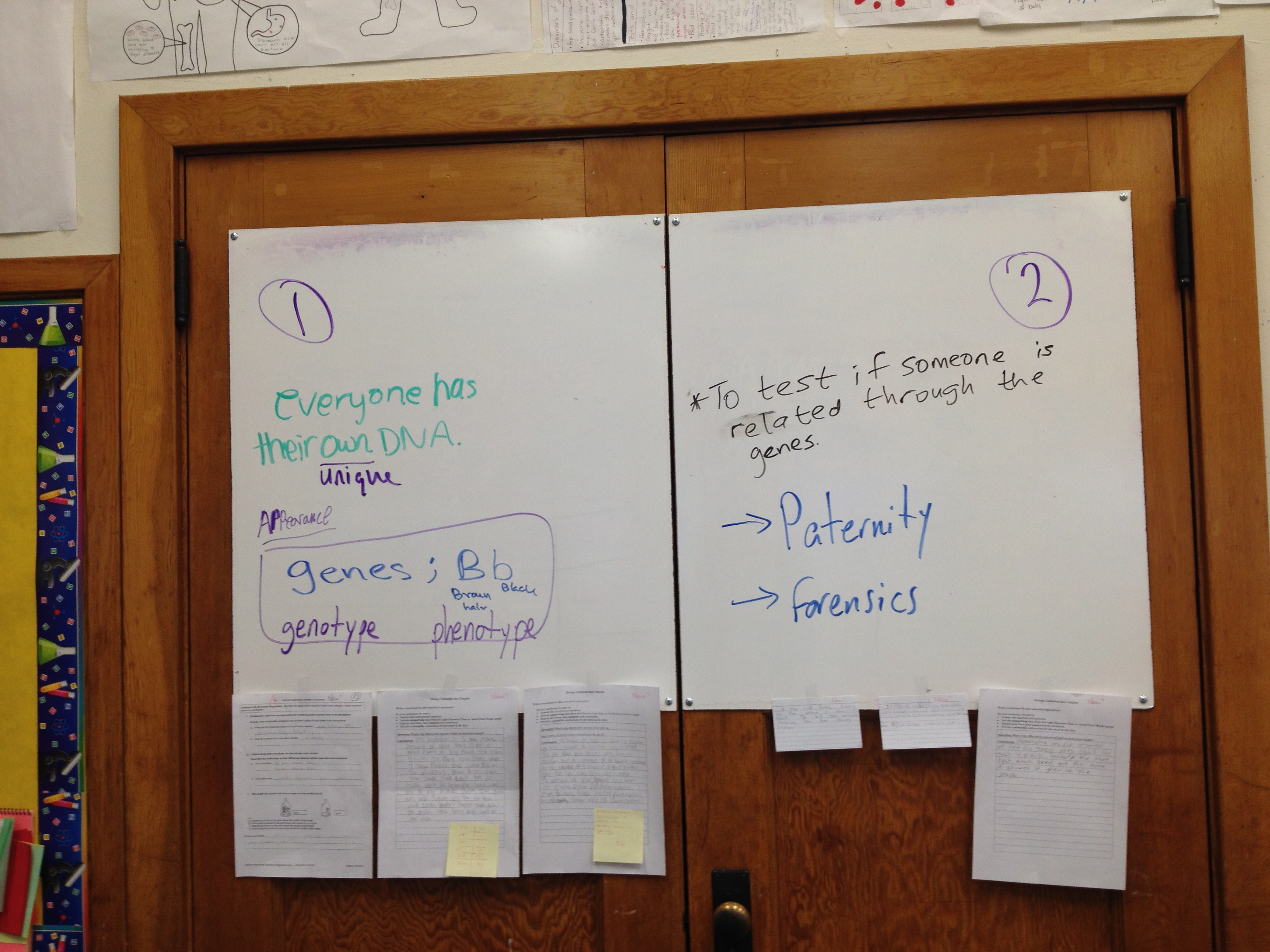
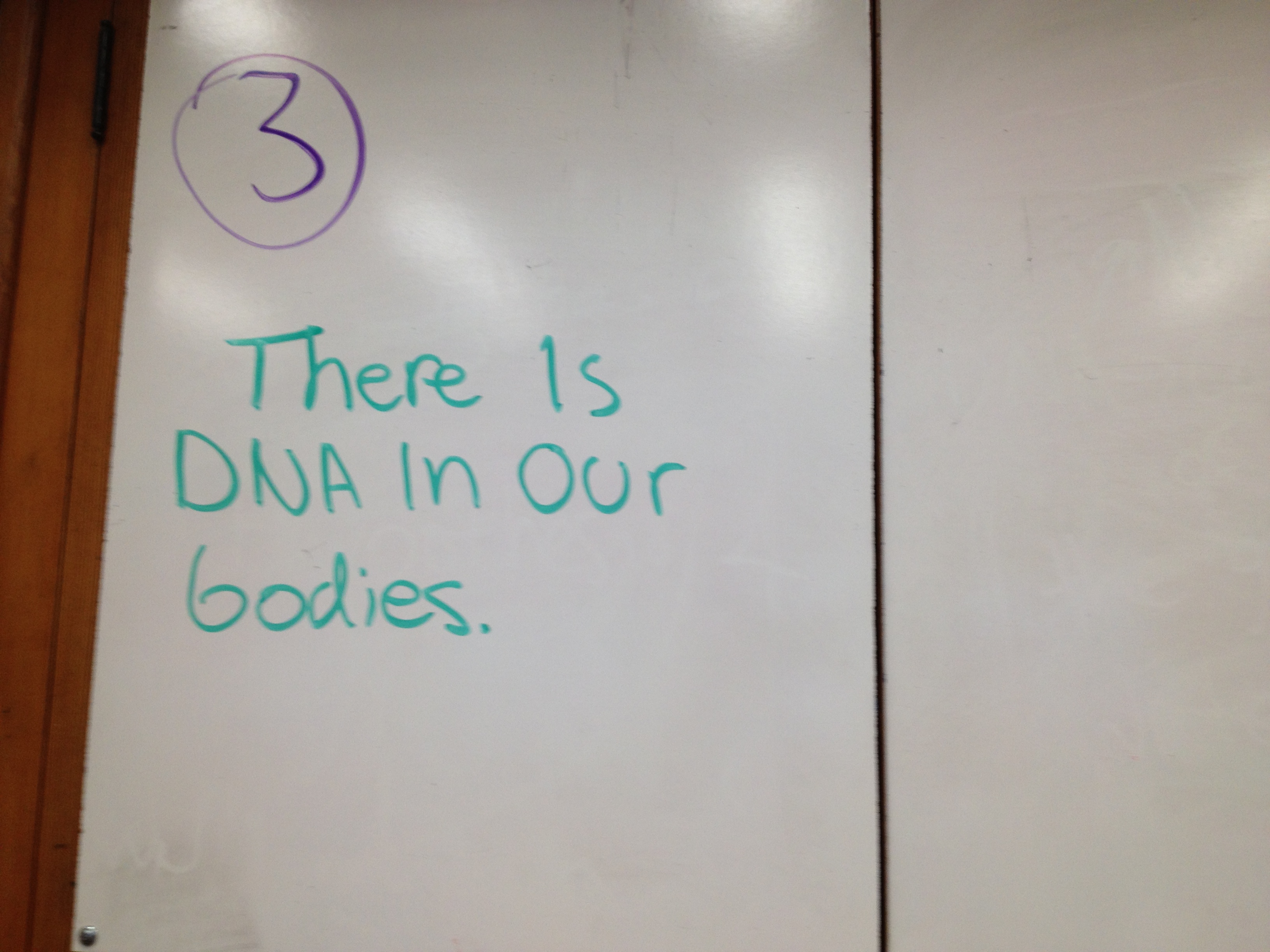
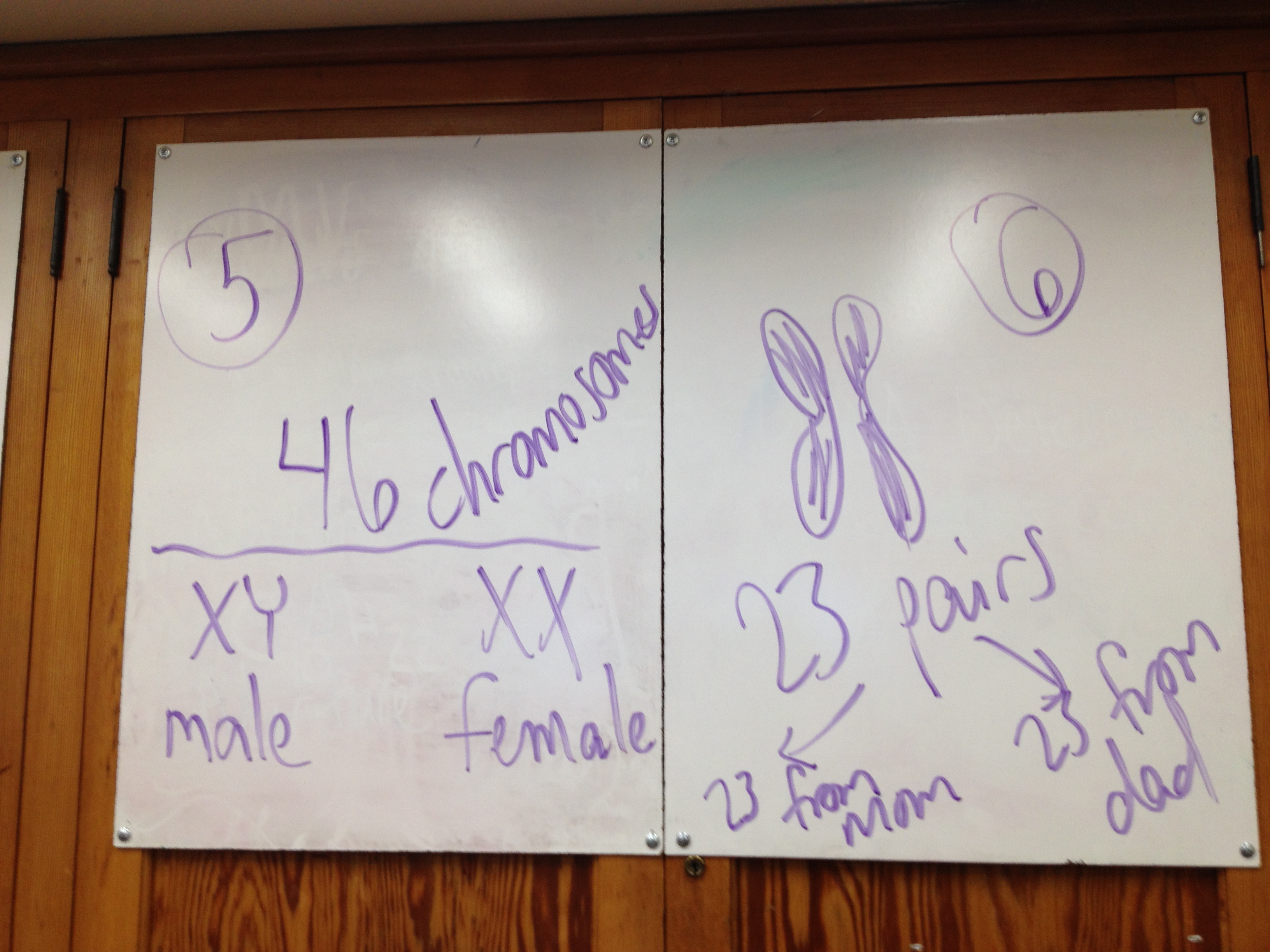
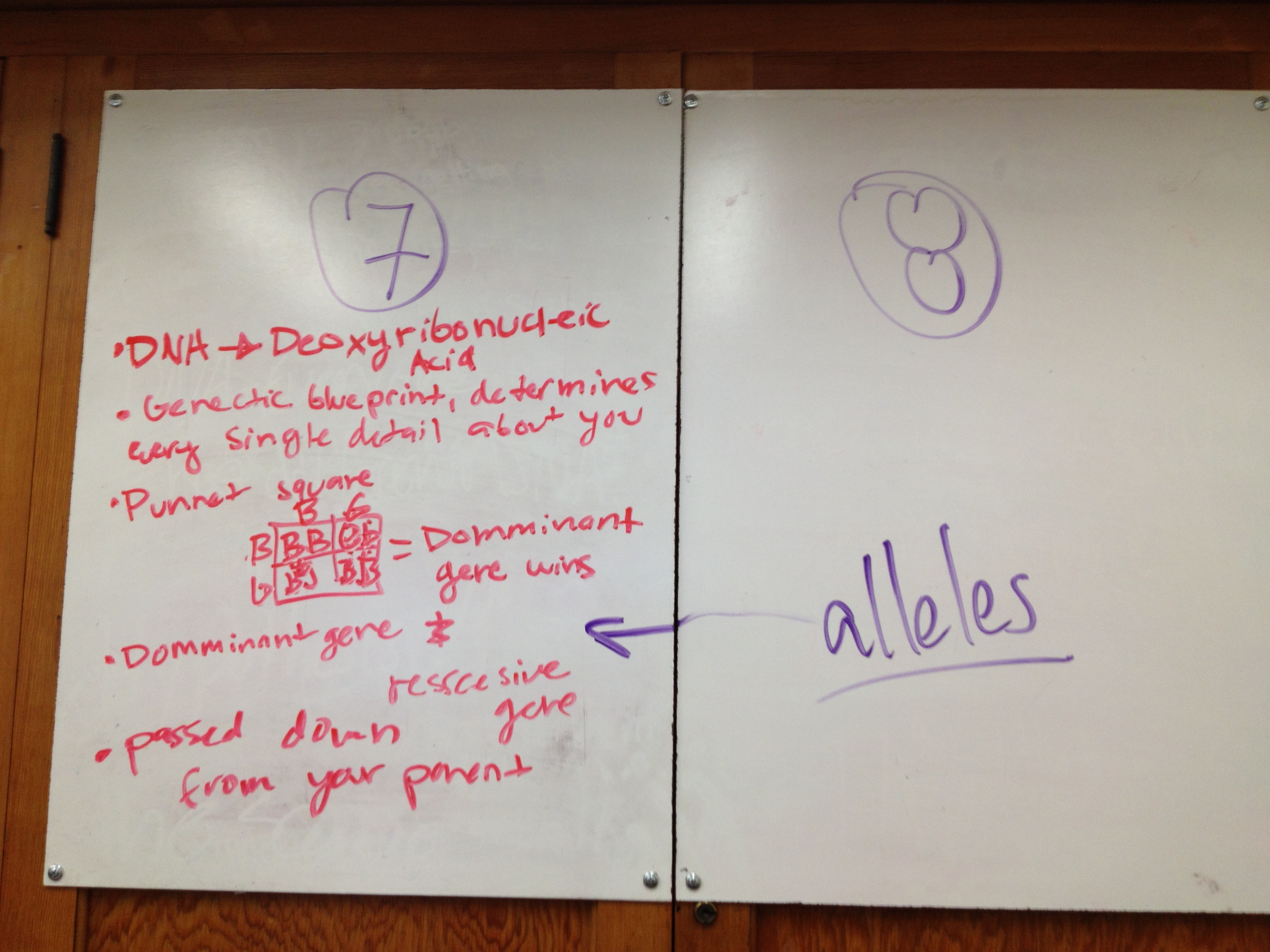
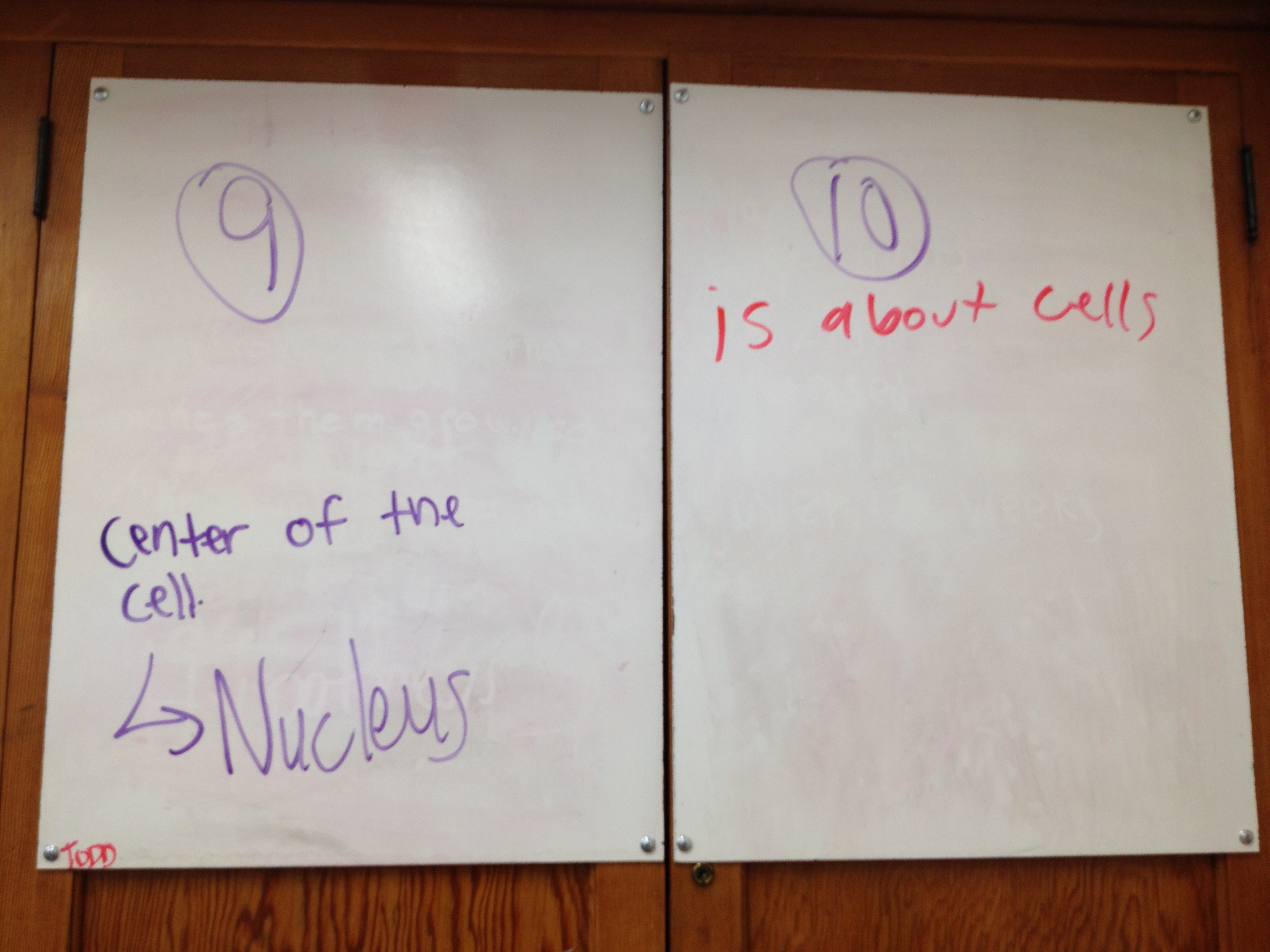
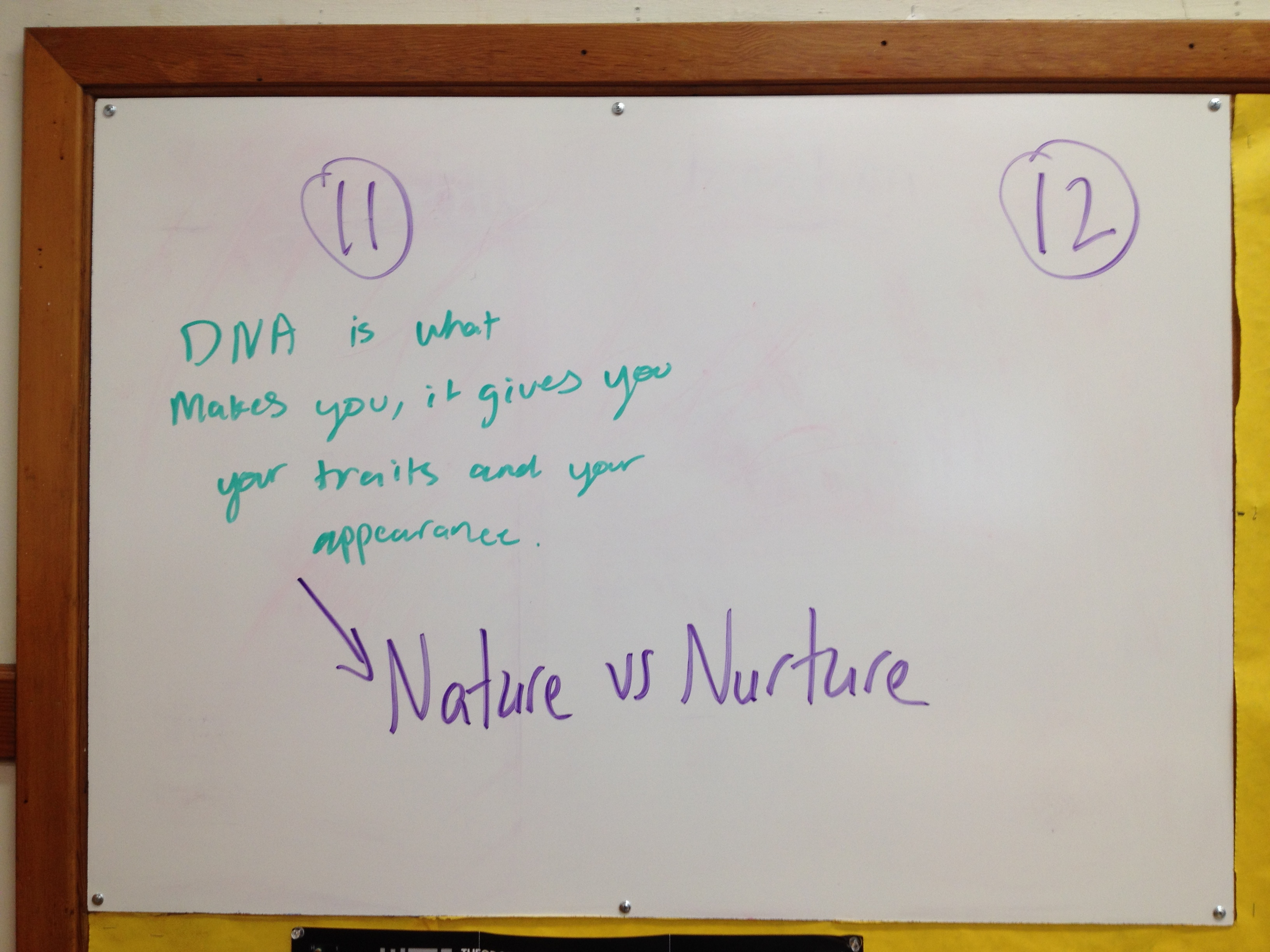
Finally, students received a few slides of instruction regarding Central Dogma vocabulary before we watched the first 16 minutes of Cosmos: Episode 2. The last slide of the lesson lists the questions students answered while watching the video.
Energy, Matter, and Organization: Unit Exam
After the unit exam, students were encouraged to read about the Navy’s efforts to extract carbon dioxide and hydrogen ions from seawater to create fuel which can then be used to power ships. Here is the article.
Energy, Matter, and Organization: Ocean Acidification – Day 2
Today we are working in the computer lab so students can learn more abut the process of ocean acidification, the effect on sea life, and to model how the pH is predicted to change during their lifetimes. Students will use the website Our Acidifying Ocean and will complete pages 1 and 2 of the worksheet.
Energy, Matter, and Organization: Ocean Acidification – Day 1
We kicked off the lesson with an entry task focused on why we use fossil fuel combustion (to produce energy). Students were then asked to consider one unintended consequence of fossil fuel combustion (releasing carbon dioxide into the atmosphere). We followed that discussion with a video about ocean acidification (below) before concluding the lesson with an experiment in which students re-created the conditions of ocean acidification by measuring the change in pH after exhaling through a straw placed in water for one minute.
Energy, Matter, and Organization: Combustion – Day 2
We continued our study of combustion with a review of why burning candles lose mass. We watched a video in which Mr. Anderson describes not only the process of combustion but also the concept of Conservation of Mass. At the end of the video, he mentions how neat a candle burning in the space shuttle looks, so I also included a video of the recent FLEX2 experiment aboard the International Space Station. After the lesson, students completed a quiz connecting the concepts of combustion, cellular respiration, and photosynthesis.
Energy, Matter, and Organization: Combustion – Day 1
The lesson for Monday centered on the concept of combustion. We dove into vocabulary about chemistry and even balanced an equation! We then created a table comparing photosynthesis, cellular respiration, and combustion. Because some classes were ready, we also discussed the combustion of paraffin wax in a burning candle. Yesterday’s lesson can be viewed by clicking here.
 Science with Swart
You must be logged in to post a comment.