
Category Archives: Biology

Digital Microscope!

Thanks to a generous grant from the Southwest King School Retirees’ Association, we were able to purchase a digital microscope and a set of prepared slides.   This equipment will enable us to recover some of the functionality of a lab in a classroom setting, and will extend our capabilities by allowing us to take digital pictures and movies and to conduct extensive analysis of those images.

Here are our first three images taken with the microscope:

1. Daphnia Head – 40x

Daphnia Head

2. Onion Root Tip – 40x

Onion Root Tip - 40x

3. Onion Root Tip (mitosis!)- 100x
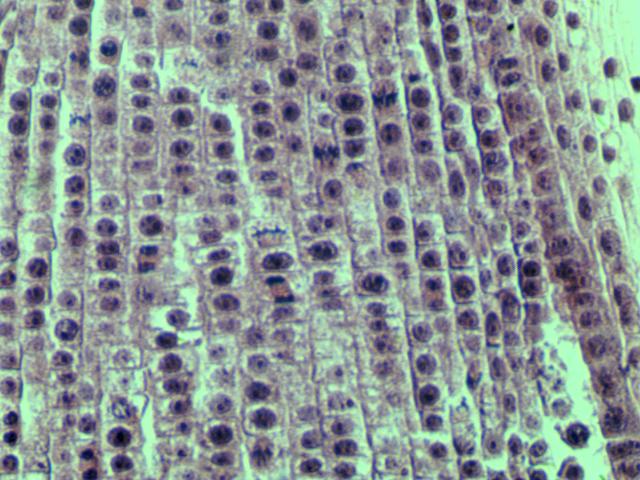
Onion Root Tip Mitosis - 100x

Systems Biology – Lesson 3

After learning how to define networks in lesson 1, and how to analyze a network in lesson 2, students were tasked with constructing a network in lesson 3.  Students worked in groups of up to four people to construct an economic network, with each student contributing at least 5 nodes and 5 edges.  The ability to understand how networks function, and how to analyze and construct a network will be valuable skills as we move forward in the unit and investigate human body systems, ecosystems, and the integration of the emerging cryptocurrency economy with our study of ecosystems.

Evolution – Mini-Unit Wrap-Up

To better understand how DNA mutation drives evolution, students worked through the HHMI’s BioInteractive lesson titled Creating Phylogenetic Trees from DNA Sequences.  Students completed the accompanying PDF worksheet prepared by HHMI.

The Evolution mini-lesson concludes on Friday.  Students will have all day in class on Friday to read up to four articles and respond to questions about the articles.  Students must read the first two articles (1- Carsonella ruddii and 2- Dogs First Domesticated in Europe) and thoroughly answer the questions to earn a grade of Developing (equivalent to a C).  Students who read and answer the questions from the third article (3- And the Genomes Keep Shrinking with questions) will earn a grade of Proficient (equivalent to a B).  To earn a grade of Advanced, students must read the fourth article (4- Vitamin C Evolution) and write a one paragraph summary explaining what they learned, what confused them, what they want to learn more about, and how they would obtain the information they want to learn.

Many students elected to take the reading packet in advance in order to complete the reading on Friday.  However, students do have the option of completing the reading over Spring Break and returning the completed work on Monday, April 14.

Evolution – Lesson 2

With HSPE testing last week, we only had two days of class.  The first day was spent completing question 1 from the virus mutation worksheet from Lesson 1.  Students also had an opportunity to make corrections to quiz 2.  To earn a grade jump, students had to complete the following for each incorrect answer:

1. Explain their thought processes behind each incorrect answer.

2. Explain why they think their new answer is correct.

On the second day, we watched episode 2 of the new Cosmos series in which Dr. Tyson describes the process of evolution.  Students should be able to explain the difference between natural and artificial selection, as compared and contrasted with the evolution of dogs and polar bears.

For this week, we continued our study of evolution in Lesson 2.  Students then constructed a Tree of Life using a list of organisms and determining the relationships between the organisms.

Evolution – Lesson 1

On Wednesday, we kicked off the Evolution unit with our first lesson.  In Lesson 1, students watched a video about the evolution of soccer and then brainstormed other everyday things that have evolved over time.  Student ideas included the evolution of vehicles, animals, society, technology, and medicine.  In the lesson, students learned that DNA can change through missense mutations, nonsense mutations, and frameshift mutations.  After the lesson, students worked with a partner to investigate a hypothetical scenario requiring the integration of research skills, critical reading skills, recollection of the Central Dogma, and application of DNA mutations.  The investigation will conclude on Monday.  By the end of class Thursday, most students had successfully answered questions 2-6 of the worksheet.  As the events of 1995 and 2000 were before many of the students were born, we watched the following videos to bring closure to that part of the investigation and to introduce students to part of Seattle cultural history.

Evolution: Can We Live Forever?

On Tuesday, we watched a NOVA ScienceNOW episode hosted by Neil deGrasse Tyson.  The show addressed the question, “Can We Live Forever?”  Students then turned in their responses to three questions on a worksheet.  Humans continue to develop amazing biomedical tools which may someday enable us to replace human parts just like car parts, potentially extending the human lifespan indefinitely.  This provides a stark contrast to the traditional concept of evolution, where DNA mutations accumulate over many generations and may provide individuals with a survival advantage.  In the rapidly approaching future, where biomedicine can overcome genetic defects and introduce new organs or even new traits, will we have to reconsider our definition of the process of evolution?

http://www.youtube.com/watch?v=VEi68CeE5eY

Genetics Unit – Lesson 8

For the Lesson 8, the final lesson in the Genetics Unit, we learned about the “Levels of Heredity” and then how to make dihybrid crosses.  A dihybrid cross is a Punnett Square that shows the possible inheritance patterns of two independently-assorting genes.  The classwork for this lesson included a dihybrid cross (two-trait Punnett Square) worksheet and a reading with questions about the connection between Down Syndrome and Alzheimer’s Disease.

We will have our second quiz for the Genetics Unit on Friday, so study hard!  Be sure to review Lessons 5-8, focusing on mitosis and meiosis, vocabulary (allele, genotype, phenotype, dominant, recessive, homozygous, heterozygous) and know how to make and analyze one- and two-trait Punnett Squares.

Heredity Projects

Congratulations to the students who received a Golden Ticket for completing their Biology Task!  Students who submitted final drafts on or before last Friday (2/14) received grades.  Students who did not submit a final draft remain eligible for a Silver Ticket.  Tasks receiving a score below proficient are eligible for one additional final Golden Ticket review on or before Friday, February 28, after which only Silver Tickets will be issued.  Remember, Seniors and Sophomores may only defend Tasks that receive a Golden Ticket.  All students must receive either a Gold or Silver Ticket to receive credit for a class.

Because of the short week, students are working on their Heredity Projects.  These short reports are due next Monday (February 24) and should be uploaded to Ms. H’s Dropbox.  There is a Heredity Project folder in each class period.  The Heredity Projects will supplement lessons next week on multi-trait Punnett Square analysis and the inheritance of traits through changes to DNA.