We began our exploration of the Periodic Table by constructing our own. In Lesson 9, students walk the path of the famous Russian chemist Dmitri Mendeleev who assembled the first predictive periodic table using the chemical and physical properties of the 63 elements known back in the 1860s. We began the lesson with a PowerPoint that included the definition of reactivity (along with the video below), then worked through the Lesson 9 Worksheet by organizing elements via a card sort activity. For homework, students should complete Lesson 9 textbook questions 1, 2, and 4. Students must also complete the Penny Lab prelab questions (#1-8) in order to participate in the lab tomorrow. As a reminder, students must also turn in a signed syllabus and safety contract to participate in the lab.
After reviewing the homework problems assigned for Lesson 7, students were reintroduced to the Copper Cycle. Because the Copper Cycle experiment involves steps that must be conducted in a fume hood, we opted to watch a video (below), with students taking observations on their Copper Cycle handout. For reference, students also received a copy of the Copper Cycle experimental procedure.
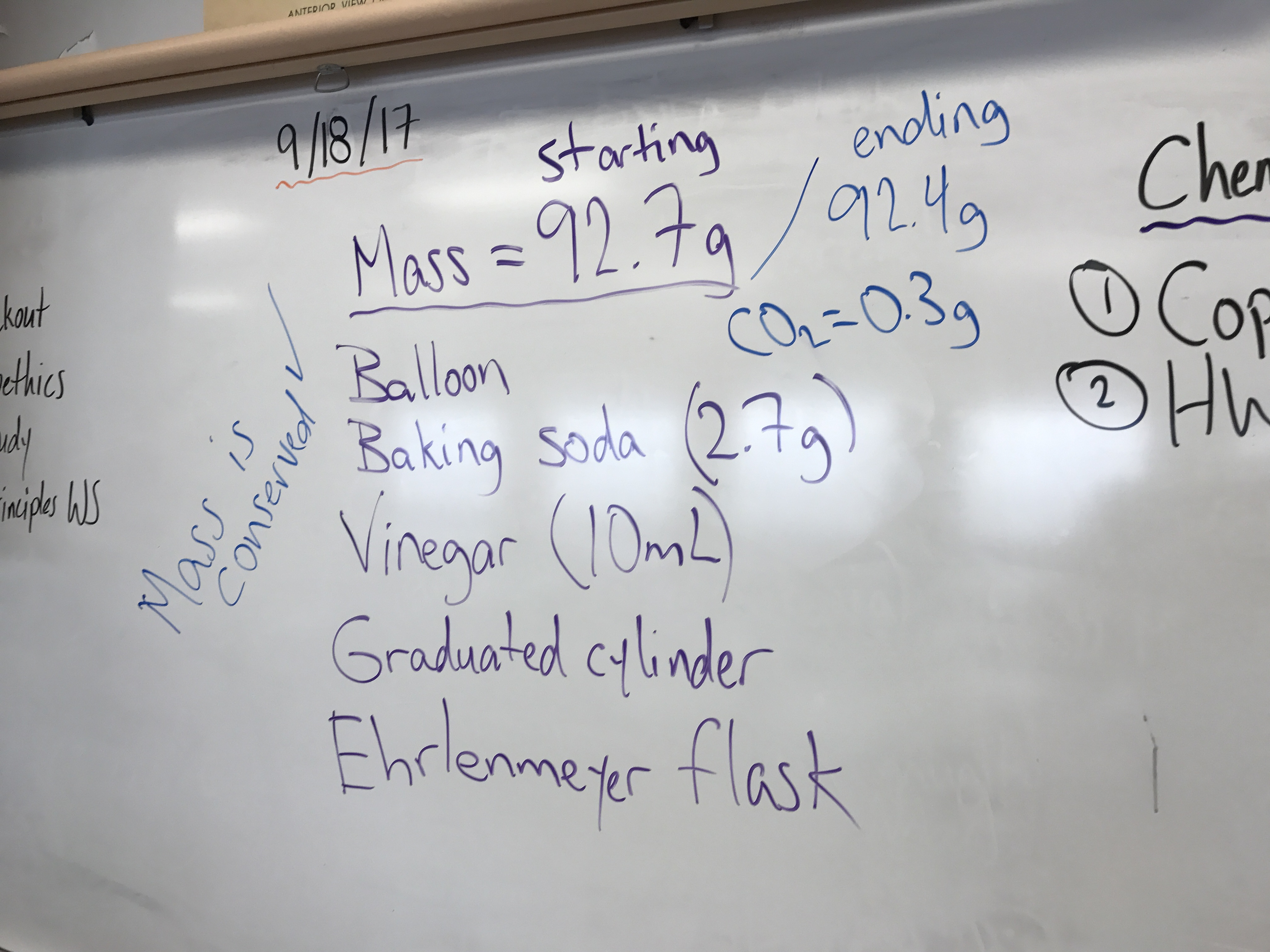
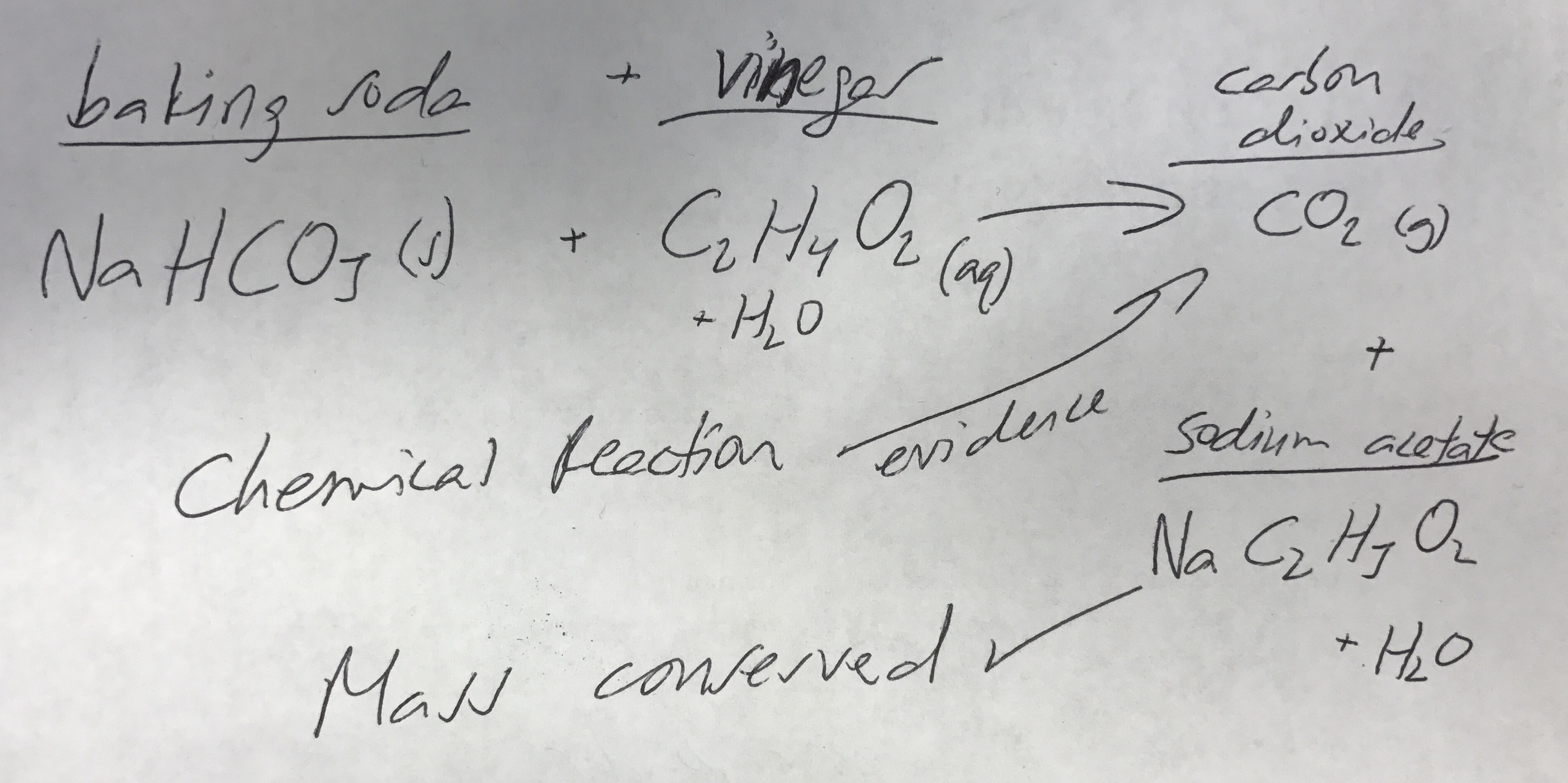
After the video, we discussed the concept of Conservation of Matter, transitioning to Lesson 8 in the textbook. Because Lesson 8 continues an investigation of the Copper Cycle, and we are unable to safely conduct that lab, we instead investigated the related concept of Conservation of Mass. Students participated in a classroom demonstration which involved combining baking soda and vinegar in a closed system and experimentally demonstrating that mass is conserved. We measured the starting and ending mass, noting the slight decrease in mass at the end due to experimental error (vinegar and carbon dioxide leaking slightly). At the end of the experiment, we removed the inflated balloon and noted a decrease in mass of 0.2-0.3 grams, indicating the carbon dioxide gas has a measurable mass. Students also noted the change in volume of the products as evidenced by the partially inflated balloon compared with the volume of the reactants.
For homework, students were provided with a copy of the Penny Lab to read over in advance of Wednesday’s class. Students were also reminded that a signed syllabus and safety contract must be turned in to enable participation in the lab.
With textbook checkout taking a bit longer than anticipated on Friday, we began the week by finishing Friday’s lesson with students taking notes on the Principles of Bioethics. We then discussed the concept of a stakeholder, a person with an interest or concern in something.
We revisited the issue of people choosing not to have their children vaccinated (introduced on Friday) by watching another short video from Frontline (below). Students were tasked with writing down a list of the stakeholders they observed in the news segment.
After the video, we created a class list of stakeholders and students used the list to help them fill out the Focus on the Principles worksheet with the ethical question of “Should healthy people choose not to be vaccinated?” After some private think time, we shared out as a class and answered questions about the Principles of Bioethics. Students were instructed to keep the worksheet as a resource to use in tomorrow’s work.
To conclude the lesson, students received a copy of the Rezip Case Study to read in class. Students were assigned to complete the reading as homework if additional time outside of class was needed.
Optional additional learning opportunities (click the links):
In their assigned homework reading of Lesson 7 of the textbook, students learned about chemical changes, and the lesson references the penny lab as an example (originally from lesson 2 in the textbook, we will conduct the penny lab next week). For our abbreviated Friday class period, students were introduced to the concept of Conservation of Mass via the Copper Cycle.
Because the Copper Cycle experiment involves steps that must be conducted in a fume hood, we opted to watch a video (below), with students taking observations on their Copper Cycle handout. For reference, students also received a copy of the Copper Cycle experimental procedure.
For homework, students were assigned Lesson 7 textbook questions 1, 5, and 6 (page 30). In addition, students should read Lesson 8 prior to class on Monday.
In our abbreviated Friday class period, students had the opportunity to check out a biology textbook to take home and use as a study guide. For the remaining time in class, we continued our study of bioethics by taking notes on the Principles of Bioethics and then applying that learning to the bioethical problem of vaccination. Students learned about a measles outbreak in the United States back in early 2015 by watching the video below. After, they filled out the Focus on the Principles worksheet with the ethical question of “Should healthy people choose not to be vaccinated?”
We launched our first official chemistry lesson today by learning about chemical names and symbols. Students took notes from a PowerPoint slide deck which condensed the learning from Lesson 6 in the textbook. They then had the remainder of the class period to make observations about 18 test tubes containing various chemical elements and compounds and filling in the table in their “mystery vials” handout. For homework, students were assigned the task of completing the handout, skimming lesson 6, and reading lesson 7 in their textbook.
We launched our mini bioethics unit with an entry task that asked students to recall the definition of biology (the study of life) and to commit to memory the meaning of the prefix “bio-” (life). Students then took notes about values, morals, ethics, and bioethics and applied their new understanding of ethics to identify the two ethical questions contained in a list of nine different questions. Students may download the class notes by clicking here. We concluded the lesson with the Pandemic Flu! exercise, in which students were tasked with considering who would and would not receive a life-saving vaccine during a hypothetical pandemic flu outbreak. For homework, students were assigned to write a paragraph about an imaginary scenario where two values conflict and a decision must be made.
Our first week included an introduction from the teacher (Wednesday) and students meeting each other and constructing a social network based on their own experiences interacting with biology away from school (Thursday). Today students will have some quiet time to reflect on who they are and who they want to become, sharing this with me in the form of an About Me writing assignment.
In addition, freshmen students were reminded to turn in their Waskowitz field trip forms in order to participate in all of the activities on Monday. Chemistry students will have a substitute on Monday while I am away on the field trip.
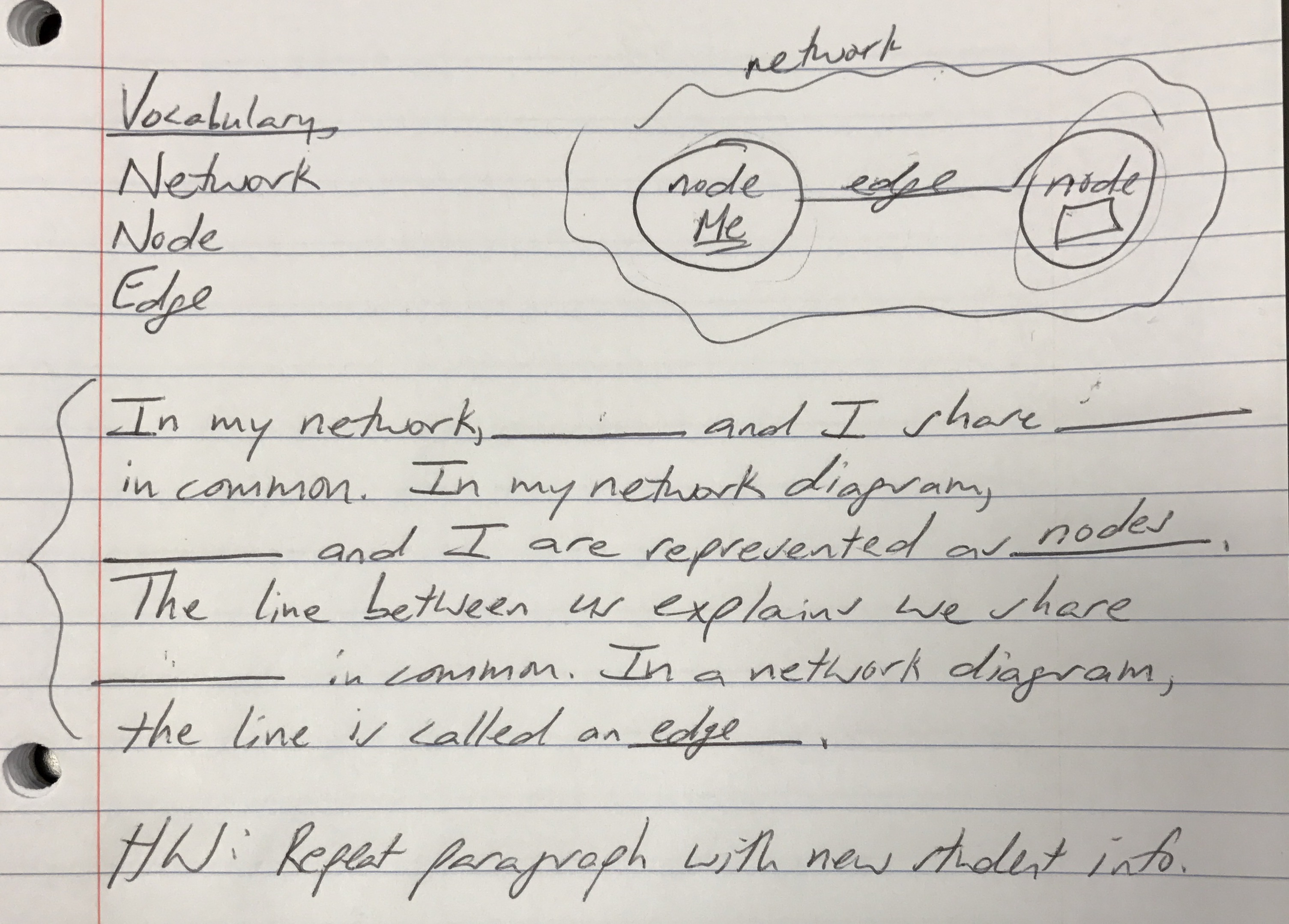
Our Day 2 activity called for students to learn a few new vocabulary words (Network, Node, and Edge) and then apply that learning to construct social networks using their homework from yesterday. Class notes, along with today’s homework (two written paragraphs using information from networks students constructed), are shown below. Click the pictures to view them as full-size images.
Welcome to day 1 of the 2017-18 school year! Today marks the final first day in the long history of Highline High School. I look forward to meeting everyone and sharing a bit about myself before asking you to do the same. Our first day agenda:
a quick starter activity
a meet-the-teacher slide deck with time for student questions
a few nuts and bolts
an explanation of the homework activity that will be due tomorrow


 Science with Swart
You must be logged in to post a comment.