
Today we had an unannounced clicker quiz that served multiple purposes. First, the quiz allowed students to assess their knowledge of body systems vocabulary. Second, students were able to voice which body system they though twas most affected in Josh when he became sick. Their opinions determined which body systems would be available for the group projects. Finally, students with the highest scores quiz scores were identified as project team leads, and their “reward” was being able to select from the list of available body systems. Students who were not team leads then had to identify which body system and team leader their skill set would best fit, and then sign up to join that group. We will launch the projects tomorrow. Click here for the slides presented today showing new vocabulary around the levels of cellular organization (cell, tissue, organ, and organ system – synonymous with body system) and the requirements of the project.
Category Archives: Systems Biology
Cells and Homeostasis: Body Systems
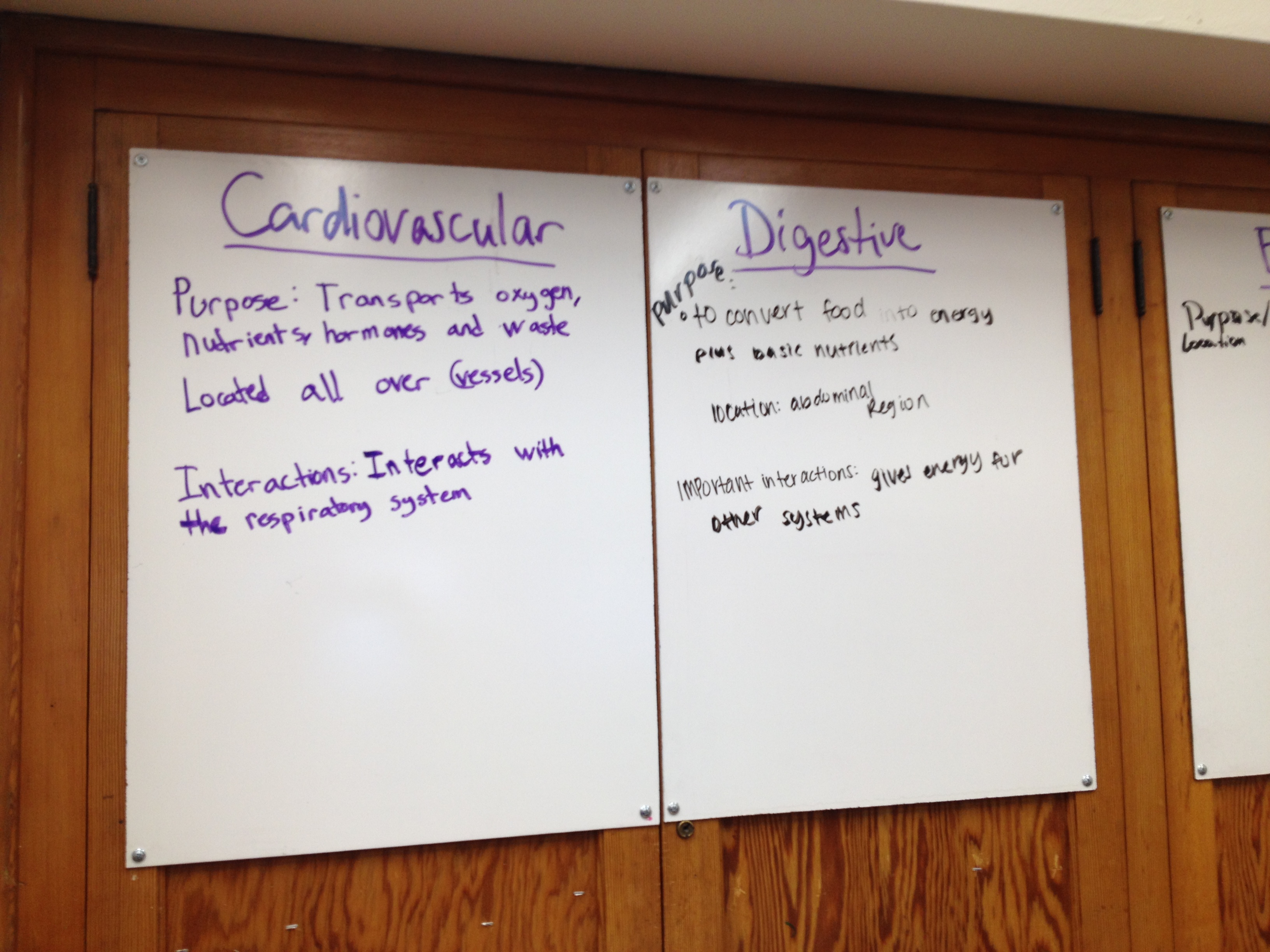
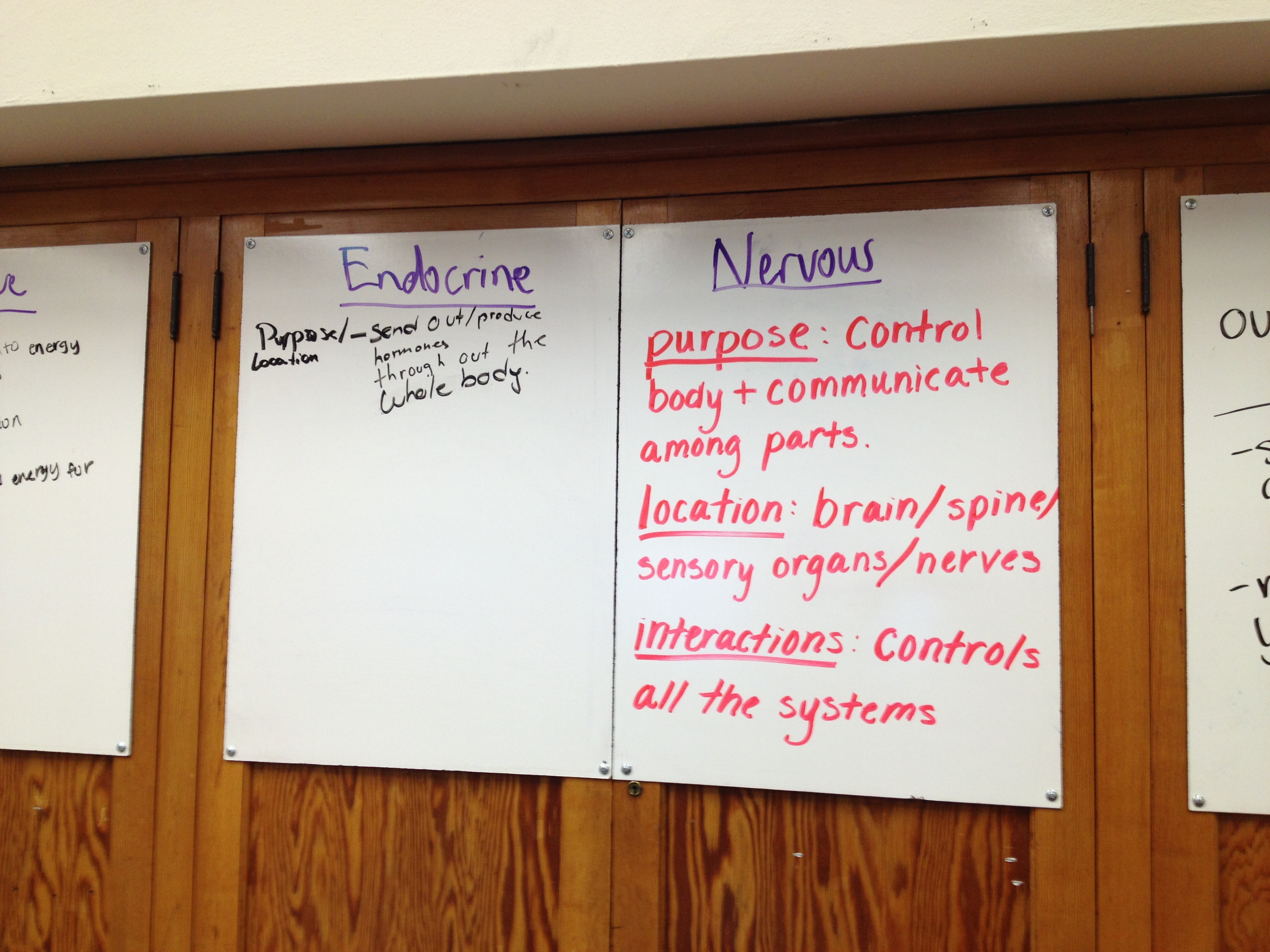
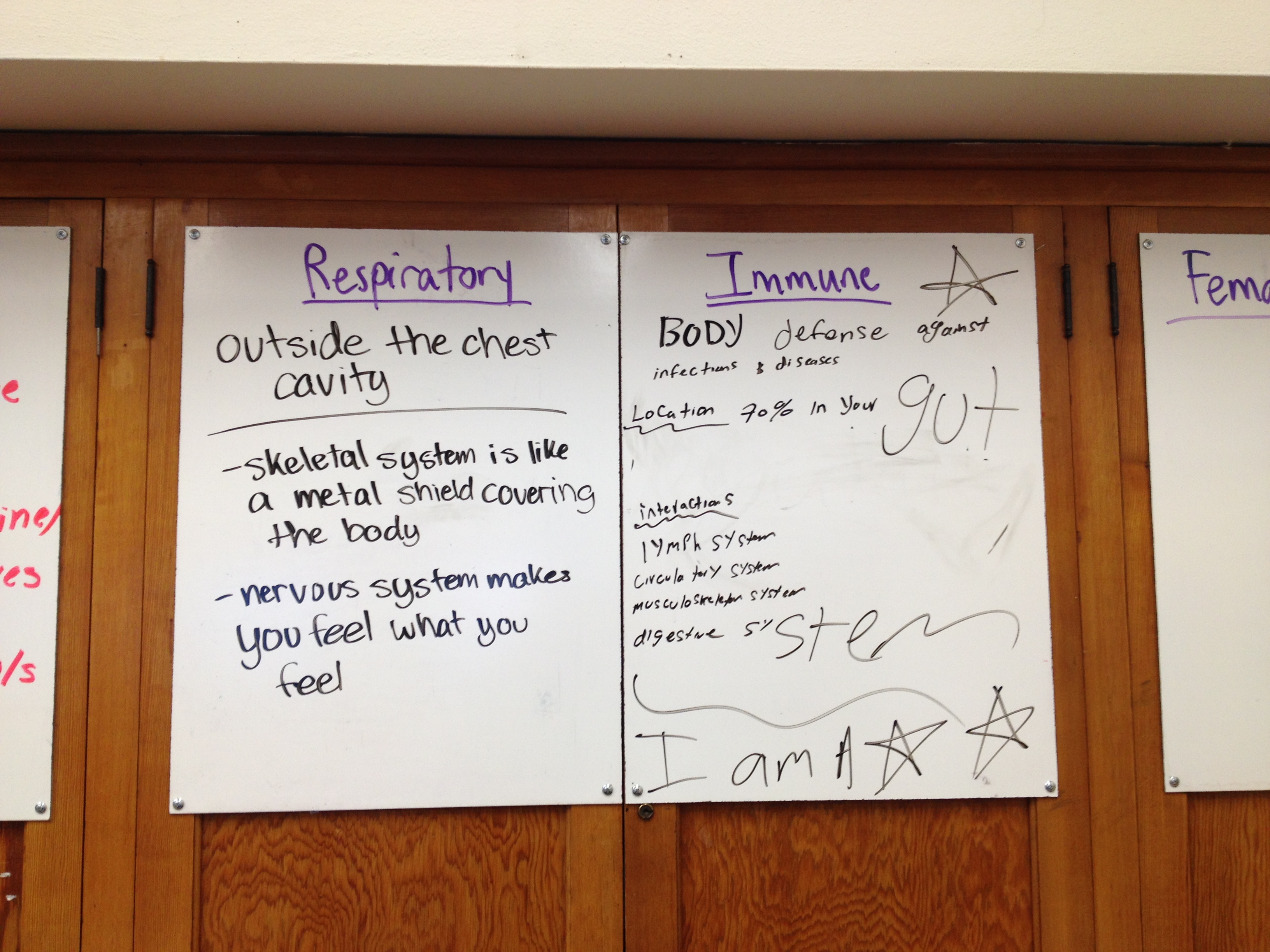
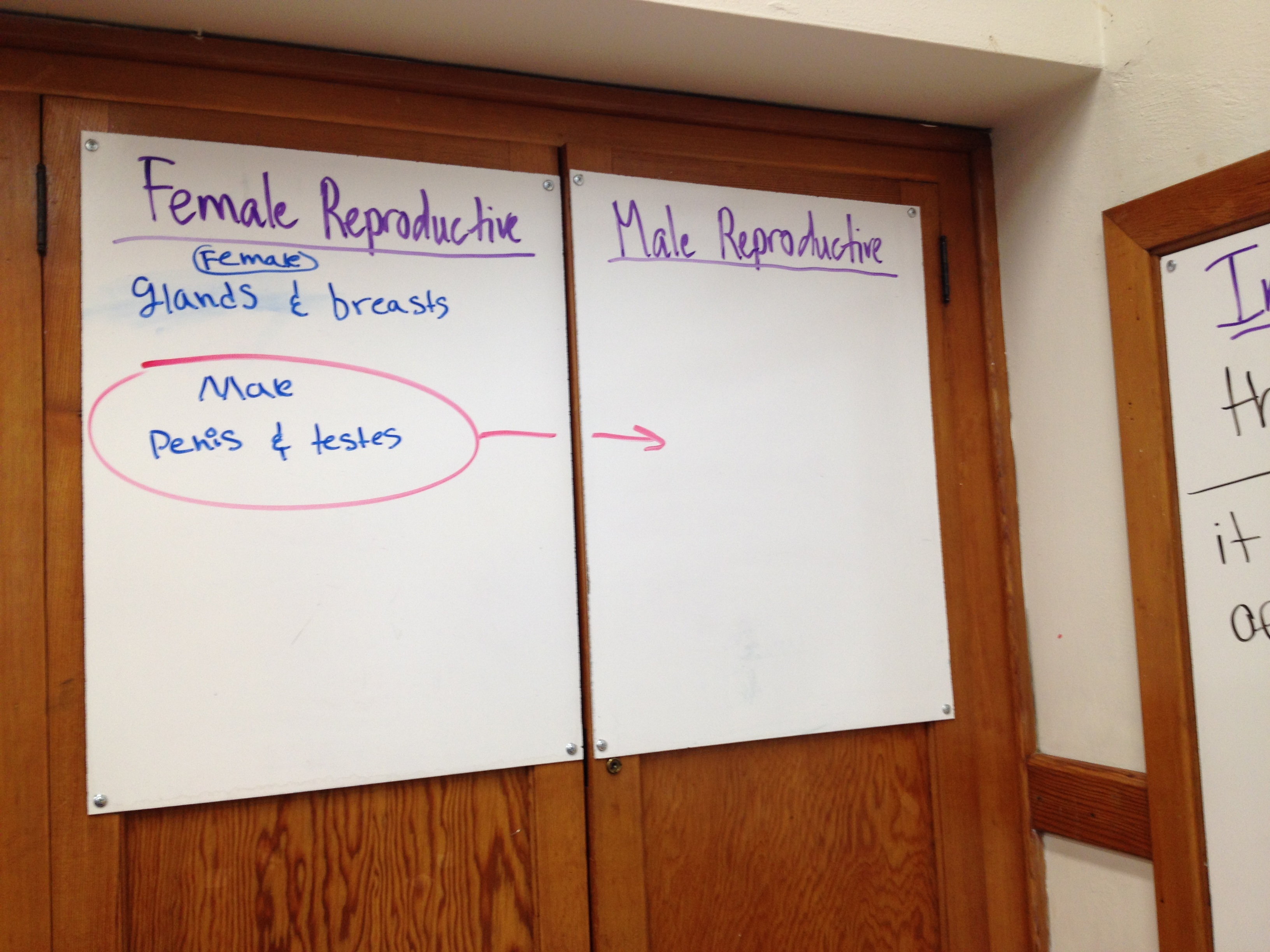
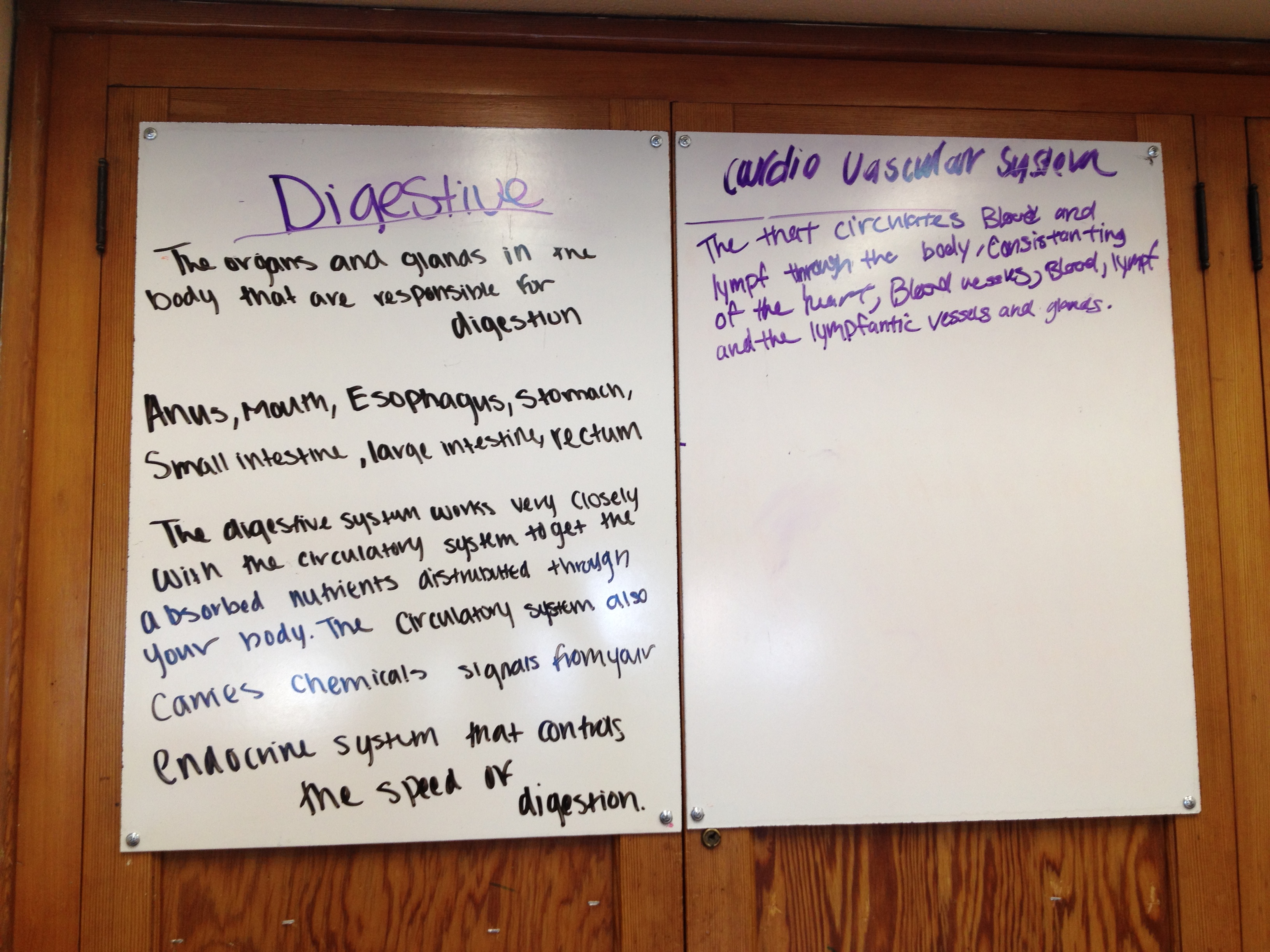
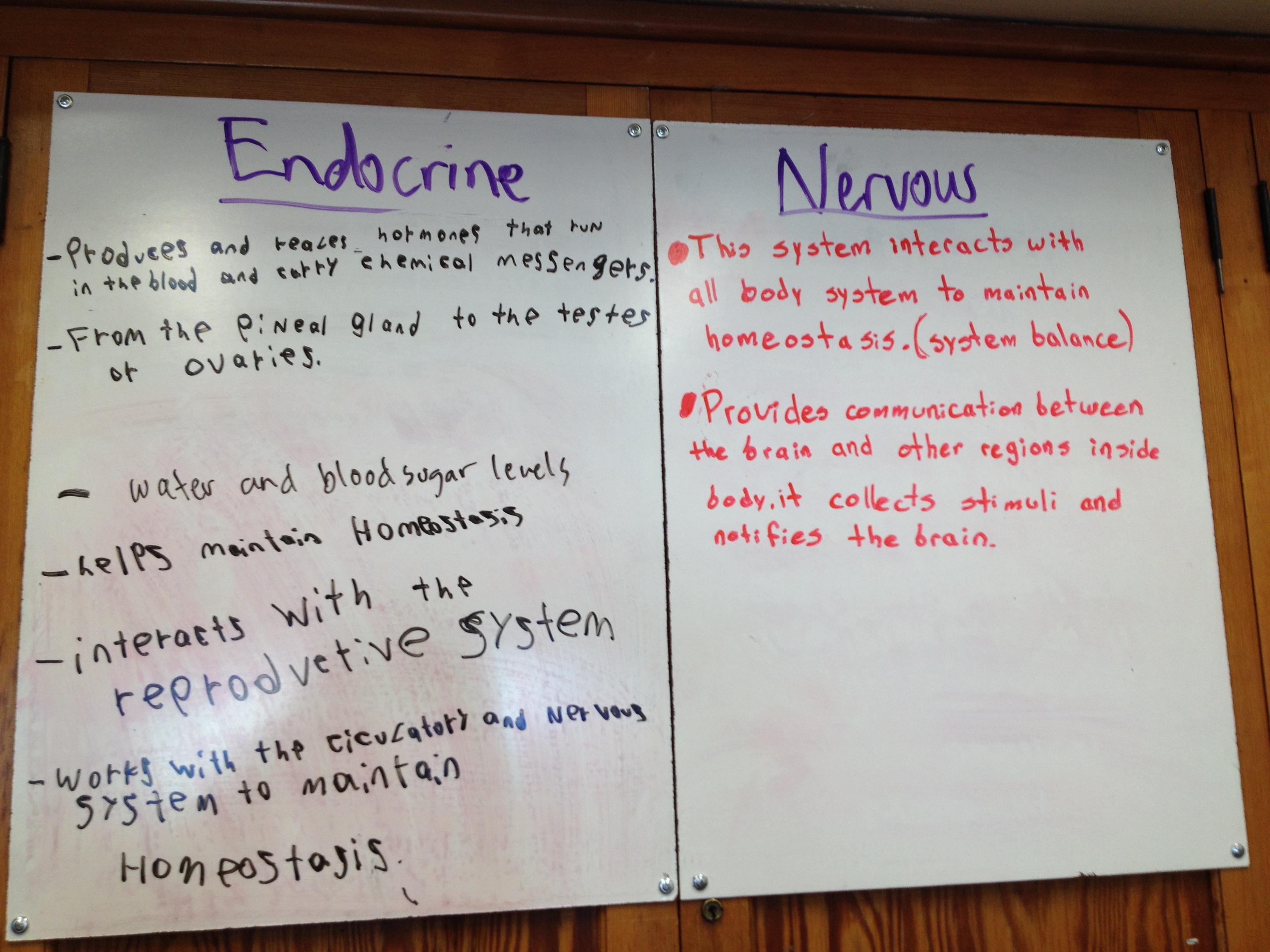
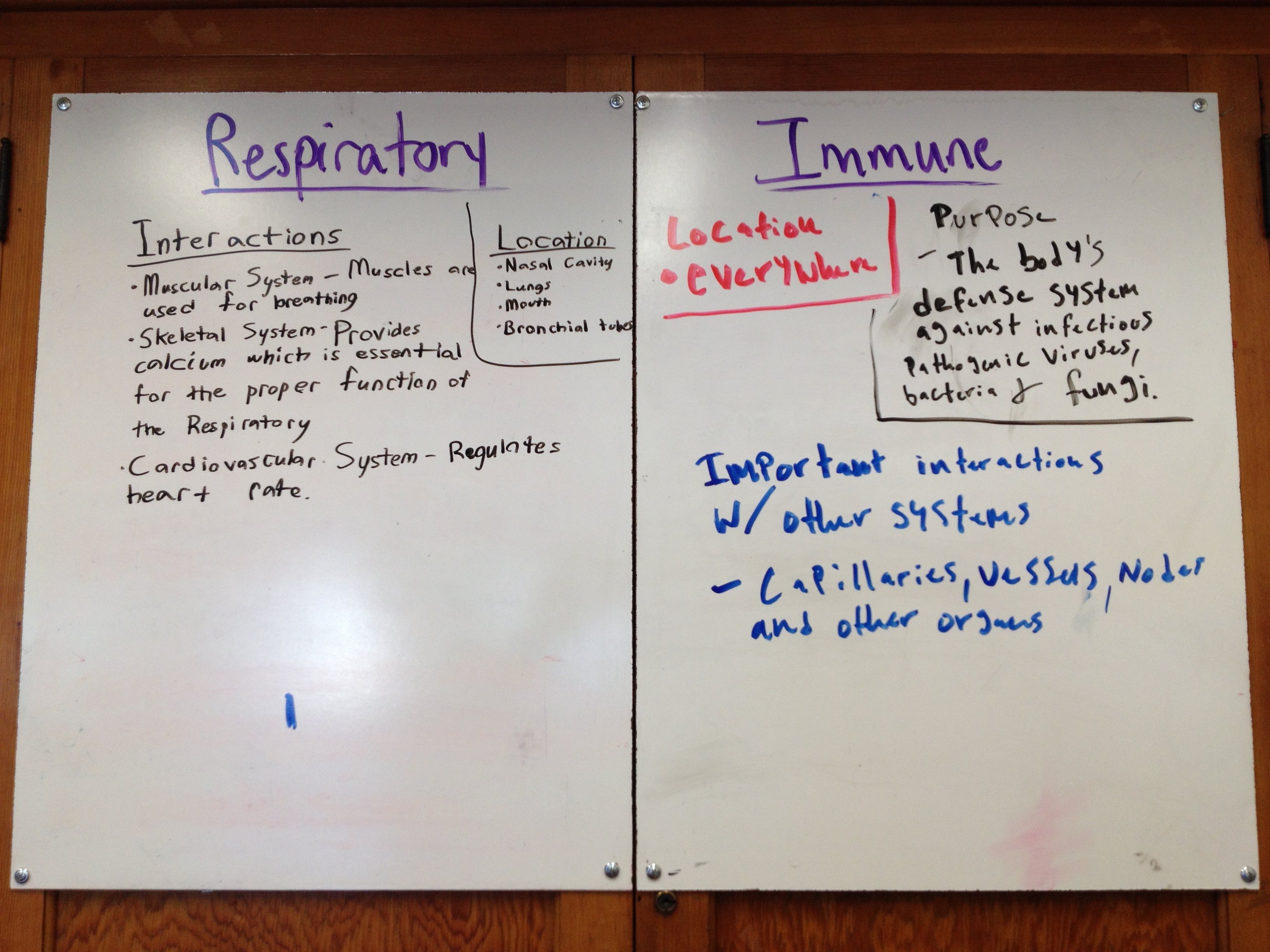
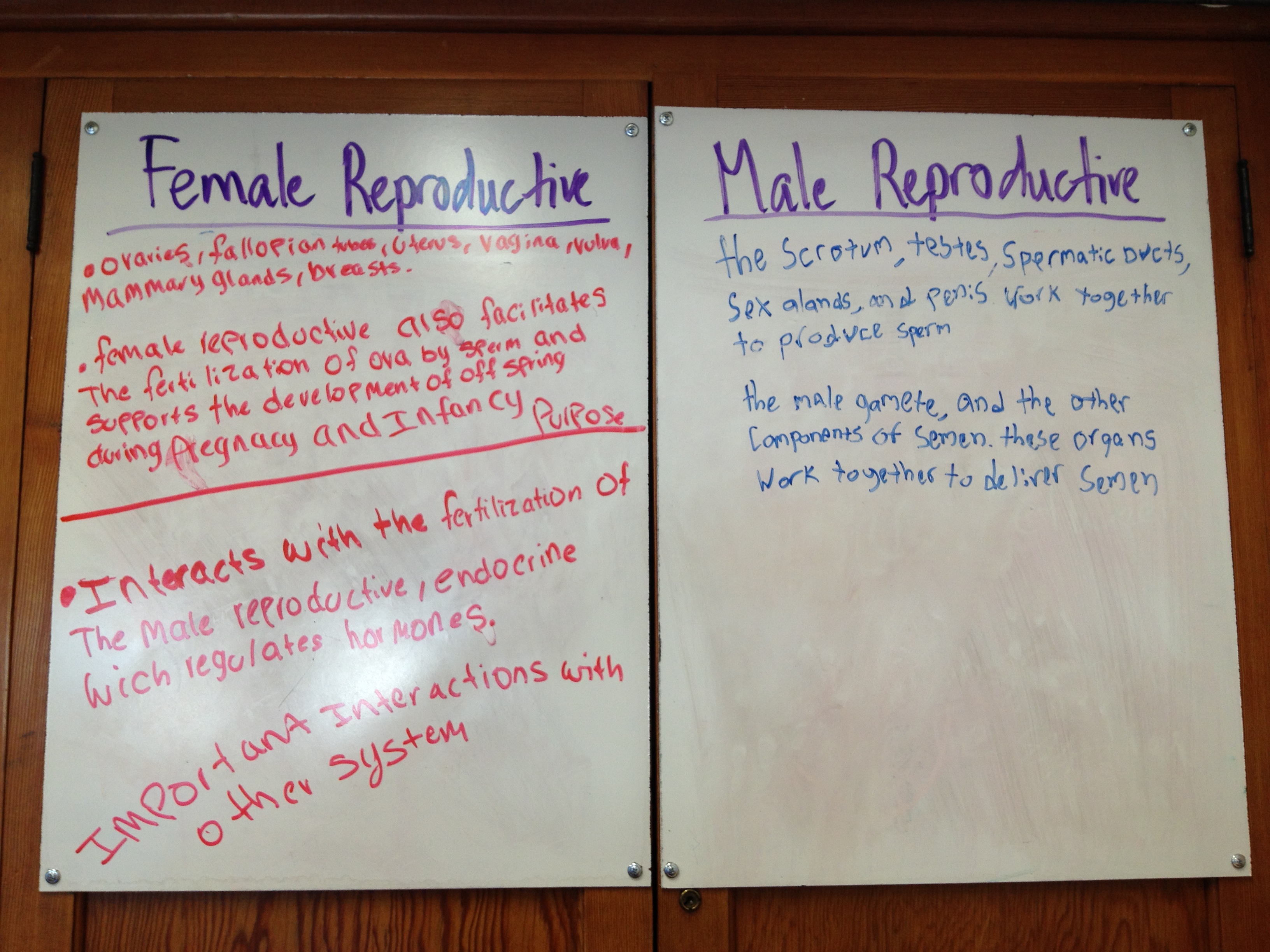
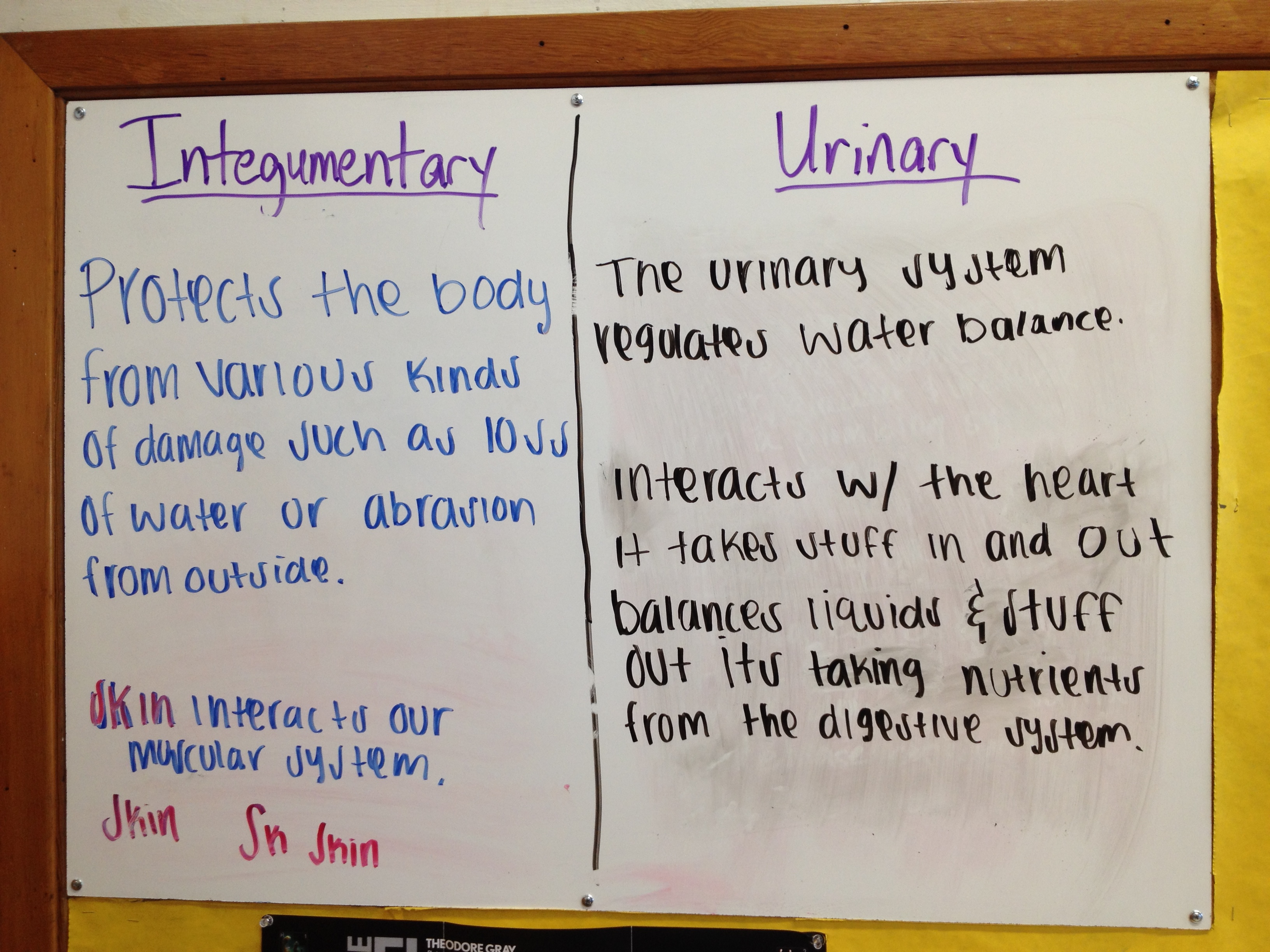
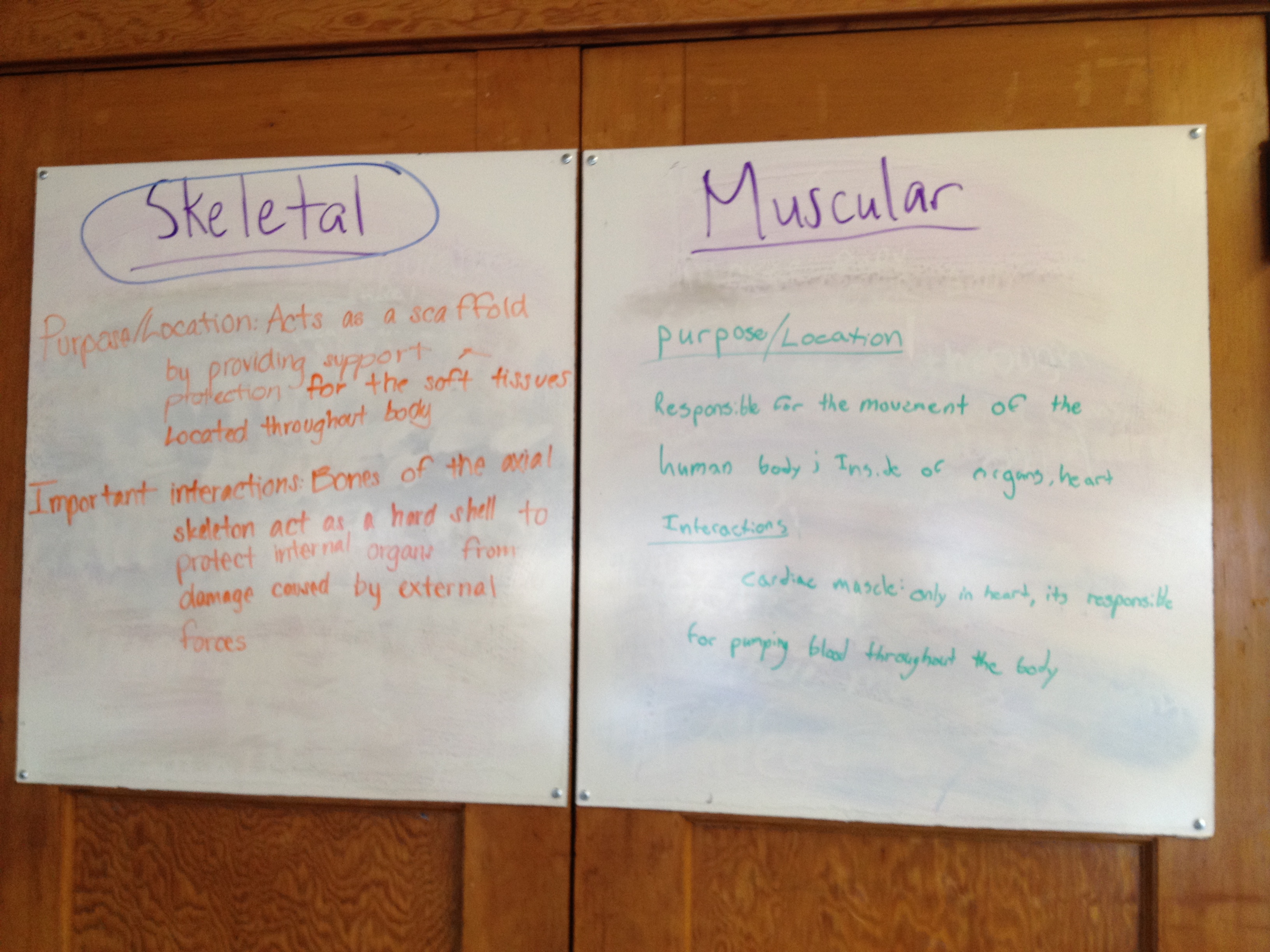
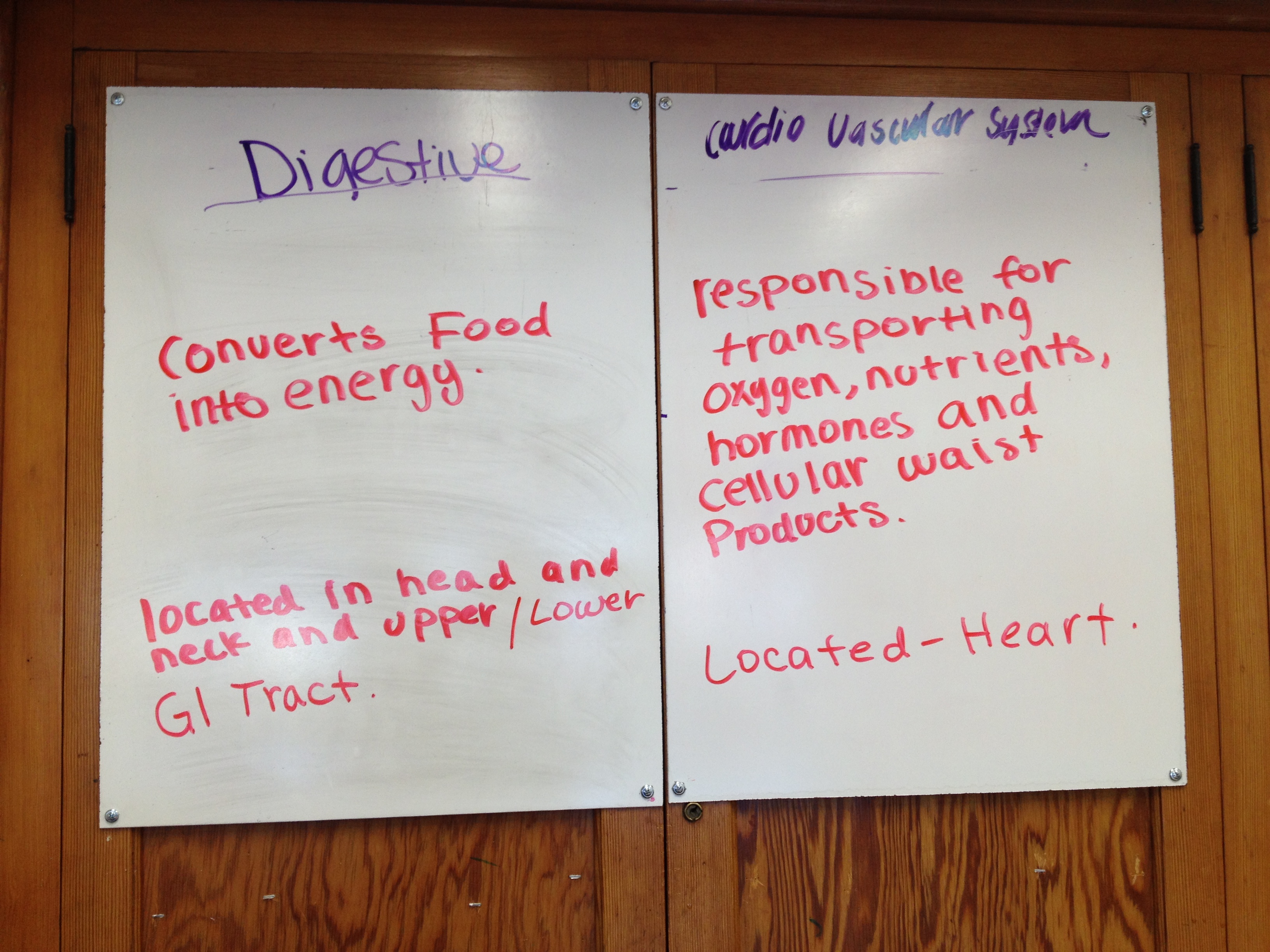
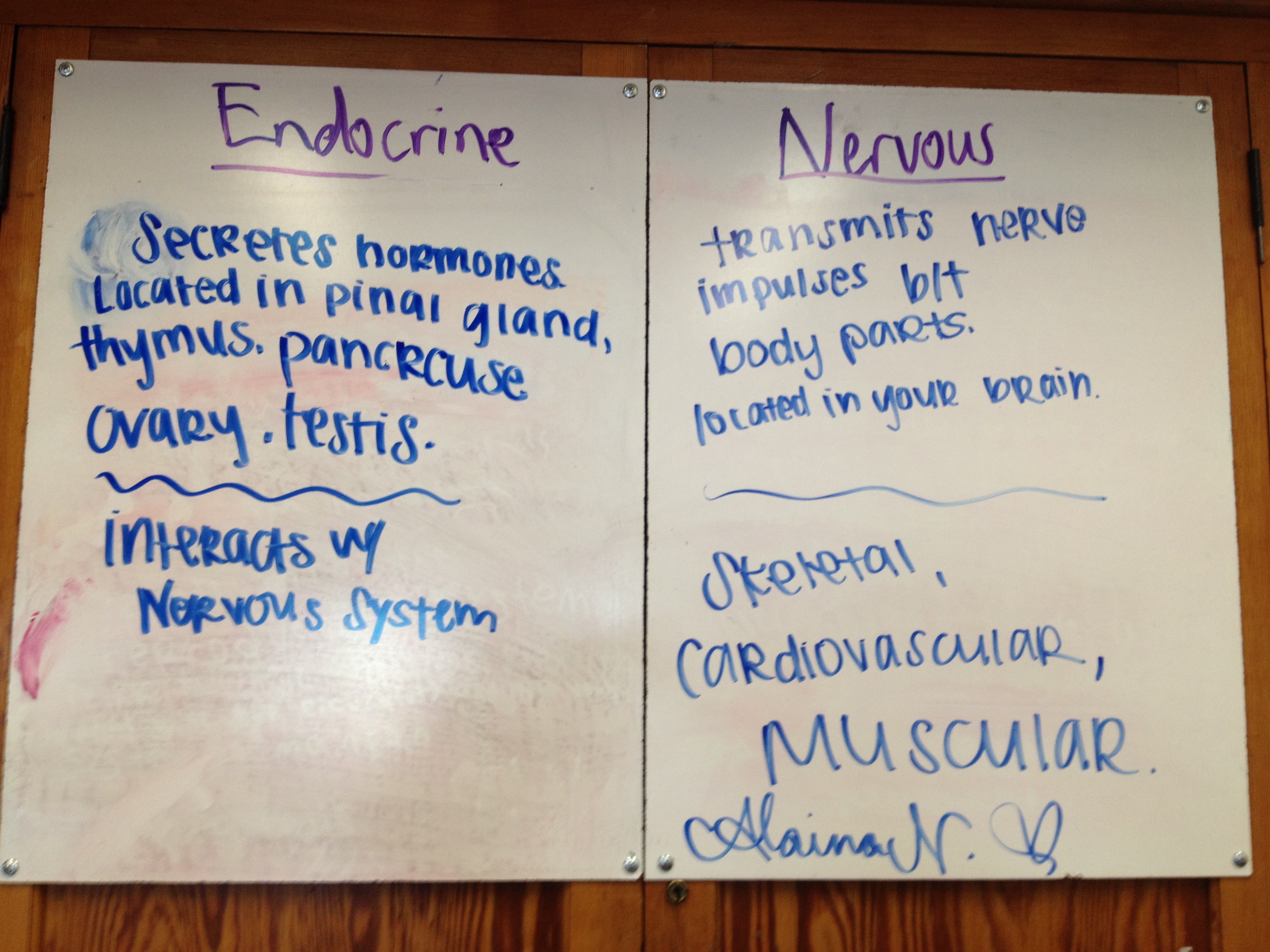
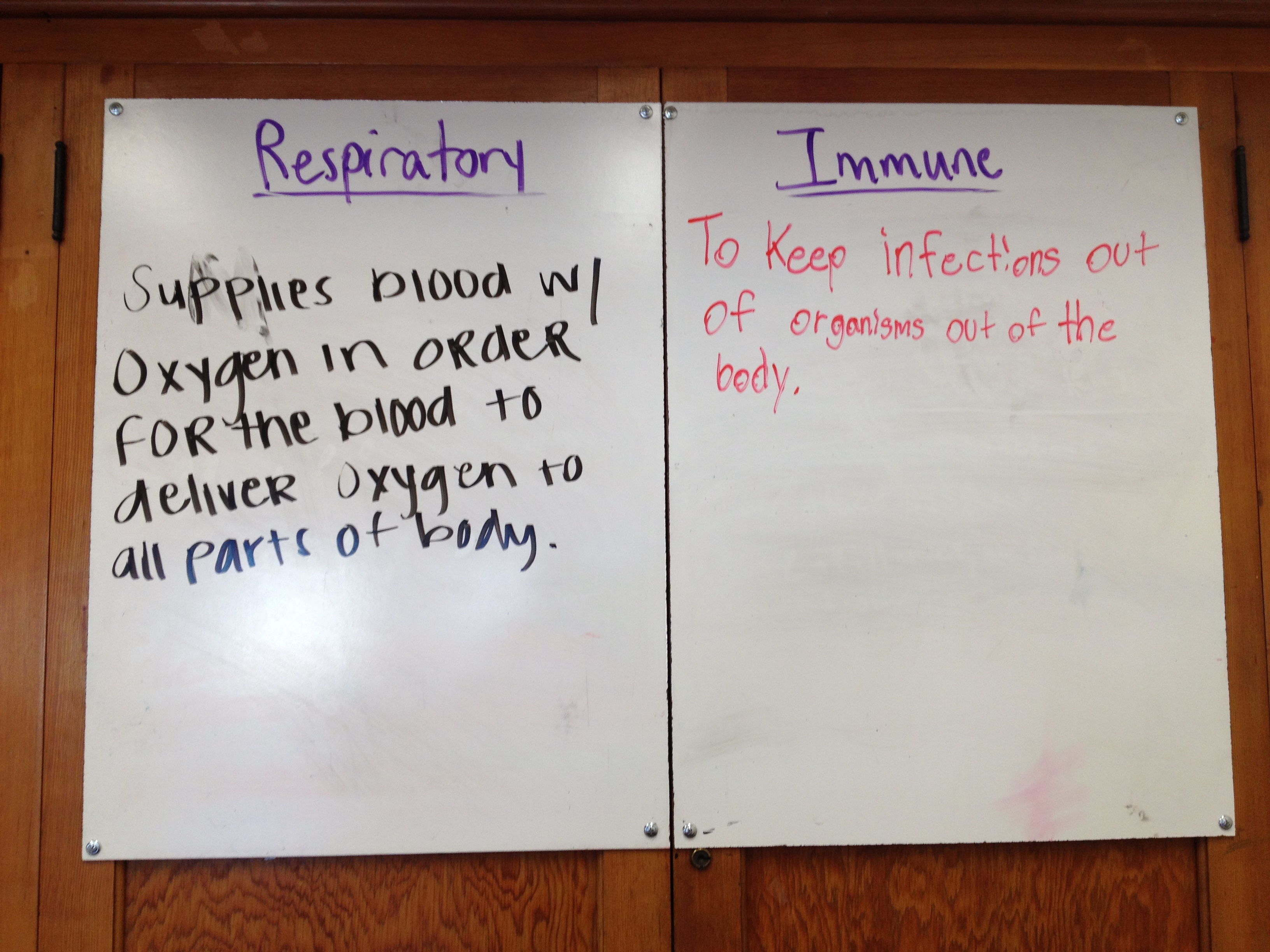
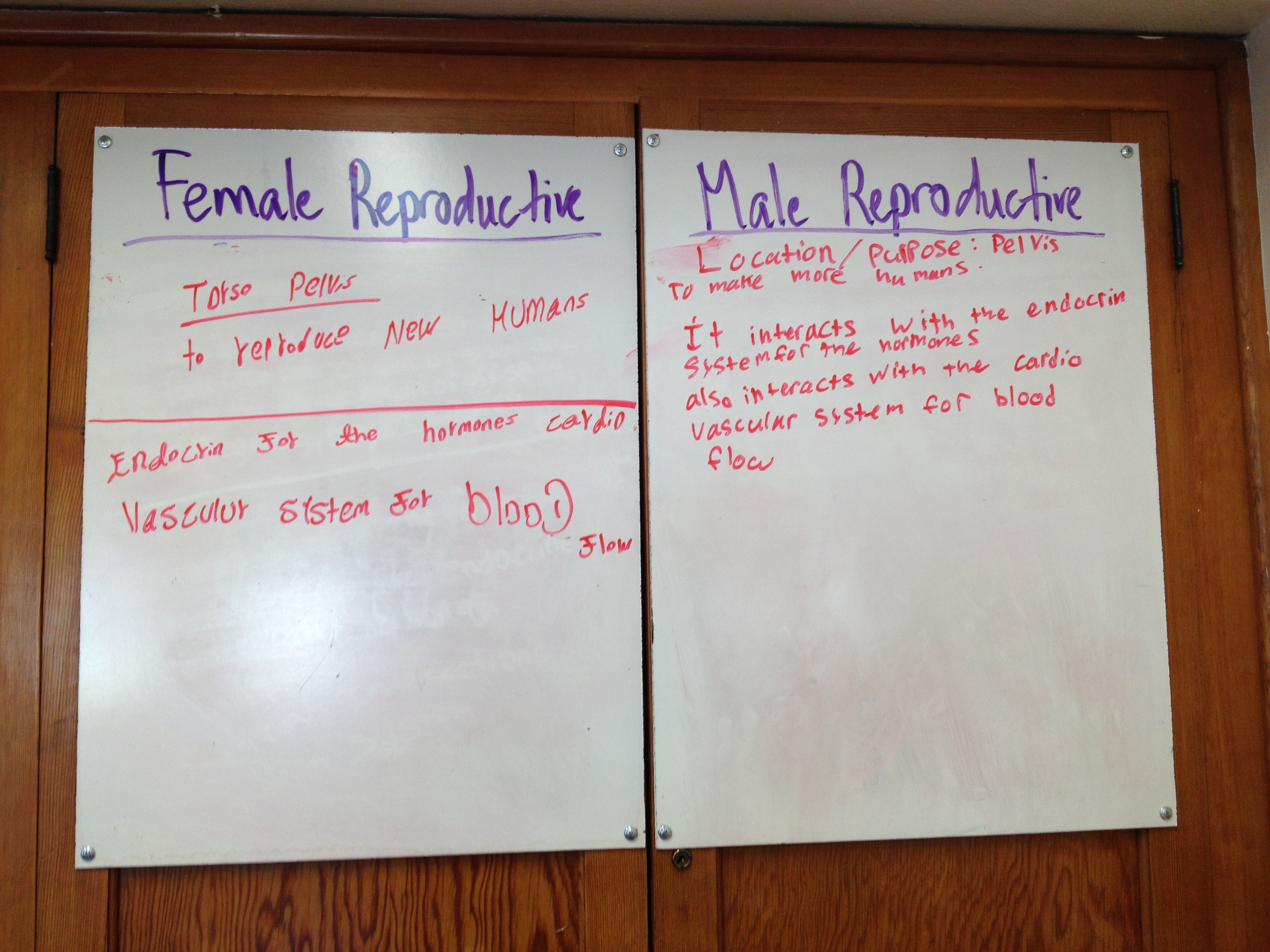
Today we reviewed Josh’s Story and then moved into a brief review of the 12 body systems. Table groups were assigned 1-2 systems and researched the systems in the class textbook and on the Internet. Students were encouraged to use the website InnerBody.com as a credible resource. Groups summarized their assigned system on a worksheet, including information about the purpose and location of each system, as well as major interactions between the systems. Students then made their learning public by writing it on a whiteboard for the rest of the class to see. Students then had time to write down the research findings of all of the groups and will use the body systems worksheet tomorrow as they try to explain why Josh became sick.
Picture from all of the white board work for each class are posted below. Click on a picture to enlarge it.

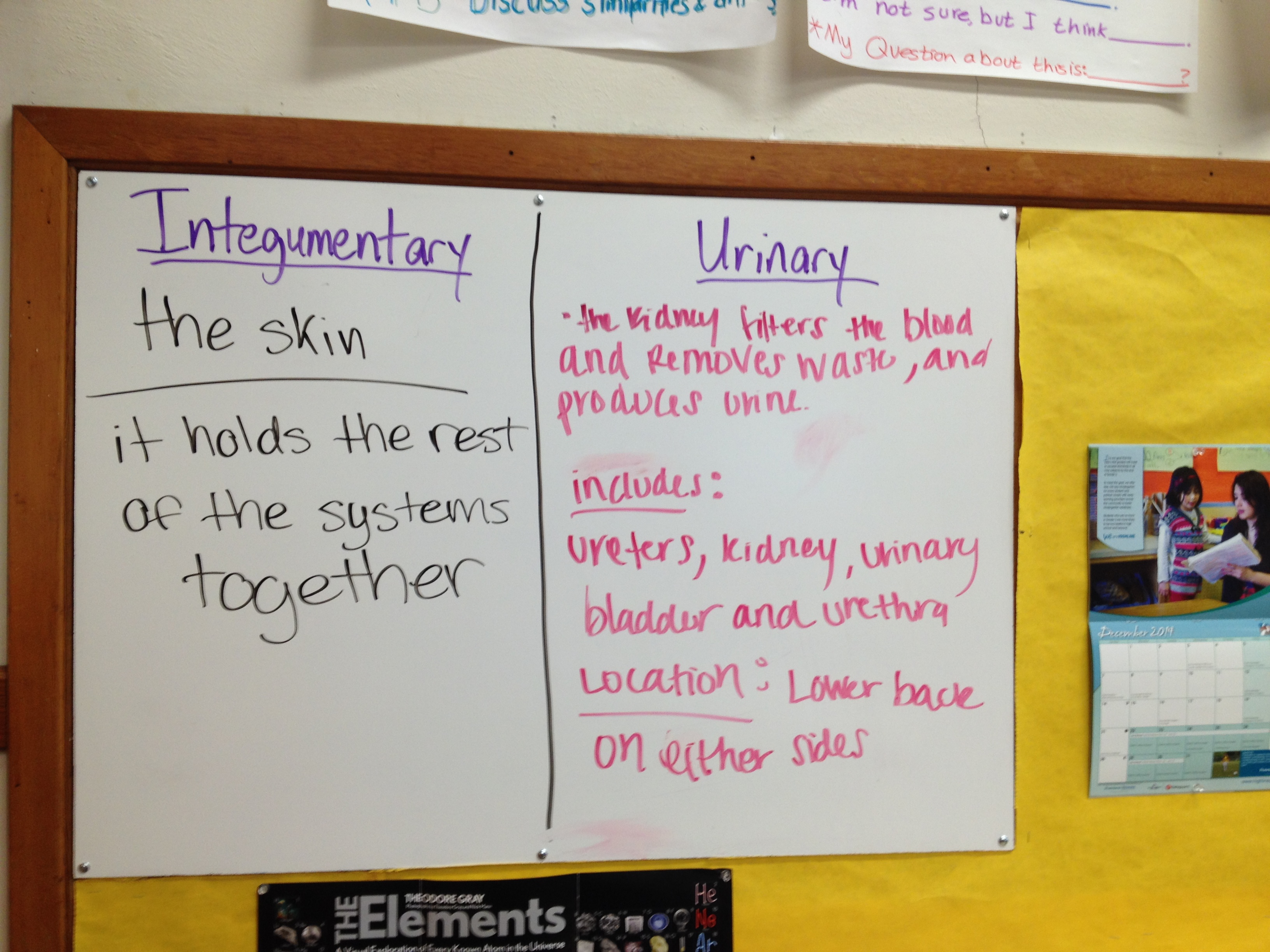
Period 2:
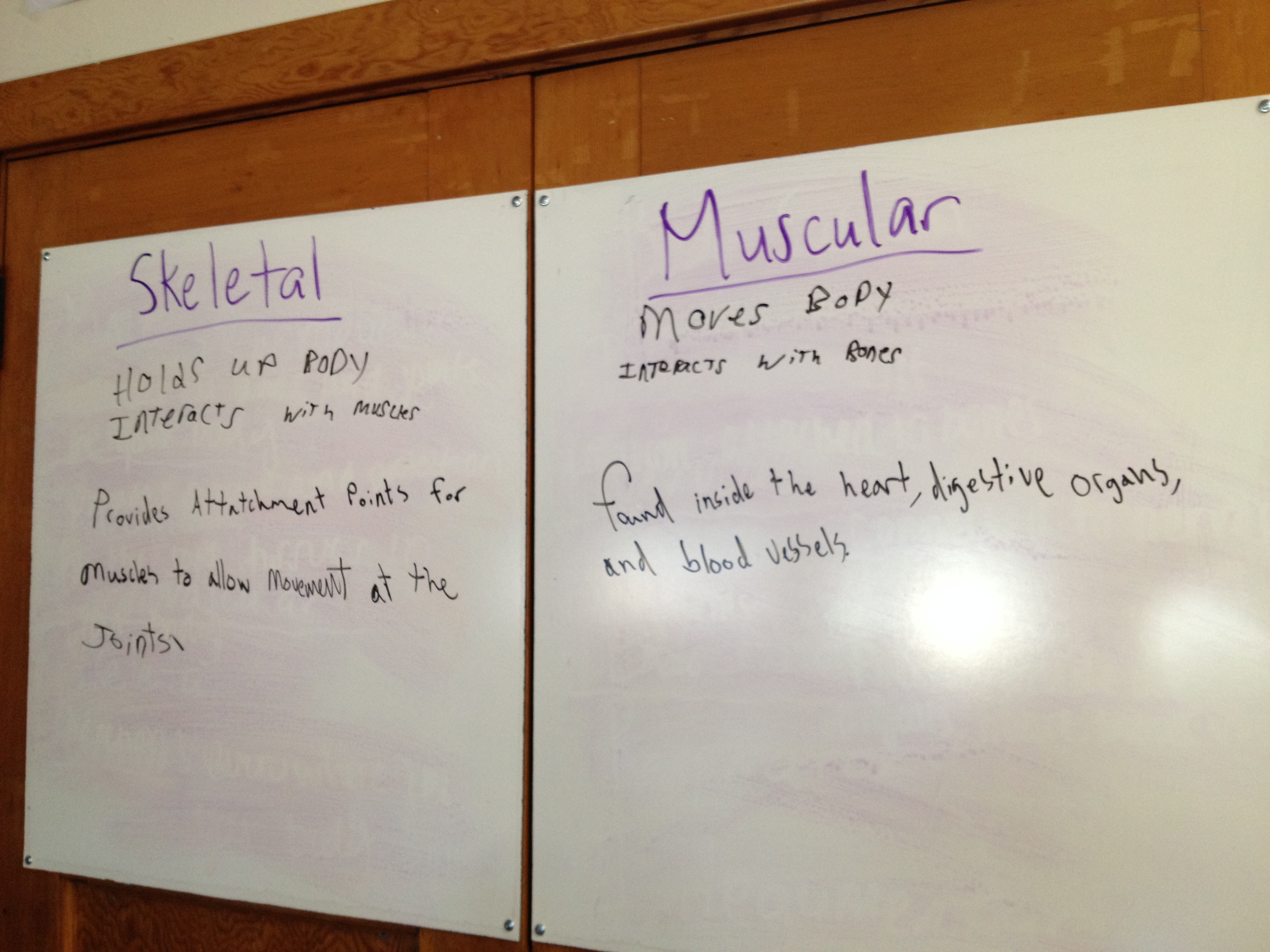
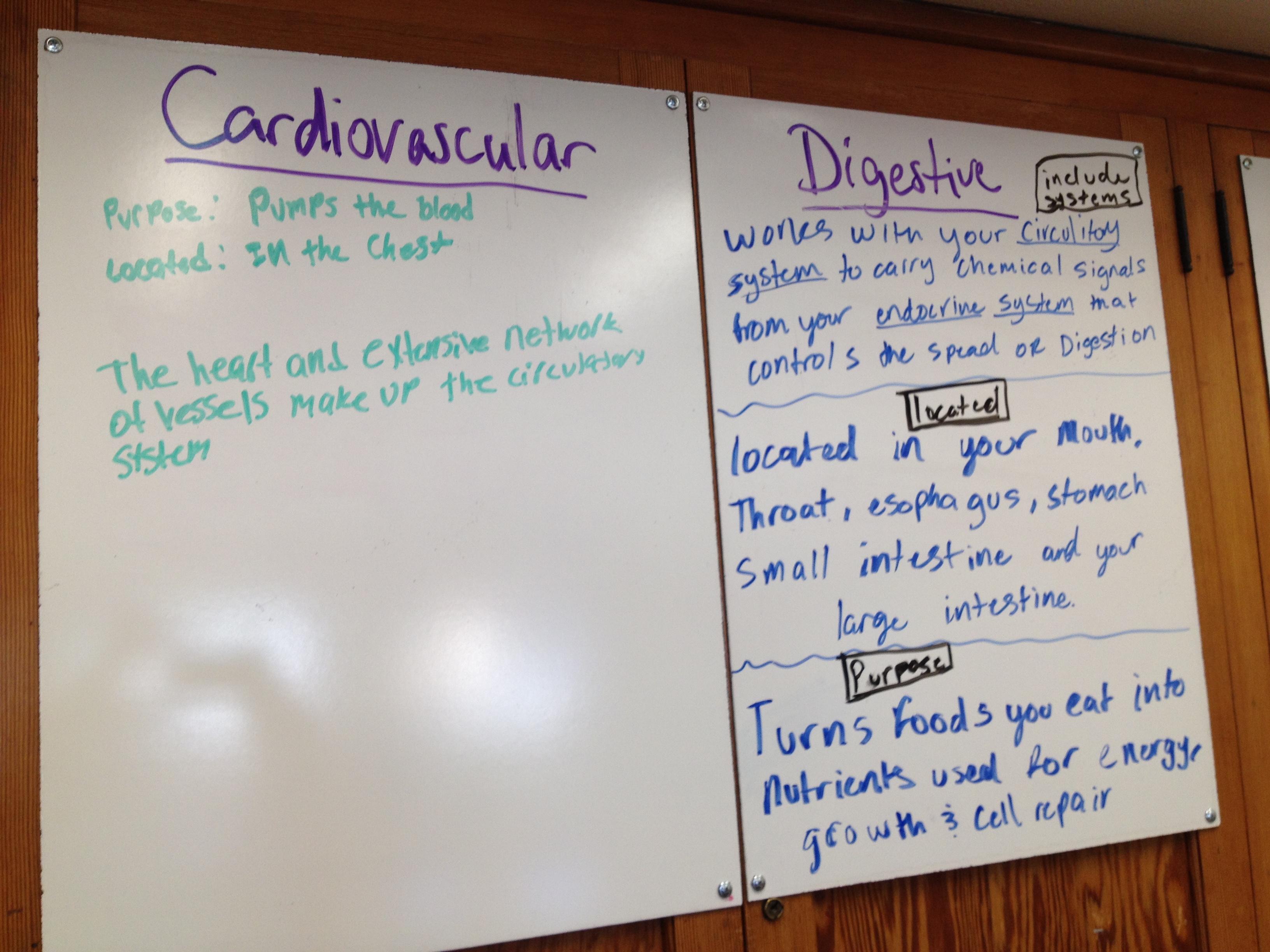

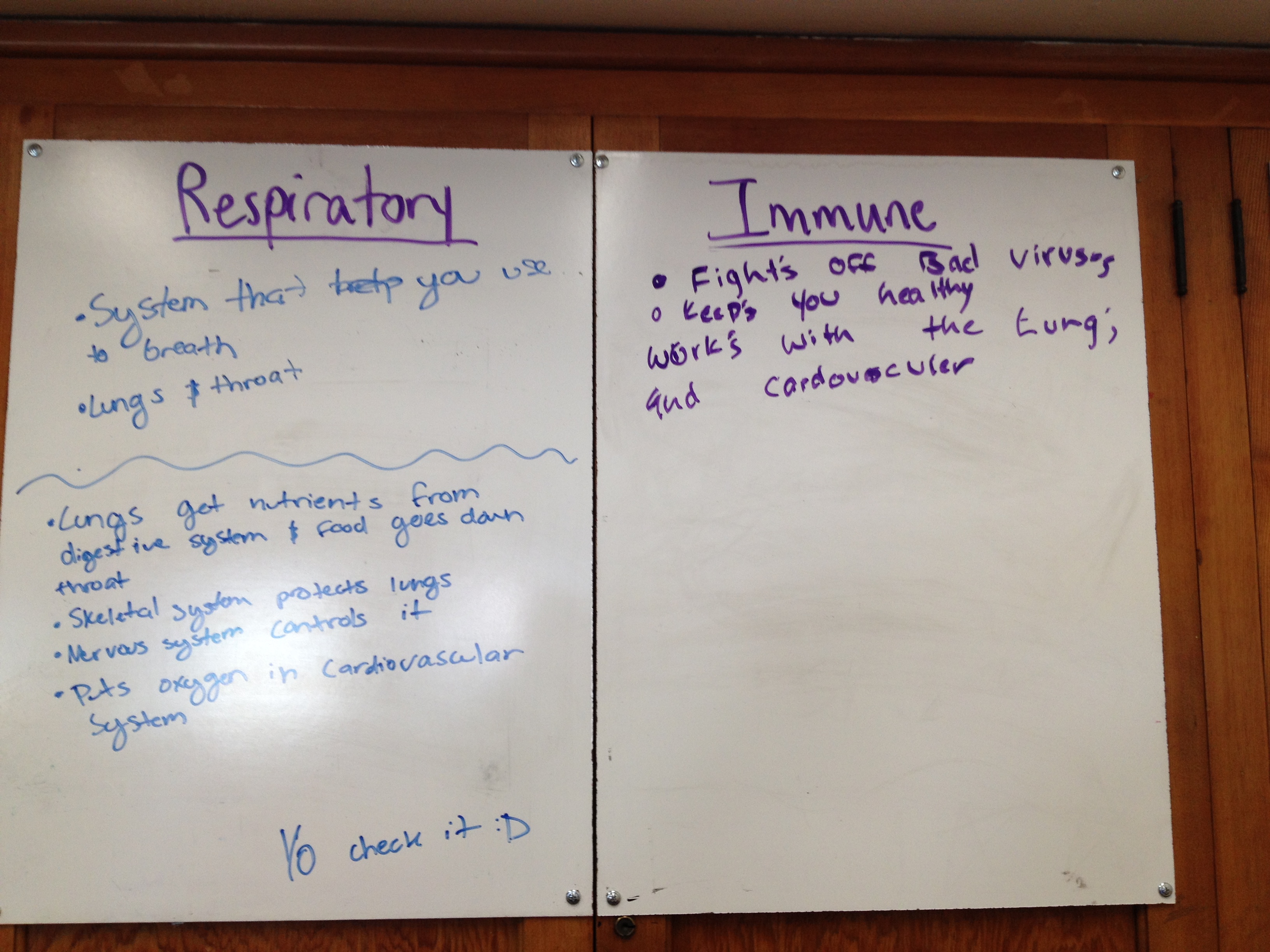
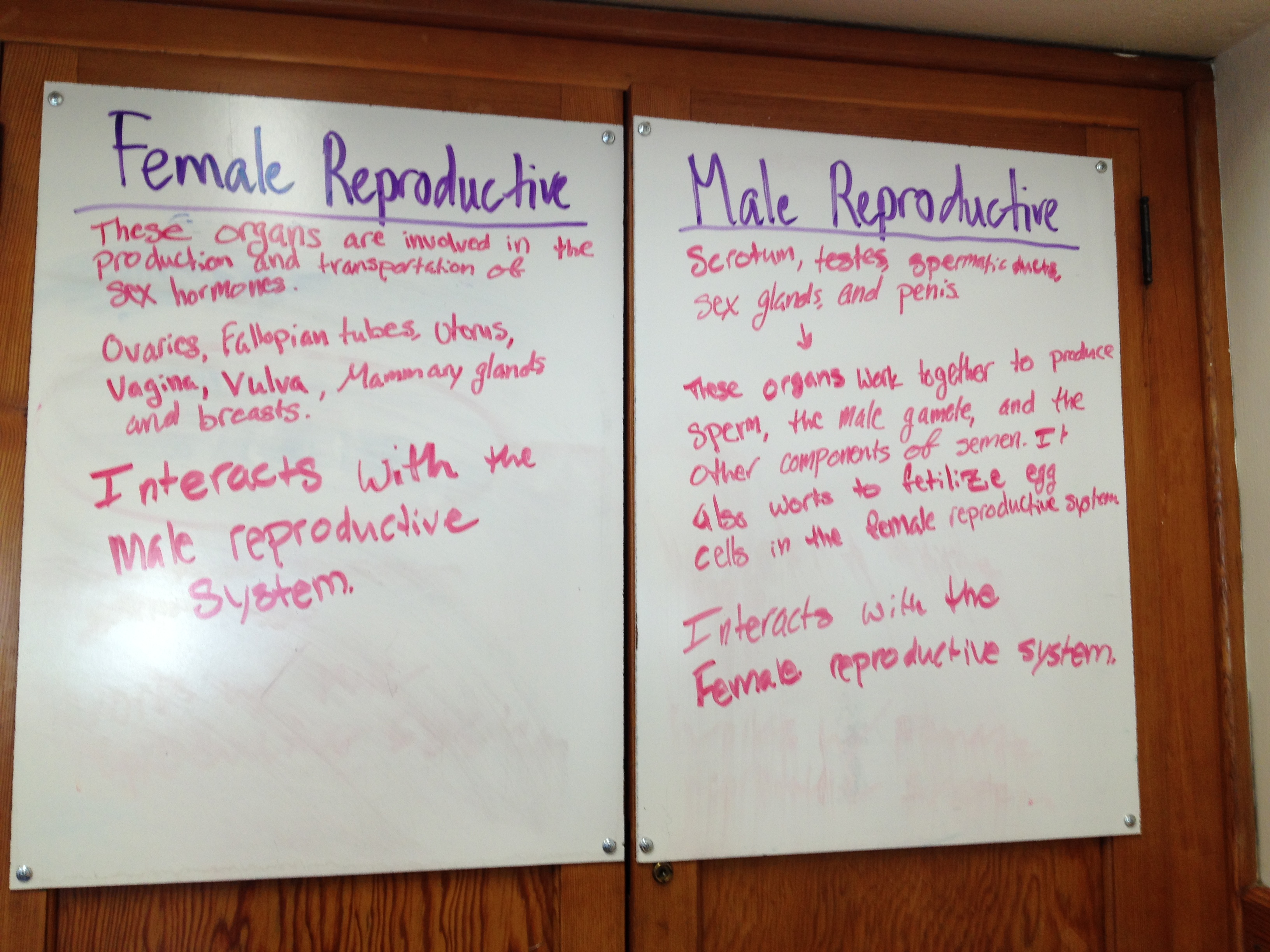
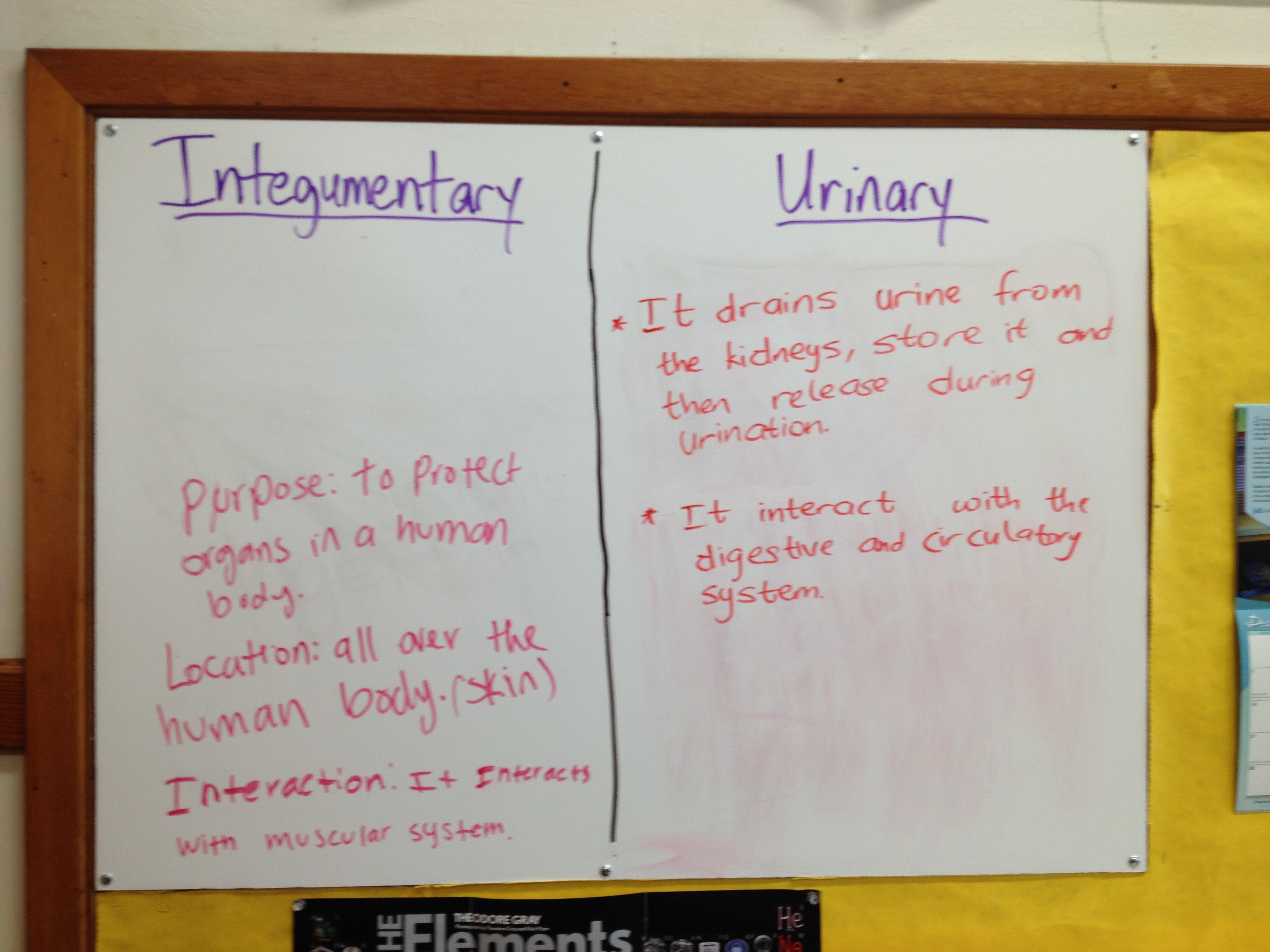
Period 3:
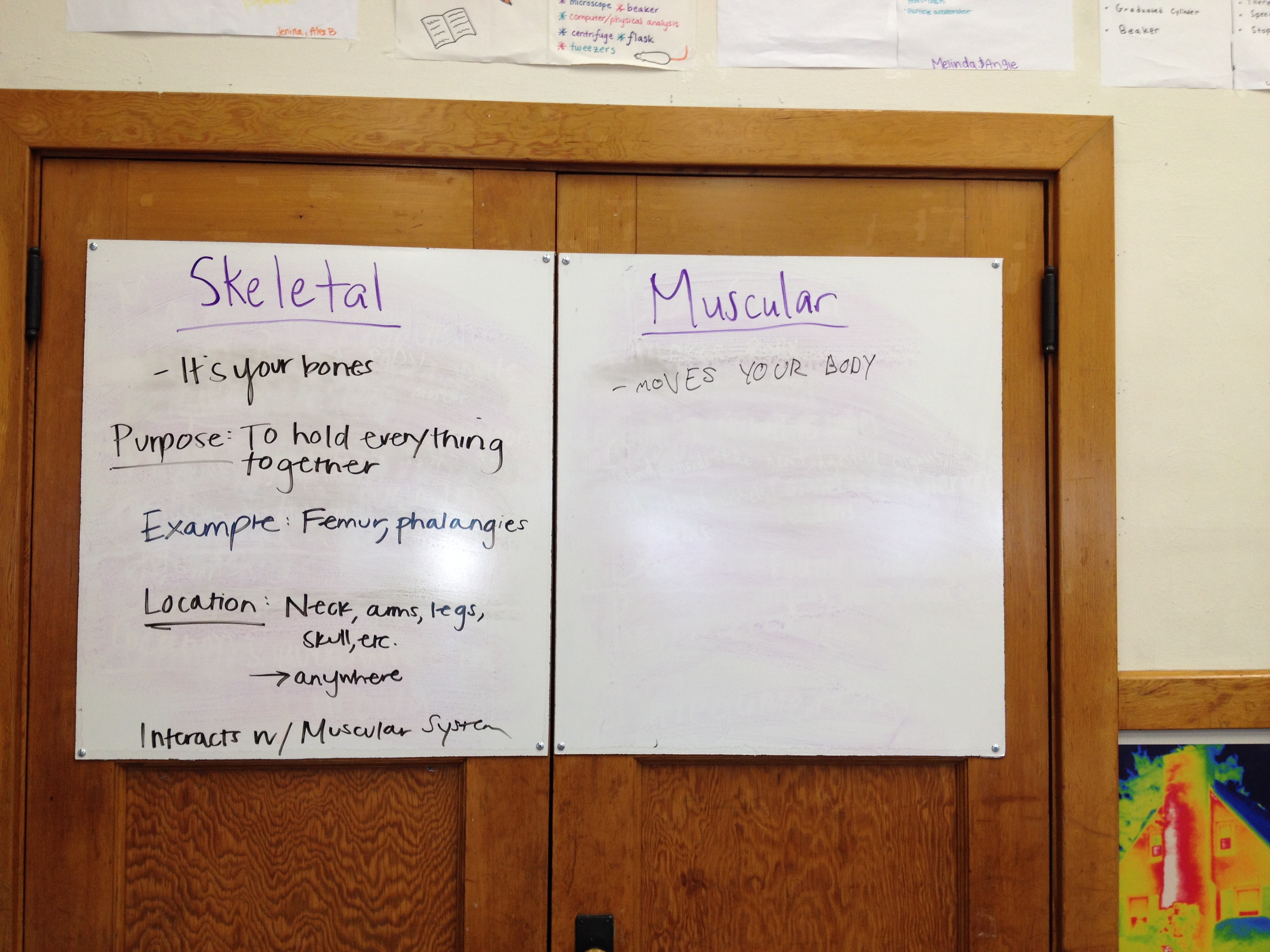
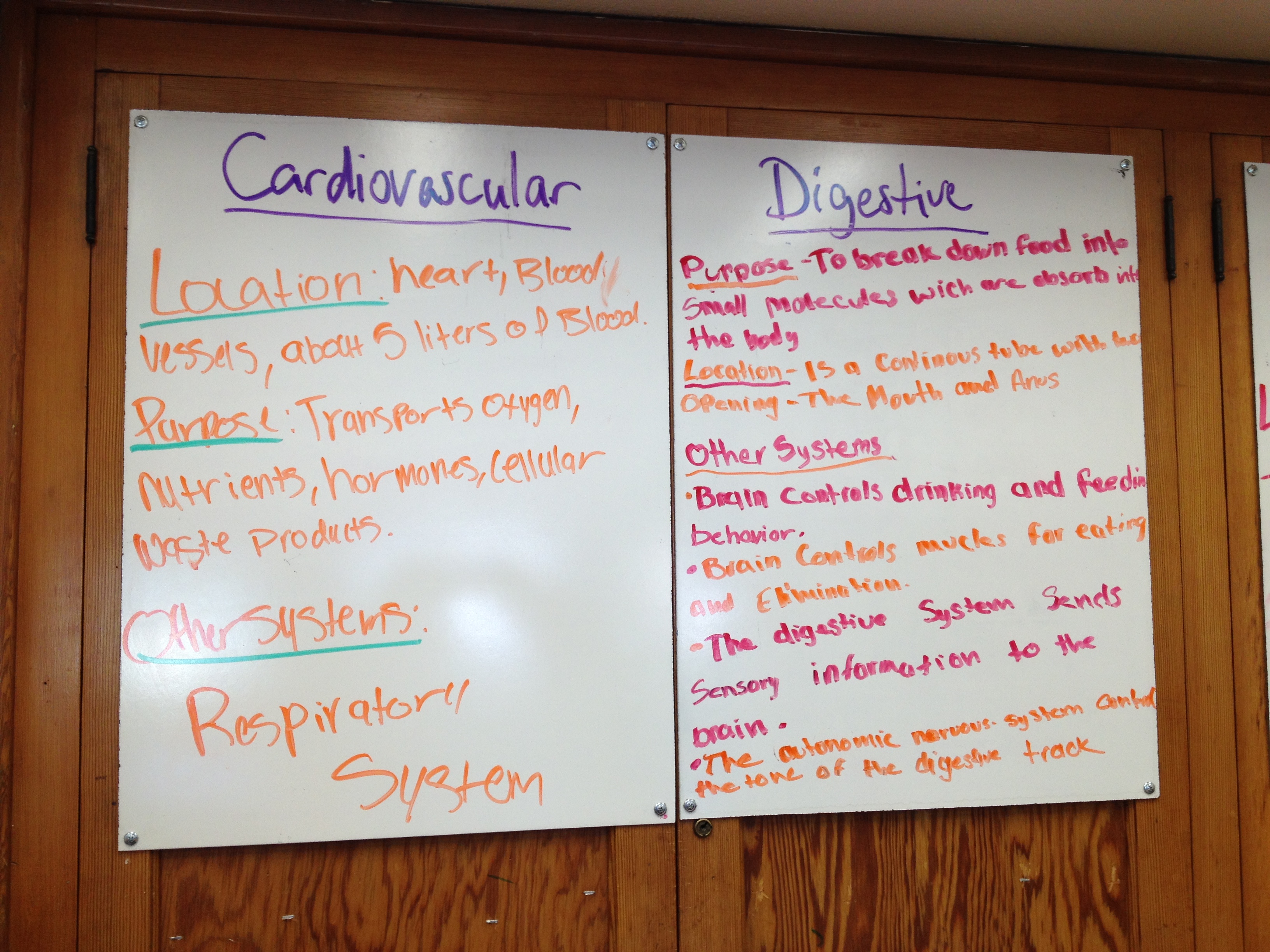
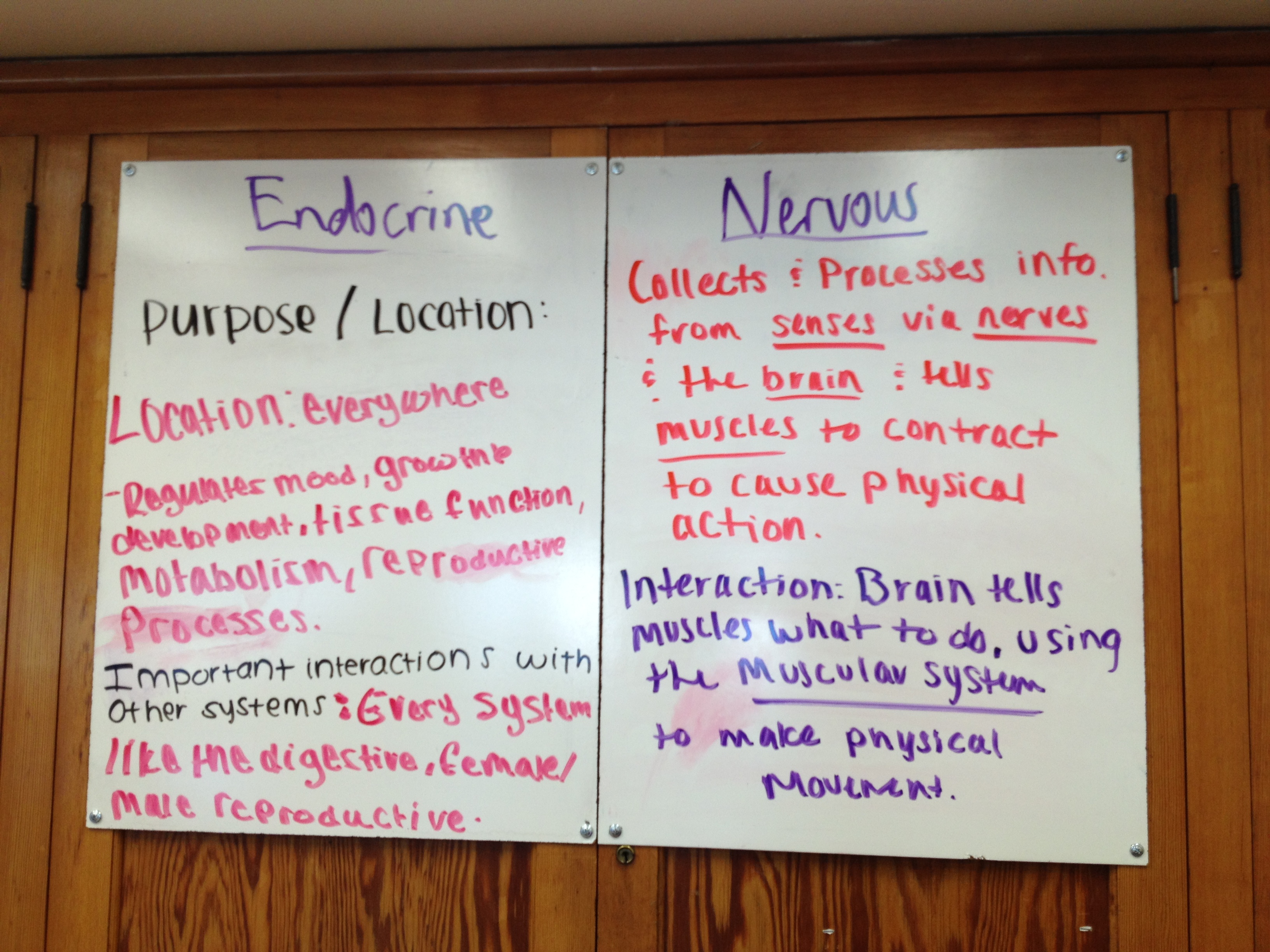
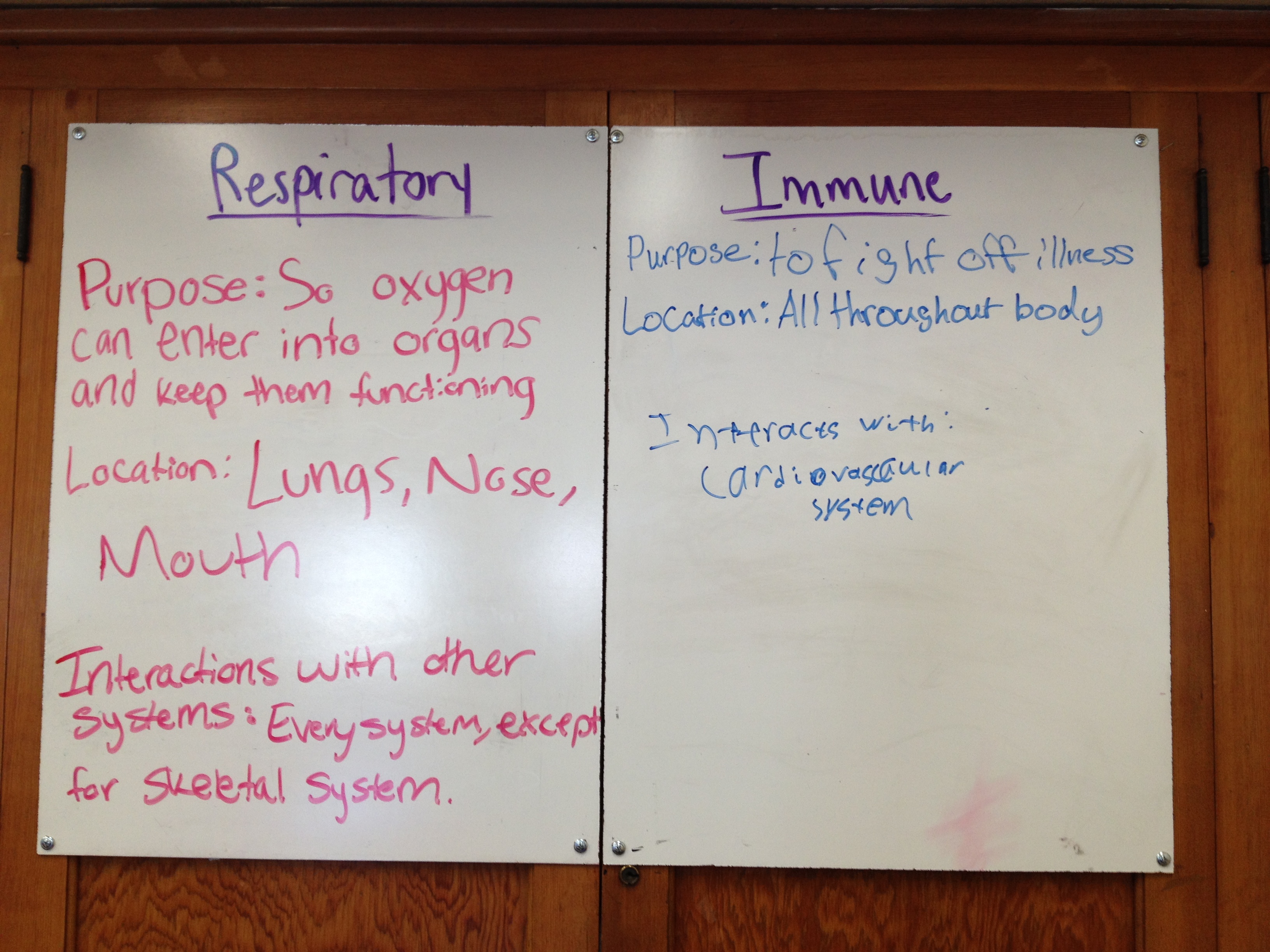
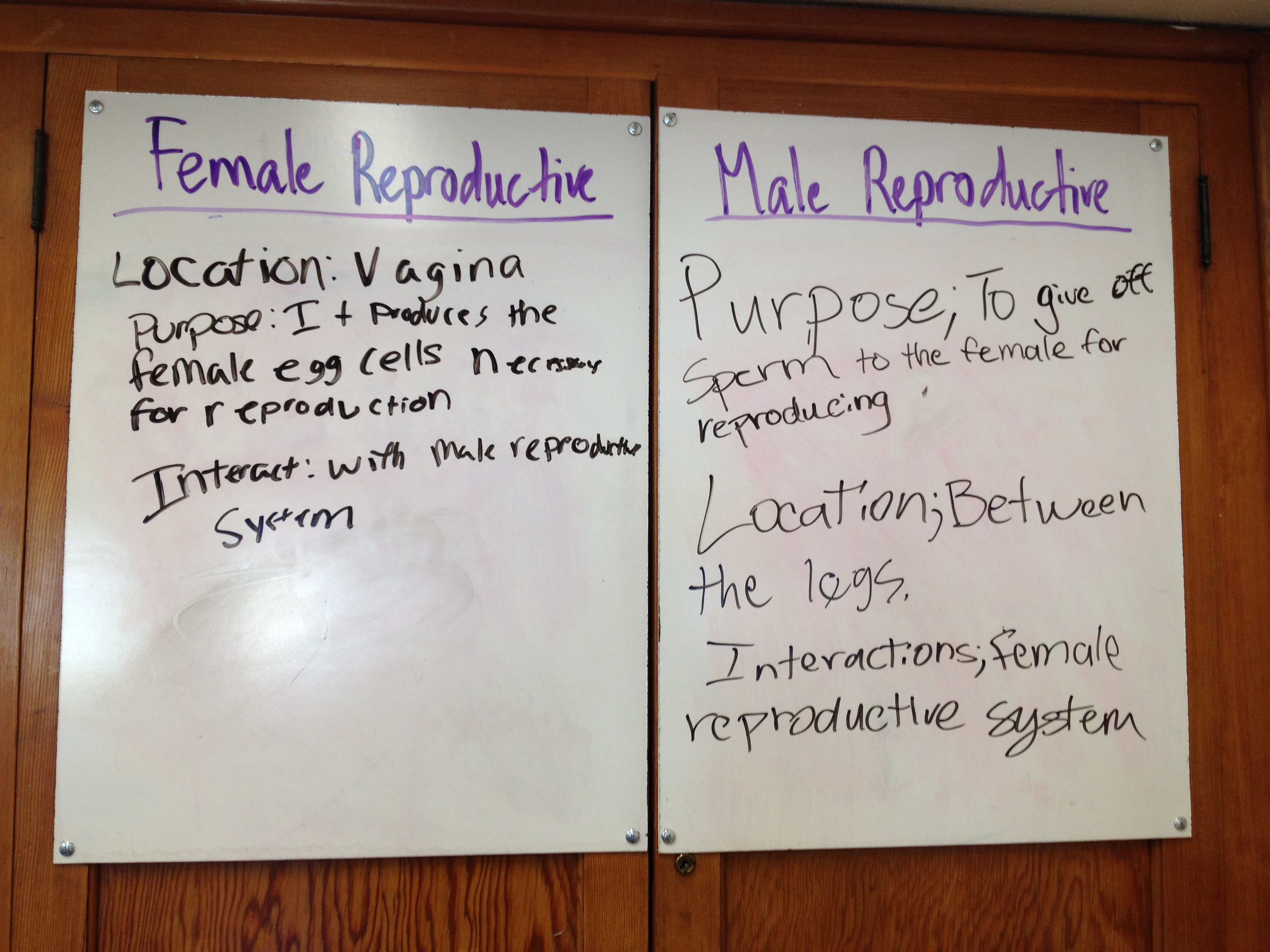

Period 4:
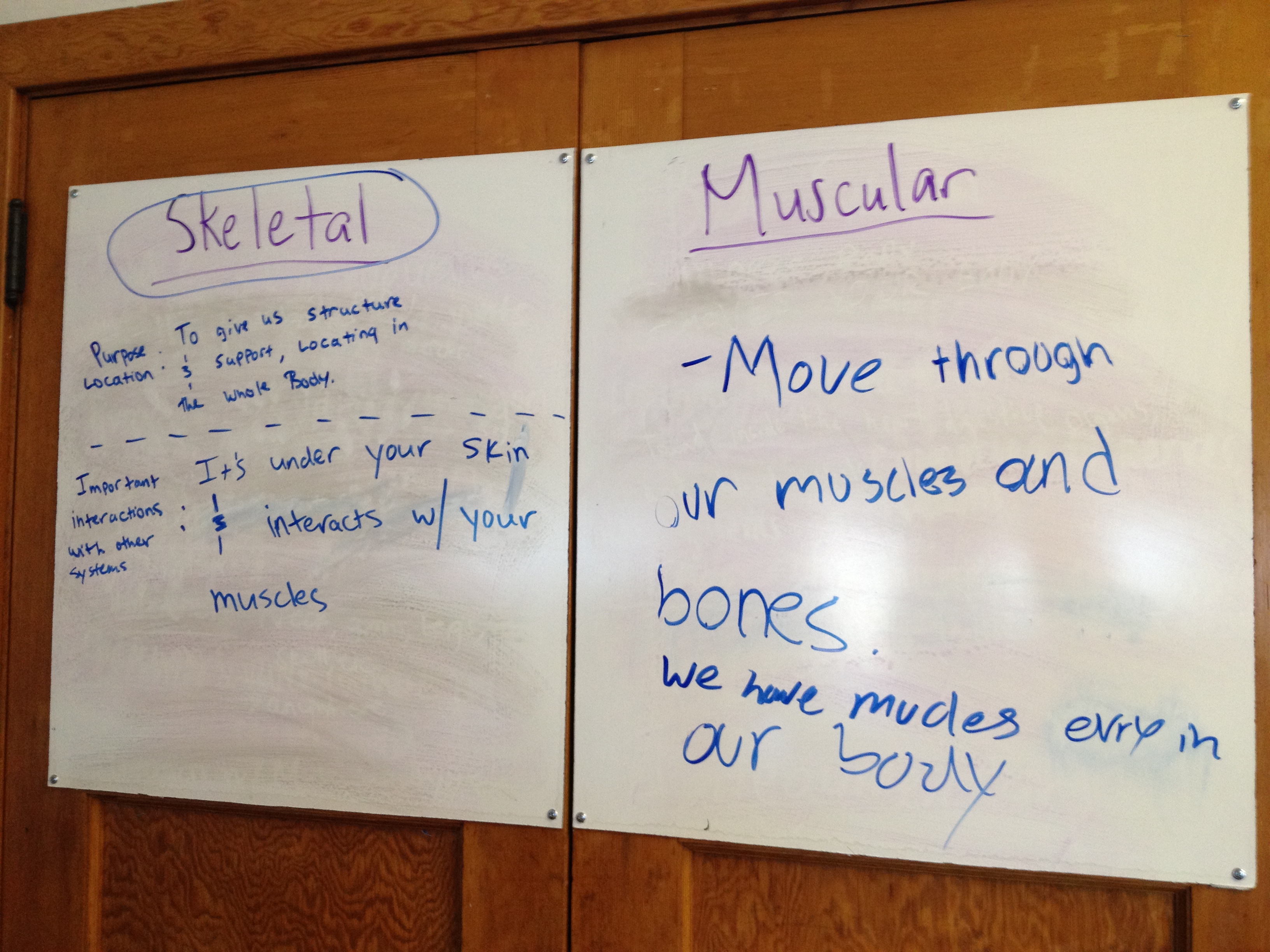
Period 5:

Ecology and Systems Biology: Unit Exam Review
Today we reviewed for the unit exam. We began by connecting the learning from yesterday’s presentation of biospheres with the concepts of unintended consequences and non-native species. As we look ahead to the biology end of course exam, students will have many opportunities to stretch their thinking in ways that will enable them to be successful on the EOC. The concept of unintended consequences is part of the EOC and was previously introduced on a reading about the reintroduction of wolves into Yellowstone National Park. Today, students were asked to consider the unintended consequences of introducing non-native species into an ecosystem, and we followed that up with a short video. The video (below) features images about the wolves and other organisms in Yellowstone, with George Monbiot narrating. The narration is actually a segment from a longer TED talk by Mr. Monbiot.
After the video, students spent the remainder of the class period studying hard for the Unit 2 exam tomorrow. The slide deck of study questions is attached. Students were reminded that they are permitted to use their lab notebooks and work folders on the exam. Cell phones, talking with other students, and cheating are not permitted and will result in a score of zero. Students will be seated per the PSAT seating guidelines, with backpacks against the front wall and students seated as they enter. I reserve the right to arrange seating as required to ensure all students have the opportunity to express their own thinking on the exam without disruption.
Ecology and Systems Biology: Biospheres
Yesterday, Nick from King County Solid Waste joined us as a guest speaker. Nick brought biospheres, fully-enclosed glass spheres filled with water (and a little air). In the water were tiny shrimp, bacteria, algae, rocks, coral, and the occasional shell. Nick explained that the organisms in the biosphere have been alive for a few years now, and the biotic and abiotic factors present within the sphere, along with sunlight, are all the factors needed to keep the organisms thriving. He explained how matter circulates within the biosphere, and then asked students to contrast a biosphere with our planet. Students then participated in a sorting activity where they learned which items can be reused, recycled, composted, thrown away, or perhaps should not be purchased in the first place. The biospheres provided an excellent way to visualize the concept that the amount of matter in an ecosystem does not change, although the form that matter takes does change.
Biospheres, or ecospheres, are available for purchase, including online through Amazon.com.
Ecology and Systems Biology: Why the GSL is salty
Curious why the Great Salt Lake is so salty? Check out this video clip from the Travel Channel show Off Limits (starting at about 1:30). http://www.travelchannel.com/video/the-sea-salt-of-utah
Ecology and Systems Biology: Initial Model Revision
Today students revised their initial models of the Great Salt Lake, integrating learning about the trophic pyramid, energy flow, carrying capacity, and limiting factors.
Ecology and Systems Biology: Catch-up Day
With the career fair this morning, classes were only 35 minutes long. We decided to spend the time catching up on unfinished assignments and checking grades in Illuminate. Several students made substantial gains and I strongly encourage all of my students to make every effort to stay caught up on homework and turn in assignments on time. Our unit exam is scheduled for next Wednesday, and first quarter ends next Friday.
Ecology and Systems Biology: Summary Table
In anticipation of the career fair tomorrow, students spent the first half of class comparing the US economy to what they have learned about ecosystems. After five minutes of private think/write time, students worked in row groups (with the students seated in their row) to share their ideas and then represent them on their row’s white board. Students were pressed to consider how education fits within the larger economic system. We discussed the idea that education can be compared with the sun, as it adds energy (ideas and qualified workers) into the system. For the second half of class, students worked with their row groups to fill out a summary table for the current unit. Each row worked on one of four sections of the summary table, after which students compared their work the completed answer key. The summary table will be a useful study tool for the unit exam scheduled for next Wednesday.
Ecology and Systems Biology: Structured Talk
Last Thursday, my 4th period students participated in Studio Day. The lesson involved using structured talk to discuss student predictions around population modeling of organisms in the Great Salt Lake. Today, I taught the first day of that lesson to my 1st, 2nd, 3rd, and 5th period students. My 4th period students continued the lesson from last Thursday, using mathematical modeling and knowledge of biomass and energy transfer to determine the number of organisms in each trophic level present in an area of the Great Salt Lake.
Updated: On Tuesday, my 1st, 2nd, 3rd, and 5th period students continued the lesson be started yesterday. We returned to the halobacteria growth curves and calculated the amount of biomass available to the primary consumers (the brine shrimp). Students learned that there were only enough halobacteria to support 2 brine shrimp, which is not enough energy to support an Avocet (secondary consumer) or a Northern Harrier (tertiary consumer). Students completed the modeling activity and explained their population curves using the science concepts we have learned this unit, focusing on biomass, limiting factors, and carrying capacity. My 4th period students read about the ecosystem of Yellowstone National Park following the reintroduction of wolves back in 1995.
Ecology and Systems Biology: Matter
After reviewing student work, one area that we clearly needed to spend some time revisiting was the concept of matter. In a system, the amount of matter does not change. Atoms are the fundamental unit of matter. When collections of atoms bond together they create molecules. The key point is that the number of atoms in a system will stay constant, while the bonds between those atoms (the molecules) can change. Stated another way, the amount of matter stays constant but changes form. This conservation of matter concept was introduced to students in 9th grade Integrated Science, and it is important that students understand the concept as they continue in their study of biology. To help visualize the conservation of matter principle, on Friday we watched a segment of the NOVA special “Hunting the Elements” beginning at 47:47 and continuing through the end of class. The explosions during the first segment of the video were accompanied by explanations of the rearrangement of atoms and release of energy, and students took notes to ensure understanding of the conservation of matter. Next, students learned about CHNOPS, the 6 main elements found within the human body (Carbon, Hydrogen, Nitrogen, Oxygen, Phosphorus, and Sulfur). Students recorded the percentage of each element and learned to calculate the percentage of elements reported an pounds. Depending on time, some classes were able to watch the next segment on trace elements, while others finished with the segment on bacteria living in Yellowstone National Park. The complete video can we seen below or on Netflix.
 Science with Swart
You must be logged in to post a comment.