
We extended our learning about ions to the study of ionic compounds, reviewing the Lesson 20 PowerPoint which included the vocabulary terms of cation and anion and learning about how different numbers of anions and cations combine by following the Rule of Zero Charge. Students worked on the Lesson 20 Worksheet and for homework should complete Lesson 20 textbook questions #1-7 and read Lesson 21 in the textbook.
All posts by David Swart
Cell Membranes
After a week of re-learning cell organelles and observing cells under the microscope, today students learned about how the cell membrane works. The primary focus of the lesson was to provide students with the vocabulary to explain the concepts of osmosis and transport of water across the membrane via the membrane protein channel aquaporin. Students should review the Membrane Functions PowerPoint slide deck and commit the vocabulary terms to memory. The aquaporin claymation video included in the slide deck is also provided below for easy access:
Ions
With the short class period, lesson 19 was distilled down to the key vocabulary words:
Ion: An atom (or group of atoms) that has a positive or negative charge because it has lost or gained electrons.
Cation: An ion with a net positive charge. Usually these are formed from metal atoms.
Anion: An ion with a net negative charge. Usually these are formed from nonmetal atoms.
We referred back to the Flame Test lab as practice using the new vocabulary terms. For example, the compound sodium chloride, NaCl, consists of a cation (Na+) and an anio (Cl-). Students then have the remainder of the class period to complete the practice problems in the textbook (homework on page 97, questions 1-16).
Cell Organelle Network
Our study of cell organelles intersected with our previous unit’s work with drawing systems when students were tasked with constructing a network diagram with cell organelles as nodes. For edges, students had to explain how two organelles interacted with each other. For full credit, pairs of students had to include all of the nodes in the network, with each organelle (node) connected to another organelle via at least one edge. The list of organelles came from the organelle flash cards students made on September 27. Students were able to use their flash cards, the Inside the Cell book (available via the computer), the Cell Structures Gizmo (from September 28), or they could research online as long as the resources they were using to construct their network were scientifically credible.
The picture below represents how the activity was set up, with three edges provided to all students at the launch of the activity.

Microscope Observations
Class began with a brief entry task asking students to recall the parts of the microscope. Students learned (or re-learned from 8th grade) the parts of the microscope in the Gizmo from yesterday.
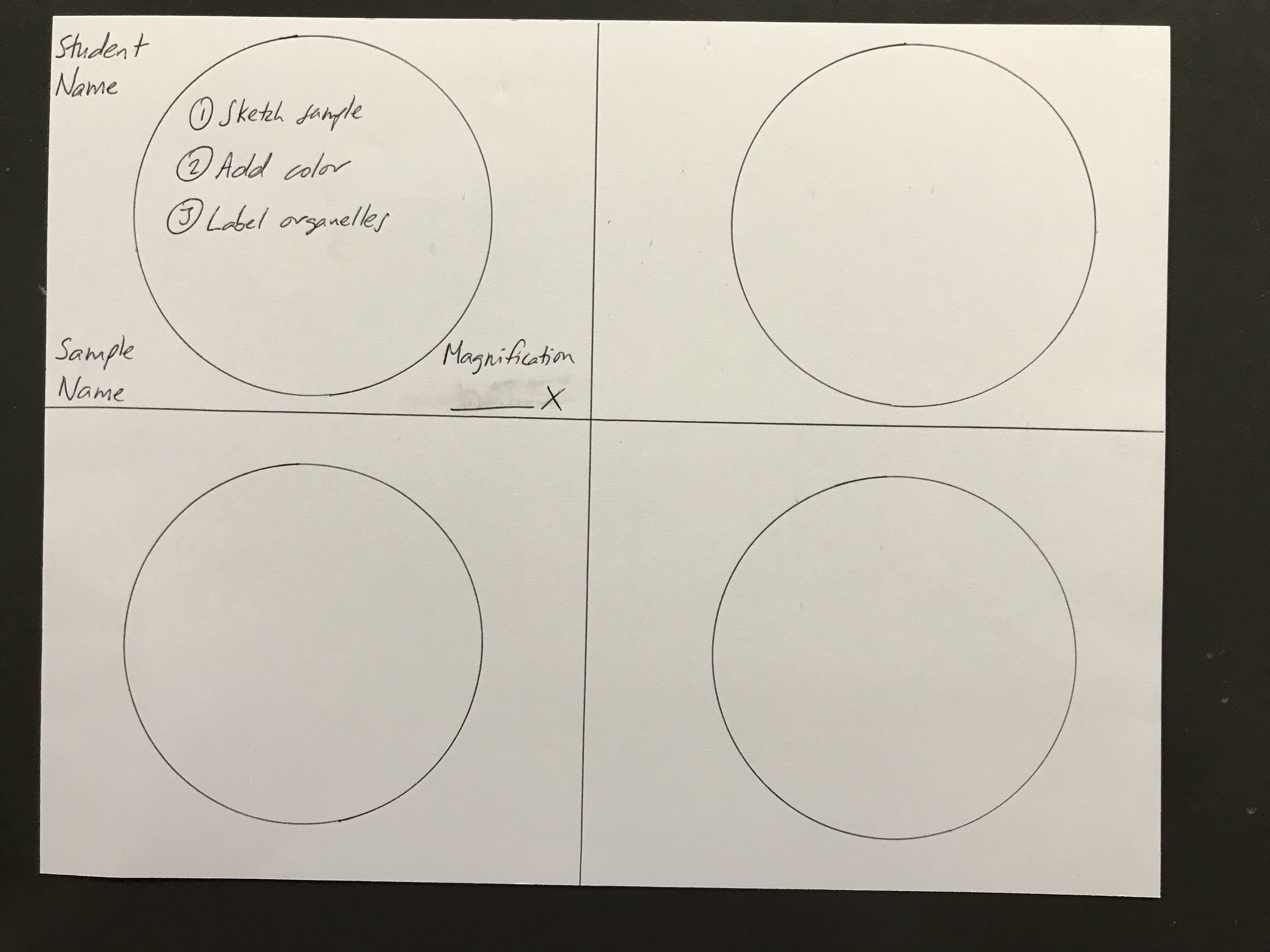
Next, for our first lab of Unit 1, students observed and made observations about various sections of plant and animal tissues under the microscope. Participation credit was received for students who sketched a sample, added color to the section drawn, and who labeled the visible organelles contained in a representative cell within the section. Students also needed to write down the name of the sample they observed and the magnification at which the observation was made.
Students were provided with the template below to organize the work of the members in their group. Each team member was responsible for filling in at least one quadrant of the paper. The work was due at the end of class and credit was received by students who completed the assignment as described above.
Valence and Core Electrons / Pre-lab
In preparation for the Flame Lab tomorrow, students received the handout for the lab and were given the first 15 minutes of class to read the lab and begin working through the pre-lab questions (due tomorrow). After, we worked through the Lesson 18 PowerPoint and then students partnered up to complete the Lesson 18 Worksheet and the Table of Valence and Core Electrons.. For homework, students should work through questions #1-10 at the end of Lesson 18 in the textbook in addition to completing the Flame Test pre-lab questions.
Review of Chapters 1-3
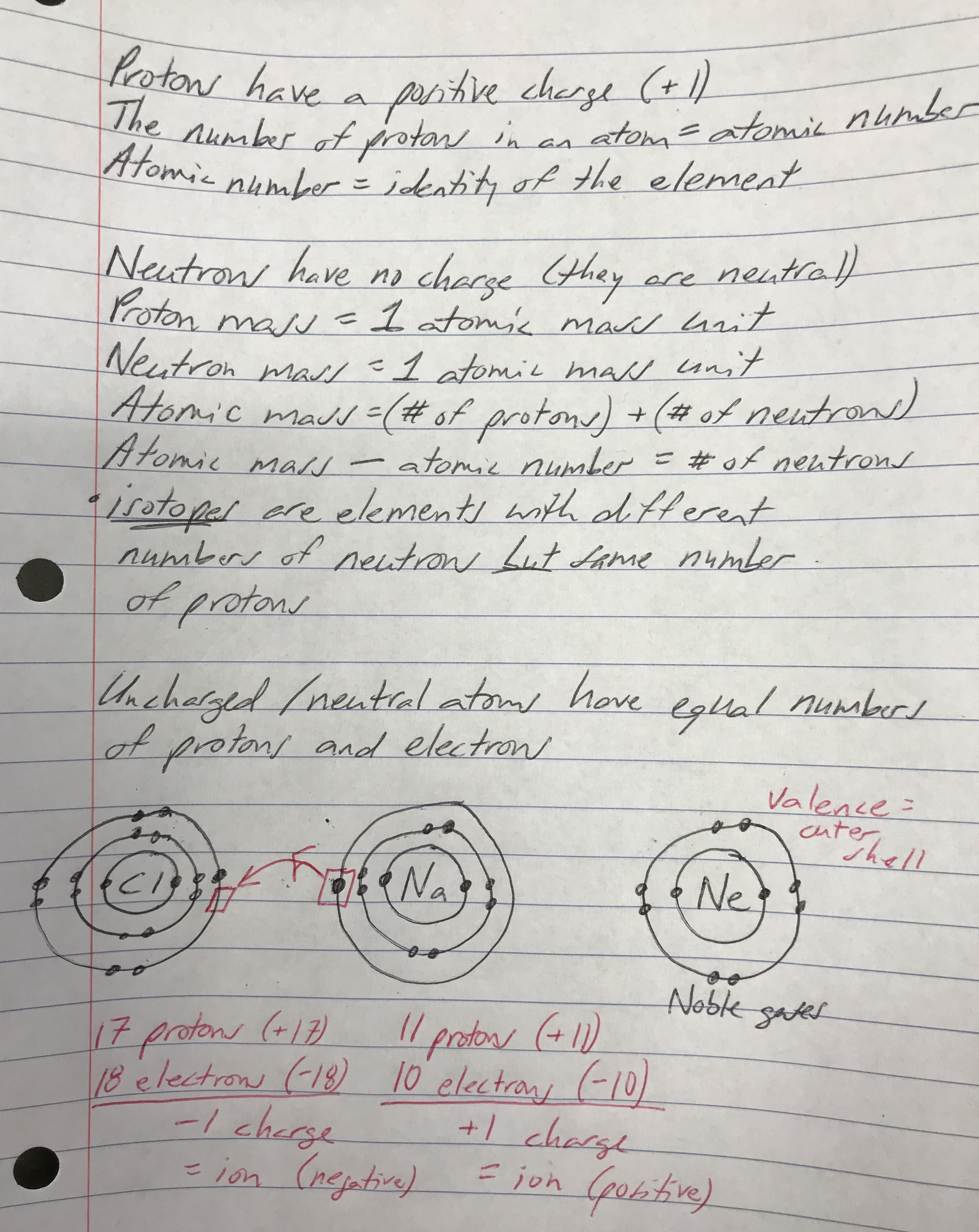
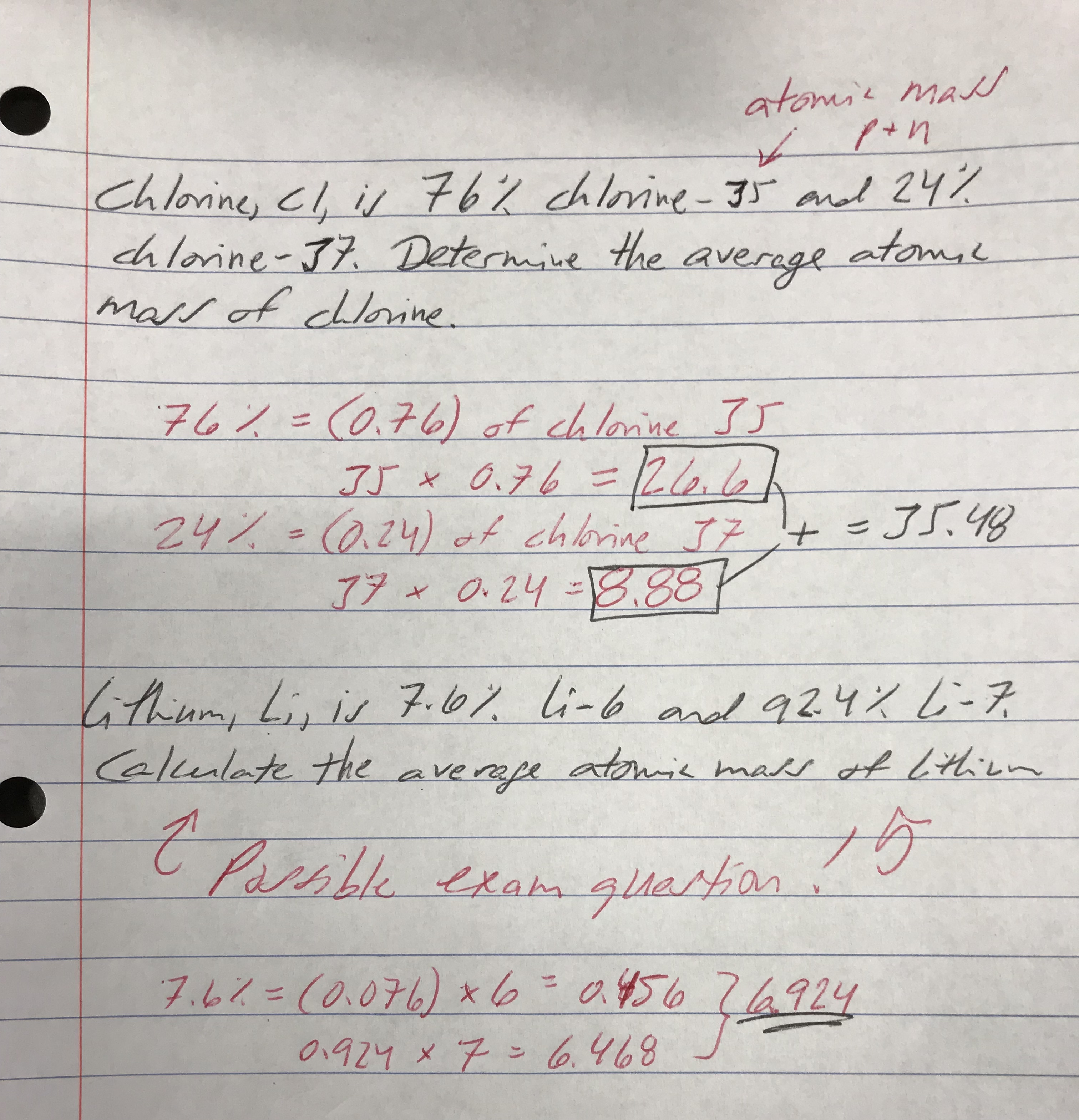
In preparation for our quiz tomorrow, we reviewed the key learnings from chapters 1-3 in our textbook. Class notes are provided below:
Cell Structures Gizmo
For today’s Gizmo activity, complete the following steps:
- Go to the Explore Learning website.
- Click the Login/Enroll button (upper right).
- Enter the class code (written on the white board).
- Click the Enroll in Class button.
- Choose “I need to create…” option.
- Enter your First and Last name (not email!)
- Use your student numer (s-#######) as your username.
- Enter birthdate as password (MMDDYYYY)
- Click “Submit”
- Launch the Cell Structure Gizmo
- Complete the Student Exploration worksheet
Atomic Number and Mass
Lesson 12 from the textbook was introduced with a brief review of atomic number and atomic mass. Key learnings:
- Atomic number = # of protons in one atom of a given element
- Protons have a positive charge
- Electrons have a negative charge
- Neutral atoms have equal numbers of protons and electrons
- Atomic mass = (# of protons) + (# of neutrons) in one atom of a given element
- Neutrons have no charge
Students then worked in pairs to complete the Lesson 12 Worksheet. For homework, students were assigned Lesson 12 textbook questions 1-7 (page 60).
All students also received a copy of their progress report. Students should make every effort to catch up on missing work this weekend and take notes on chapters 1-3 in preparation for the quiz on Tuesday.
Families of Elements
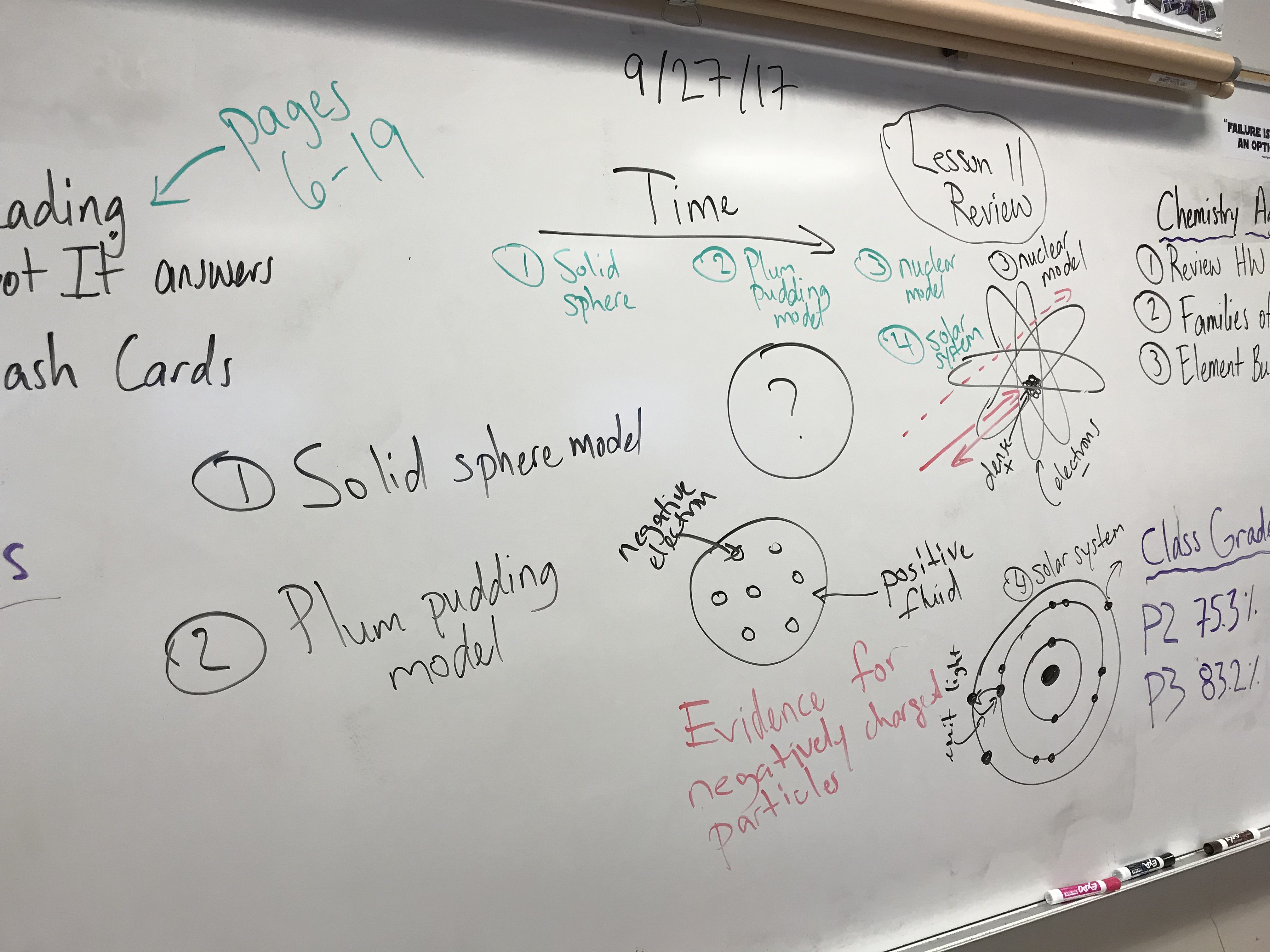
We decided to take a step back from the chemistry textbook treadmill today. After a brief review of the Lesson 11 worksheet to help address some confusion students had about how to approach their work yesterday (whiteboard notes shown below), students assembled into groups of four to tackle the “Families of Elements” activity. For their work, students divided up the reading for the activity, with each student responding to two of the questions in the accompanying worksheet. After sharing answers as a group, students applied their enhanced understanding of the periodic table to a card sort activity. Students grouped various attributes attributable to specific columns or sections of the periodic table, further reinforcing the key ideas we have learned thus far.
 Science with Swart
You must be logged in to post a comment.