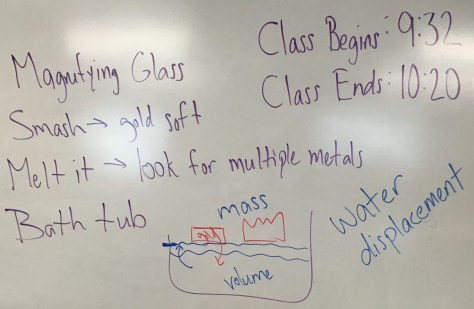
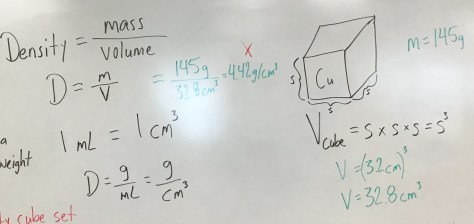
Our work today uses the concepts of mass and volume from lesson 4 and connects them into a formula used to describe a physical property of matter: density. We can calculate density using the equation density = mass / volume. Students should come away with an understanding of what density is and how it can be used to provide evidence in support of the identity of a substance. Students should also recognize the limitations of density in making such a determination.
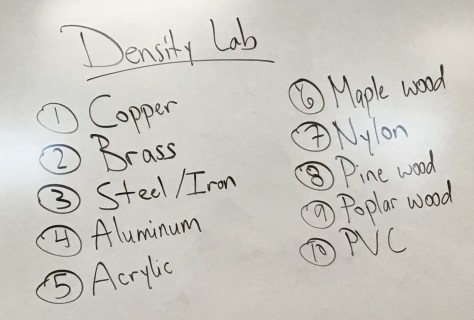
We will begin the lesson with the ChemCatalyst from the Lesson 05 PowerPoint. Students will learn the difference between intrinsic and extrinsic properties of matter, and then they will work with their element groups to calculate the density of a variety of different materials using both rulers and water displacement to measure volume.
Students who finish early may complete the mass and volume Gizmos from yesterday and/or read Lesson 5 from the textbook in preparation for the quiz on Friday covering Lessons 1-5.
Notes from class:
Extend Your Learning!
According to Ptable.com, the density of gold is 19,300 kg/m³. According to your textbook, the density of gold is 19.3 g/cm³. Use dimensional analysis to connect the densities, given that there are 1,000 grams in 1 kilogram (1,000 g = 1 kg) and 1,000,000 cm³ in 1 m³. The video below can help you through the process:
For lesson 4, we will explore the concepts of mass and volume. We will briefly discuss the ChemCatalyst from the Lesson 4 PowerPoint and students will be reintroduced to the metric system. To help reinforce the learning, we will embrace the power that is Pete Hendley:
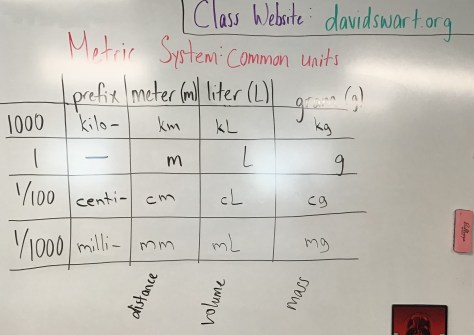
We will discuss common metric system prefixes and learn the difference between milli- (1/1000), centi- (1/100), and kilo- (1000) as applied to the base units of meter, liter, and gram. For the remainder of the lesson, students will work with a partner to complete Activity A for both the Triple Beam Balance and Measuring Volume Gizmos on the Explore Learning website.
Enter the class code (written on the white board).
Click the Enroll in Class button.
Choose “I need to create…” option.
Enter your First and Last name (not email!)
Use your student numer (s-#######) as your username.
Enter birthdate as password (MM/DD/YYYY)
Click “Submit”
Launch the Triple Beam Balance Gizmo
Complete the Student Exploration worksheet
Students who complete Activity A of both Gizmos should continue working on Activity B of the Measuring Volume Gizmo.
Class Notes:
Bonus credit opportunity! Put your triple-beam balance skills to the test and head to Nurse Jessica’s office and measure your weight on the clinic scale. Your data stays private and you earn a bonus point with her verification of you successfully achieving balance.
For lesson 3 today, students will write a response to the ChemCatalyst questions in the Lesson 03 PowerPoint. Students should leave class today able to share the definition of matter, and be able to differentiate between what is and is not matter. To achieve that learning, students will work in groups to complete the Lesson 03 Student Worksheet.
After completing the Lesson 3 Worksheet, students verified access to the digital version of our chemistry textbook:
Students will read through Lessons 3 and 4 with remaining class time or as homework. Note: we have our first quiz this Friday covering textbook lessons 1-5. To help prepare for the quiz, students will receive a copy of the Chapter 1Study Guide.
Keep Learning! Is light a particle or a wave? The TED-Ed talk below will help us answer the question of whether light is matter or not matter. Watch the video and answer the question for yourself: is light a particle or a wave? Use evidence to support your claim!
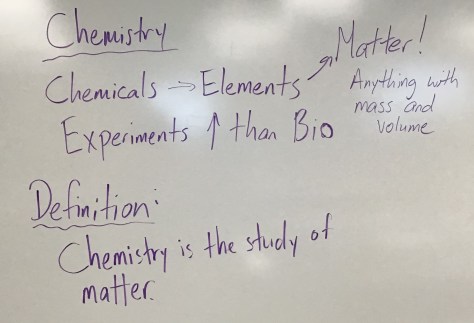
For our third day of class, a rare full-day Friday, we began with the question: What is Chemistry? Students shared what came to mind when they thought of chemistry, and we crafted those ideas into a simple definition: Chemistry is the study of matter.
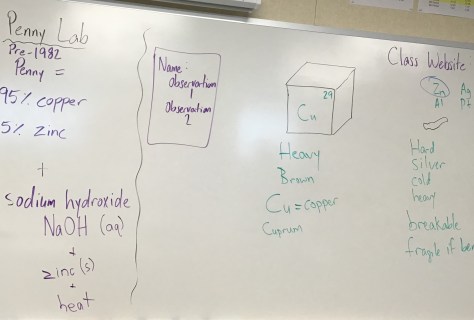
Next, students observed two materials on their lab benches – a block of copper and a beaker with zinc shot. Without being told the identity of either, students wrote down observations about the materials as a team, and then shared out observations as a class in an effort to describe and then deduce the identity of the materials.
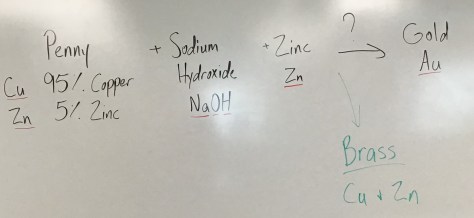
Finally, the class was led through a demonstration of the Penny Lab. Following the steps outlined on page 6 of Lesson 2 of the textbook (A Penny for Your Thoughts), we immersed a pre-1982 penny (95% copper, 5% zinc) in a warm beaker of sodium hydroxide (2 M, about 40 mL) and zinc shot (enough to cover the bottom of a 150 mL beaker). After watching the penny change color to silver, tongs were used to transfer the penny to cool water. The penny was then transferred back to the hot plate (still set to 4) where it changed to a gold-copper color. The penny was placed back in cool water where it completed the transition to having a gold appearance. Throughout the demonstration, students worked the Lesson 2 worksheet. During the longer steps of the demo, students read through Lessons 1 and 2 of the textbook and worked through the Lesson 1 Exercise questions focusing on lab safety.
We concluded the class period with a discussion of what students observed. The discussion generated an impressive number of hypotheses and testable follow-up questions, so we may revisit this as a student-led lab in the near future (once all those safety contracts are turned in!). Students clearly understood that the gold color of the penny was not an indication that the penny had literally turned to gold – the gold color is attributed to increasing the percentage of zinc as part of the penny, which manifests as a gold color after heating the penny to integrate the zinc atoms within the copper atoms of the penny and thus creating brass!
Students who would like to watch the Penny Lab in action should check out the video below:
For our second day of class, students worked in groups to complete a scavenger hunt-type activity in which they had to locate 30 different items within our classroom related to our work this year. The hunt focused on locating safety equipment, important classroom landmarks, and key supplies and consumables. Students drew a floor plan of the classroom and labeled the locations of all identified items from the hunt. Students also received a copy of the Syllabus and Safety Contract and time to read over both before taking them home to get signed. Both documents (signed by the student and a parent/guardian) are due Monday. Students who return both copies signed tomorrow will receive bonus credit.
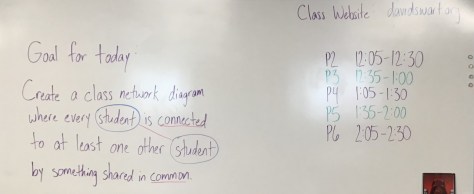
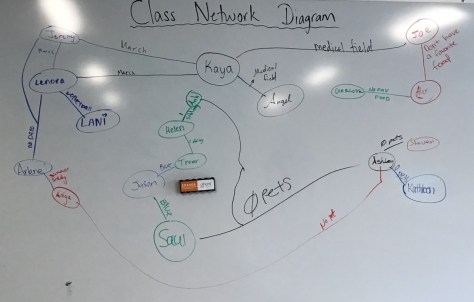
Welcome to Mr. Swart’s chemistry class! We made the most of our 25 minutes of class time together by filling out a Ten Facts About Me survey and then used the data to meet classmates and identify commonalities. Students then constructed a network diagram in which their name was a node (a circle with their name inside) and the commonality shared with another student was represented as an edge (a line) connecting the nodes for both students. The commonality was written on the edge. By the end of class, every student was represented as a node, and all parts of the network were connected to each other through at least one route. We are all connected!
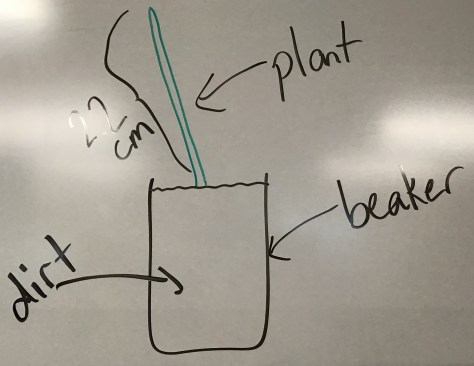
Monday, September 16 (LS1-2): After making and recording corn seed observations, students plant seeds in soil in preparation for the next phase of our experiment.
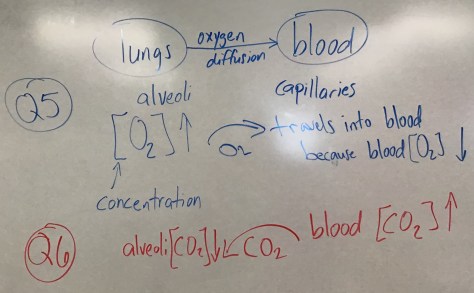
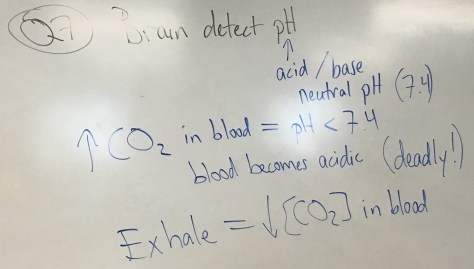
Next, students will discuss the analysis questions from last Friday’s assignment. In The Breath of Life reading, students learned how the respiratory system of humans enables gas exchange, with the lungs inhaling oxygen and exhaling carbon dioxide. The gas exchange occurs within the alveoli, thin-walled sacs inside the lungs. The reading introduced the concept of feedback systems, focusing on the special nerve cells in the cardiovascular and nervous systems that can sense changes in pH. As carbon dioxide builds up, the blood becomes more acidic, and the lungs are forced to exhale to rid the body of carbon dioxide which then brings the pH back to normal levels.
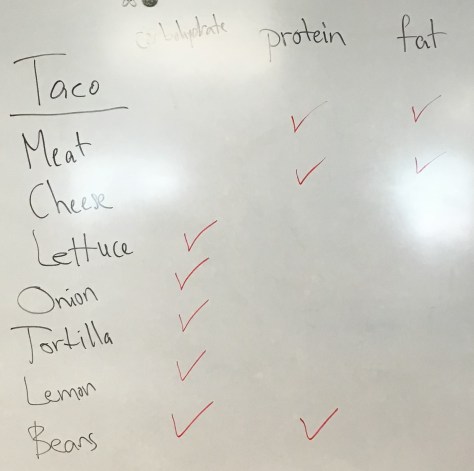
For the last few minutes of class, we made a list of some of the ingredients found in tacos, and then categorized those food items as carbohydrates, proteins, or fats. We will dig into this work much more deeply tomorrow.
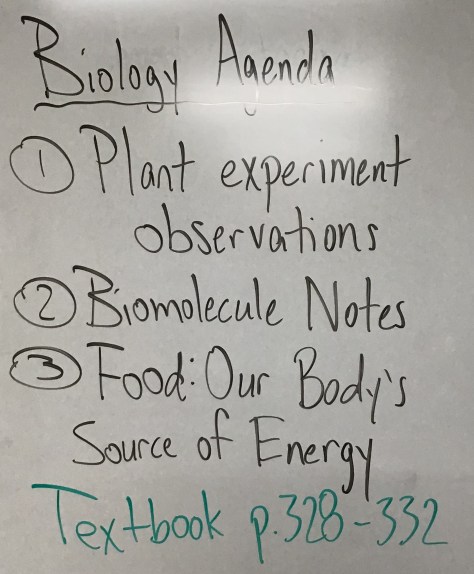
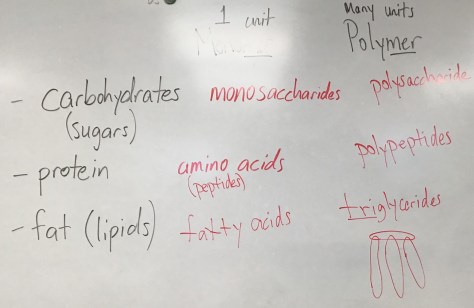
Tuesday, September 17 (LS1-2): After making and recording corn plant observations, students actively took notes and shared their understanding of biomolecules. Glucose is a simple sugar and the key ingredient in cellular respiration, the process organisms use to generate vast amounts of ATP energy. Sugars are one type of biomolecule. Our work today was to learn about three major classes of biomolecules: proteins, fats (lipids), and sugars (carbohydrates). We reviewed the monomers and polymers of each, and then students read pages 328-332 in our textbook and completed the associated worksheet. The assigned reading is titled Food: Our Body’s Source of Energy and Structural Materials. Now that students understand the link between photosynthesis (chemical potential energy stored in glucose), cellular respiration (glucose metabolized to transfer the energy in glucose to ATP), and the larger connection with the respiratory and cardiovascular systems, it is time to learn more about how the digestive system makes use of the variety of foods available to us. It is time to think beyond glucose.
Notes from class:
Wednesday, September 18 (LS1-2): After making and recording corn plant observations, we reviewed the reading from yesterday and focused in on an important group of enzymes responsible for digestion in the human digestive system. For the remainder of class, students worked with a partner on the Digestive System Gizmo activity packet.
Thursday, September 19 (LS1-2): After making and recording corn plant observations for the final time, students will work with a partner to complete the Digestive System Gizmo activity packet.
Friday, September 20: Students had the entire short Friday class period to work on the Digestive System Gizmo activity packet. Students were instructed to complete, at a minimum, through Activity B as homework before class on Monday.
Keep Learning!
Watch The Digestive System video by Mr. Anderson at Bozeman Science to learn more about this important area of study!
Monday, September 9: Signed copies of the safety contract and syllabus are due today.
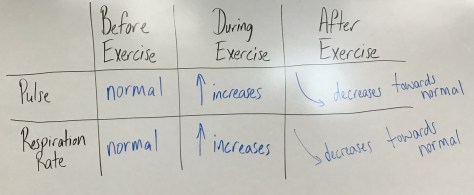
For class today, we will revisit our work last week on homeostasis. We will discuss the concepts of positive and negative feedback as they relate to humans, and extend our thinking to plants. (Reminder – please enter heart rate and respiration data on the Google Form so we can analyze the class data tomorrow.) We began our work with students sharing what they know about the connection between exercise, pulse rate, and respiration rate. We extended the discussion to include photosynthesis and cellular respiration, connecting all of the ideas together through feedback loops and the hormone epinephrine (also known as adrenaline). Class notes are shown below.
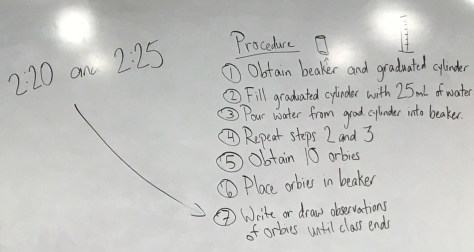
Our work this week is to further our understanding of how organisms interact with their environment. For our first experiment of the school year, students will explore variables involved with seed germination and plant growth. We will determine which variables promote plant growth (positive feedback) and which inhibit plan growth (negative feedback). Our work today is to begin the process of seed germination by first hydrating Orbeez. The procedure we followed is shown below:
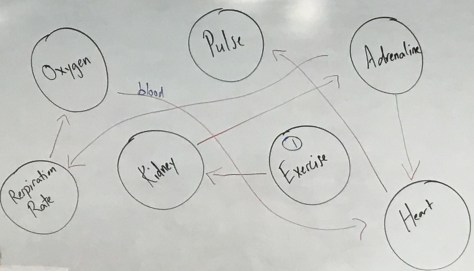
Class began with an entry task in which students were tasked with constructing a network diagram using 7 vocabulary terms learned so far this year. After making initial attempts, students worked with their lab table group to optimize their network. The first team finished drew their network diagram on the white board (pictured below) and the class analyzed it. Students learned to look for the node with only arrows leaving to determine where to start, and they learned that the arrows point from one term toward the next term in the sequence.
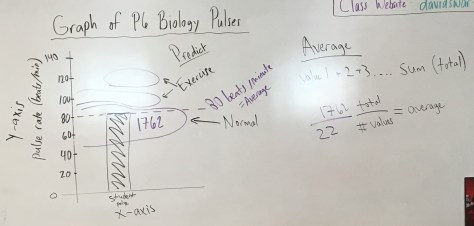
While students were busy drawing network diagrams, Nurse Jessica visited and offered to use a pulsometer for students to obtain accurate pulse readings. We used the anonymous student data to construct a graph and then calculated the average pulse rate (beats per minute) of all of the students in the class.
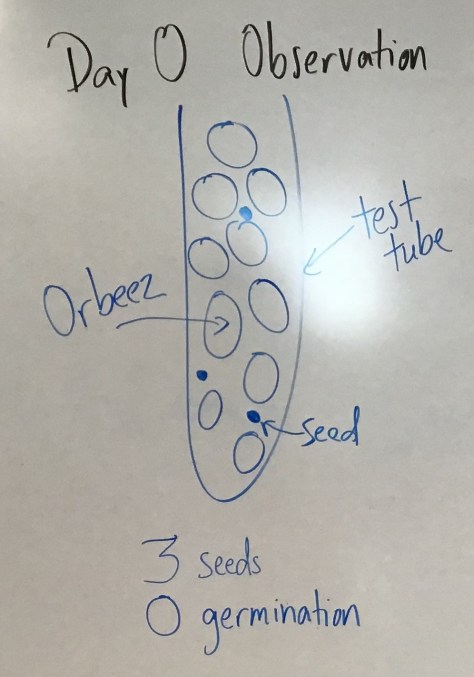
Finally, we returned to our Orbeez hydration activity from yesterday. Students recorded observations of their Orbeez after one day (24 hours) hydrating in water. Students then rinsed their Orbeez and placed 10 Orbeez in a labeled test tube along with some corn seeds. Students selected up to 10 seeds to add to their test tube. Students drew and labeled their initial (Day 0) observations in their notebooks. Over the next few weeks, students will make daily observations of their corn seeds.
Wednesday, September 11: At the beginning of class, students recorded observations of their corn seeds “planted” in Orbeez.
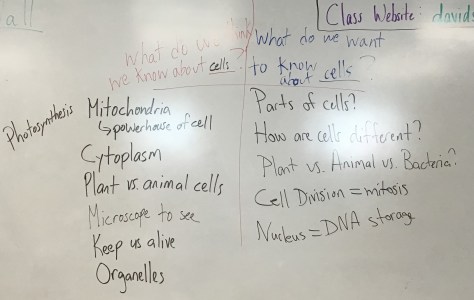
Next, we constructed a student-generated list of what students know, think they know, or want to know about cells:
Next, we will watch the Harvard BioVisions video Inner Life of a Cell, which presents a realistic animation of how cells move:
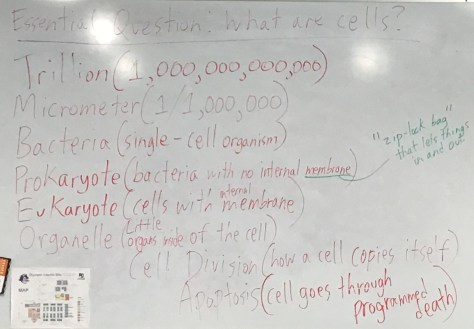
After the video, Mr. Peterson guided students through new vocabulary words that they will encounter in an article to be read after working with Mr. P.
The article, titled Facts About Cells, comes from Newsela. Students will have the option to select one of four different versions of the article, each geared toward a different reading level. Students will select the version most appropriate for them and then complete the quiz questions at the end of the article. For students looking for an advanced level text, students may instead read through page 13 of Chapter 1 of Inside the Cell. The “Got It” questions on page 19 are due tomorrow by the end of class instead of the “quiz” questions from the Newsela article.
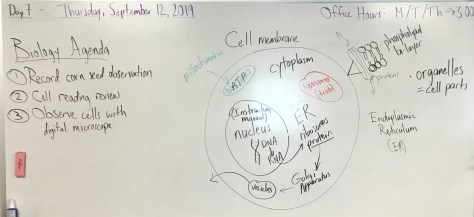
Thursday, September 12 (HS-LS1-2): After making and recording corn seed observations, we discussed the articles from yesterday. Students gathered into groups based on their chosen text levels and discussed the “quiz” questions at the end of the articles. We used the reading as a basis to construct a model of a cell, with aspects of the model representing a network diagram. We finished by revisiting photosynthesis and cellular respiration, connecting the mitochondria organelle from our model with ATP from cellular respiration.
Notes from class:
Friday, September 13 (HS-LS1-2): After making and recording corn seed observations, students will review the types of cells as a class. When finished, students will read The Breath of Life on pages 236-239 of the BSCS Biology textbook and complete the analysis questions (due Monday). We will discuss the analysis questions on Monday.
Keep Learning!
Want to learn more about body systems and the specialized cells, tissues, and organs they contain? Review the body systems with Anatomy and Physiology videos from Crash Course!
To kick off the school year, students will meet the teacher, learn about our classroom, and then complete the Ten Facts About Me survey. The information they share will help introduce the students to each other and the teacher. Students will share information about themselves with each other, constructing a network diagram during the process. The survey and network diagram will be turned in at the end of class.
Thursday, September 5: Human Homeostasis (HS-LS1-3)
Computers are an invaluable tool for modern-day biologists. We will rely on computer technology frequently this school year as a means to acquire and share knowledge. For this lesson, students will work with their assigned partner to create free accounts at ExploreLearning.com. We will periodically utilize the simulations (called Gizmos) on the website. After both partners have successfully created accounts, students will work together with the assignment of completing Activity A of the Human Homeostasis Gizmo worksheet. Note: students faced a number of challenges today while working on the Gizmo (too few functioning computers and several student gmail accounts locked) so the Gizmo will not be counted as an assignment.
When class begins, students will review important vocabulary concepts from yesterday’s work with Mr. Peterson. Next, students will be introduced to our class experiment. Students will monitor their heart rate and respiration rate (one minute each) on at least three separate occasions today (Friday), tomorrow (Saturday), and Sunday. Each day, students should record resting rates, rates after light activity, and rates after exercising. Students will record each data point on this Google Form and we will analyze the class set of data next week. Finally, students received copies of the class syllabus and safety contract. Students will read and return both copies on Monday, signed by both the student and a parent or guardian.
Keep Learning!
For students interested in pushing their learning beyond the content learned in class, we can look to the Next Generation Science Standards (NGSS) for High School Life Science (HS-LS) for the standards we are investigating and look for assessment boundaries. The assessment boundary for HS-LS1-3 states: Assessment does not include the cellular processes involved in the feedback mechanism. This means the WCAS exam students take at the end of their 11th grade year (based on understanding of the NGSS) will include questions that approach the assessment boundary but do not include content at that boundary. Therefore, students looking to learn at an advanced level should explore content at or beyond the assessment boundary! The Keep Learning! section located at the end of each week’s post is a great place to get started. For this week, check out the videos below focusing on Homeostasis and Negative/Positive Feedback:







 Science with Swart
You must be logged in to post a comment.