
We revisited our discussion of DNA, learning how chromosomes consist of DNA (and histone proteins), and segments of chromosomes encode for genes. Students watched an animation of gene transcription and translation, and then practiced mutating DNA sequences. The lesson can be viewed here.
Category Archives: Genetics
Central Dogma: Case Study of Cystic Fibrosis
Because of the short week, today was a full schedule Friday. We took advantage of the longer class period by learning about the stop codon, focusing on cystic fibrosis as a model disease caused by a genetic mutation which introduces a premature stop codon in about 10% of people with CF. After watching an inspiring music video about a 15-year-old young man with CF, students learned more about the disease and genetic mutations in general. We finished with a game where students practiced converting amino acid sequences to RNA and then replacing individual bases to create stop codons. The lesson plan, along with example sequences from the game can be found here.
Central Dogma: Introduction to DNA
We began class with a new seating chart. Students organized themselves by birth month and were seated in pairs. Students were reminded how important it is to make new friends and engage with new people to learn new ideas and ways of approaching a scientific challenge.
After the seating chart, students were provided with a timeline for making up work from the last two weeks of Unit 4. All late work and revisions are due by this Friday. Students were also reminded to check in on the class website daily and to monitor the new Twitter feed for interesting science articles.
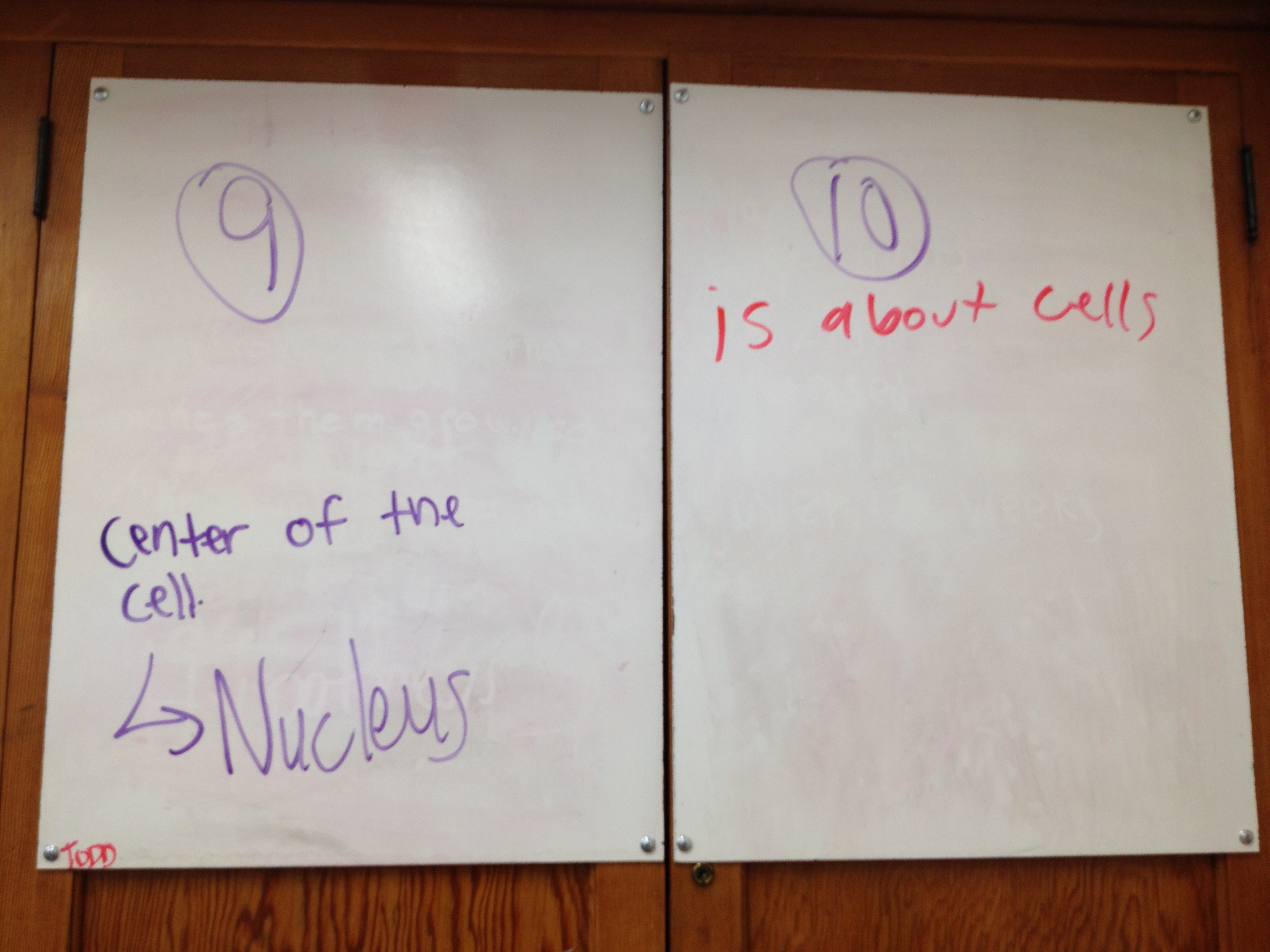
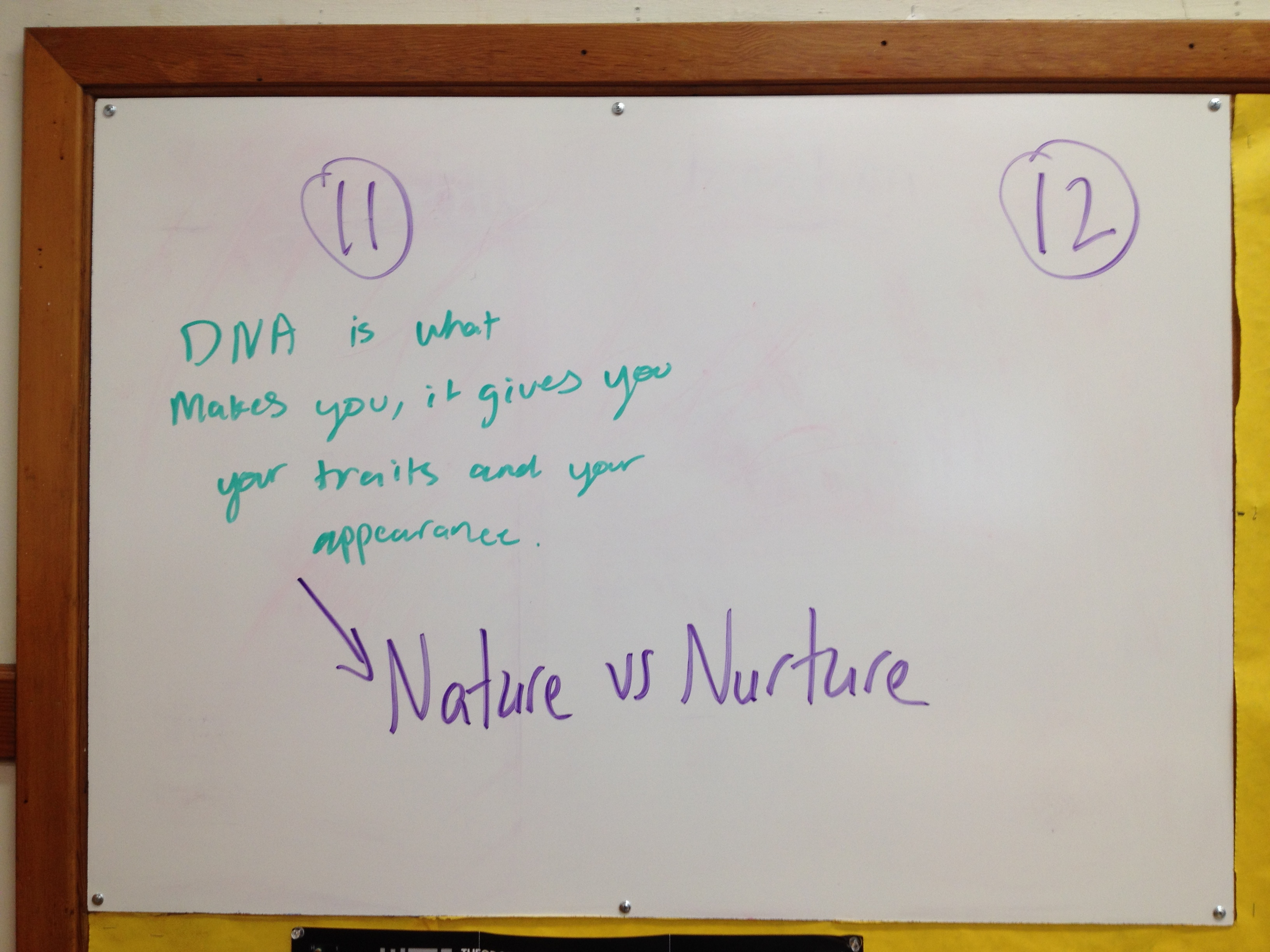
Next, we launched in to Unit 5: Central Dogma. Students were asked to write down everything they know about DNA and then shared their knowledge with their new table partner. Students were encouraged to use the agree/disagree structured partner talk strategy. Student pairs then shared one piece of information about DNA that they discussed by writing it on a class white board. An example of the information from one class is given below.
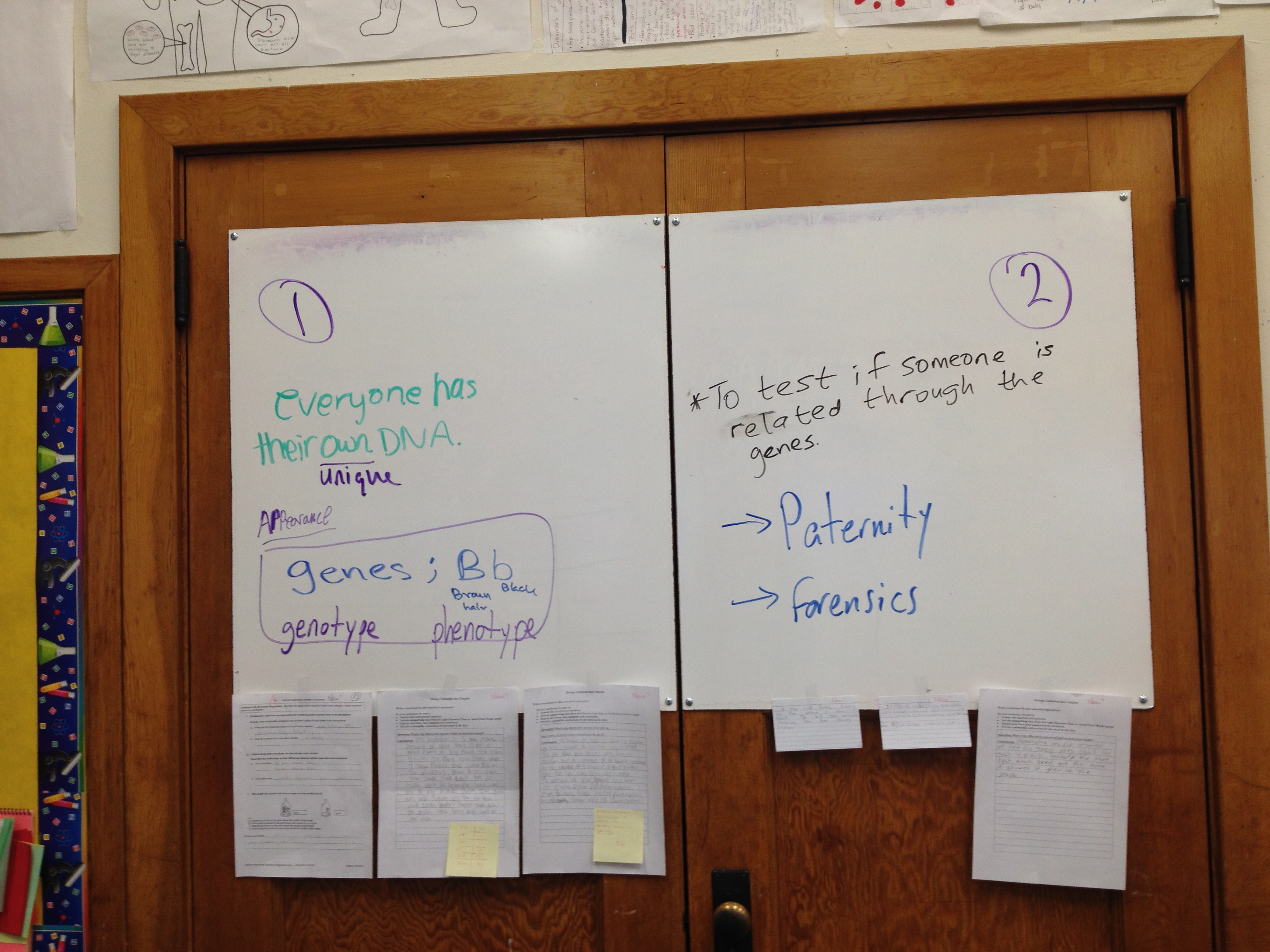
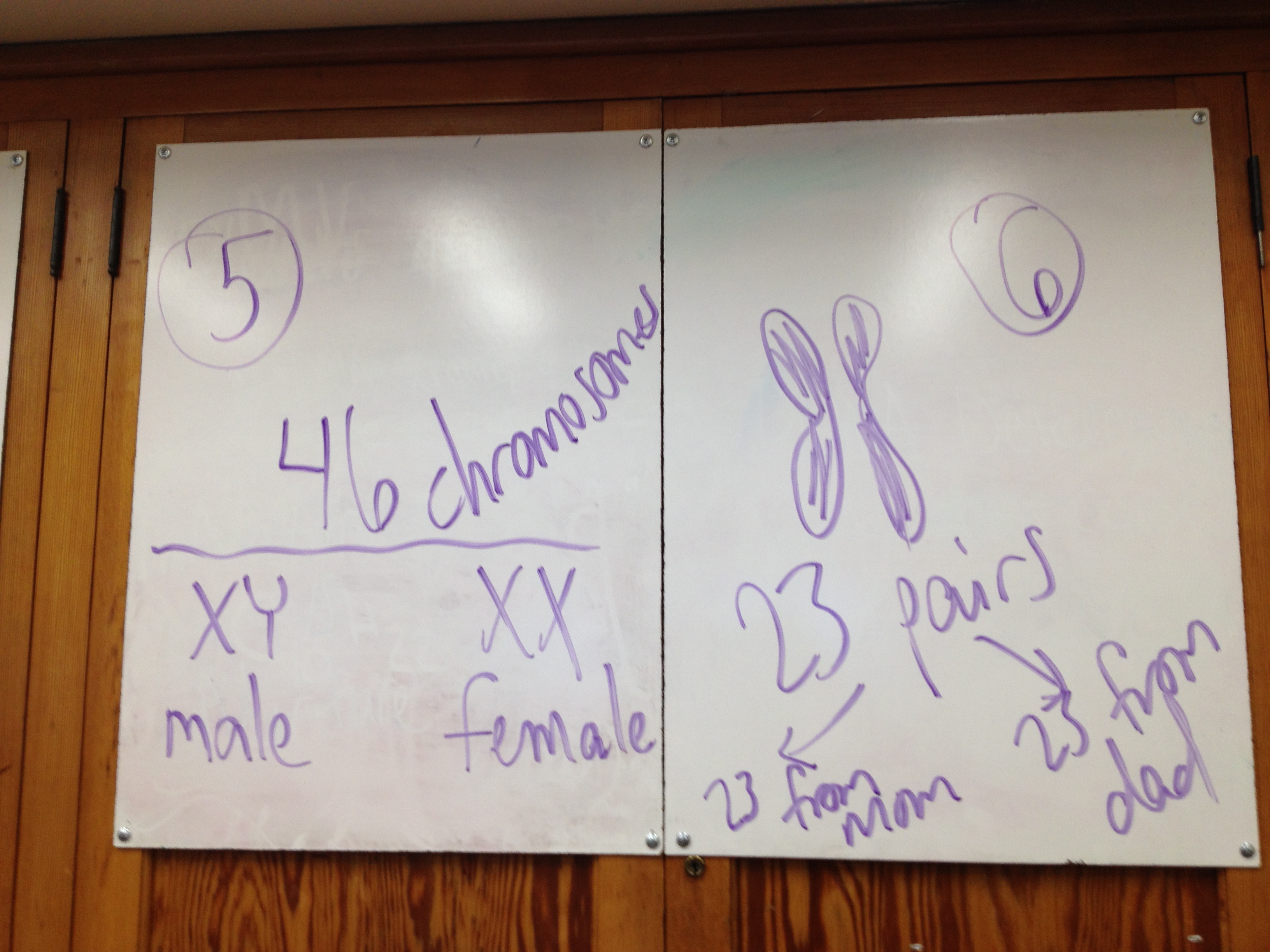
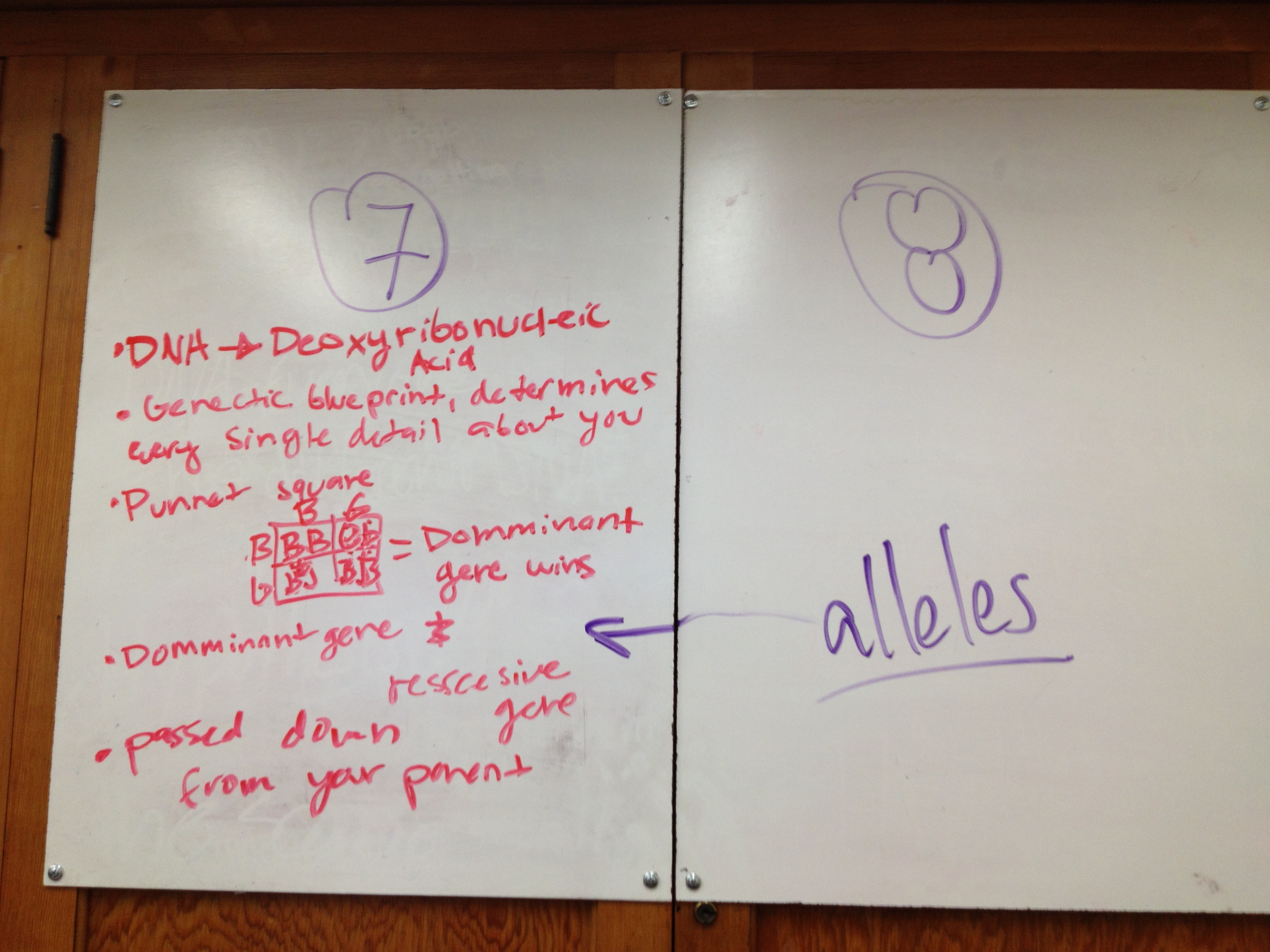
Finally, students received a few slides of instruction regarding Central Dogma vocabulary before we watched the first 16 minutes of Cosmos: Episode 2. The last slide of the lesson lists the questions students answered while watching the video.
Systems Biology – Lesson 9
In lesson 9, our first lesson of the week, we circled back to osmosis, a concept students learned about early in the school year. We connected the theme of “Water Follows Salt” with the reality that cell membranes contain pores and channels that regulate the flow of everything across the cell membrane. We discussed the vocabulary of osmosis in the context of blood, recognizing that blood cells in plasma (isotonic) behave much differently than blood cells in water (hypotonic) or in saltwater (hypertonic). We then thought about how salmon might be able to transition from freshwater to saltwater during their life cycle. By connecting pore protein expression (via the Central Dogma) with evolution, students now have the foundation necessary to explain how salmon can hatch from an egg fertilized in a freshwater stream, migrate through the brackish waters of an estuary out into the Puget Sound, travel for years in the salty Pacific Ocean, and eventually find their way back to the steam from which they were born to complete their life cycle. We wrapped up with a video about ice cave exploration, in which the concept of extremophiles was presented. Students then transitioned to Work Time where they read an article and answered questions about extremophiles.
Wrapping up Genetics
We are wrapping up the Genetics Unit and transitioning to the Evolution Unit. The Stranger Visions video is an excellent example of the merger of art, science, and technology. Give it a watch, and think twice the next time you spit out your gum!
Genetics Unit – Lesson 8
For the Lesson 8, the final lesson in the Genetics Unit, we learned about the “Levels of Heredity” and then how to make dihybrid crosses. A dihybrid cross is a Punnett Square that shows the possible inheritance patterns of two independently-assorting genes. The classwork for this lesson included a dihybrid cross (two-trait Punnett Square) worksheet and a reading with questions about the connection between Down Syndrome and Alzheimer’s Disease.
We will have our second quiz for the Genetics Unit on Friday, so study hard! Be sure to review Lessons 5-8, focusing on mitosis and meiosis, vocabulary (allele, genotype, phenotype, dominant, recessive, homozygous, heterozygous) and know how to make and analyze one- and two-trait Punnett Squares.
Heredity Projects
Congratulations to the students who received a Golden Ticket for completing their Biology Task! Students who submitted final drafts on or before last Friday (2/14) received grades. Students who did not submit a final draft remain eligible for a Silver Ticket. Tasks receiving a score below proficient are eligible for one additional final Golden Ticket review on or before Friday, February 28, after which only Silver Tickets will be issued. Remember, Seniors and Sophomores may only defend Tasks that receive a Golden Ticket. All students must receive either a Gold or Silver Ticket to receive credit for a class.
Because of the short week, students are working on their Heredity Projects. These short reports are due next Monday (February 24) and should be uploaded to Ms. H’s Dropbox. There is a Heredity Project folder in each class period. The Heredity Projects will supplement lessons next week on multi-trait Punnett Square analysis and the inheritance of traits through changes to DNA.
Genetics Unit – Lesson 7
In Lesson 7, we learned about the Austrian monk Gregor Mendel and his pea plants. Mendel’s careful study of how pea plants inherit traits allowed him to predict the existence of genes (he called them “particles”) nearly 100 years before DNA was discovered! Students then practiced analyzing trait inheritance patterns using a Punnett Square worksheet.
Reminder: Students must upload the final draft of their Task to Ms. H’s Dropbox folder (the Final Draft folder in their class period folder) by midnight tomorrow (Friday, February 14). Students who upload the Task before the deadline and who receive a grade of Proficient or better will receive a Golden Ticket!
Genetics Unit – Lesson 6
Today we had a lively discussion of the effects of nature and nurture on various traits. We realized that the information encoded in our genes might make us appear and think a certain way, and yet our environment also plays an important role in making us who we are. The discussion transitioned to Lesson 6: mitosis and meiosis. Our previous emphasis on DNA replication and the vocabulary associated with the project from Lesson 1, coupled with the videos of DNA replication from Lesson 2, all created the foundation for readily understanding cell division.
Genetics Unit – Lesson 5
Picking up where we left off before Task Week, in Lesson 5 we reviewed key vocabulary related to the Central Dogma. Students received blank copies of the vocabulary worksheet and were provided with time in class to transcribe Central Dogma-related definitions. The remainder of the class period was spent working in small groups to discuss and debate whether specific traits are inherited through nature or nurture. The purpose of this lesson was to provide students with a link between proteins (encoded by genes within DNA) and phenotype (traits that are readily observed). Next, we will turn our attention to how traits are inherited: mitosis and meiosis.
 Science with Swart
You must be logged in to post a comment.