Category Archives: Cells

Cells and Homeostasis: Body Systems

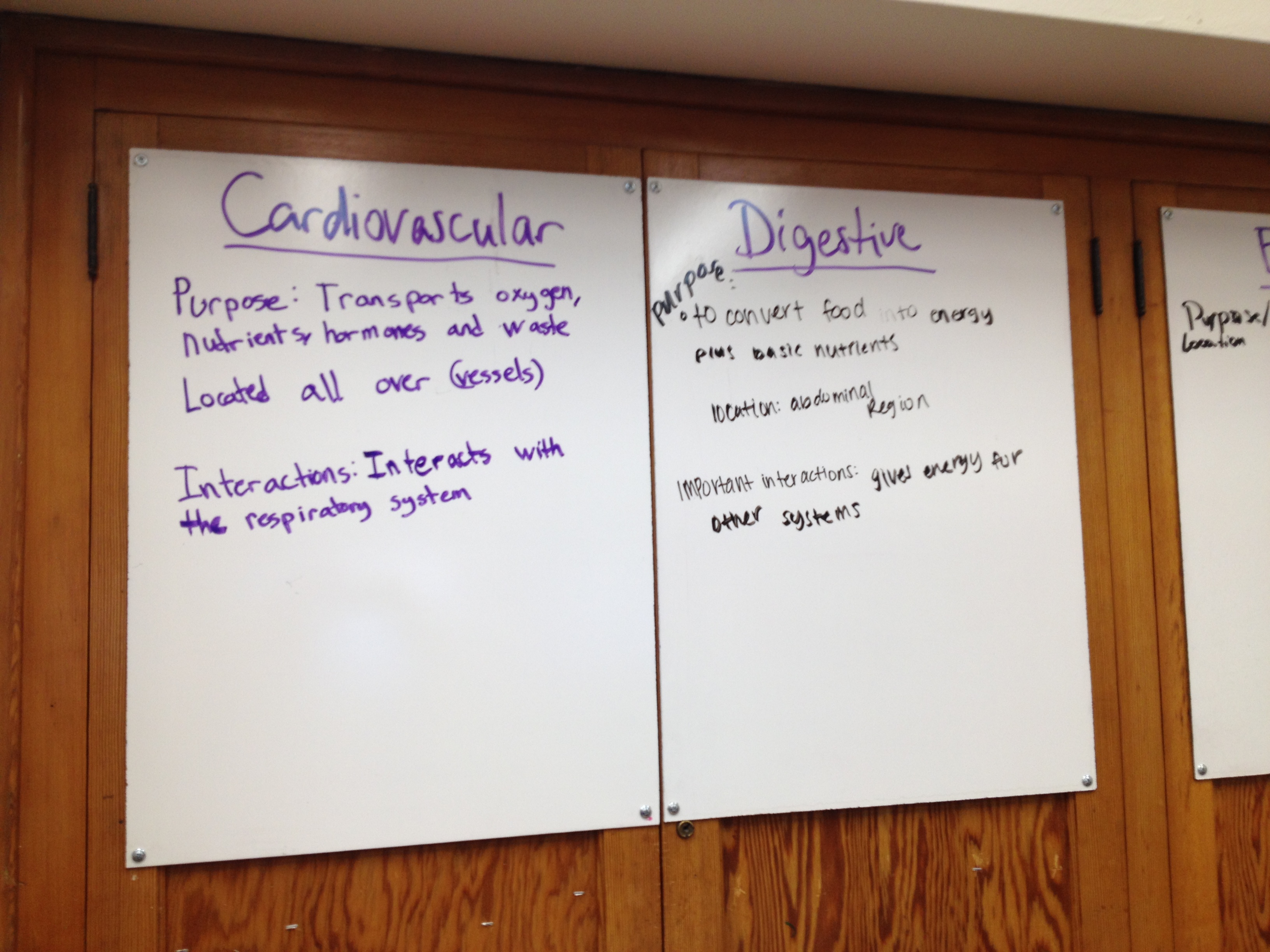
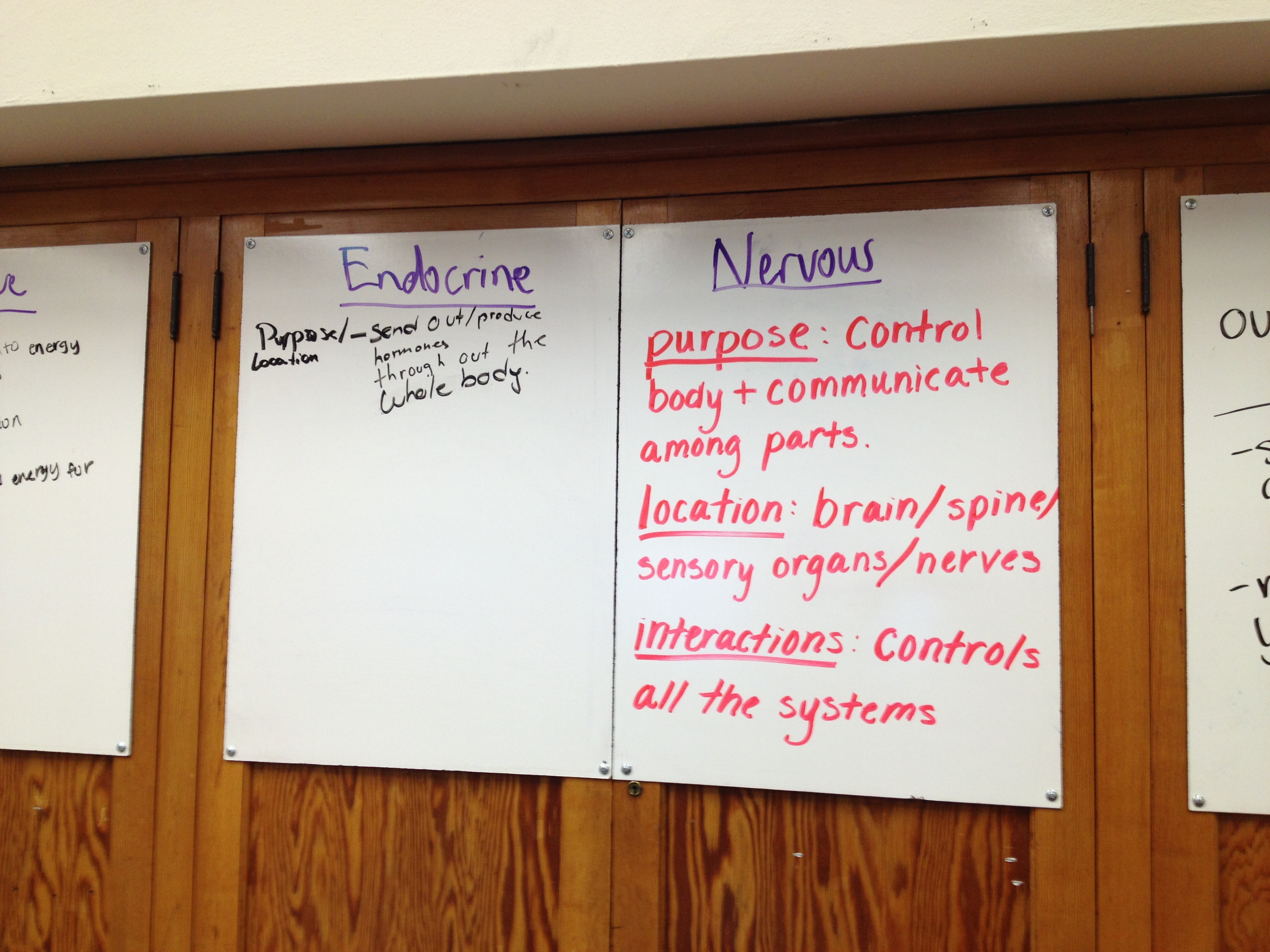
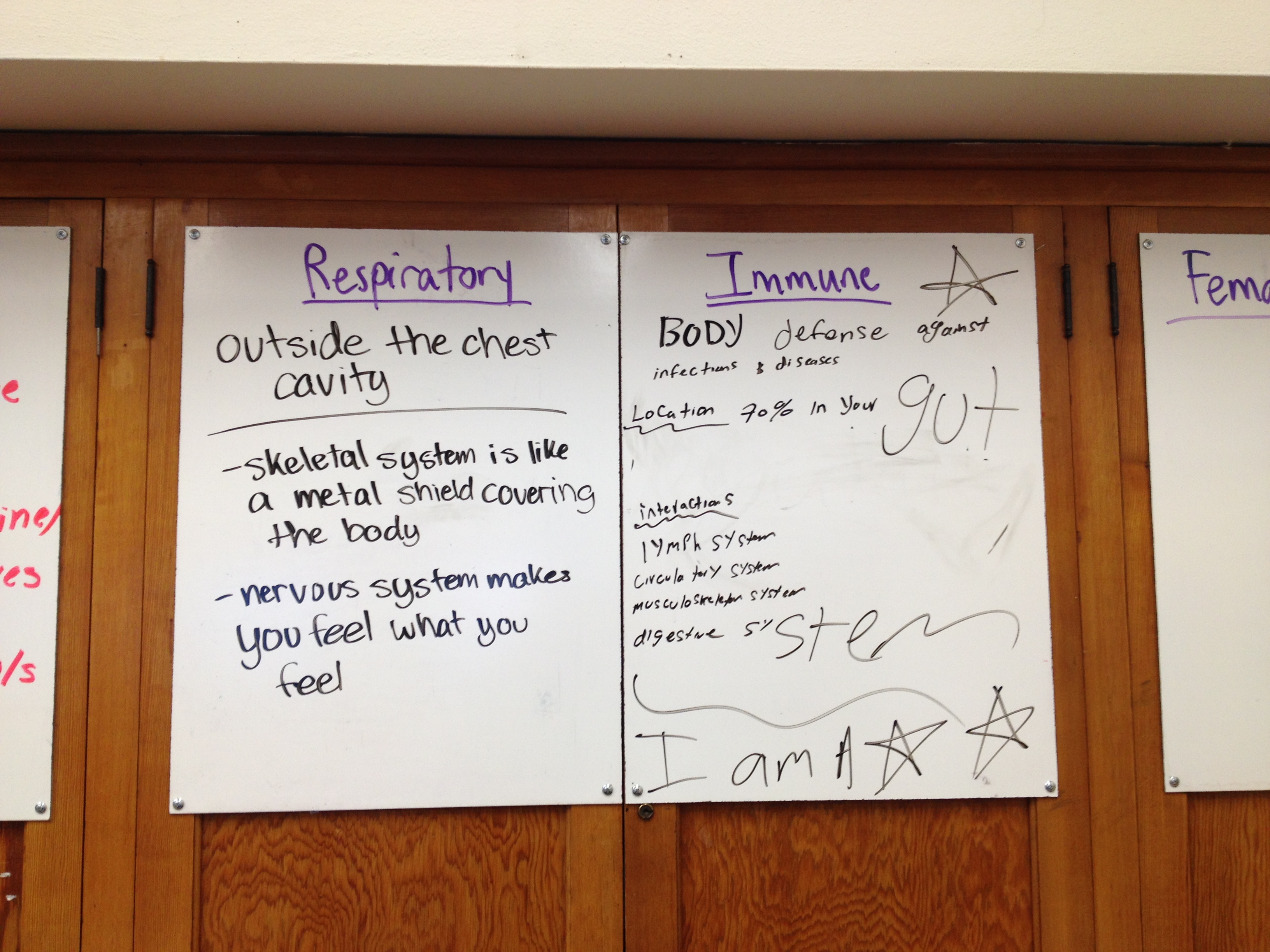
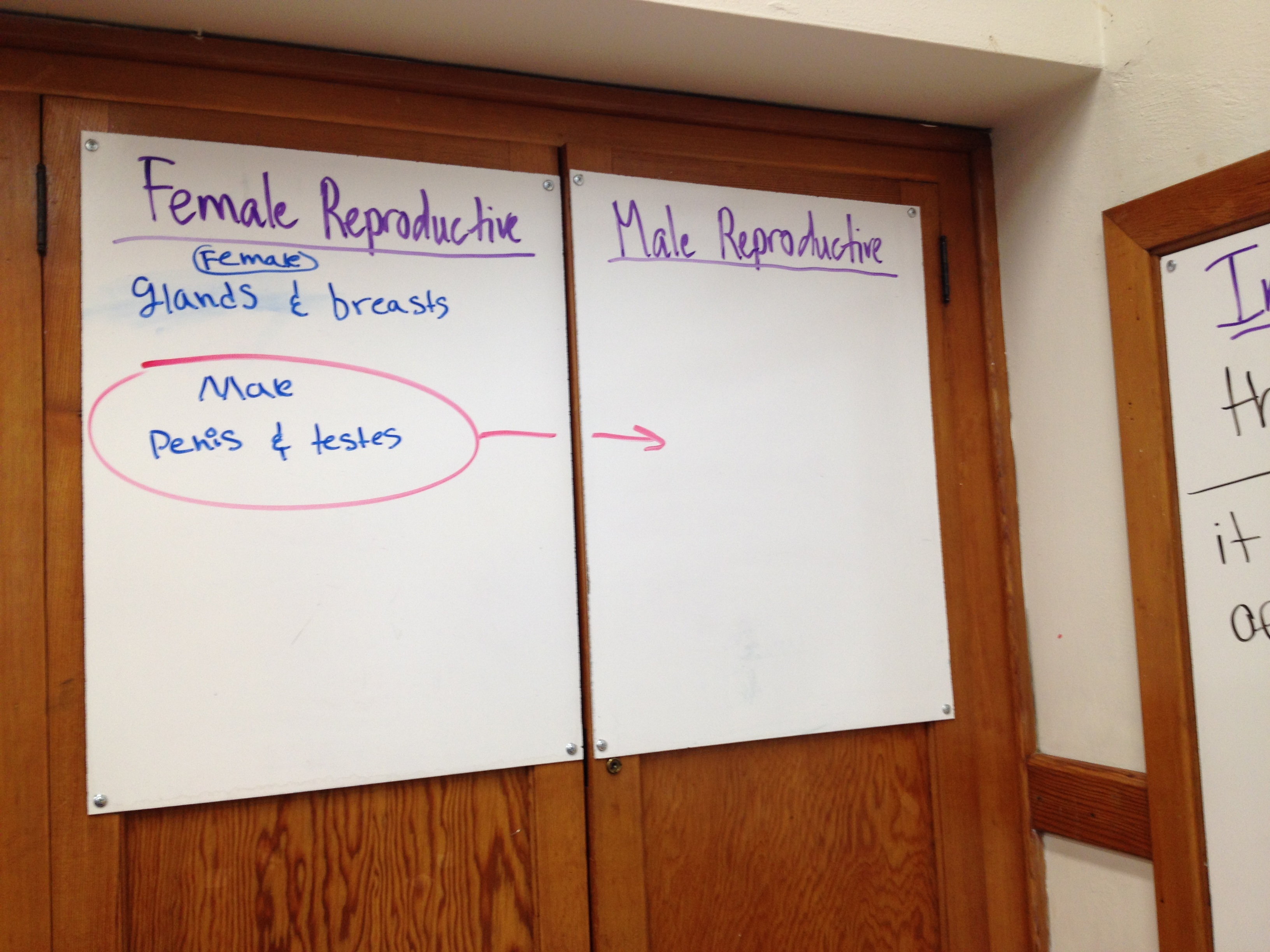
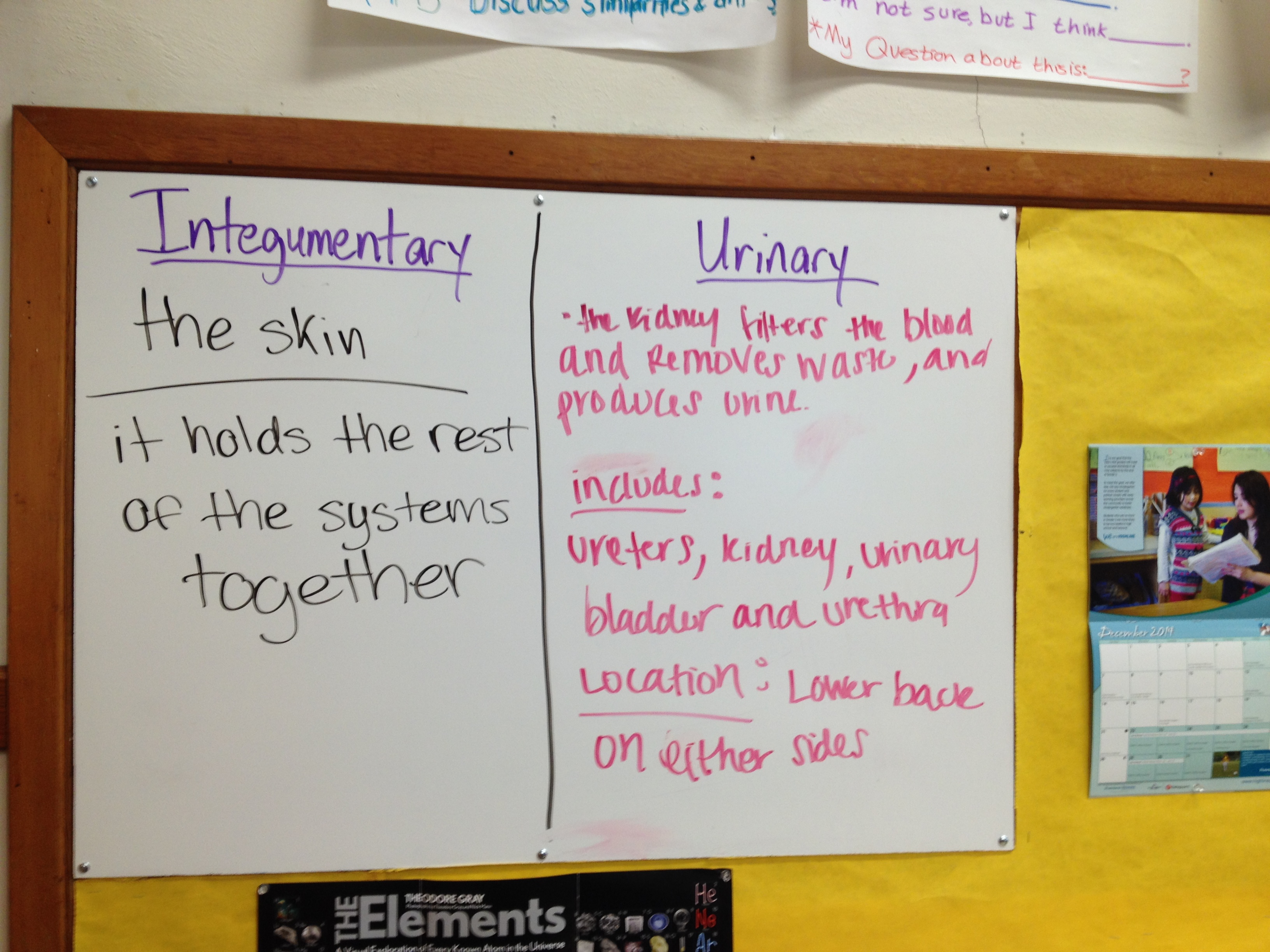
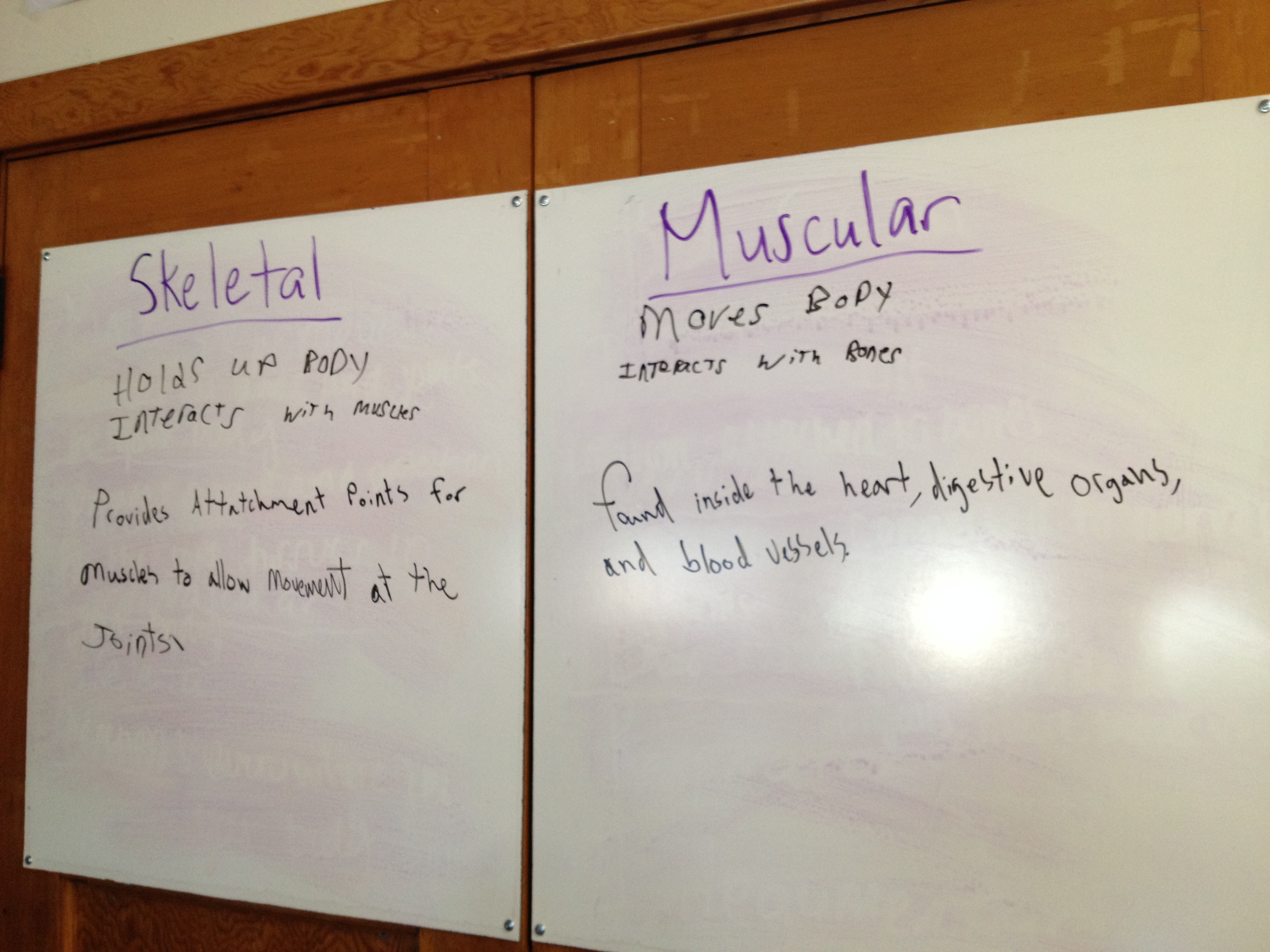
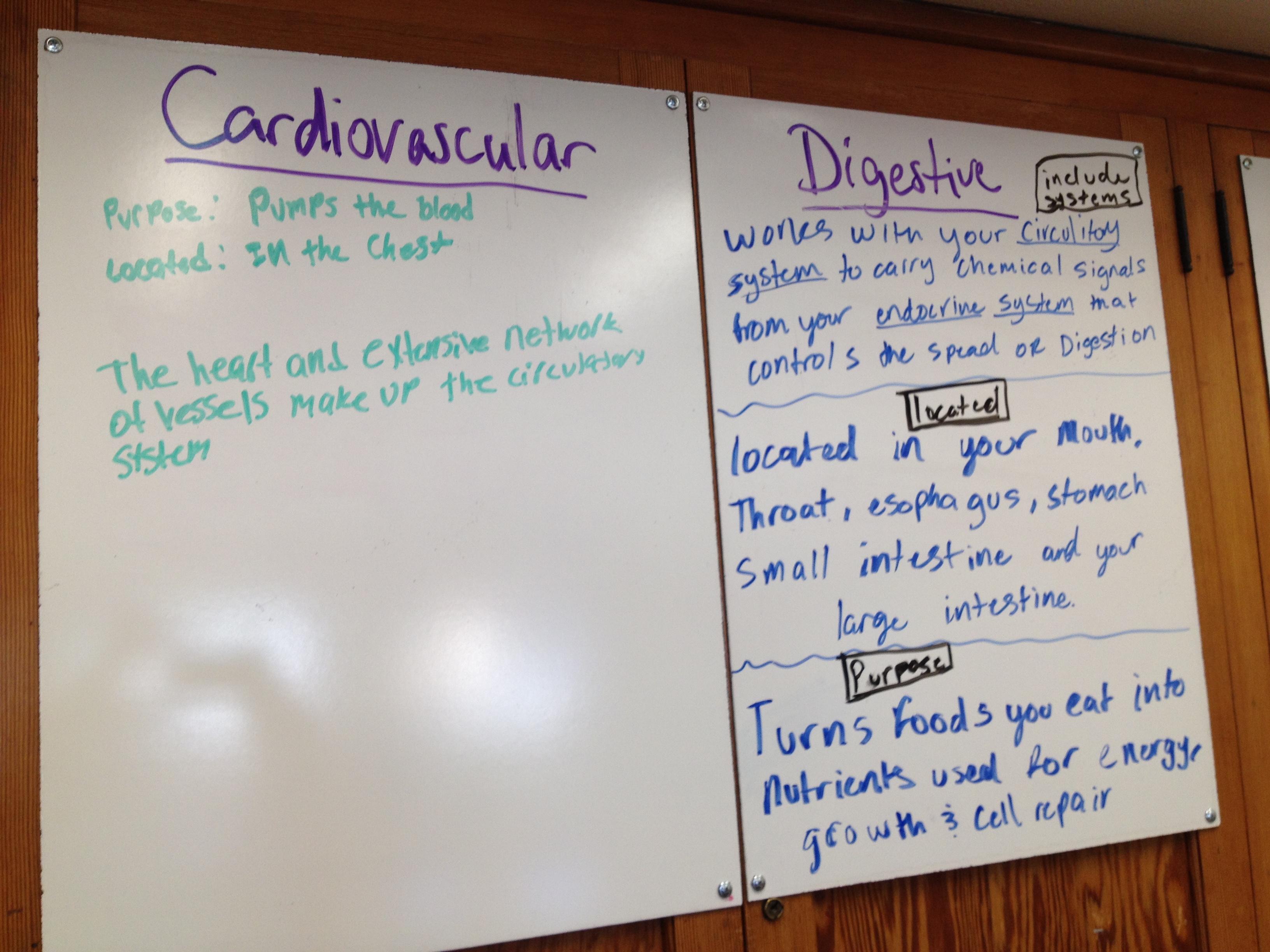
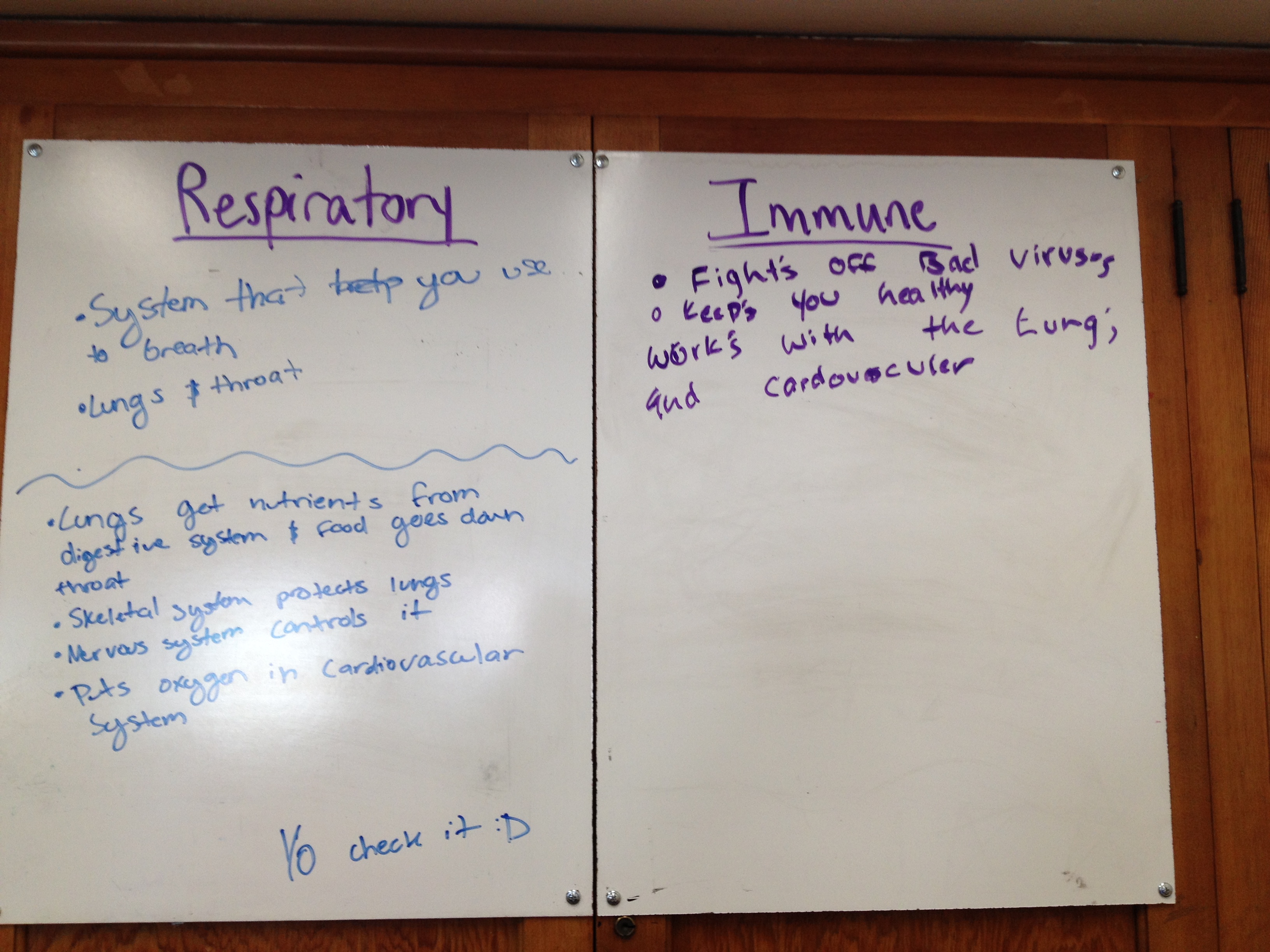
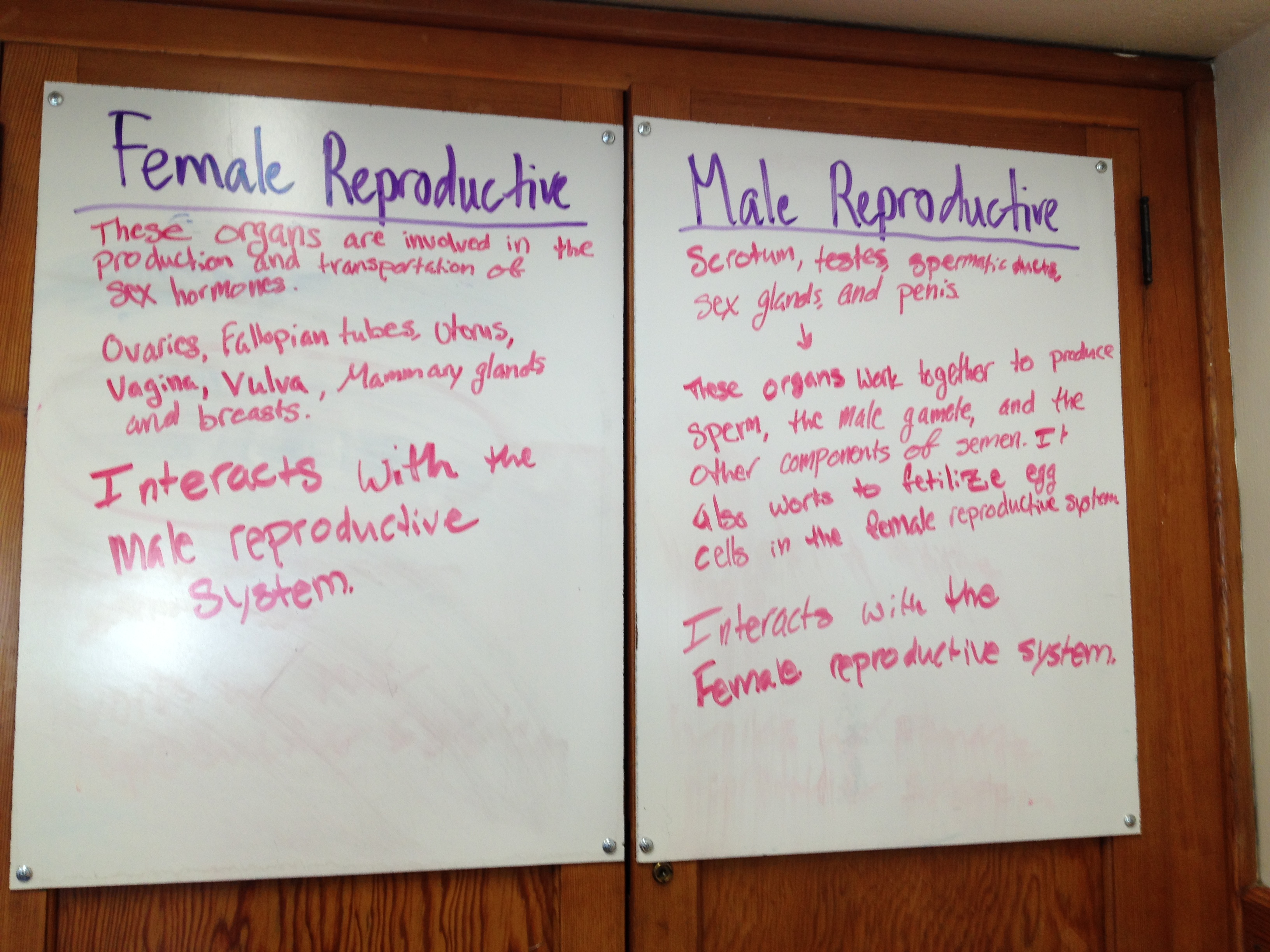
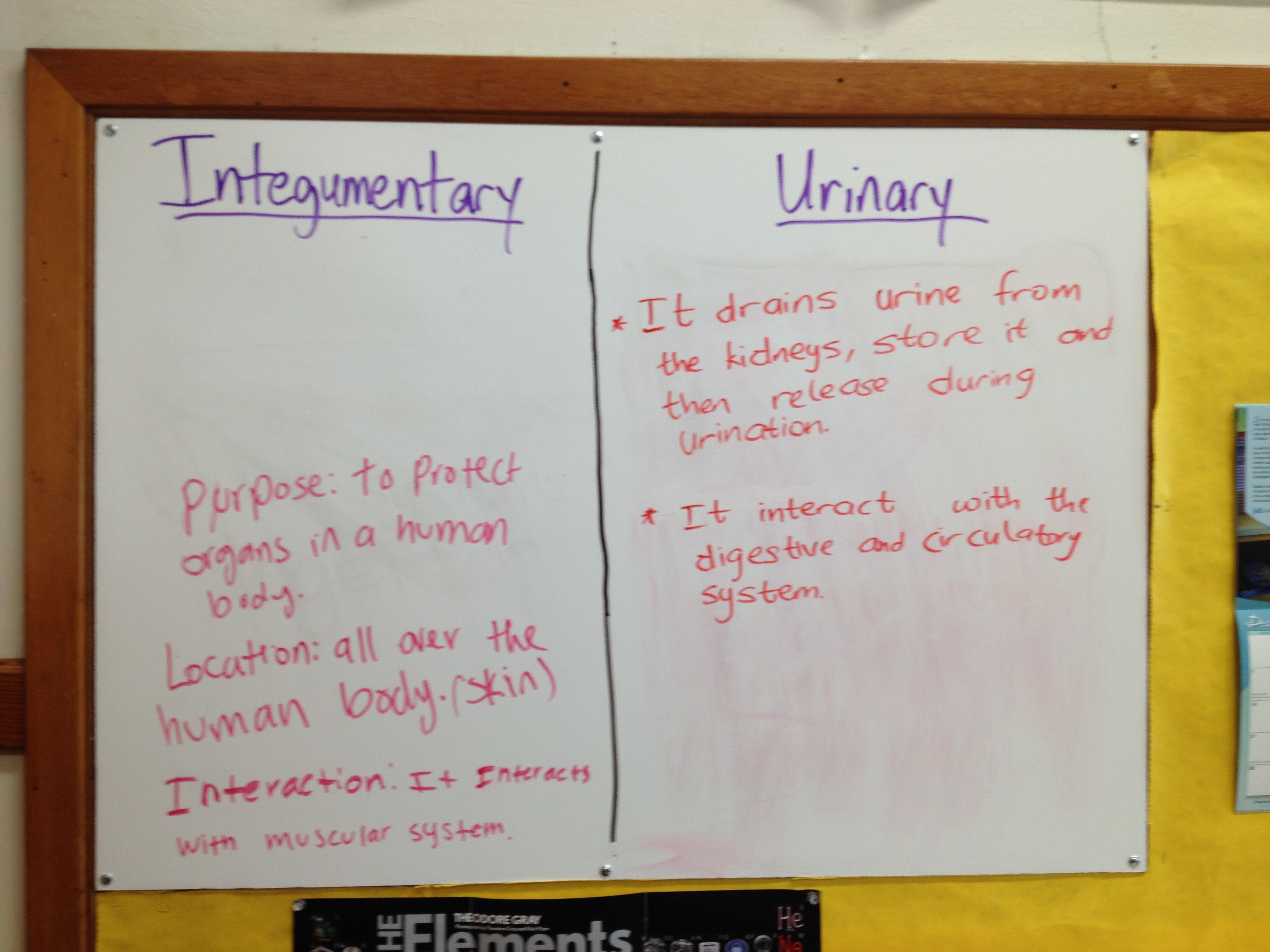
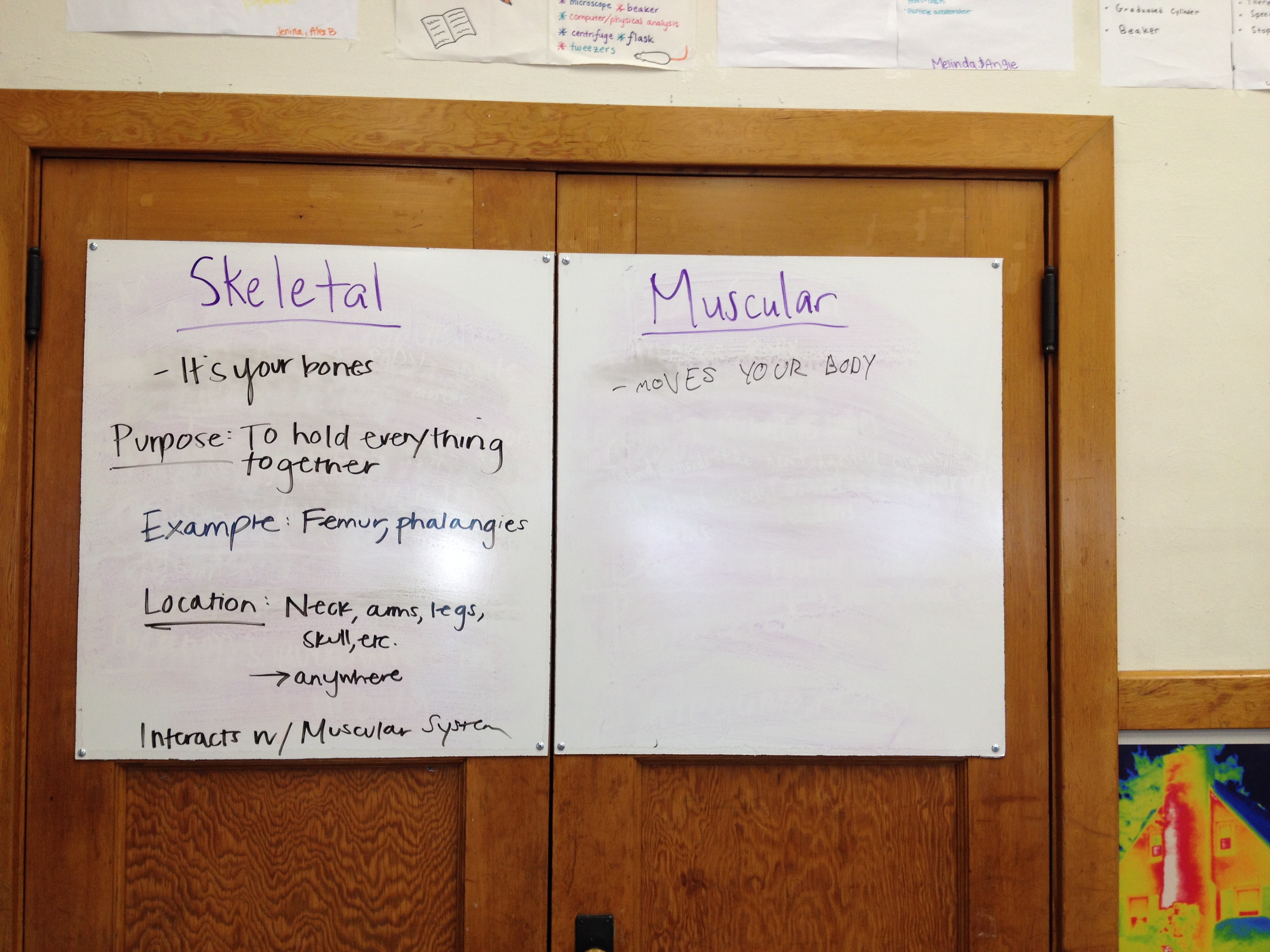
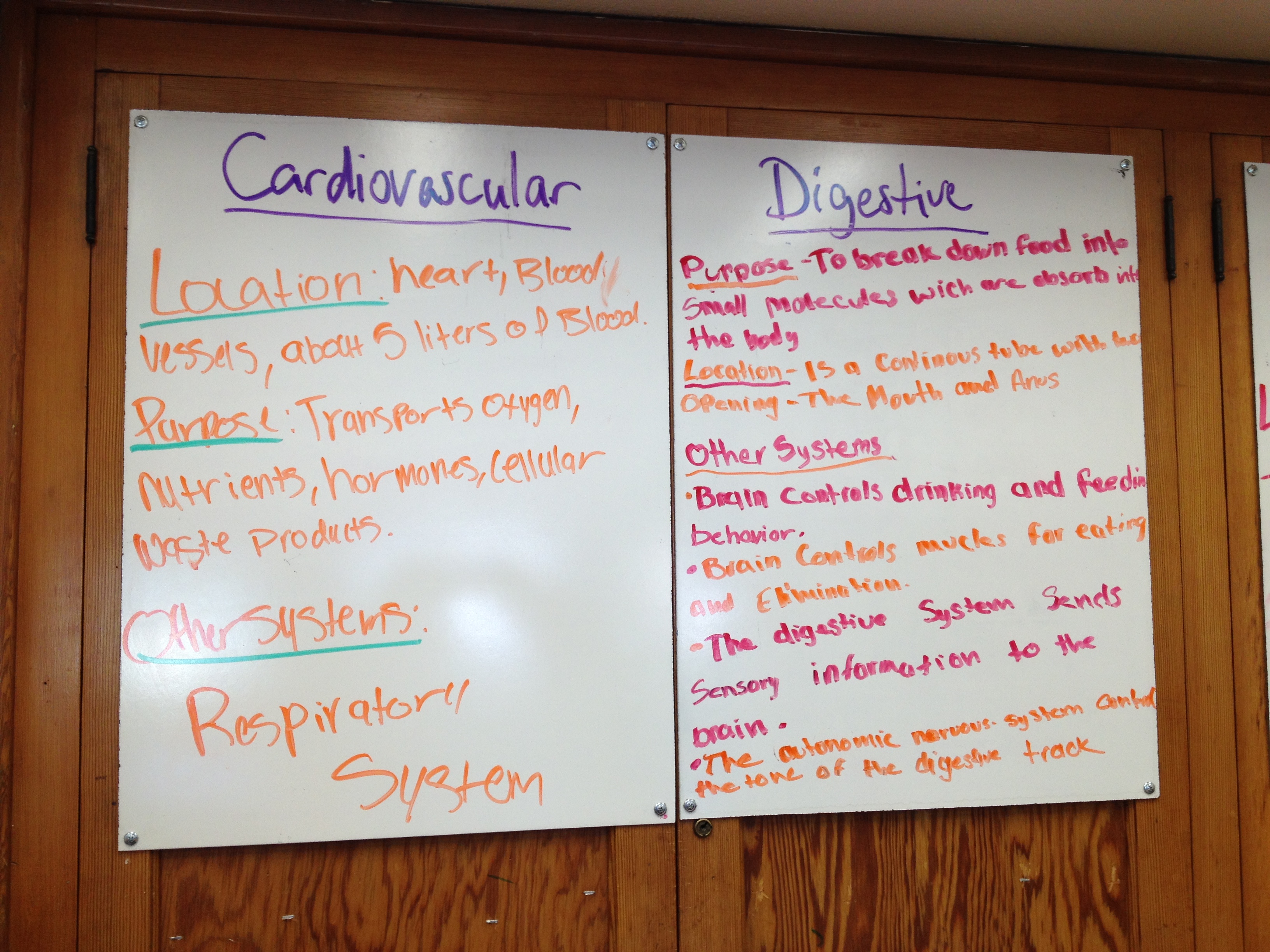
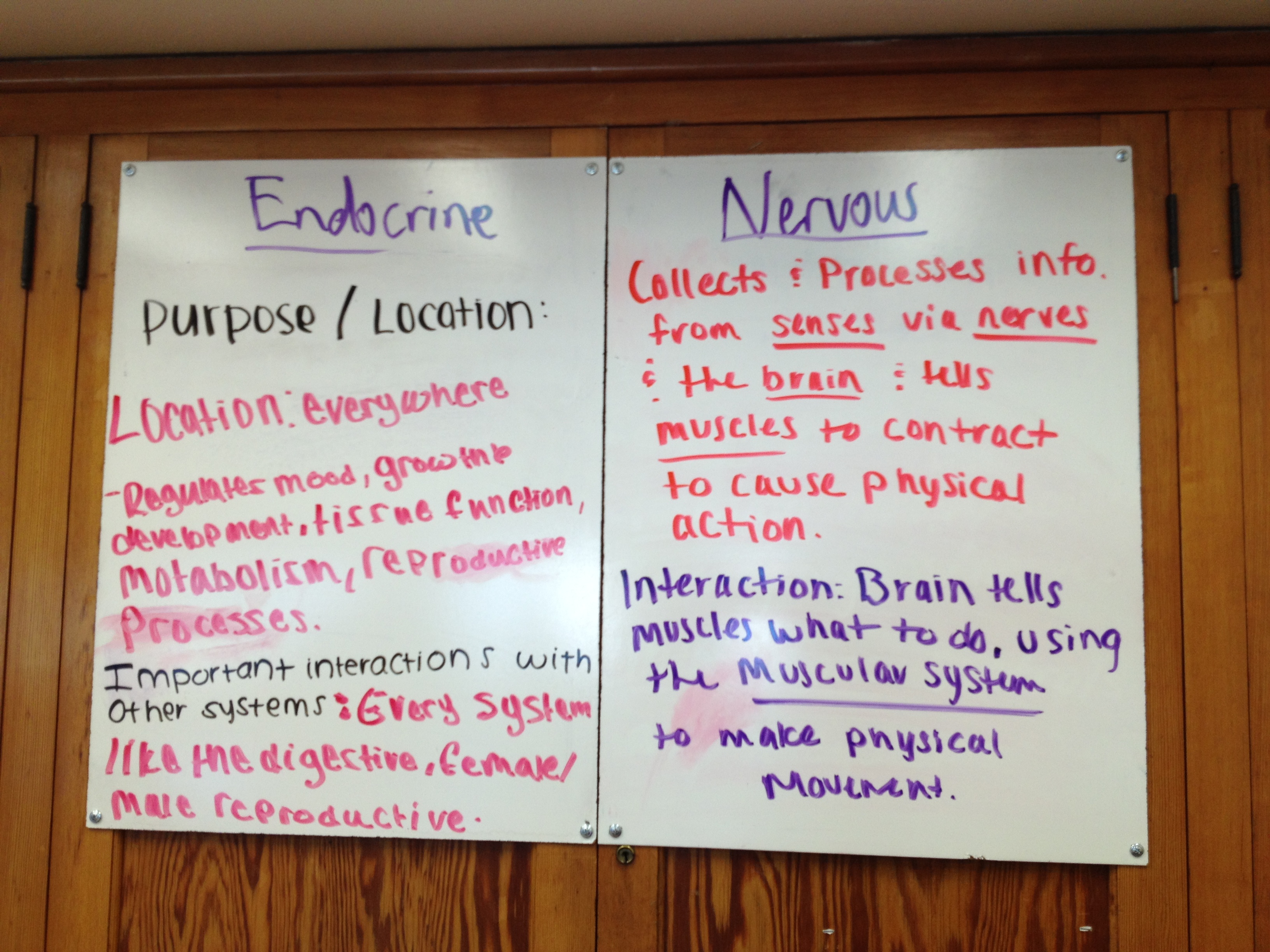
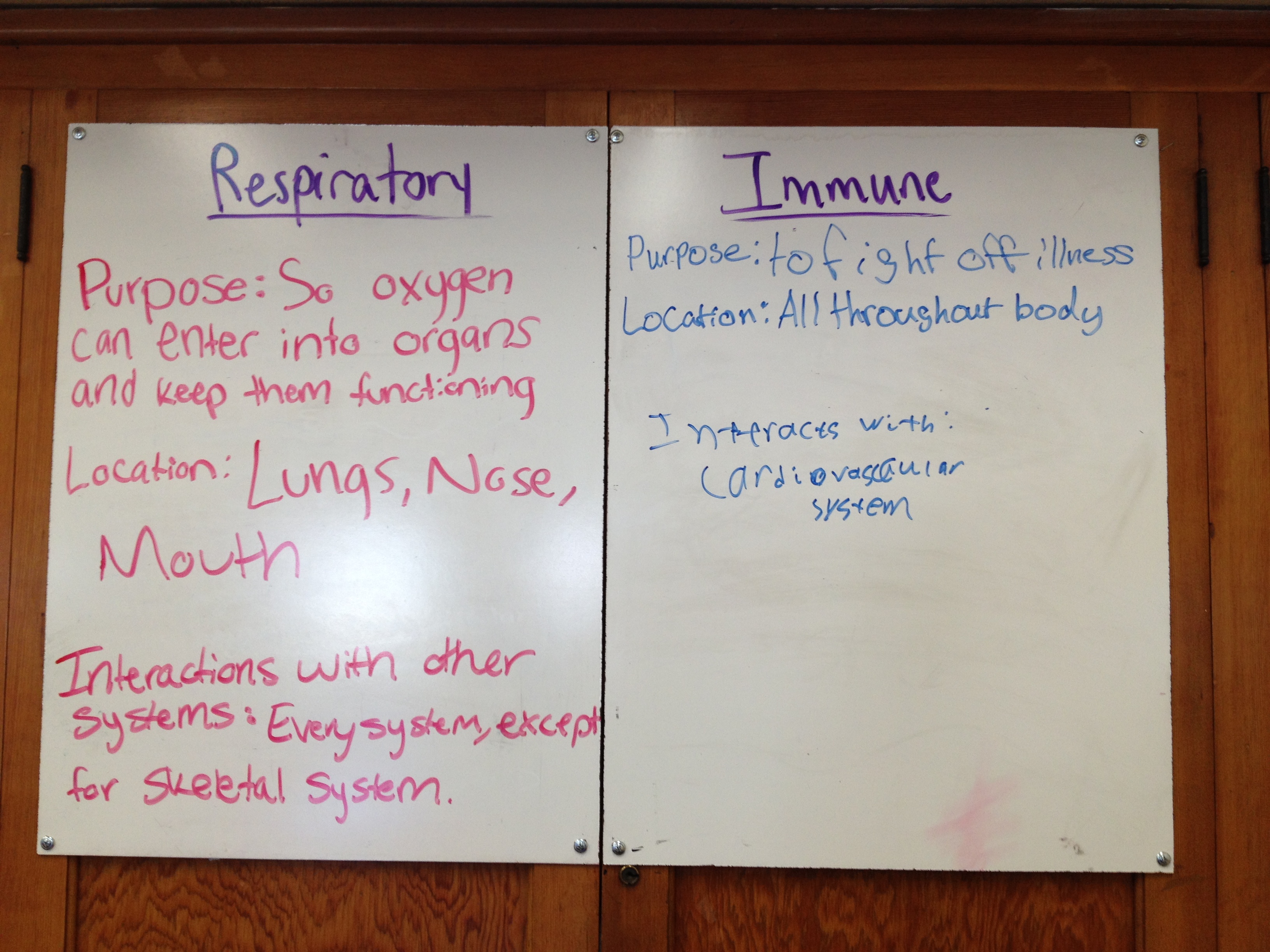
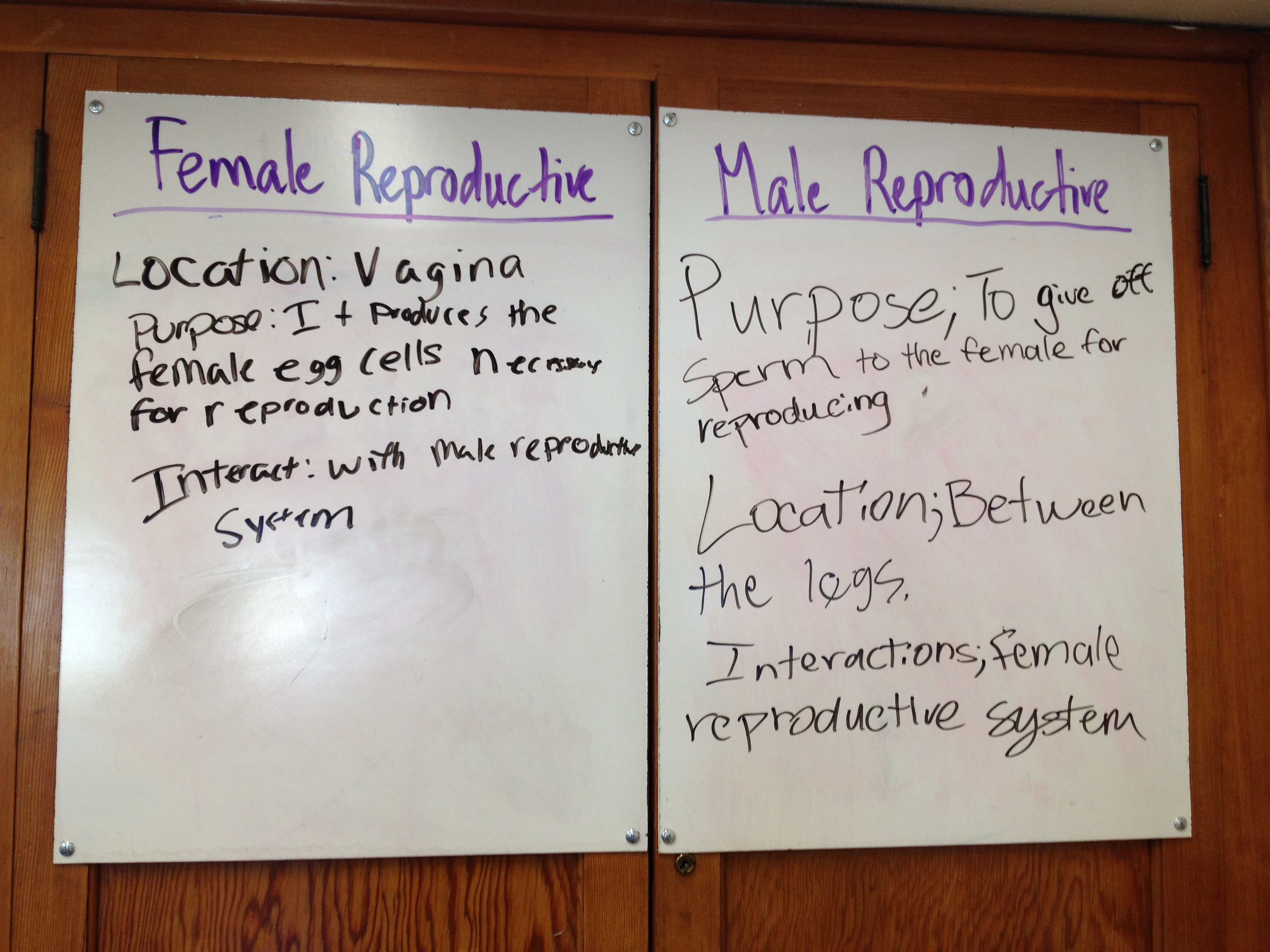
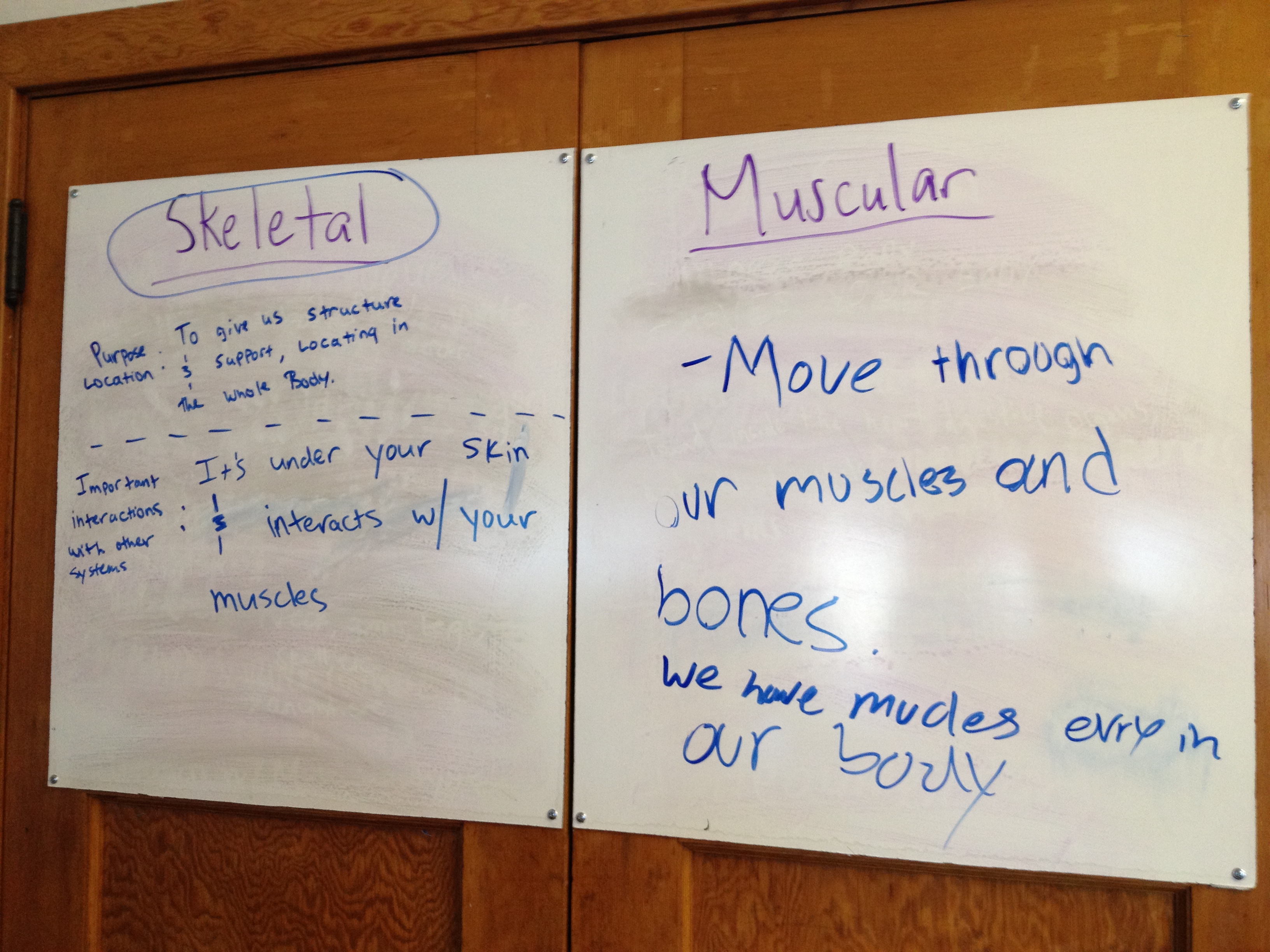
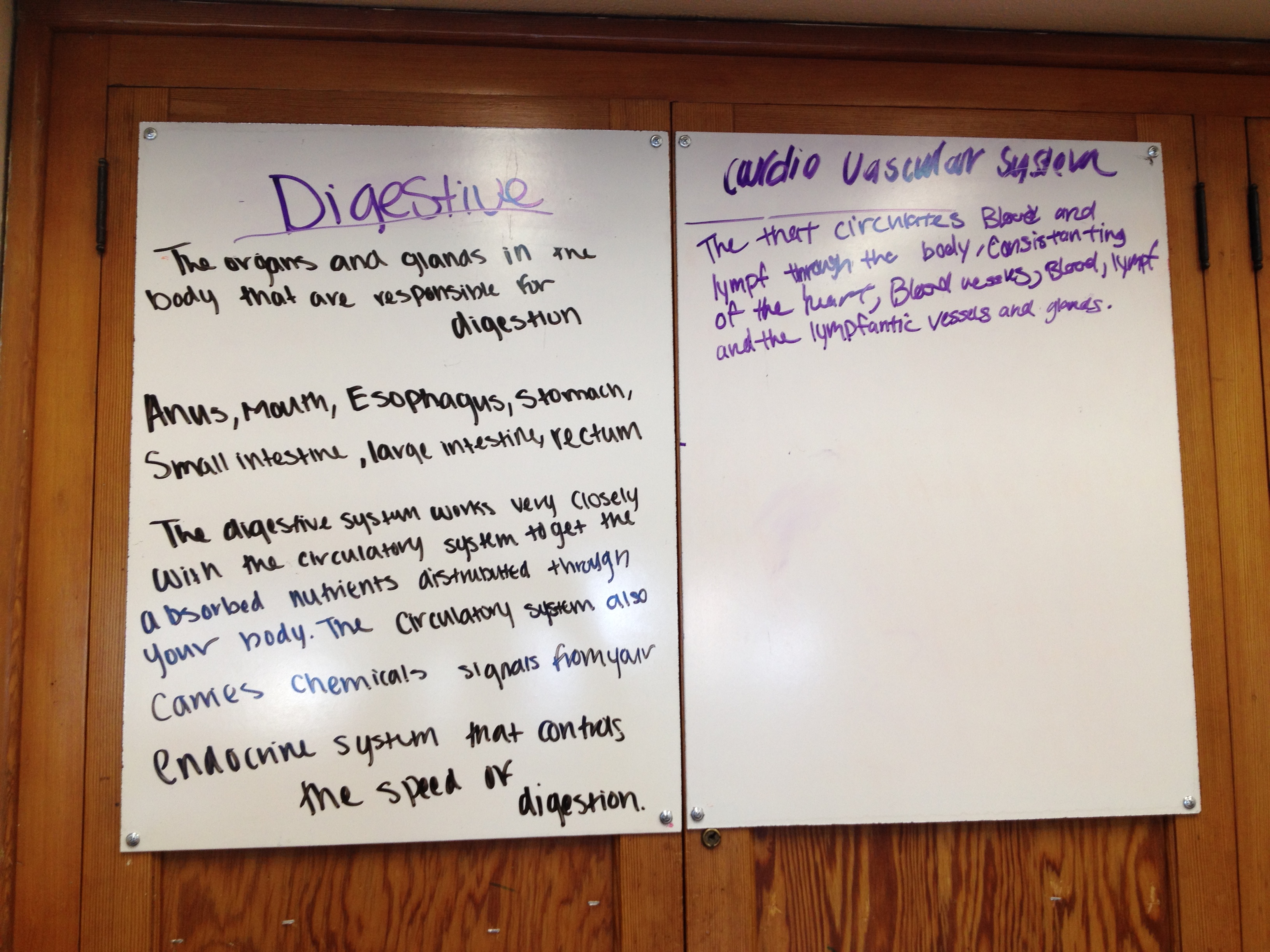
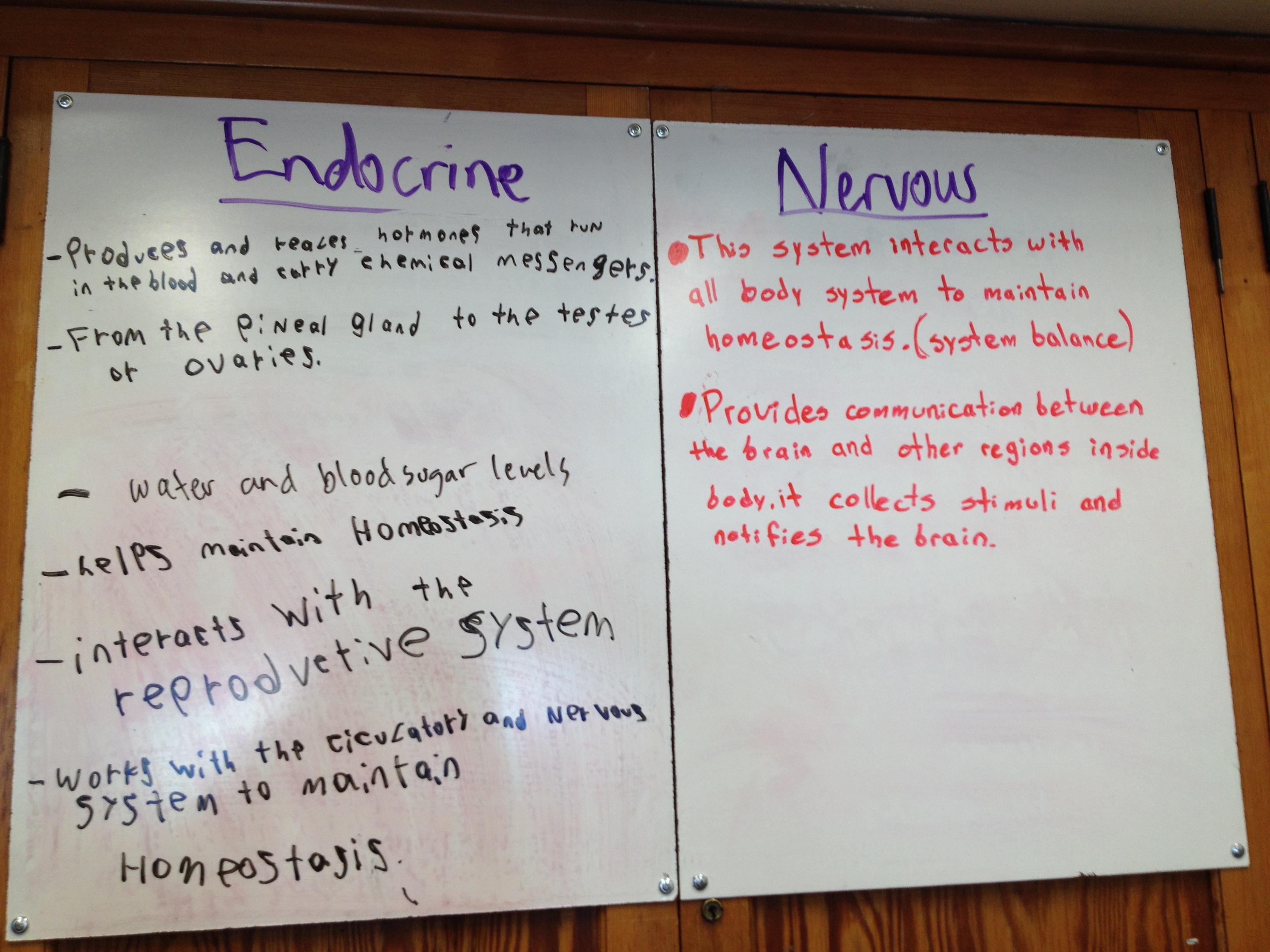
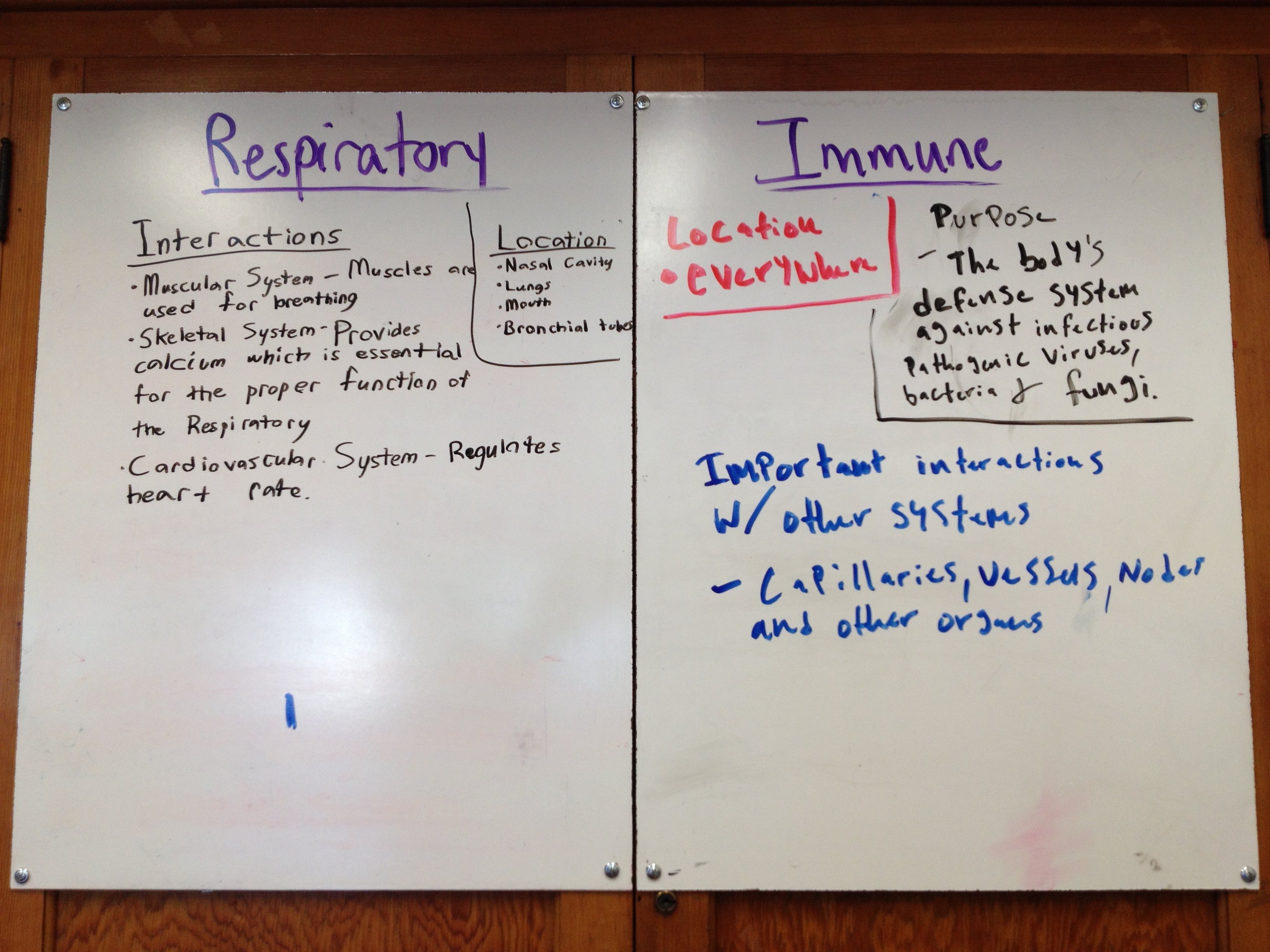
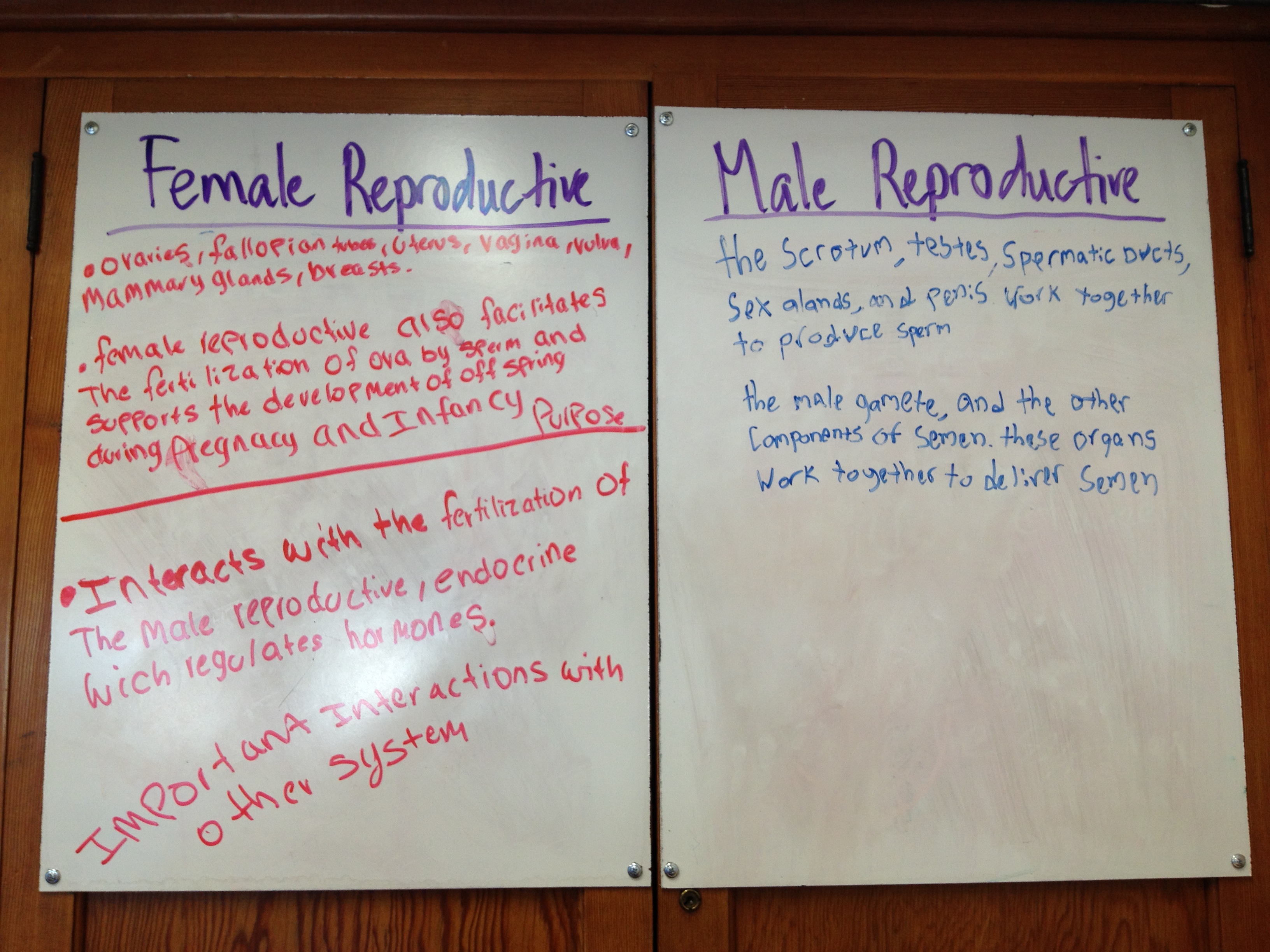
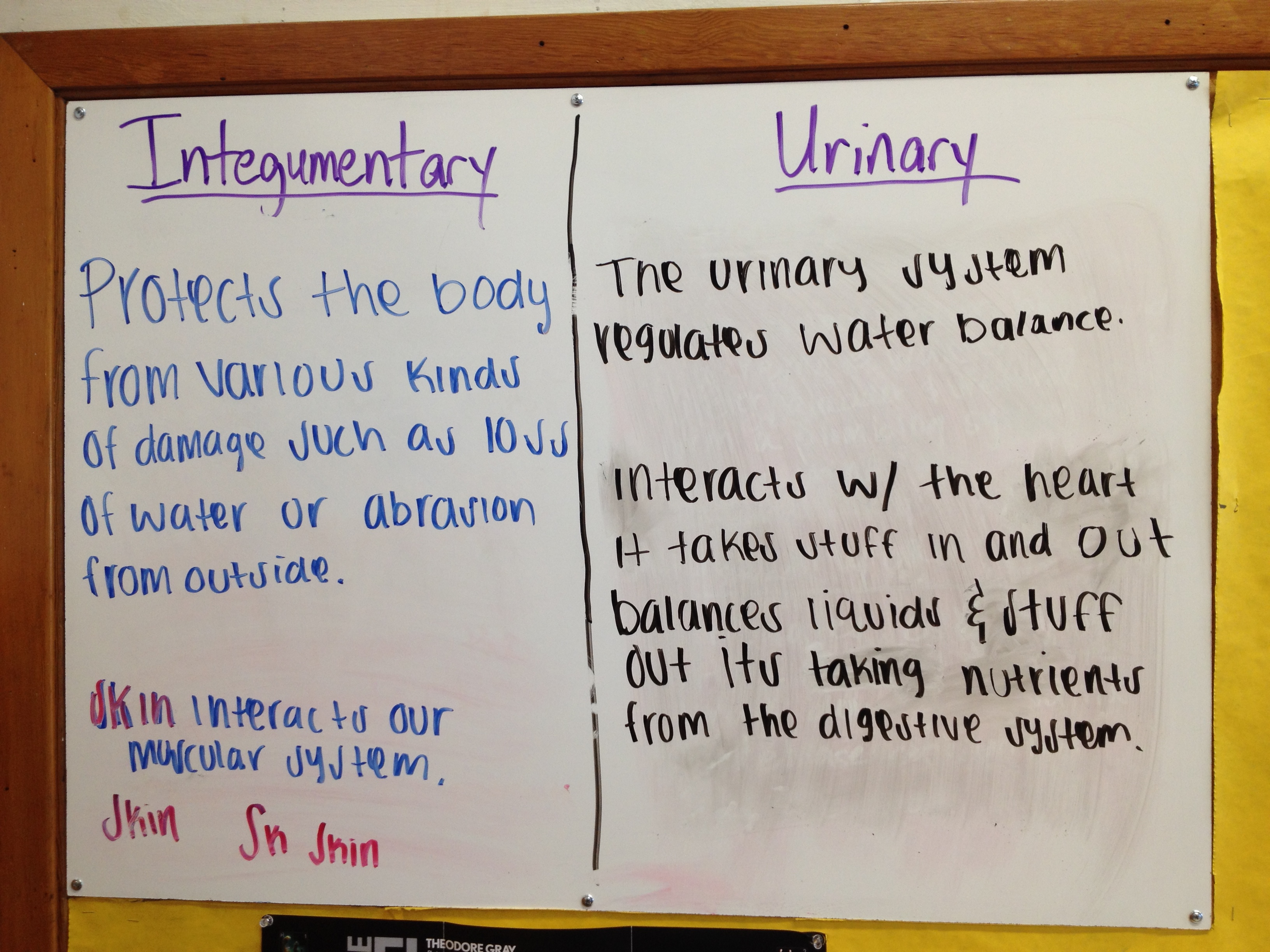
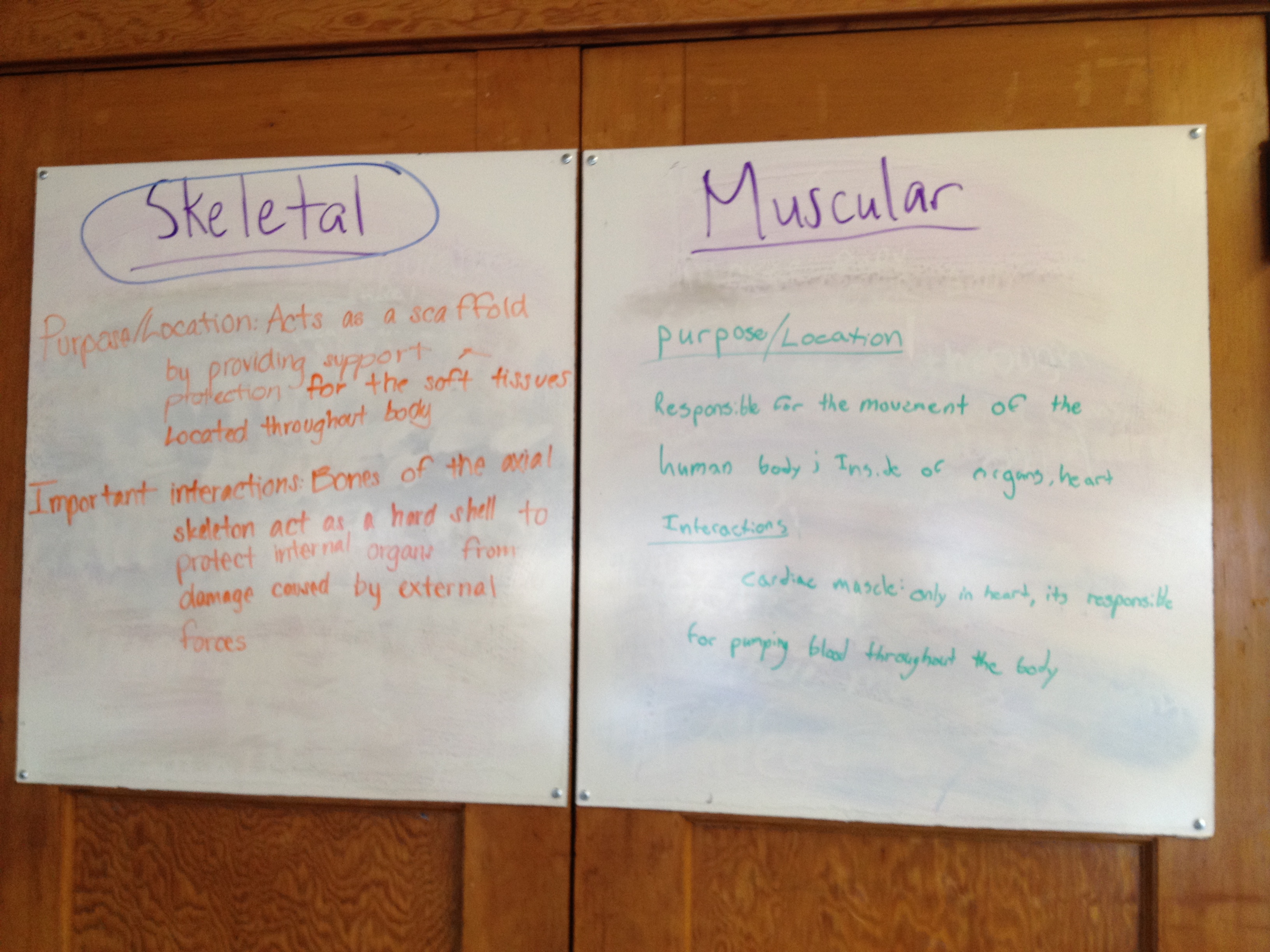
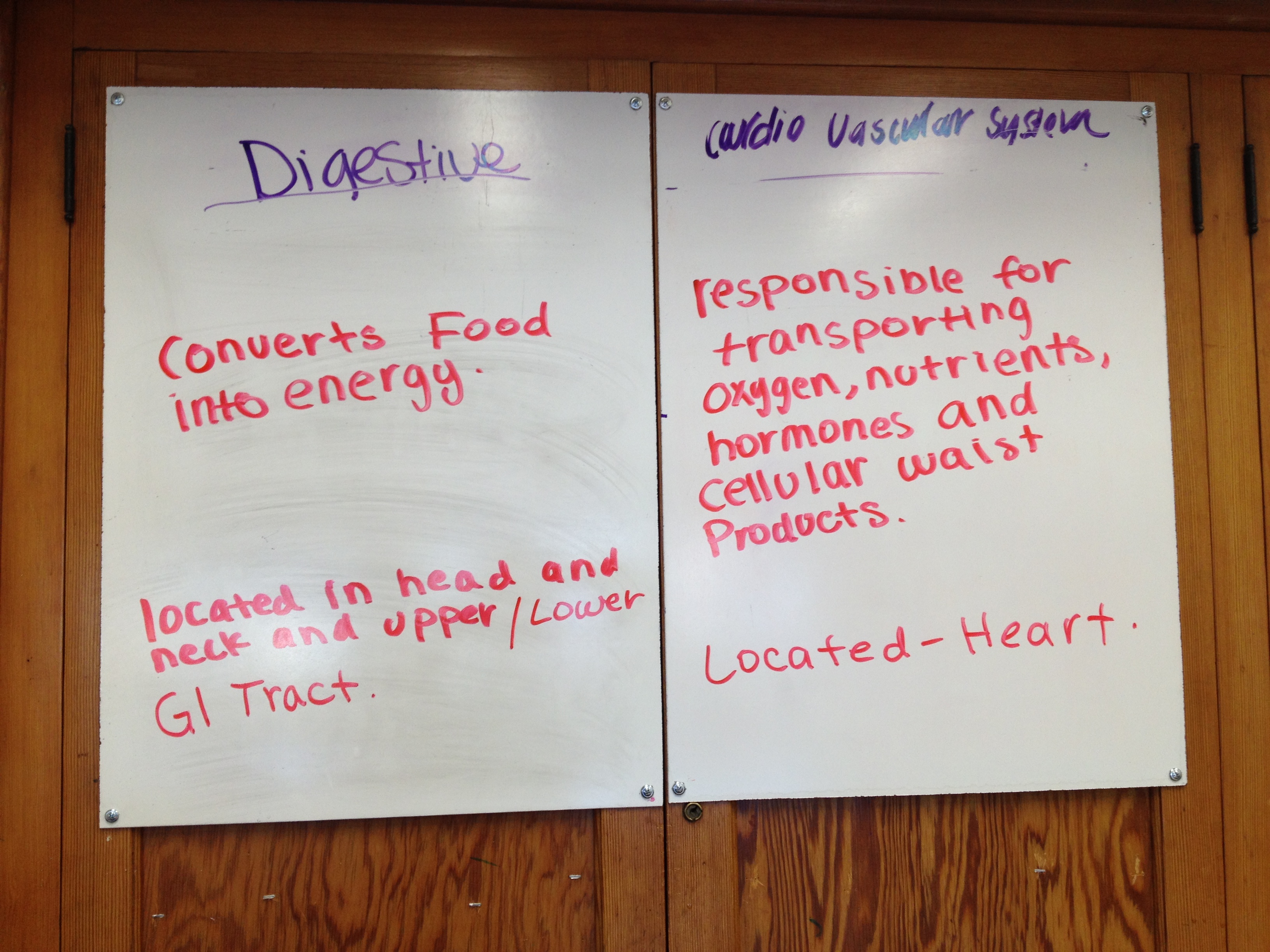
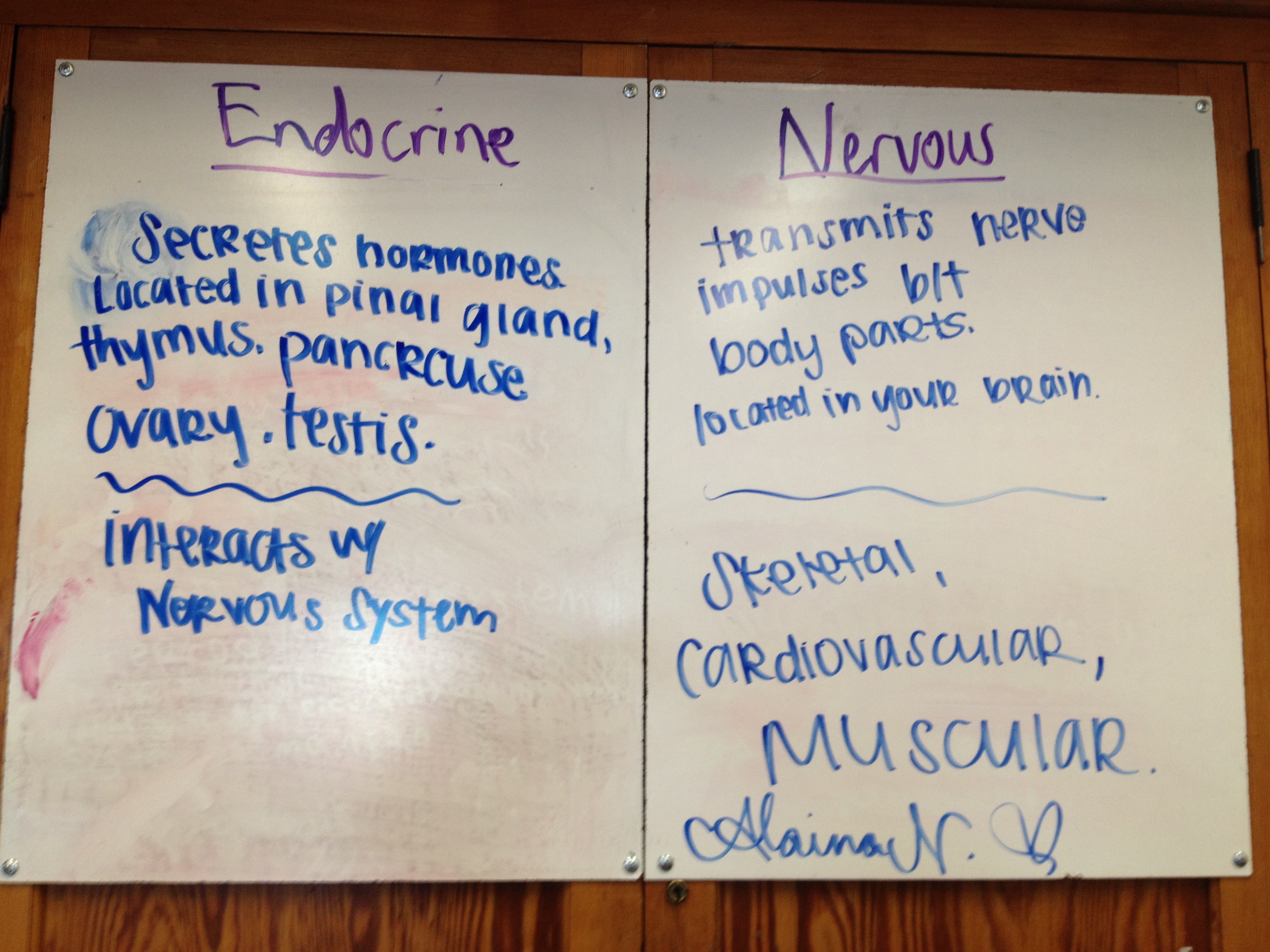
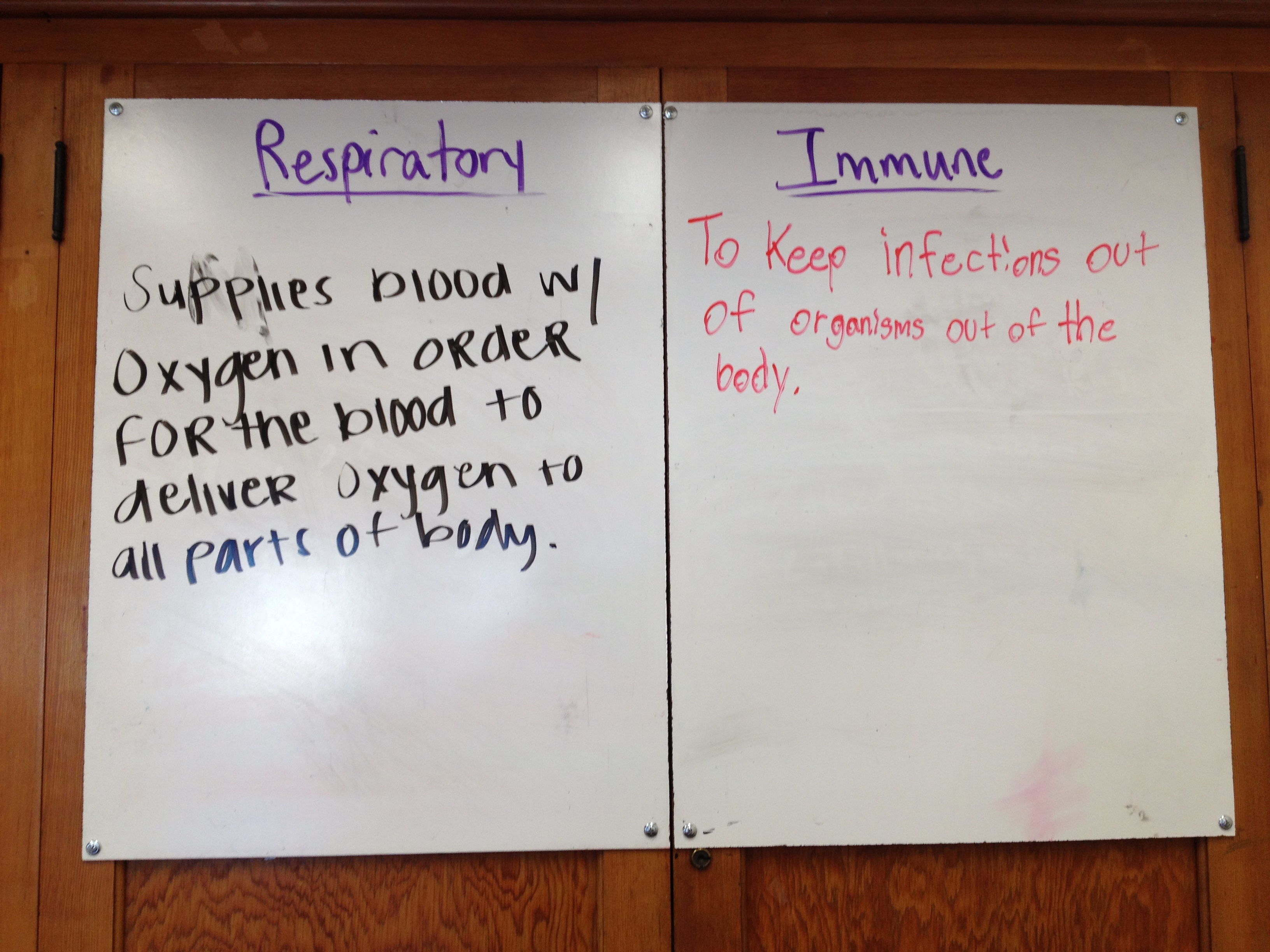
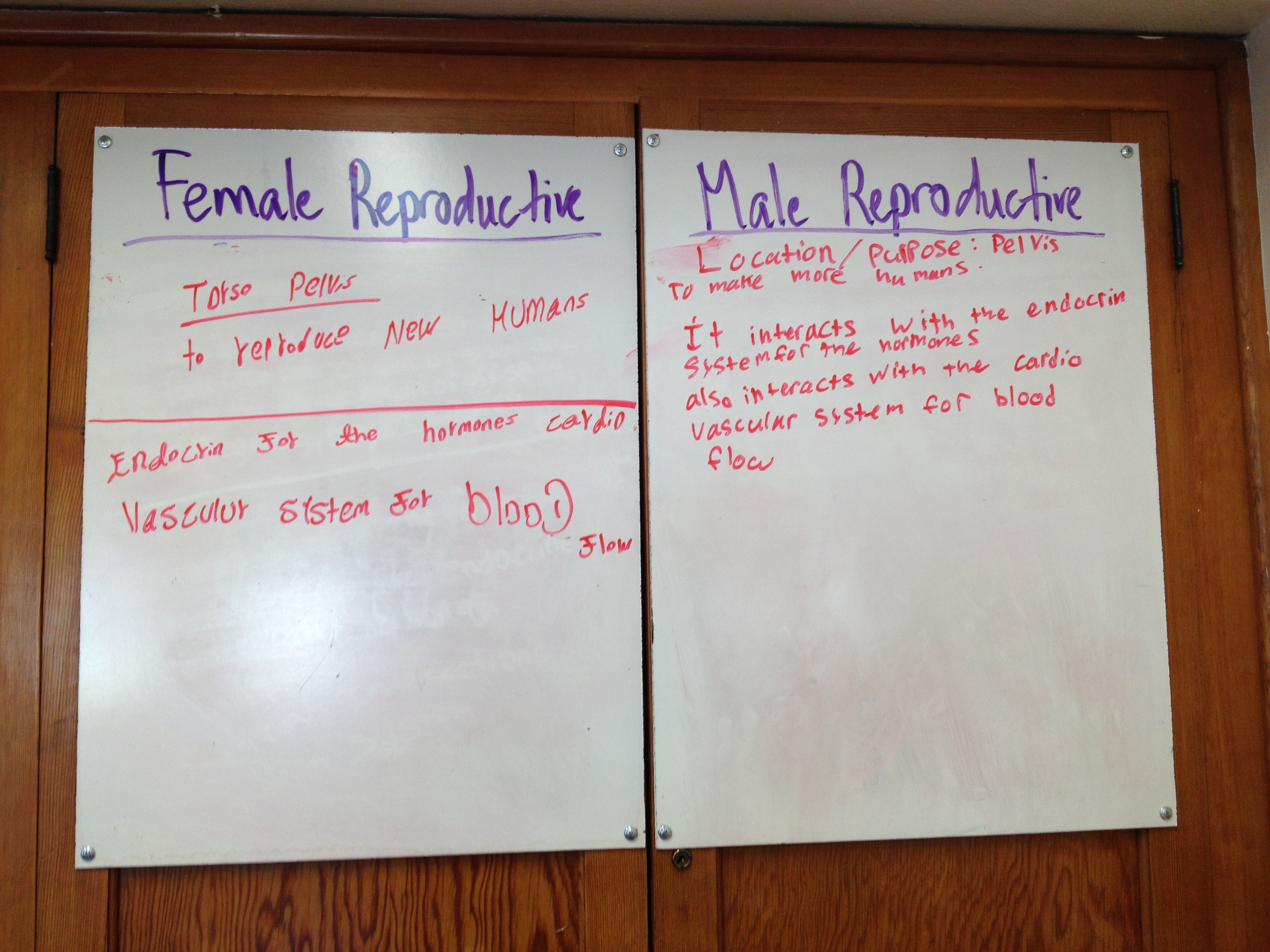
Today we reviewed Josh’s Story and then moved into a brief review of the 12 body systems.  Table groups were assigned 1-2 systems and researched the systems in the class textbook and on the Internet.  Students were encouraged to use the website InnerBody.com as a credible resource.  Groups summarized their assigned system on a worksheet, including information about the purpose and location of each system, as well as major interactions between the systems.  Students then made their learning public by writing it on a whiteboard for the rest of the class to see.  Students then had time to write down the research findings of all of the groups and will use the body systems worksheet tomorrow as they try to explain why Josh became sick.

Picture from all of the white board work for each class are posted below.  Click on a picture to enlarge it.

Period 1:
IMG_6431 IMG_6432 IMG_6433 IMG_6434 IMG_6435 Integumentary and Urinary

Period 2:
IMG_6437 IMG_6438 IMG_6439 IMG_6440 IMG_6441 IMG_6442

Period 3:
IMG_6443 IMG_6444 IMG_6445 IMG_6446 IMG_6447 IMG_6448

Period 4:
IMG_6449 IMG_6450 IMG_6451 IMG_6452 IMG_6453 IMG_6454

Period 5:
IMG_6455 IMG_6456 IMG_6457 IMG_6458 IMG_6459 IMG_6460

Cells and Homeostasis: Cell Membrane Reading

Today in class students read about cell membrane structure and function.  They created questions about key vocabulary concepts in their lab notebooks, traded notebooks with their table partner, and then answered each other’s questions.  The reading will serve both as an information base and also as a preview to tomorrow’s computer simulation.  Remember, we are in computer lab 235 tomorrow.

Cells and Homeostasis: Quiz and Vocabulary

Students took a pop quiz today.  After several lessons spent studying the interaction of cells and the environment, it was time to apply student learning to the environment of blood cells in plasma.  Although the scenario was unfamiliar to most students, the principles they have learned thus far can be readily applied.  In addition, the quiz served as a grade check, as students who had taken quality notes and spent time studying those notes outside of class were able to work quickly through the quiz.  After the quiz, students were introduced to 5 new vocabulary words, each directly relevant to the quiz content and which served to reinforce learning that took place in lessons prior to the quiz.  Students will have the opportunity to revisit quiz content very soon in order to demonstrate understanding of the content.

Update: On Friday, students worked with their table groups to revise their quizzes, integrating their learning of the vocabulary concepts from Thursday.

Cells and Homeostasis: Conclusion Writing

Students wrote conclusions today summarizing the outcomes of their “eggsperiment” lab.  Conclusions consisted of the following elements:

  1. A summary of your understanding of the egg lab results you selected to include in your graph
  2. Define your next experiment
  3. A hypothesis for how your next experiment would turn out

Bonus: We recently measured the amount of oxygen and carbon dioxide present both in our classroom and bubbling off of five eggshells dissolving in vinegar.  To capture the gases, Styrofoam cups were placed over the cups containing the eggs in vinegar.  An opening just large enough for the probes was cut in the cups, allowing us to measure O2 and CO2 without losing those gases to the classroom air.  Here are the results, clearly indicating an increase in carbon dioxide building up in the cups over time as the eggshells began dissolving in vinegar.  What other trends do you see?  What happens to the amount of oxygen measured coming off the eggs?  Remember, 2nd period did not record cup oxygen values, so that piece of data is missing.

Cells and Homeostasis: Structured Talk

Today we revisited the concept of structured talk, with students thinking about and discussing why the membrane of a shell-less egg placed in distilled water ruptured, while a shell-less egg placed in corn syrup shriveled up.  After some private think/write time, students shared their understanding with their lab partner, comparing and contrasting their ideas.  Partners then shared with their table, after which the table groups represented their ideas visually on a white board.  By the end of the exercise, students had practiced structured talk and better understood the concept the water moves across the cell membrane toward the higher concentration of solute (a vocabulary word students will learn tomorrow).  After filling out a data capture tool for the UW, students then had time to analyze their graphs from yesterday and answer the following questions:

  • What patterns or trends do you see in your graph?
  • How did your choice of graph reveal patterns or trends in the data?
  • Given your understanding of the movement of water across a cell membrane, explain the egg mass results.
  • What questions do you still have?

Cells and Homeostasis: Graphing

Yesterday students analyzed the results of all of the Eggsperiment data from my five class periods.  They calculated the average change in egg mass for two or more experimental conditions and then graphed the results.  Each student is responsible for making their own graph, and the graph must include the condition of their egg, along with one or more relevant control conditions, or conditions that can used as a basis of comparison when writing the discussion section of their lab report.  The graph must include a title, labeled x-axis and y-axis with appropriately labeled increments, and a key explaining the groups on the graph.  Most students made a bar graph.

Cells and Homeostasis: Eggsperiment Day 4

Today we collected data from the eggsperiment!  Students measured the mass of eggs that had been incubating for nearly 24 hours in various liquids.  The class data can be viewed here.  On Monday, students will work in teams to evaluate the data, looking for trends or patterns across the data collected from students in all 5 of my class periods.  After collecting the class data, we briefly discussed how water is transported across cell membranes (via aquaporin proteins) and contrasted that with the overly simplistic concept of osmosis.  We will dig more deeply into those concepts next week.

For homework this weekend, students should complete the calculations and analysis of the CO2 and O2 results collected on Monday when eggshells were dissolving in vinegar.  Students should attempt to graph the data and we will discuss graphing strategies on Monday as well.

Note: period 2 students did not collect one of the rows of O2 data, so that data point will have to be omitted from the analysis.

Cells and Homeostasis: Eggsperiment Day 3

The students placed their shell-less eggs in various solutions today in order to evaluate the interaction of a cell membrane with an external environment.  The purpose of the experiment is to help shed light on a case study the students read about a guy named Josh who worked hard all day in the hot sun and became ill despite drinking energy drinks and juice.  In the experiment, students placed eggs in tap water, distilled water, a saturated salt solution, a 10% light corn syrup solution (sugar water), grape or orange Gatorade, Dr. Pepper, or Coke Zero.  The students measured and recorded the mass of each egg prior to placing them in their assigned liquid, and they will record the mass again tomorrow.

While students were hard at work conducting their lab, I joined Mrs. Tessandore at a Project Lead The Way conference at Seattle University.  We are exploring the possibility of bringing the Biomedical Science curriculum to our school in the near future.