
Today we are participating in the Hour of Code. To get started, visit one of these websites below and dive in. Want to continue your learning with coding and score some extra credit? Visit the Keep Learning! page for instructions on how to sign up for these websites using a class course code. Be sure to let me know you have signed up and you will receive extra credit for completed work units. Computer literacy and coding are critical skills for all scientists, so keep learning!
All posts by David Swart
Body Systems Project Presentations
Great job today with the presentations! Today concludes our study of body systems. Tomorrow we will participate in the Hour of Code.
Body Systems Project – Day 4
Today marked the final day of class time for students to work on their body systems projects. Students will present their projects to their classmates tomorrow.
Cells and Homeostasis: How Cells Eat
Today we began class with students meeting with their Great Salt Lake causeway project groups. Students reviewed the feedback they provided each other in order to improve their current projects. We then took a detour from our study of body systems in order to acquire the vocabulary around how cells eat. We viewed a Power Point slide deck and then broke into our body systems groups to the last few minutes of class to discuss how the eating mechanisms might be relevant to each body system. Students will have tomorrow to complete their body systems projects and will present on Wednesday.
Body Systems Project – Day 3
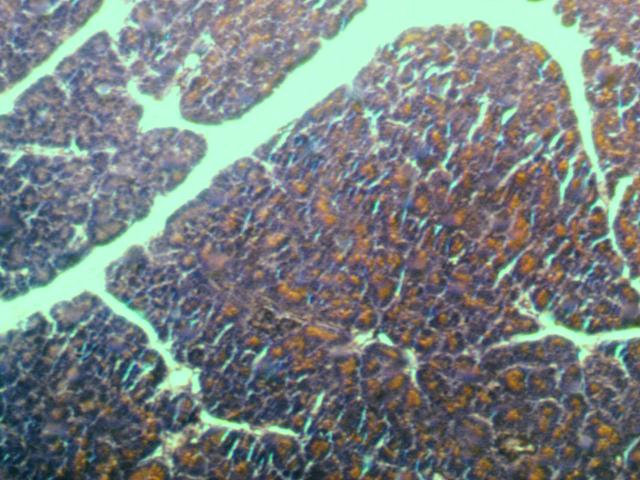
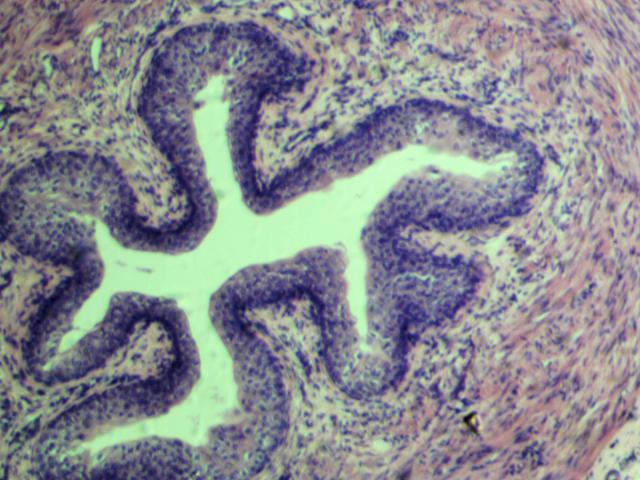
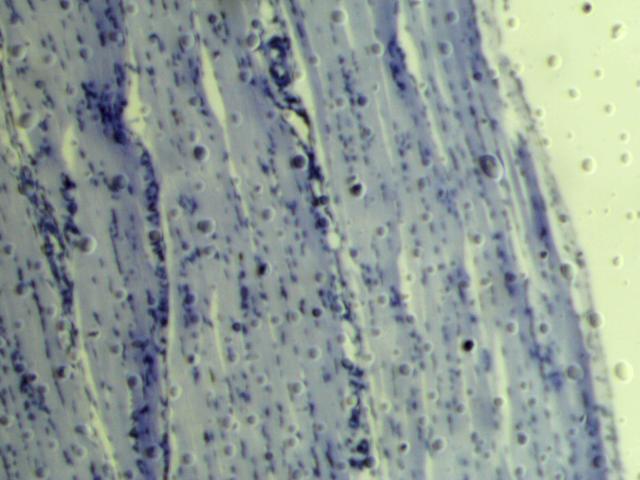
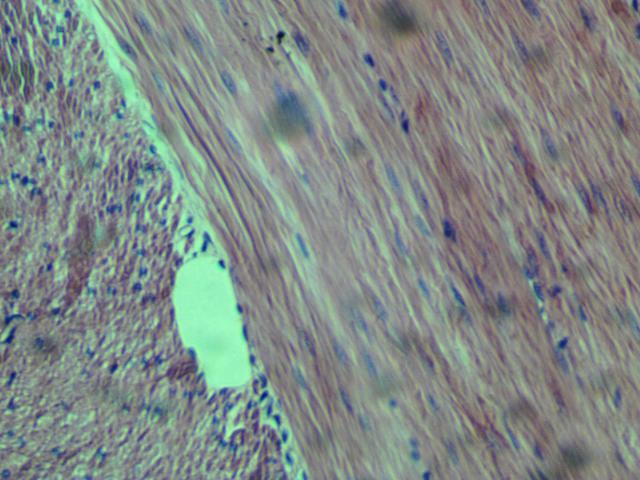
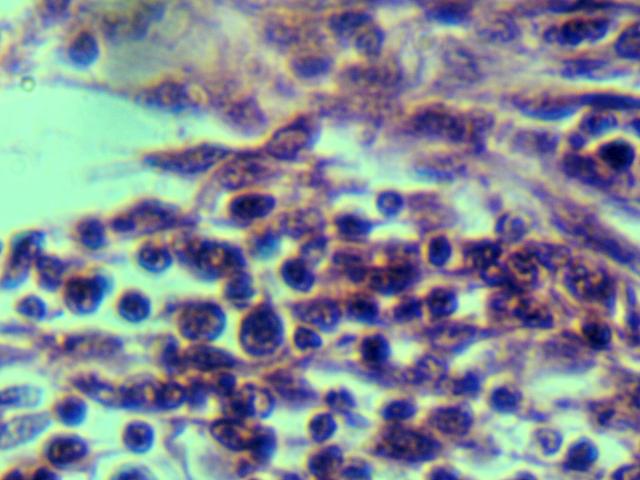
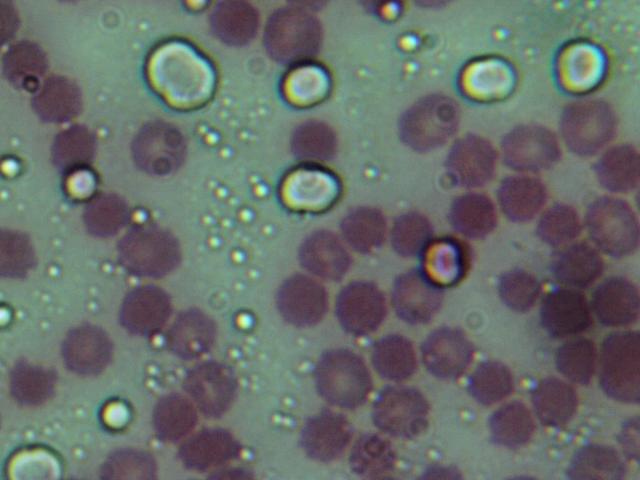
Students ontinued working on their body systems projects, making excellent progress on both the posters and findings tests a doctor might use to diagnose illness in their assigned body system. Students also had access to our classroom digital microscope, taking pictures from prepared slides that are relevant to their projects. A sampling of pictures taken by students are shown below. Additional pictures of human tissues are available on the website pulpbits.com.
Body Systems Project – Day 2
Today we launched into our body systems project work. Students worked together in their project teams and completed a worksheet to help them define the parameters of the project. From there, they used the resources available in the room (library books about body systems, textbooks, and Internet websites like InnerBody.com) to research the content for the poster. Students are also responsible for identifying at least one test the doctor seeing Josh would order to validate the diagnosis that the specified body system is negatively affected. Students received a list of tests with “normal” values and were referred to MUSC Health for information about each test (which could also be researched with a Google search).
Body Systems Project – Day 1
Today we had an unannounced clicker quiz that served multiple purposes. First, the quiz allowed students to assess their knowledge of body systems vocabulary. Second, students were able to voice which body system they though twas most affected in Josh when he became sick. Their opinions determined which body systems would be available for the group projects. Finally, students with the highest scores quiz scores were identified as project team leads, and their “reward” was being able to select from the list of available body systems. Students who were not team leads then had to identify which body system and team leader their skill set would best fit, and then sign up to join that group. We will launch the projects tomorrow. Click here for the slides presented today showing new vocabulary around the levels of cellular organization (cell, tissue, organ, and organ system – synonymous with body system) and the requirements of the project.
Cells and Homeostasis: Doctor You!
Today we applied our learning of body systems to our study of Josh. Students thought deeply about which body systems were affected when Josh became sick and shared their ideas with each other and on a worksheet. Students then were challenged to think of themselves as Josh’s doctor. They were tasked with coming up with three possible diagnoses for Josh, and then finding out which medical tests to order. To identify the “normal” laboratory values of each available tests, students visited TheBody.com. Students are challenged to hypothesize how Josh’s lab values might be affected by each diagnosis.
Extension:
- What do the lab tests actually measure?
- Why do the values change when a person is sick?
- How do the values return to the “normal” range?
Cells and Homeostasis: Body Systems
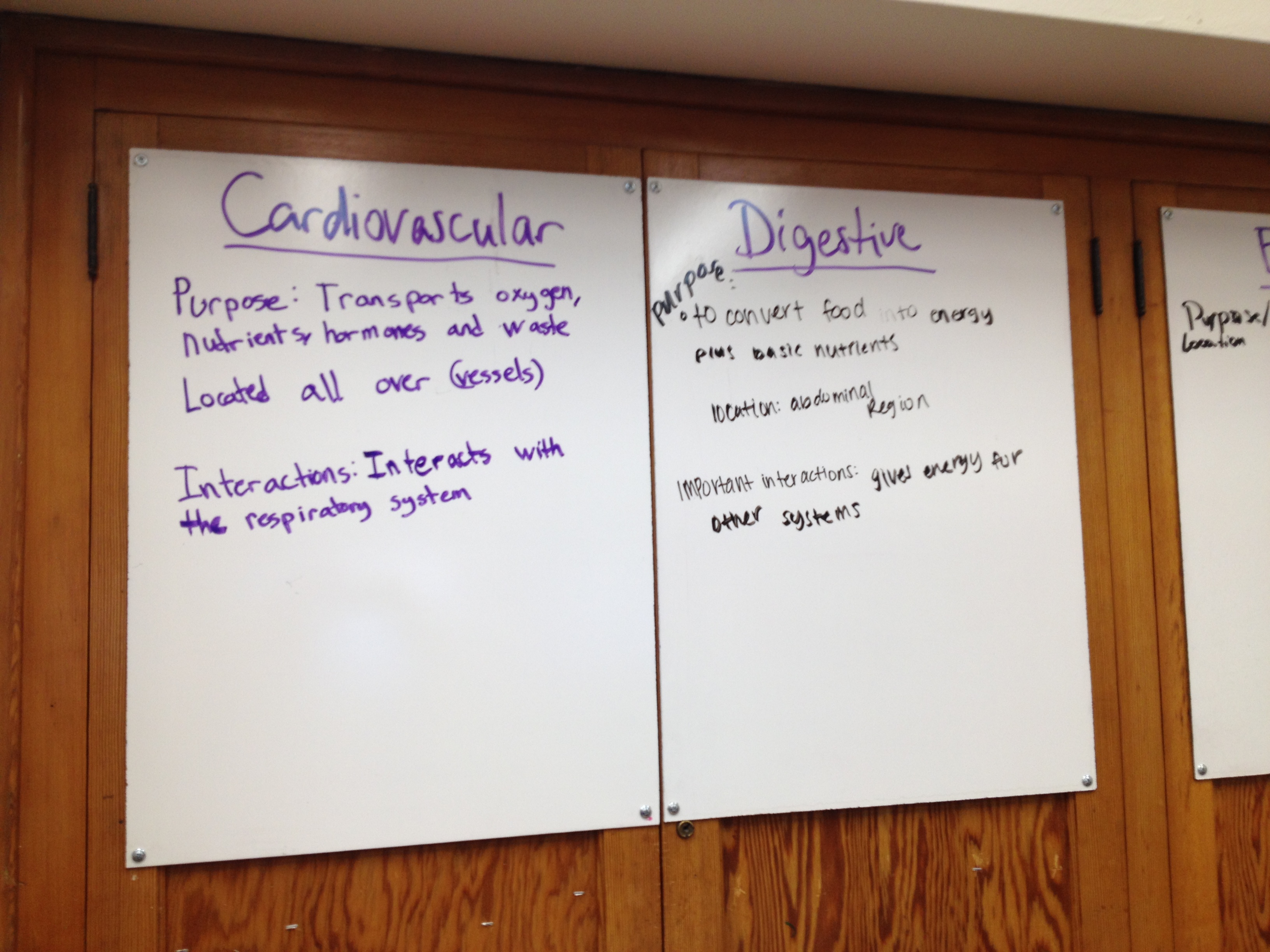
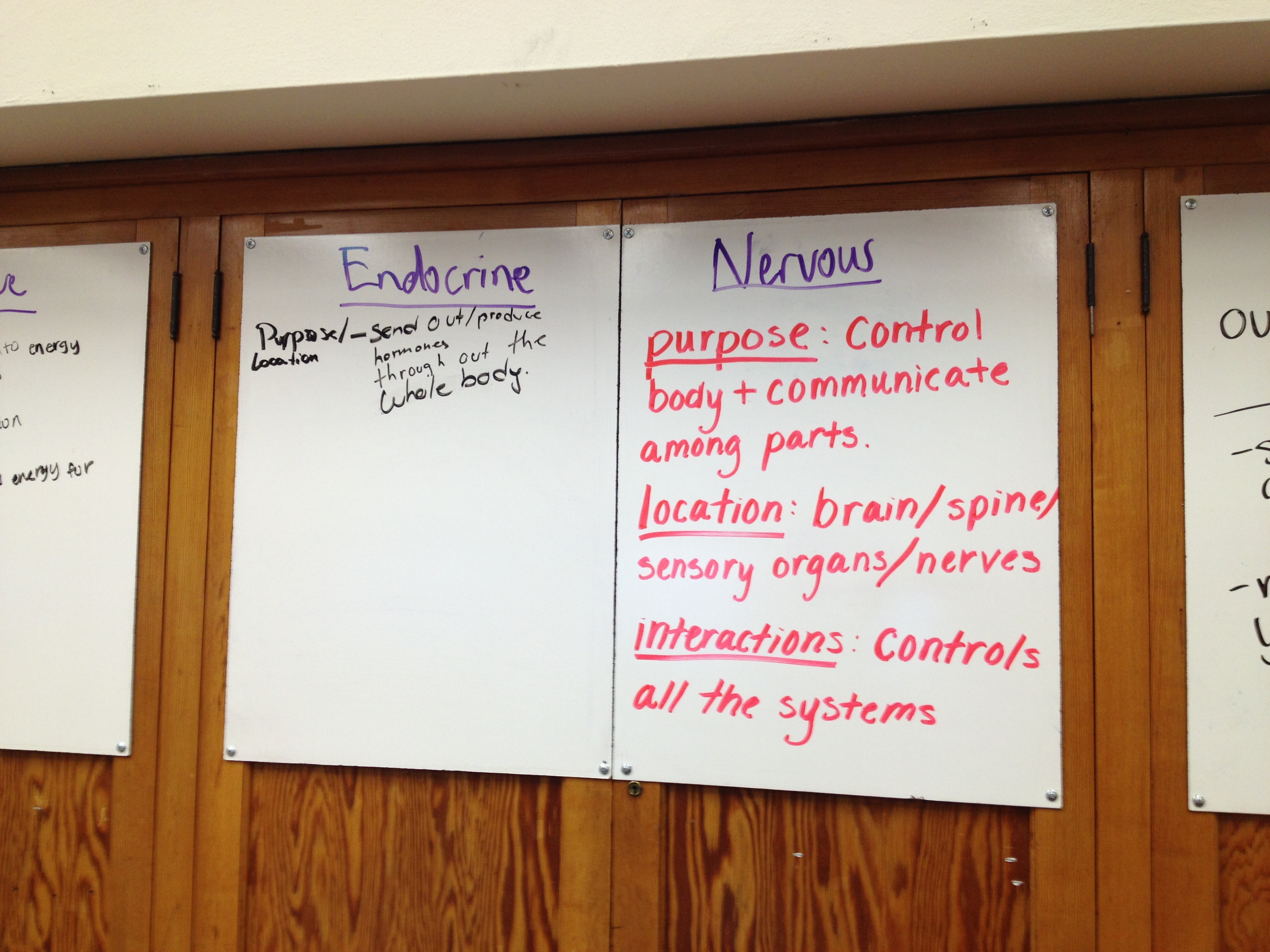
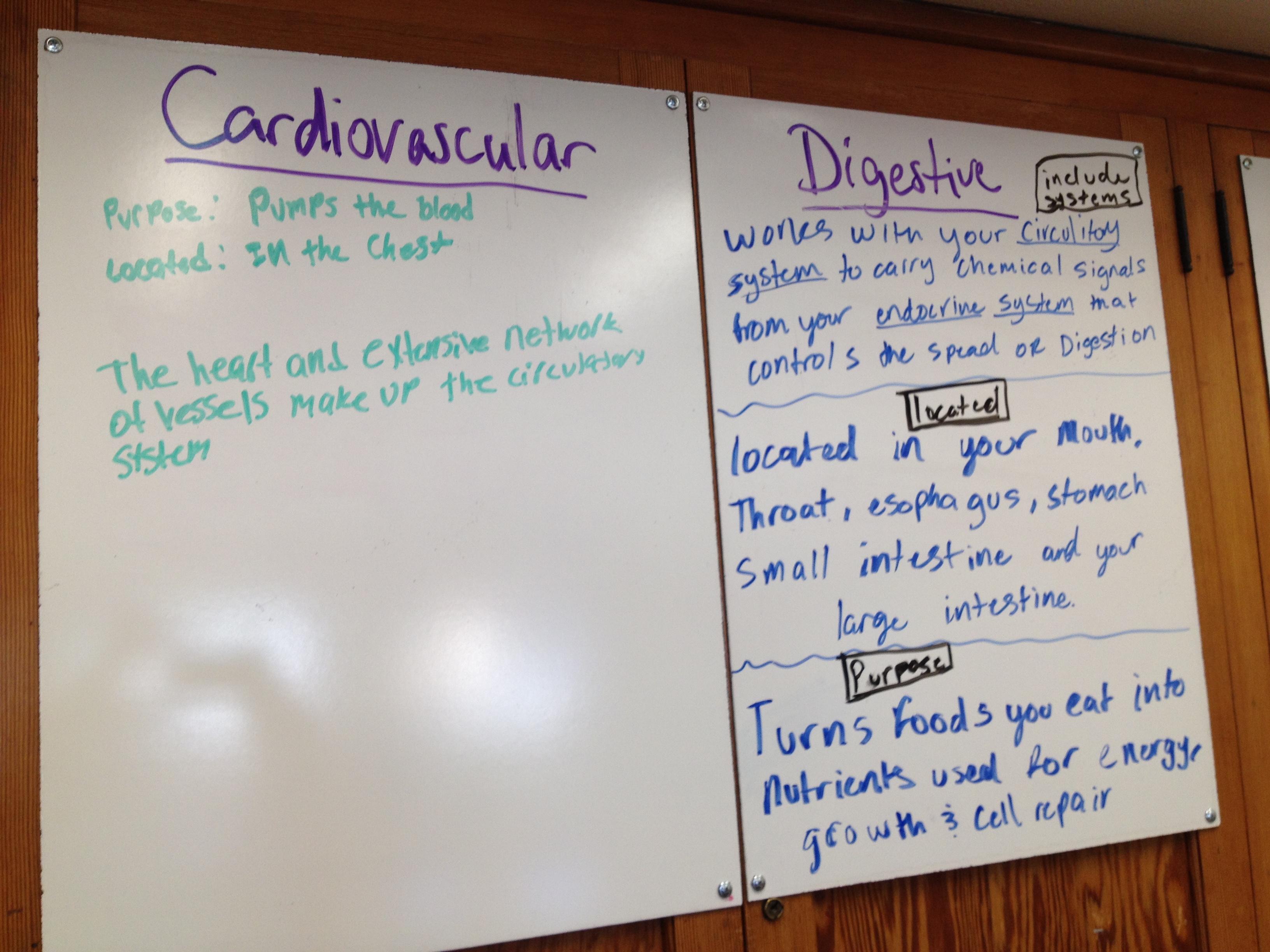
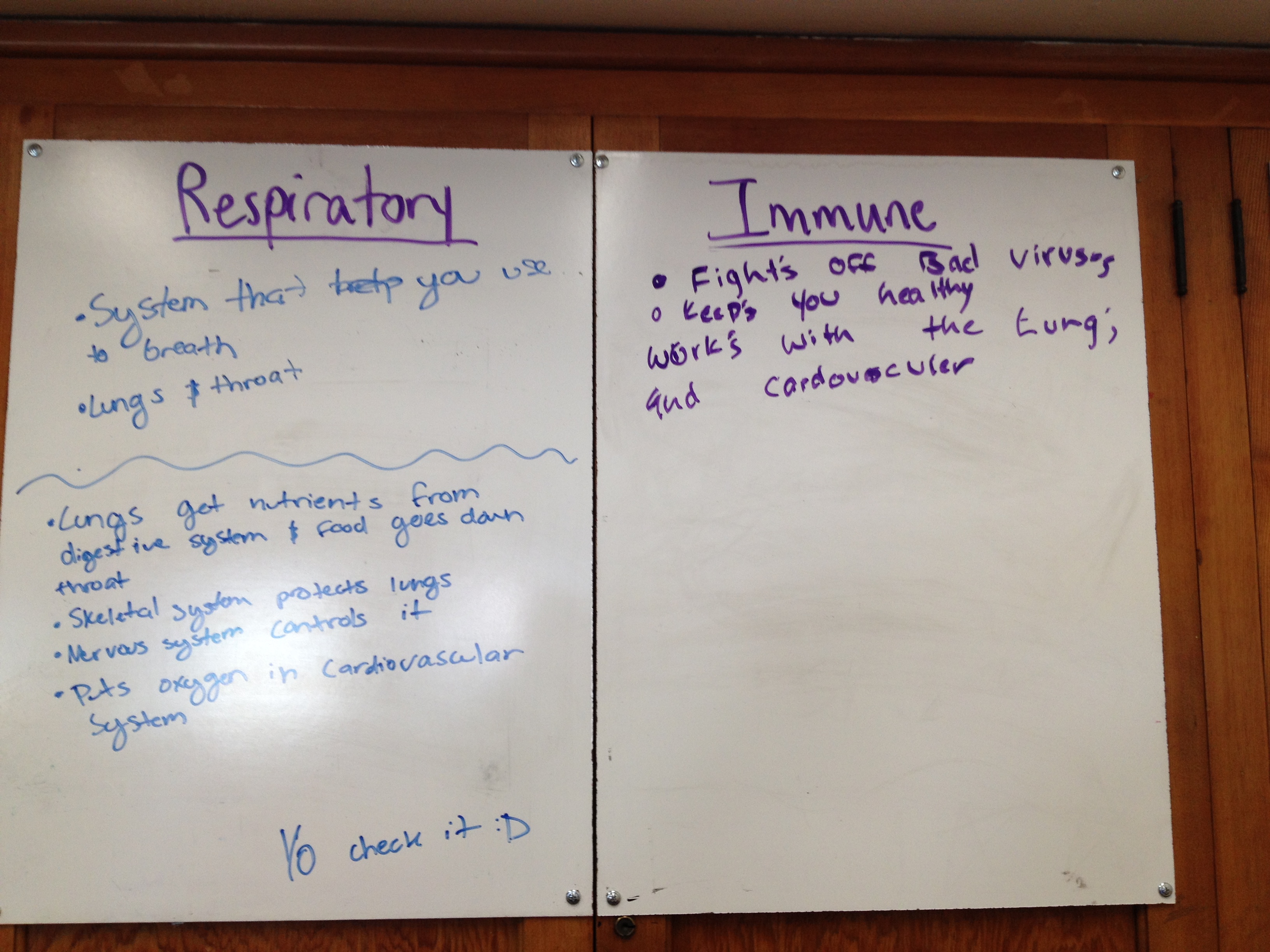
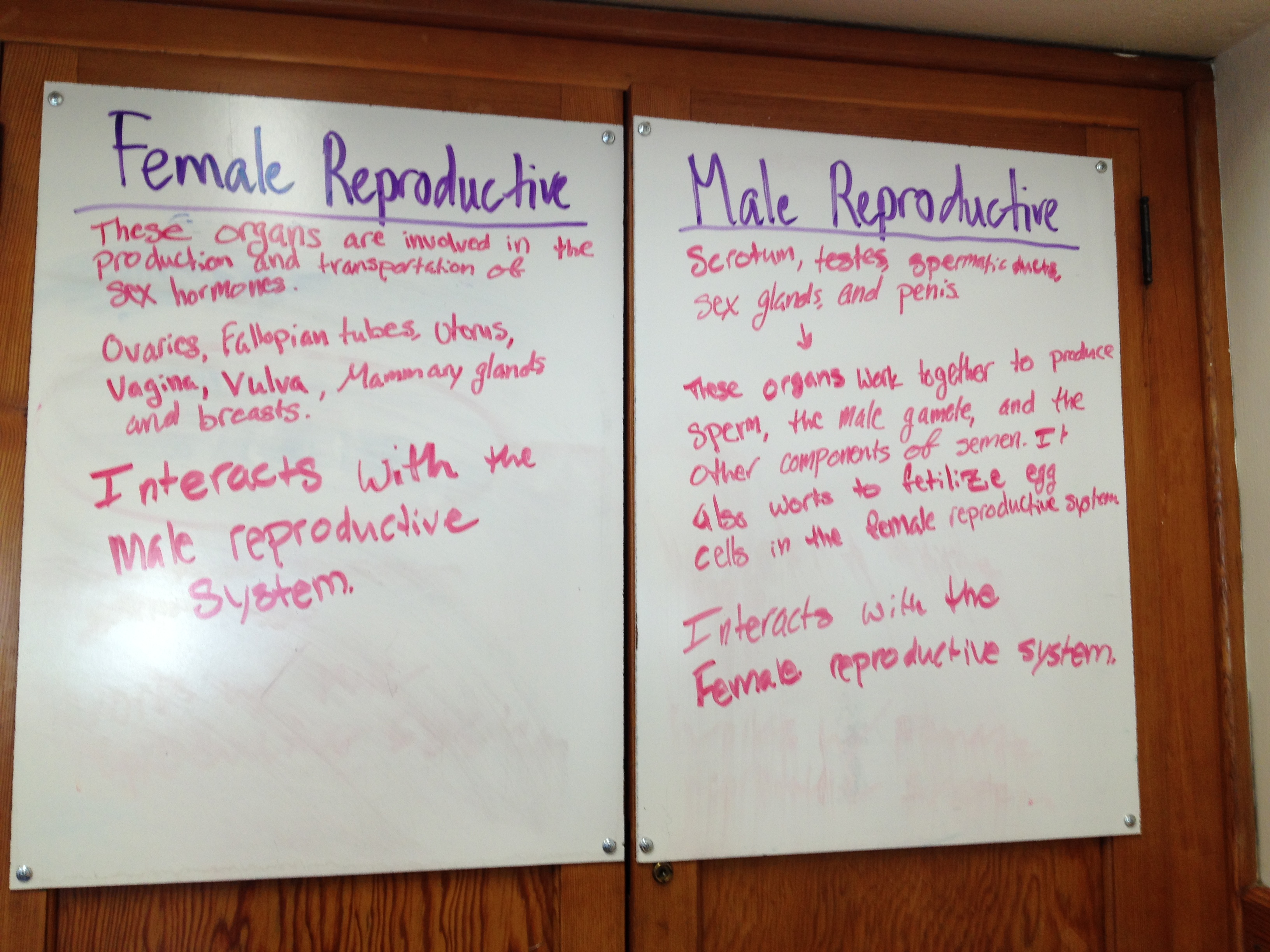
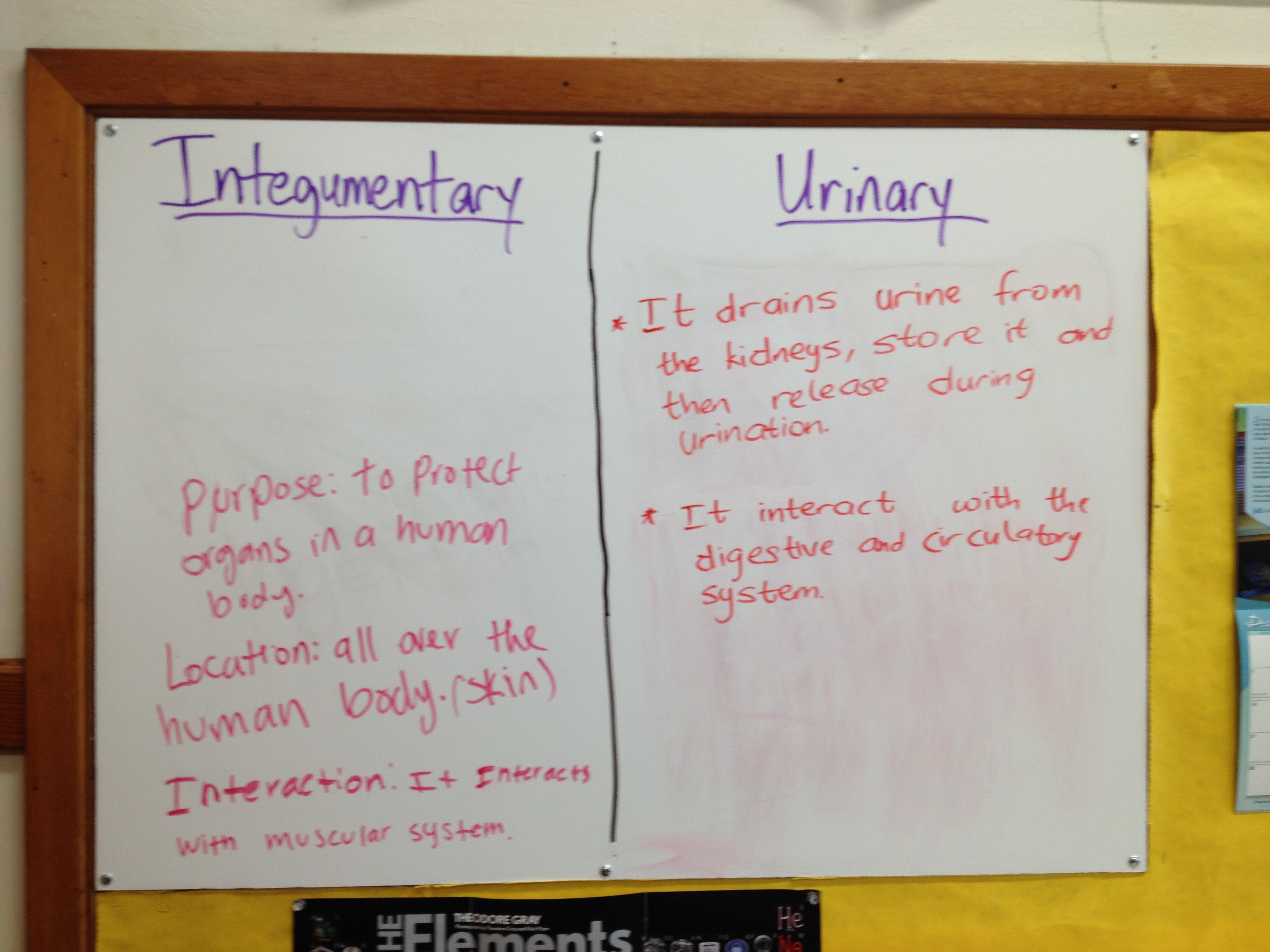
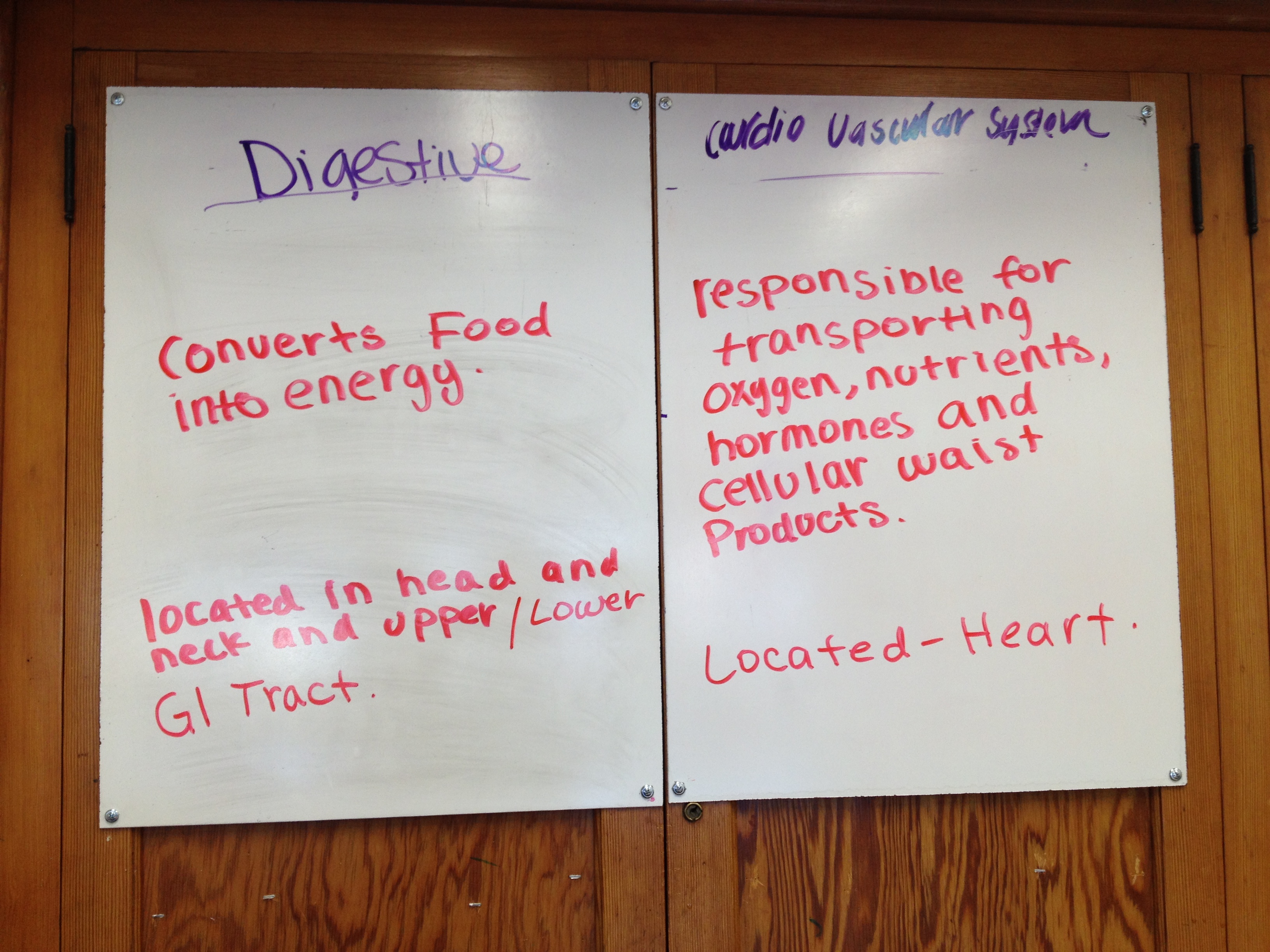
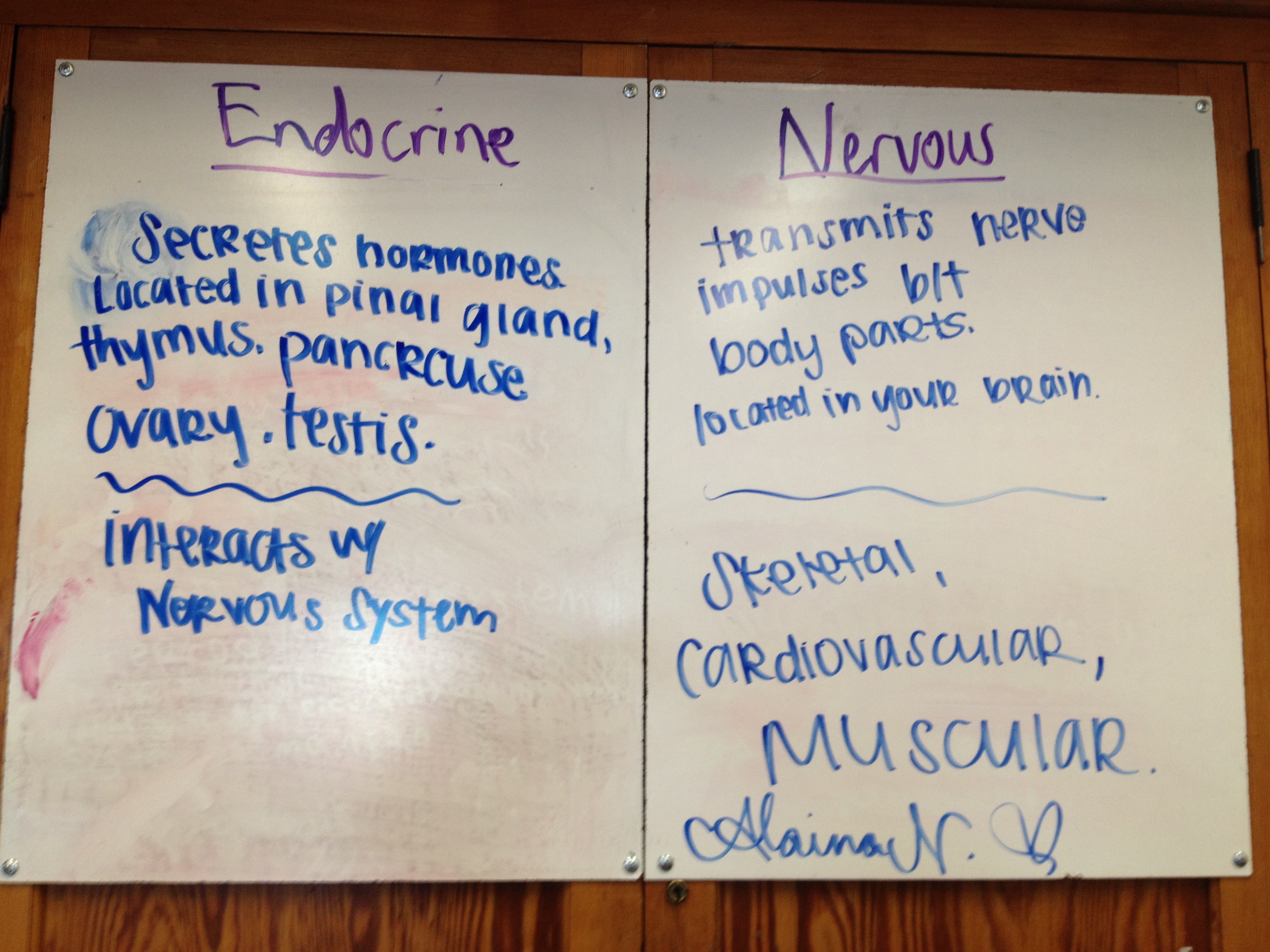
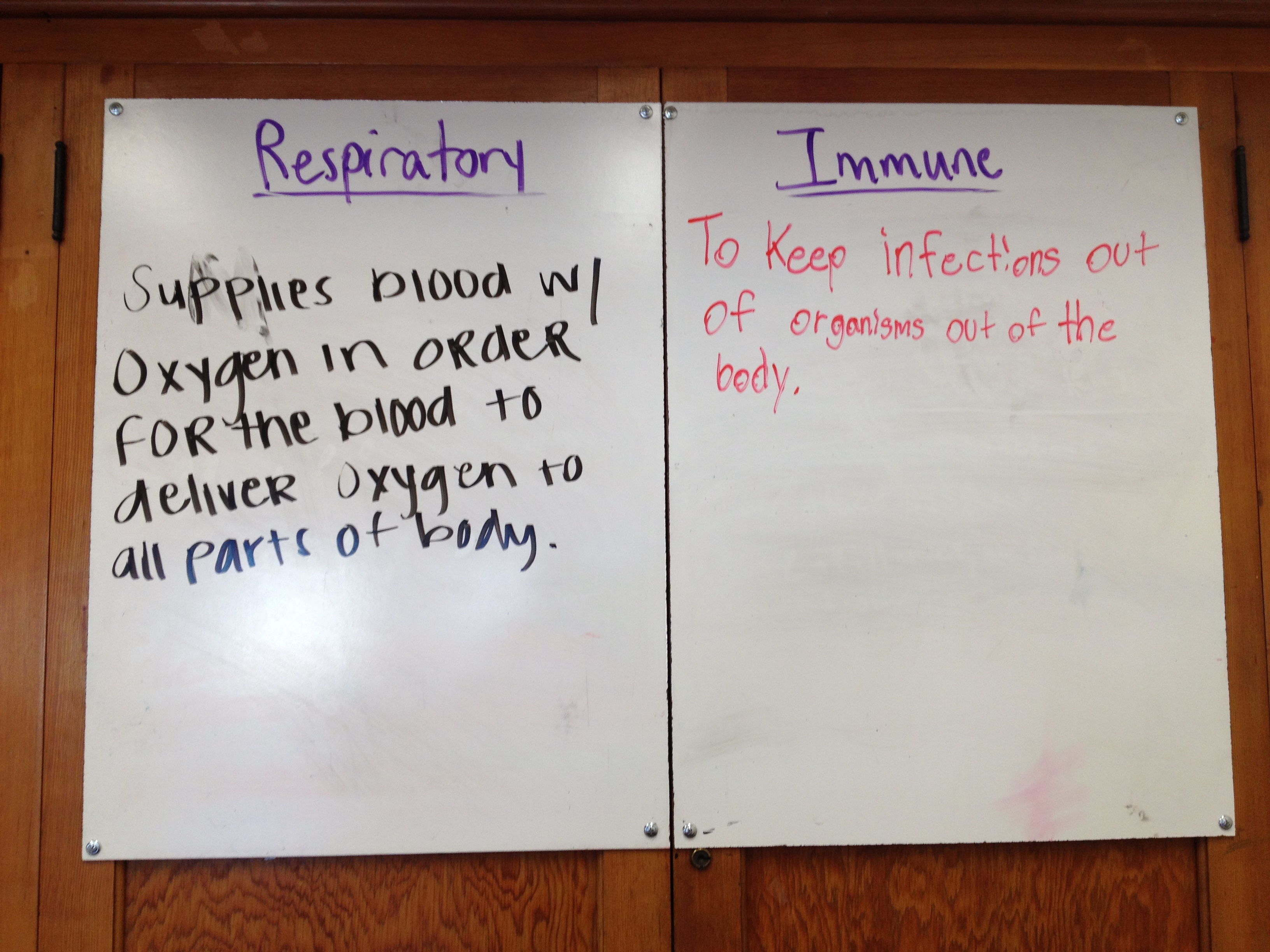
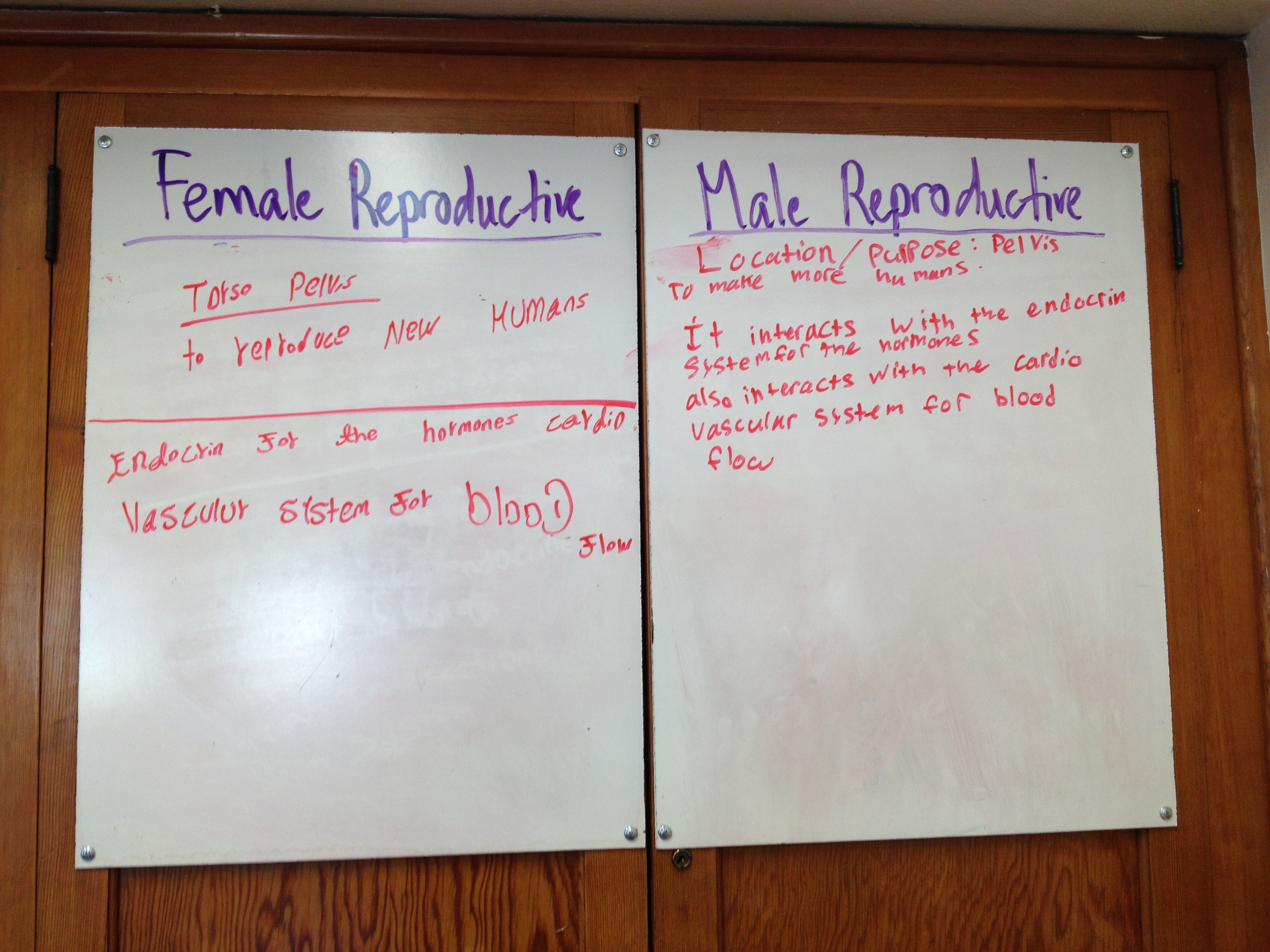
Today we reviewed Josh’s Story and then moved into a brief review of the 12 body systems. Table groups were assigned 1-2 systems and researched the systems in the class textbook and on the Internet. Students were encouraged to use the website InnerBody.com as a credible resource. Groups summarized their assigned system on a worksheet, including information about the purpose and location of each system, as well as major interactions between the systems. Students then made their learning public by writing it on a whiteboard for the rest of the class to see. Students then had time to write down the research findings of all of the groups and will use the body systems worksheet tomorrow as they try to explain why Josh became sick.
Picture from all of the white board work for each class are posted below. Click on a picture to enlarge it.

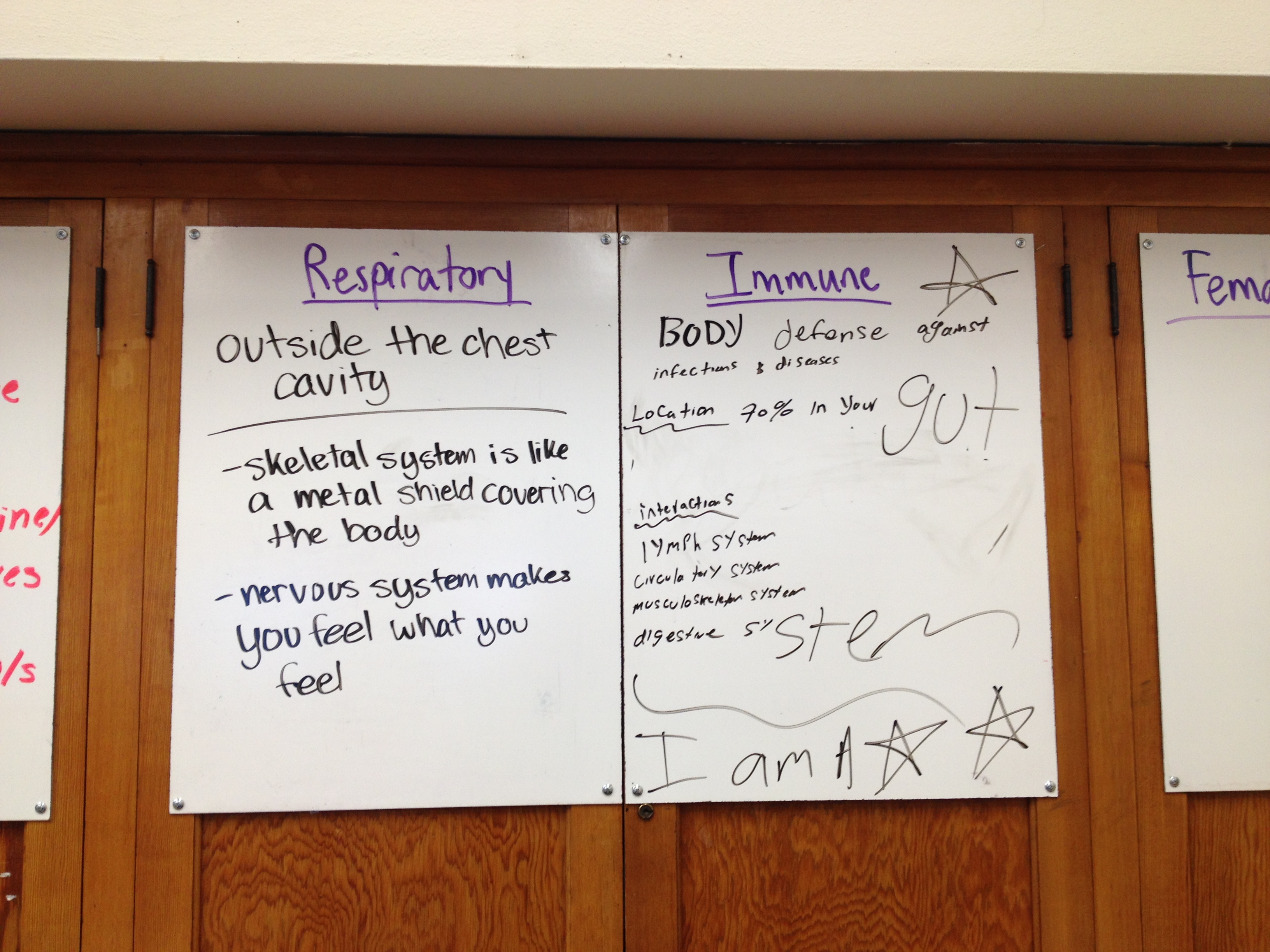
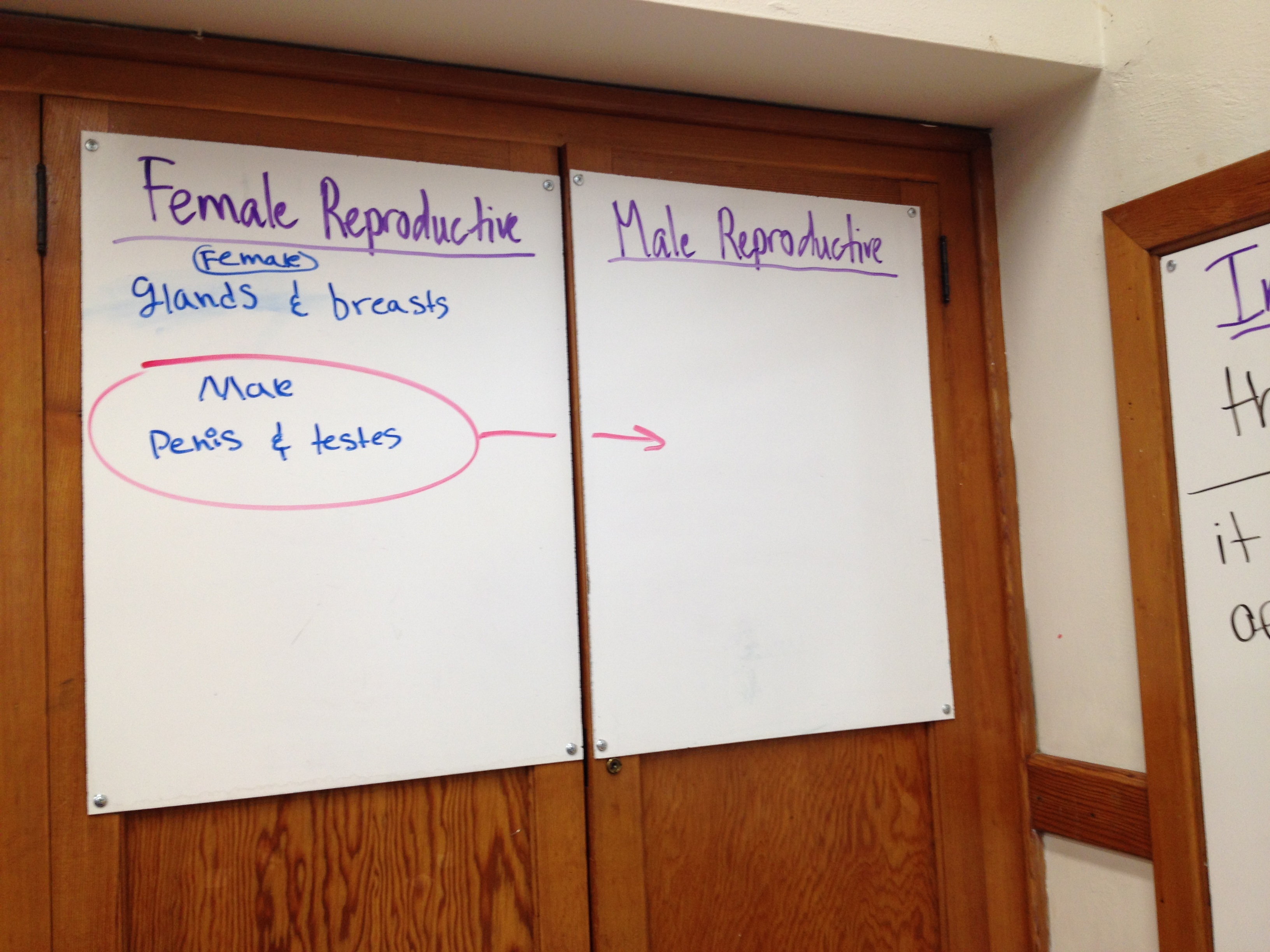
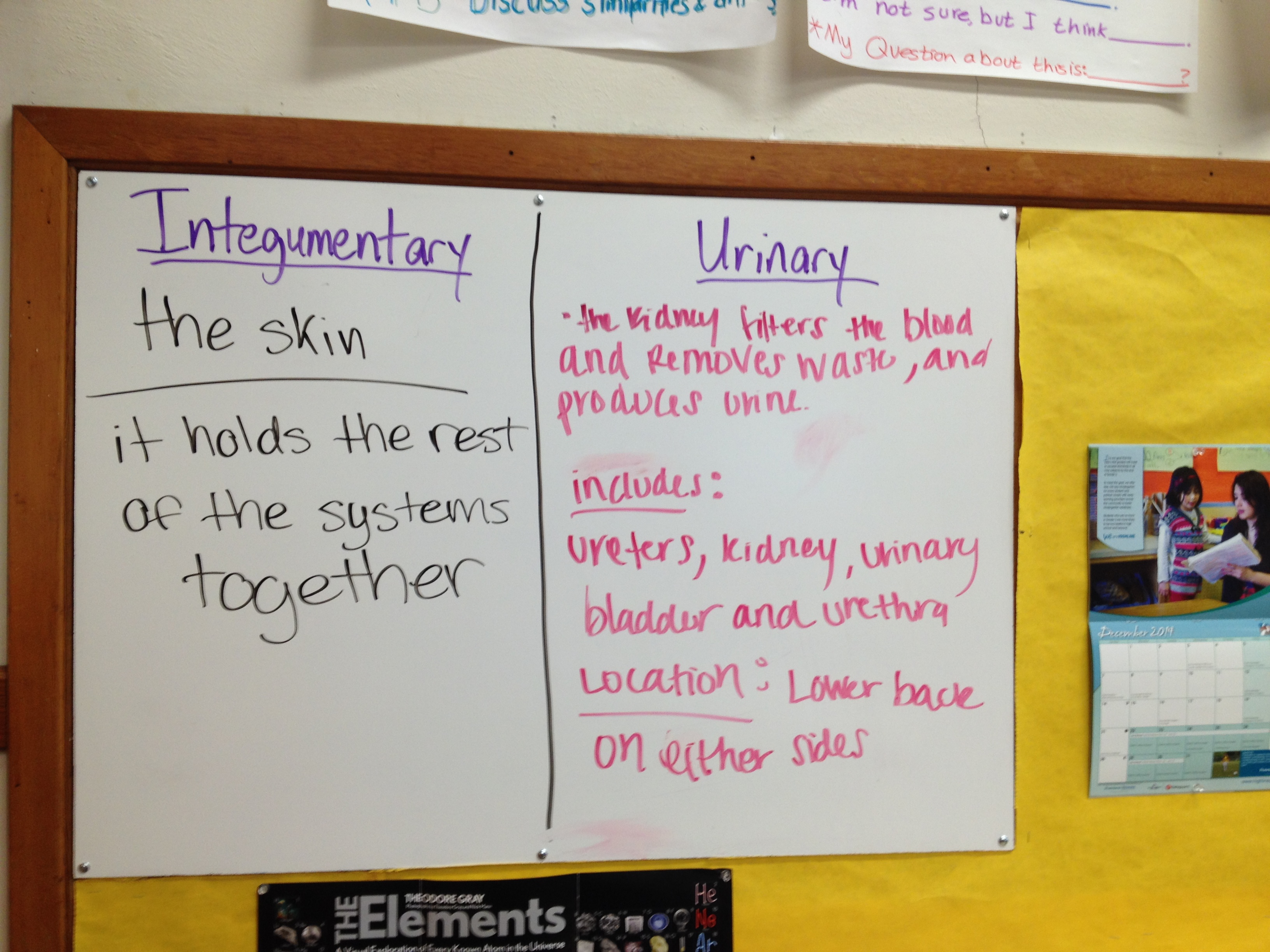
Period 2:
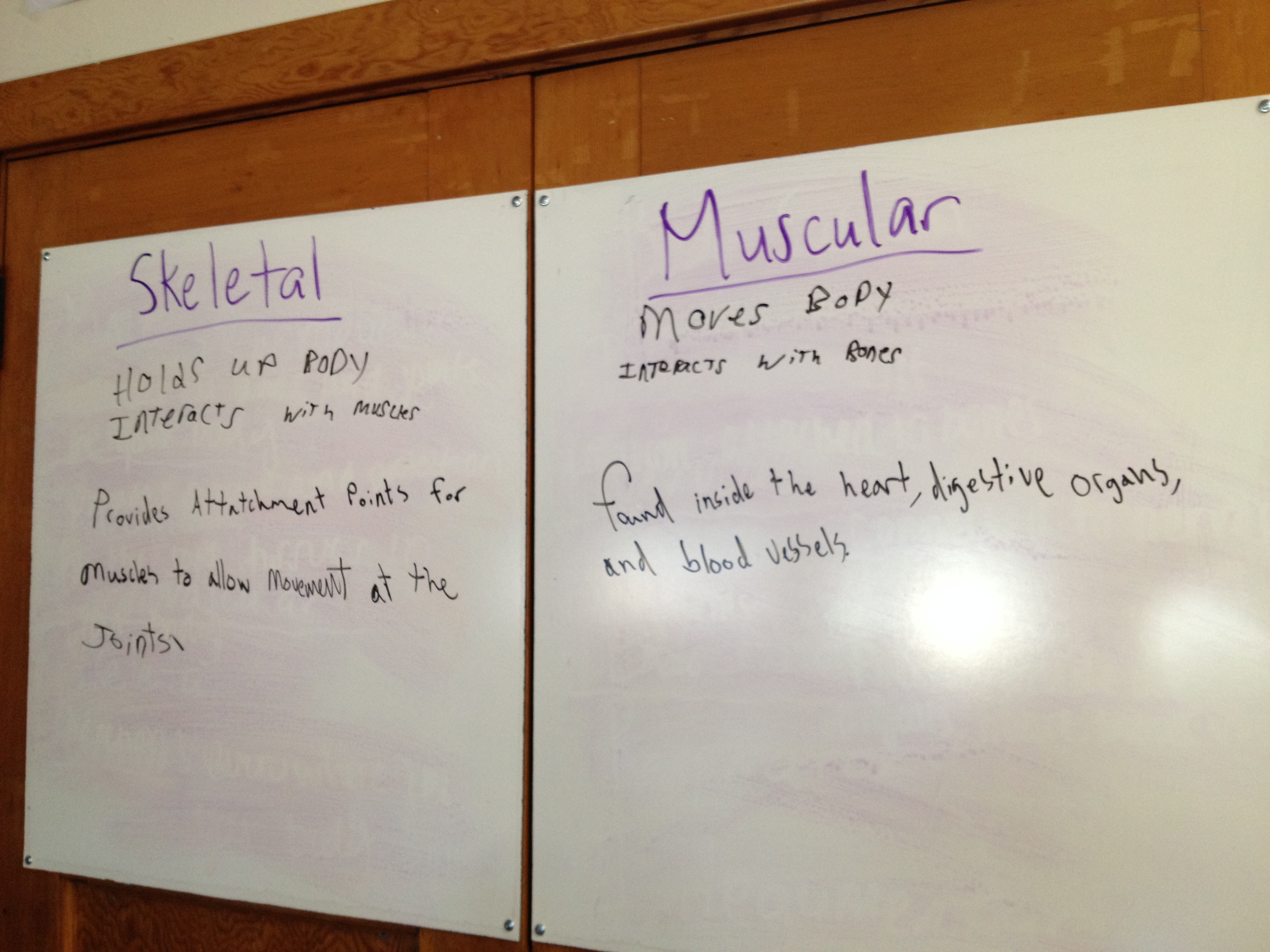

Period 3:
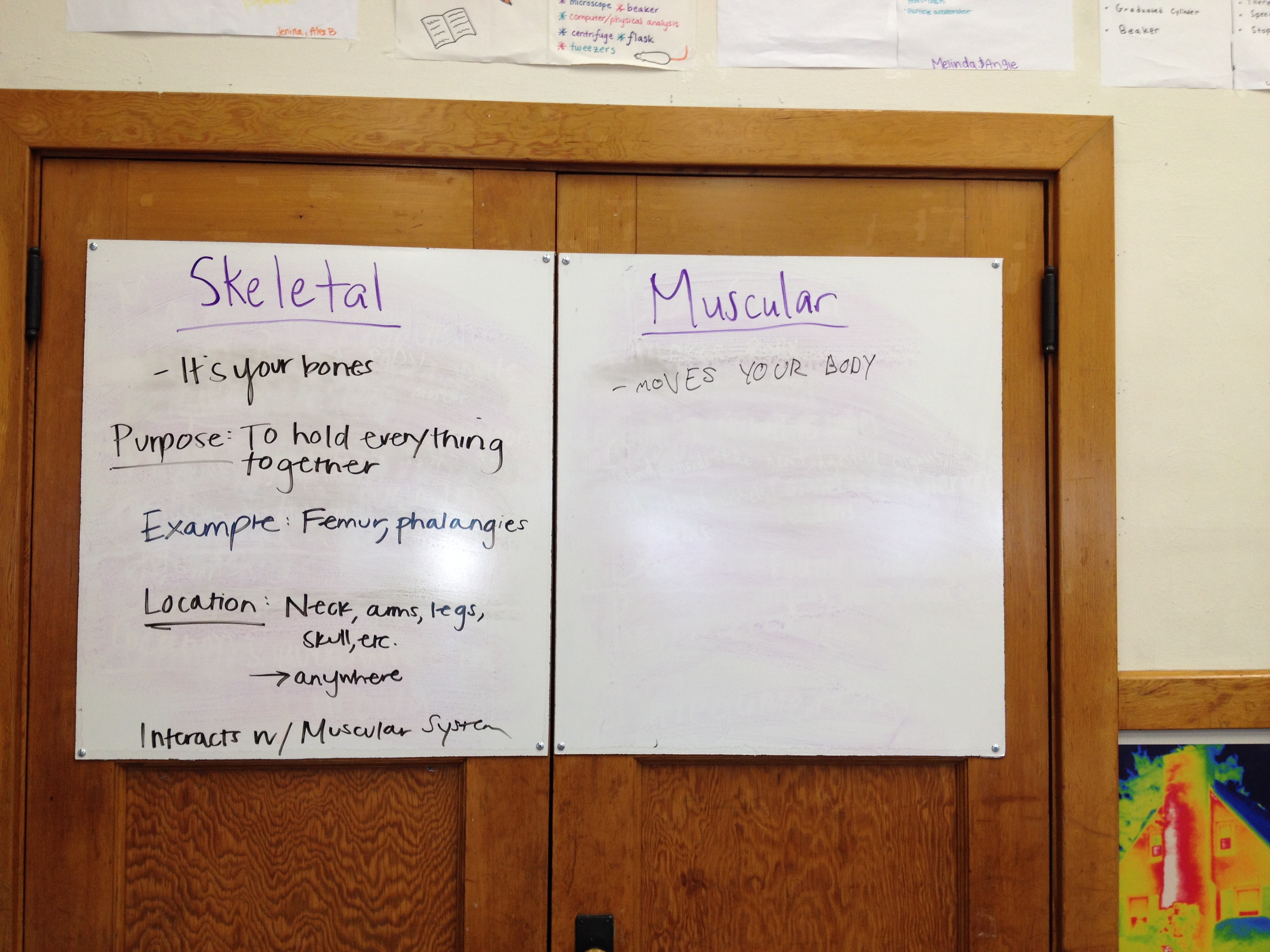
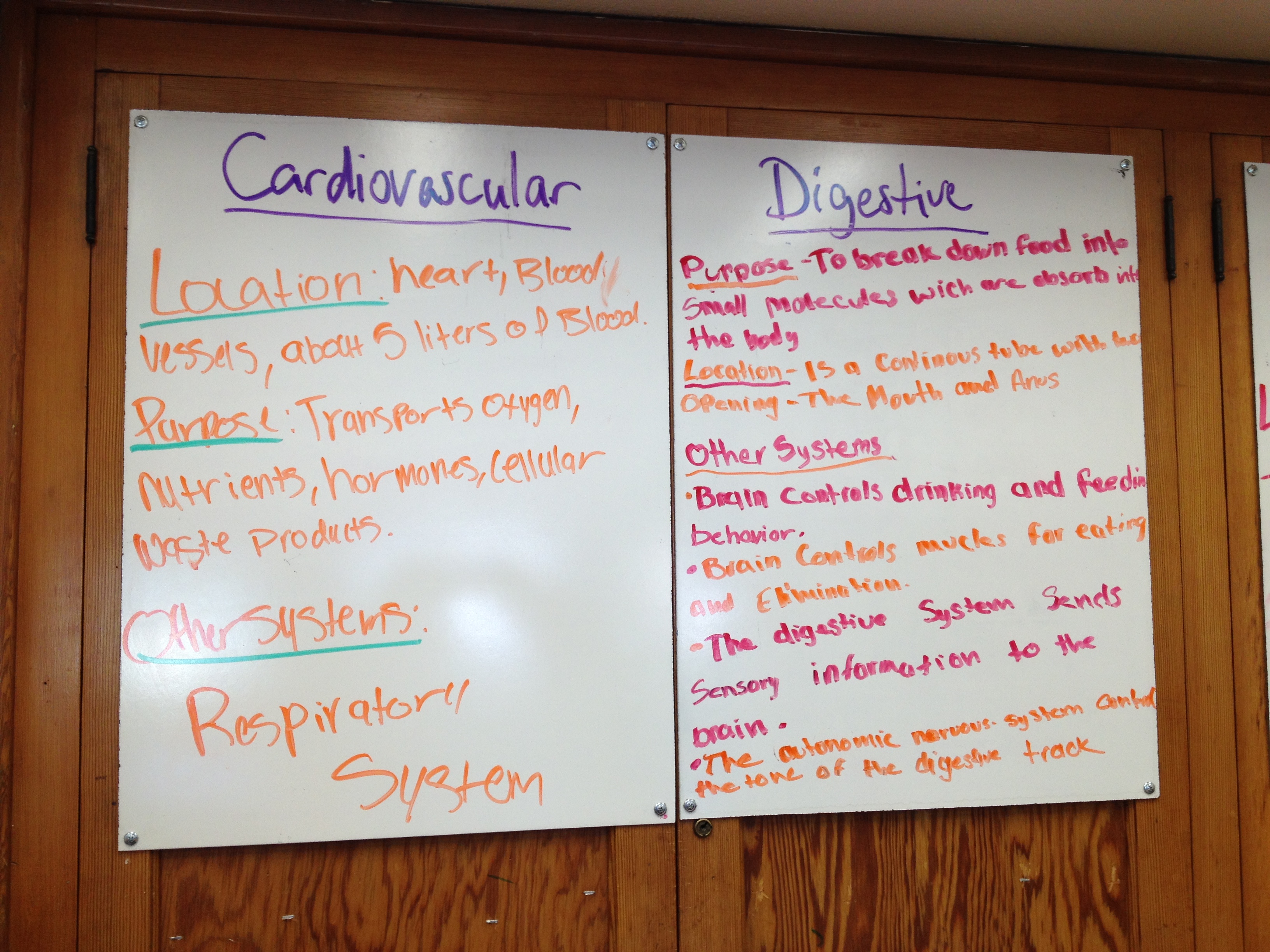
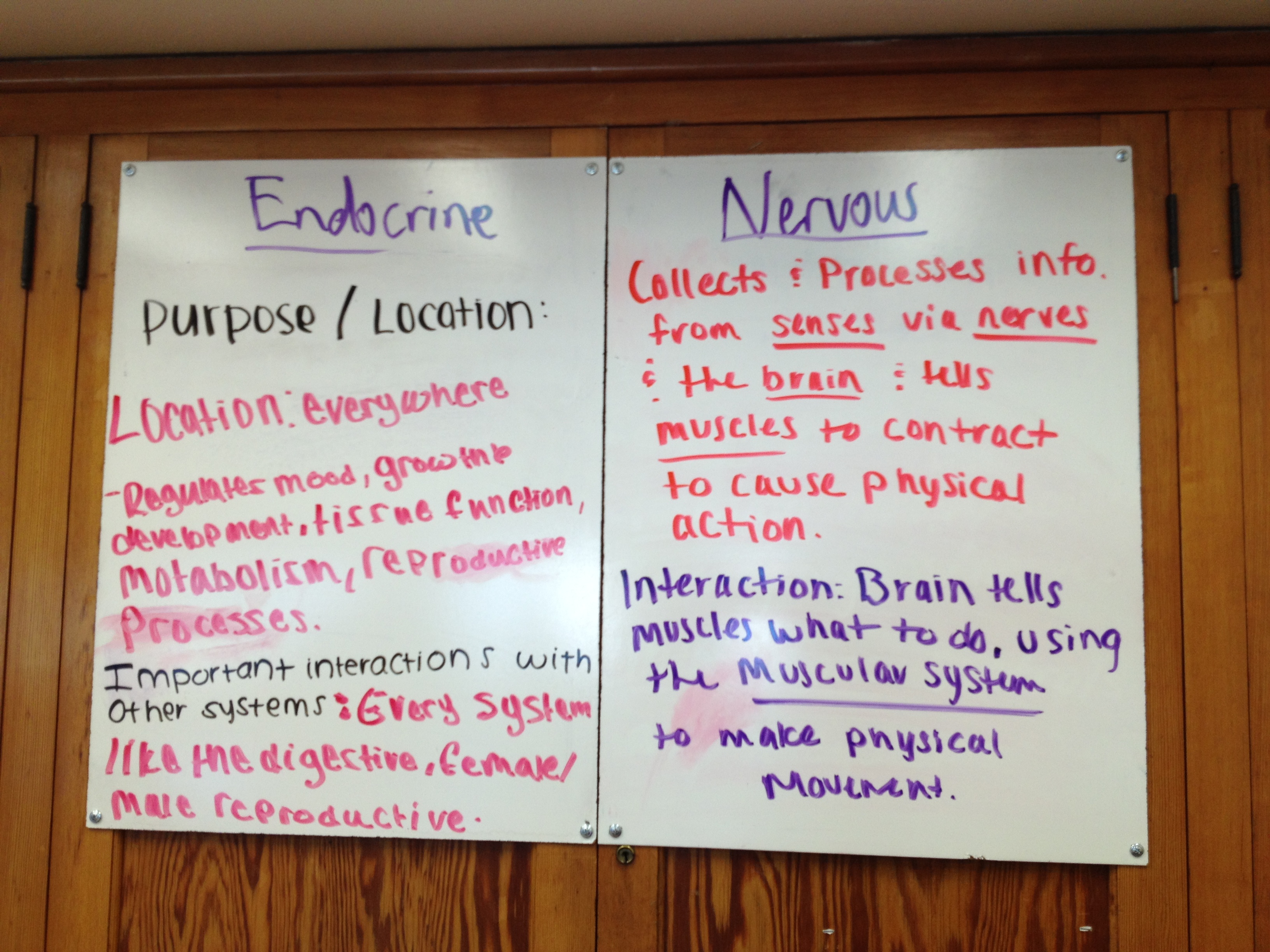
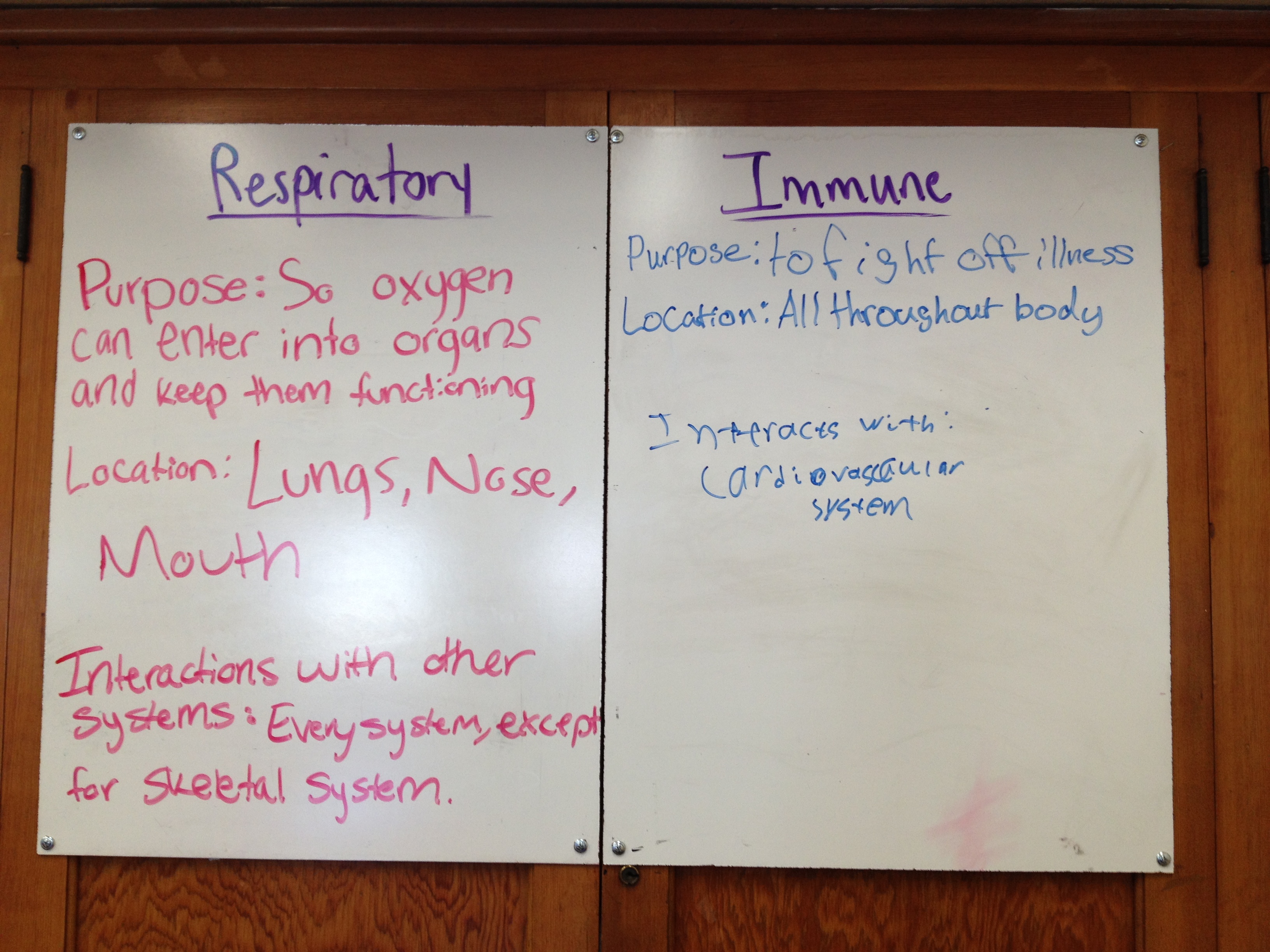
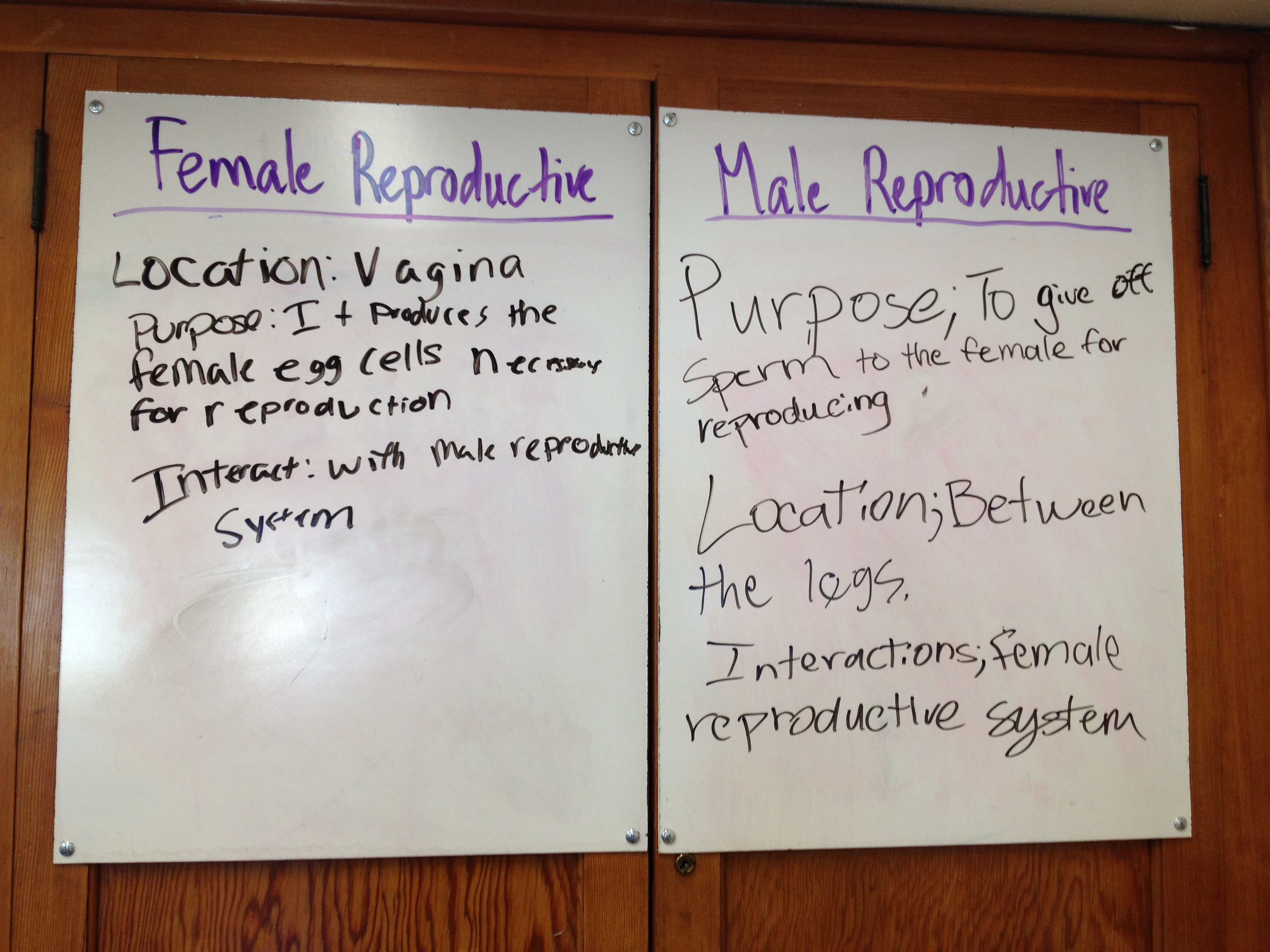

Period 4:
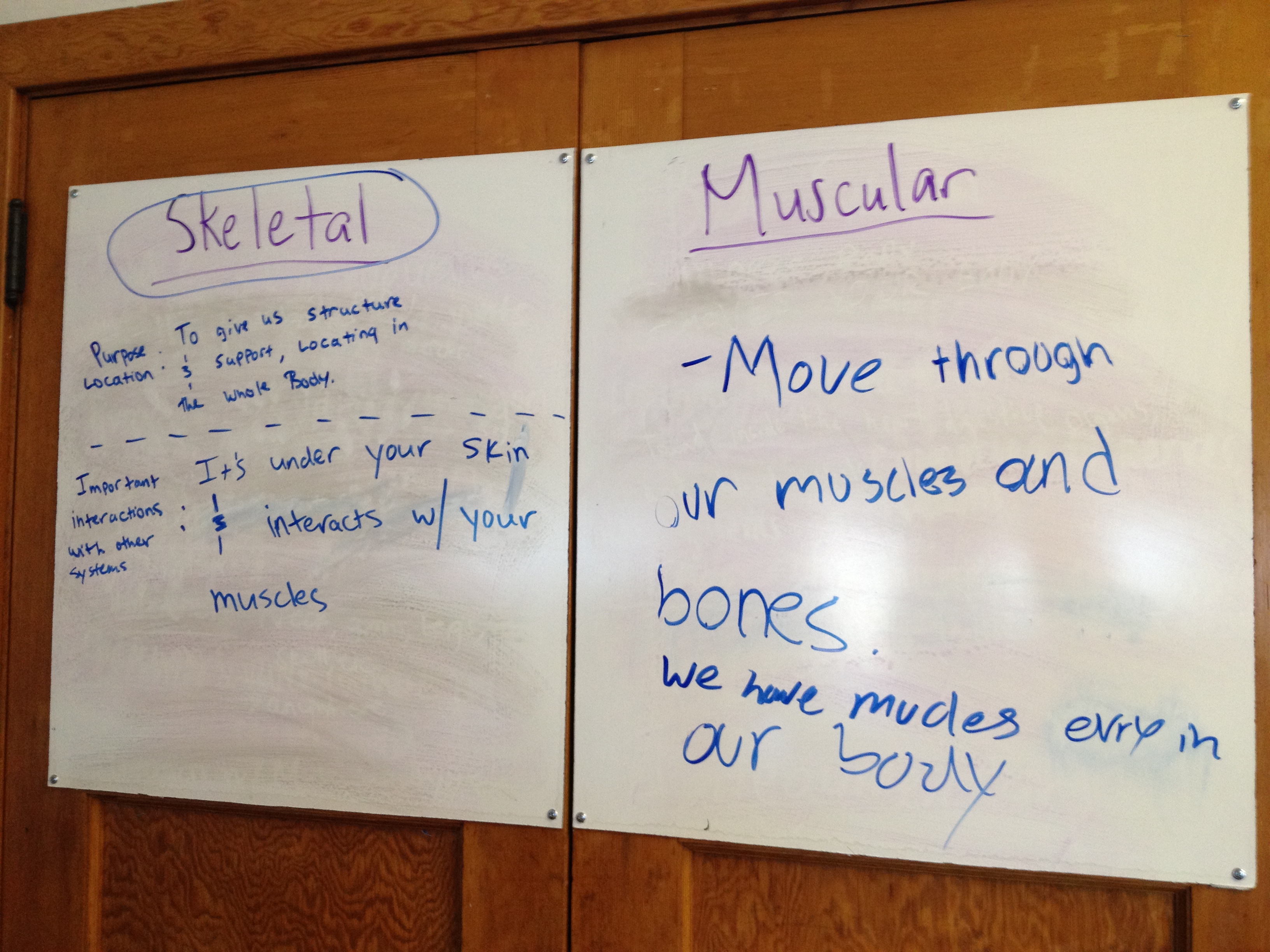
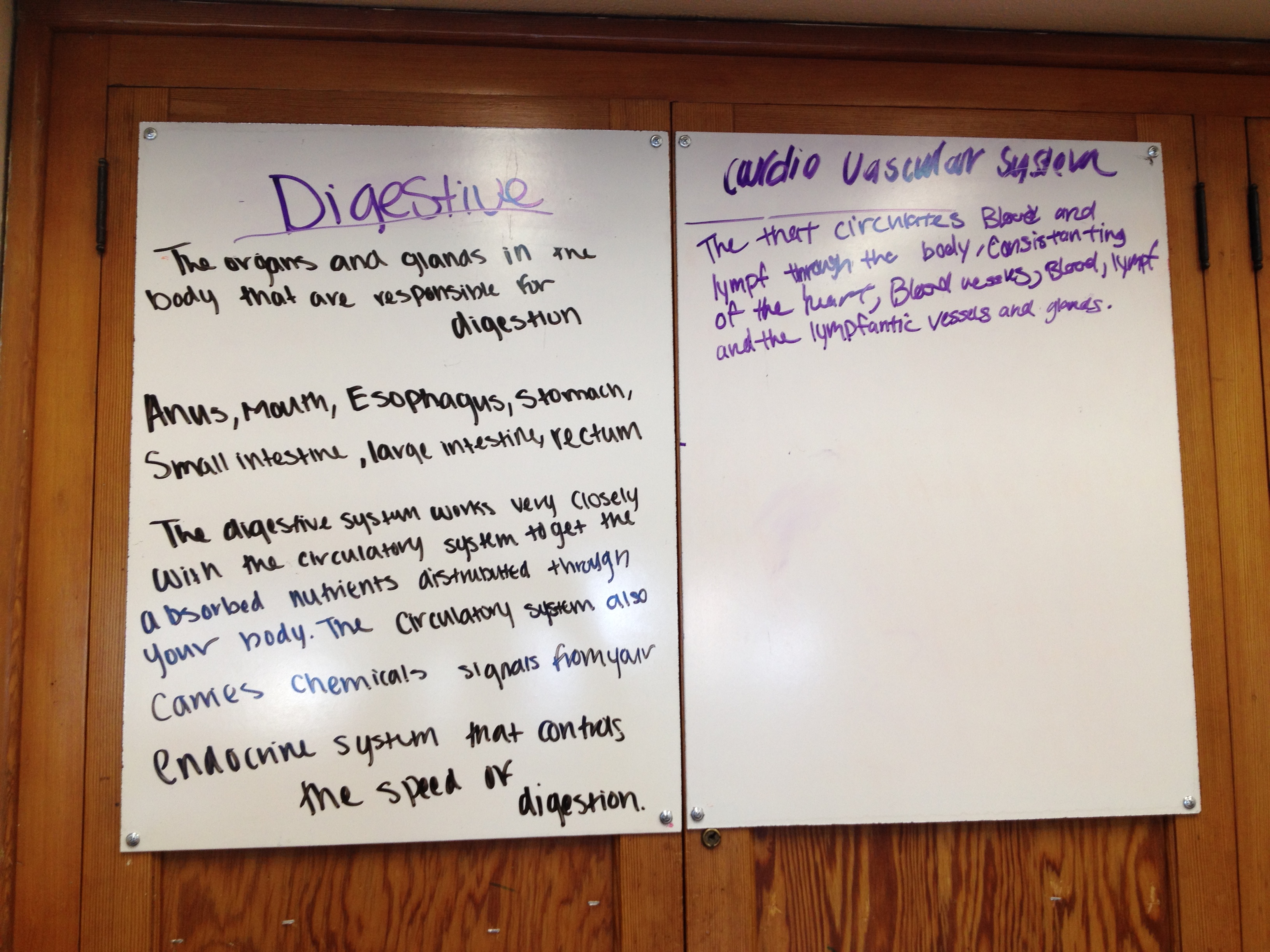
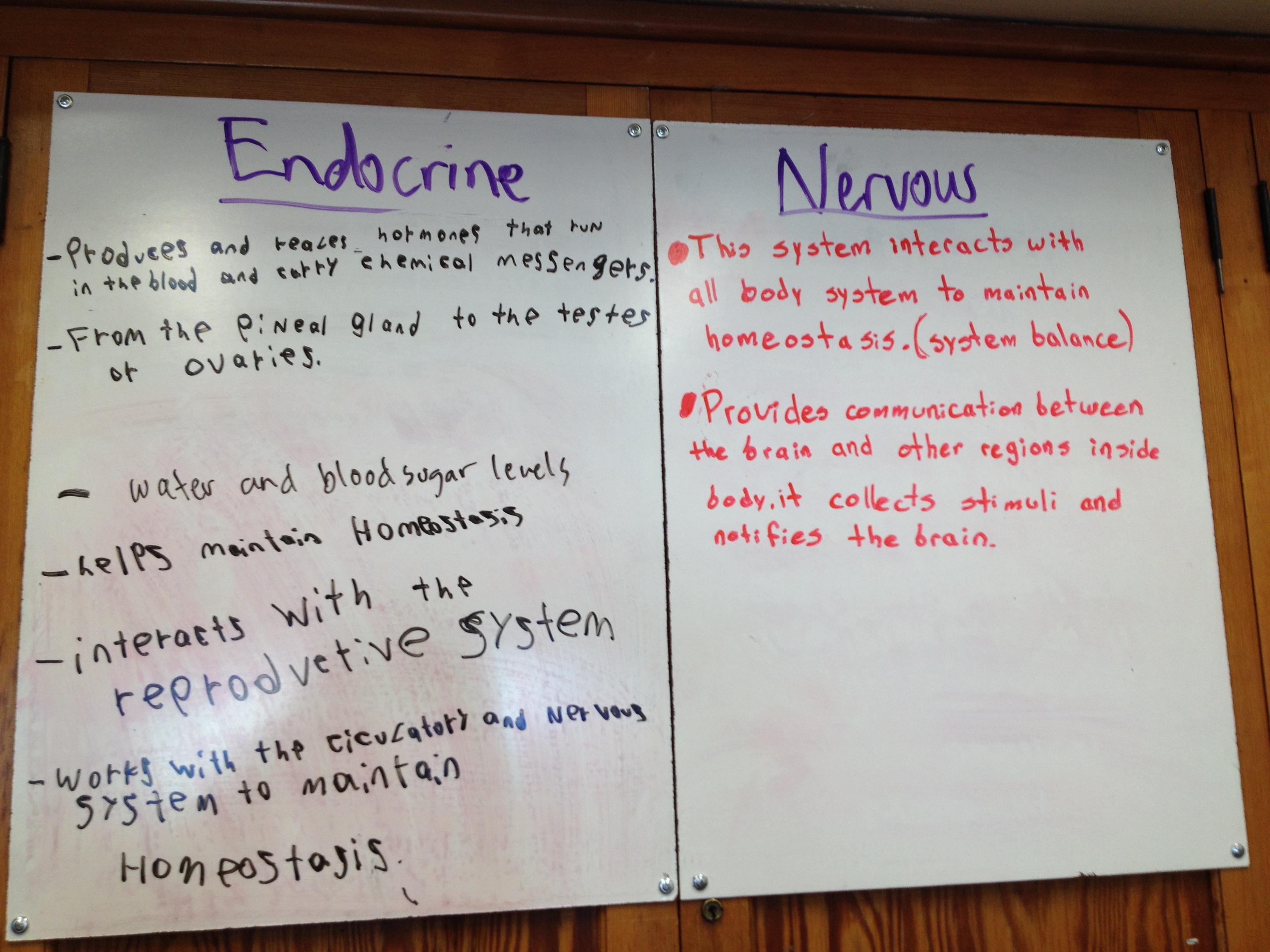
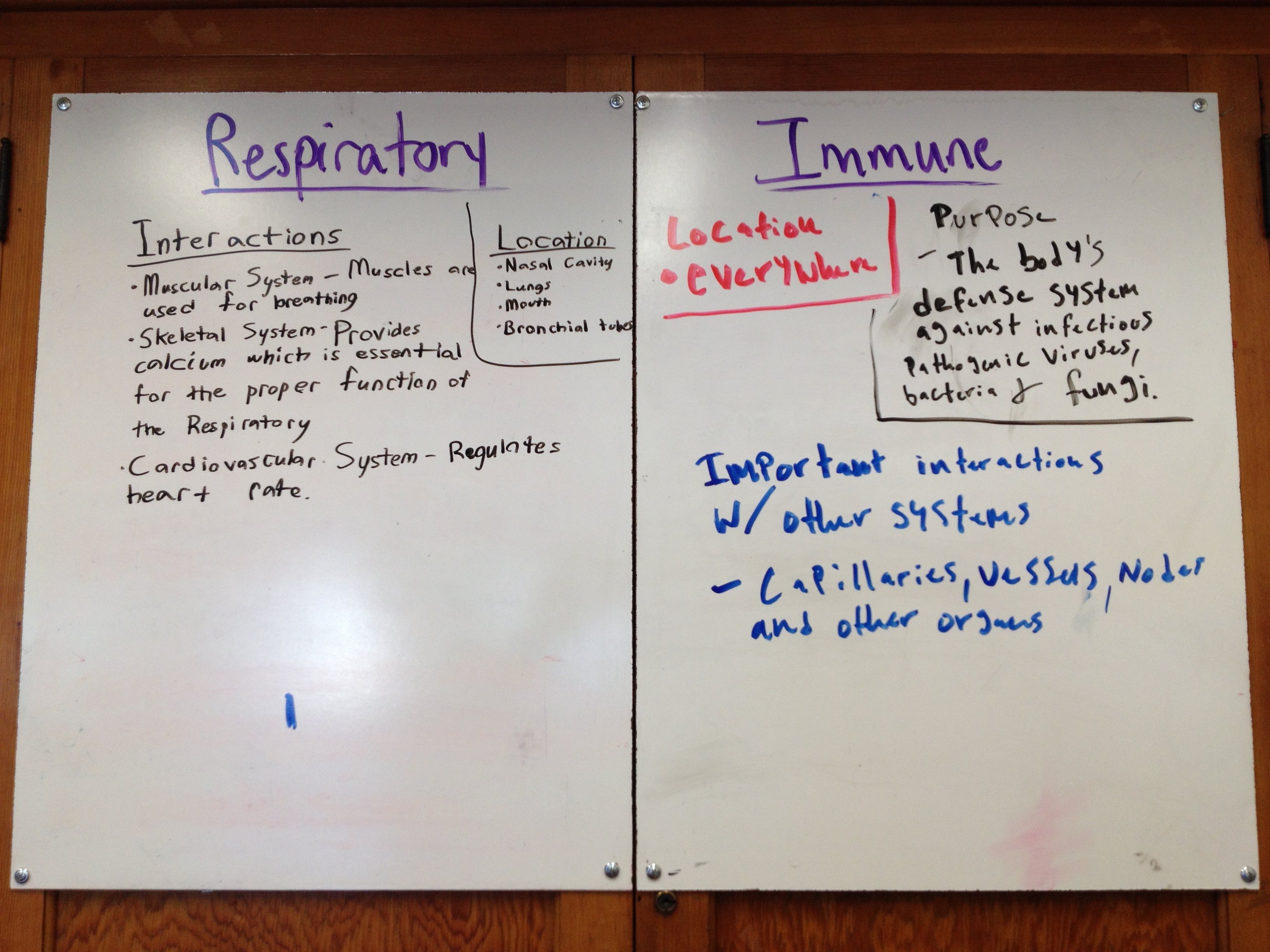
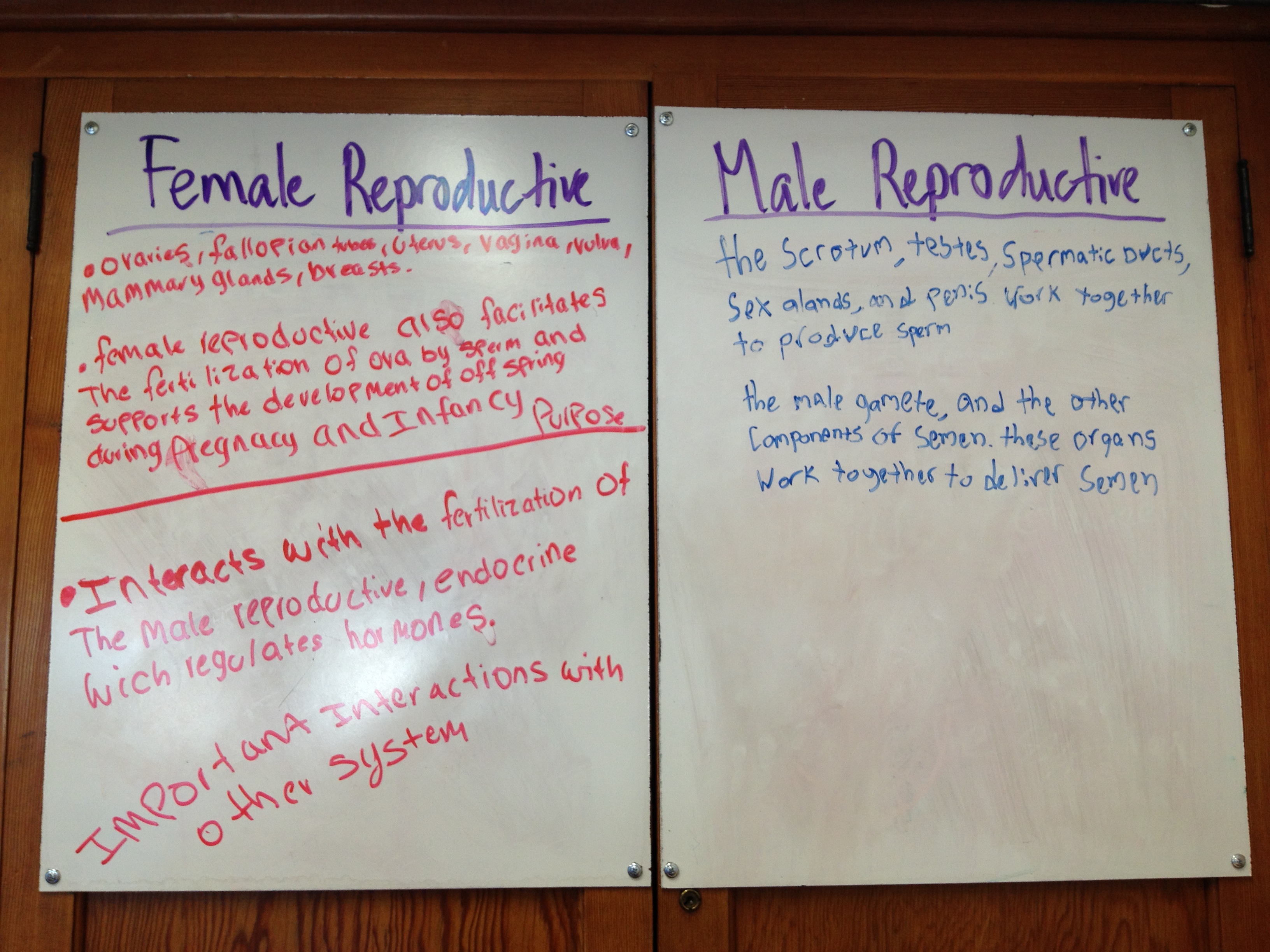
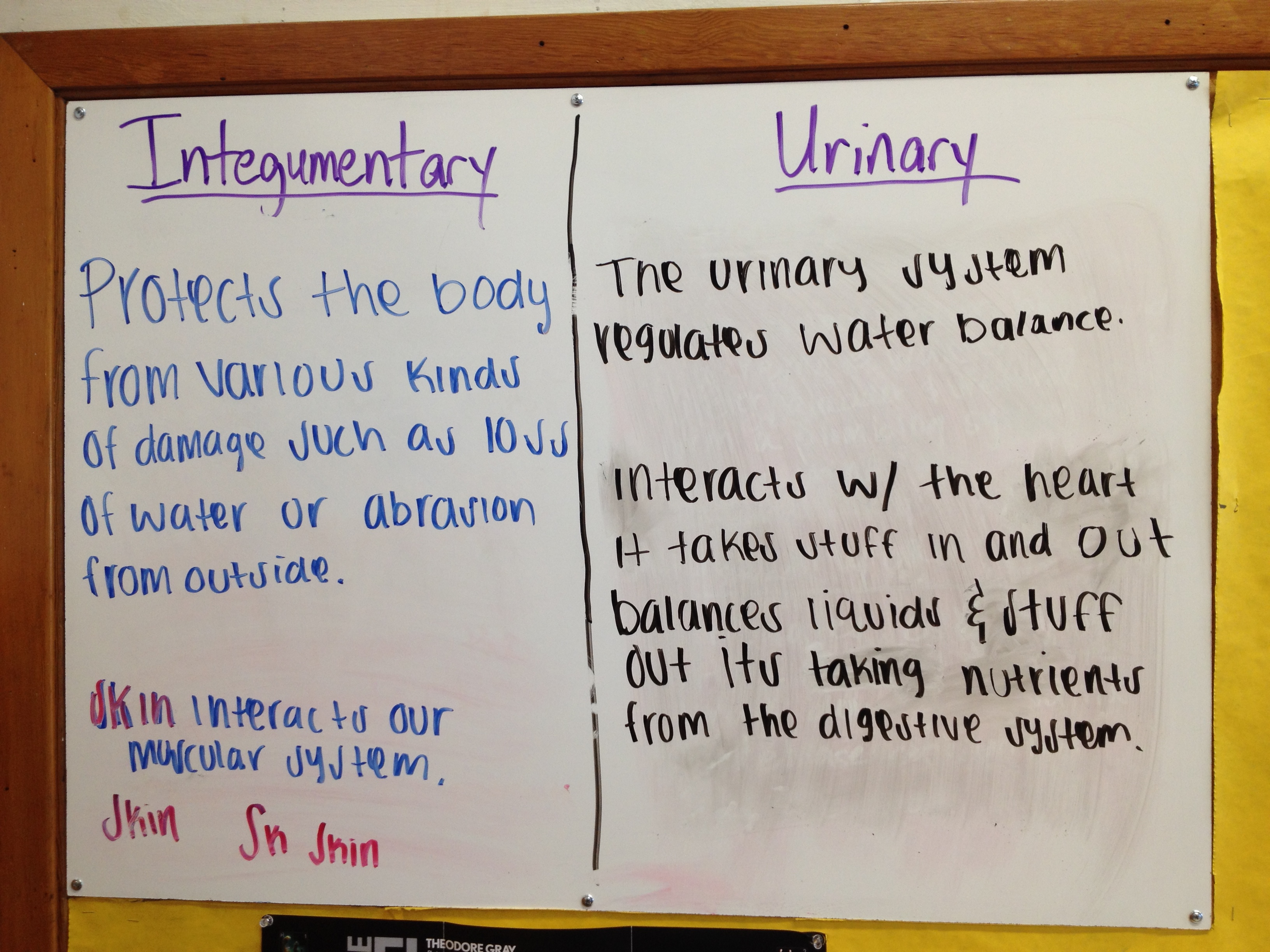
Period 5:
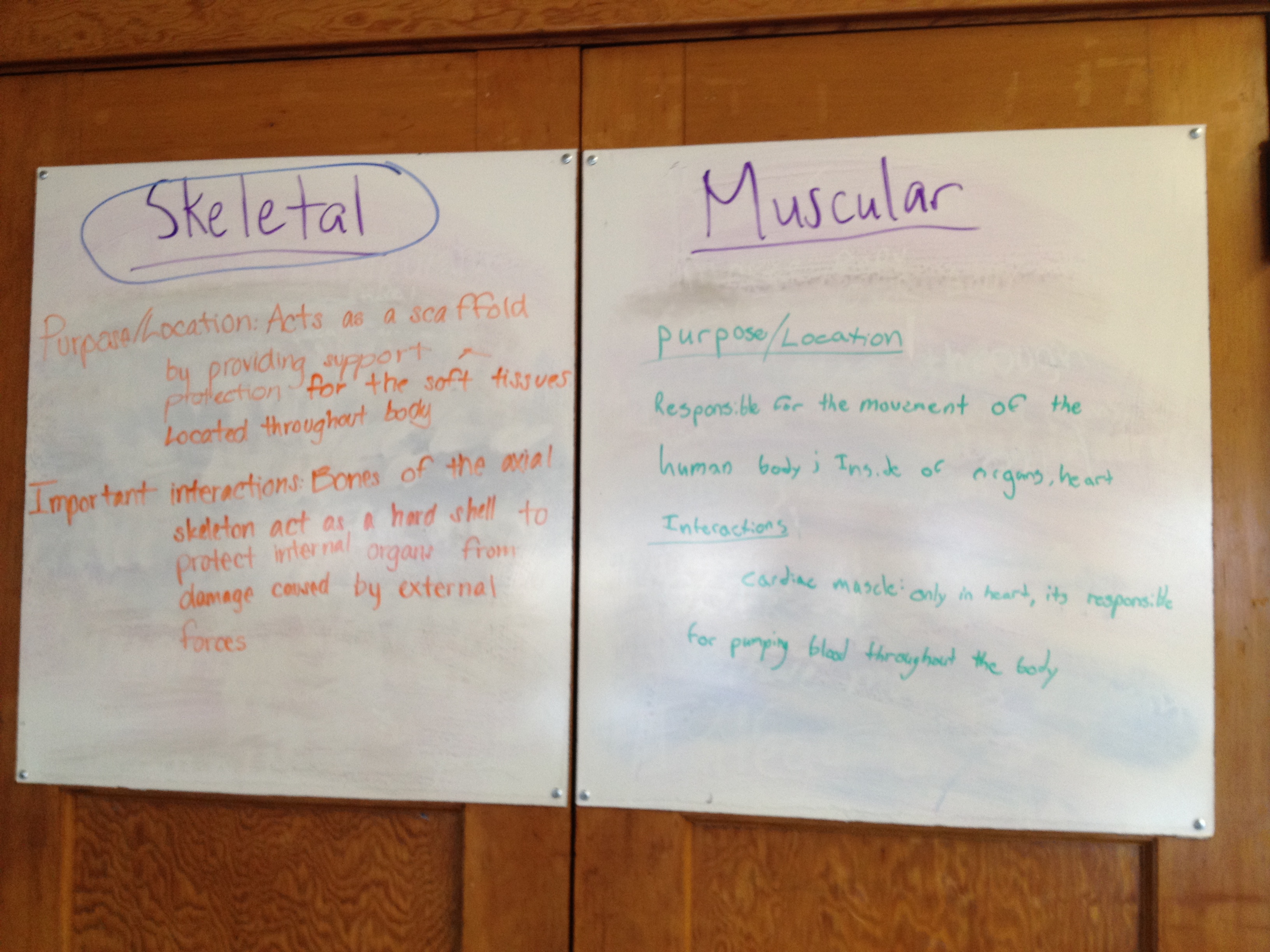

Cells and Homeostasis: Membrane Diffusion Lab
Today we are meeting for class in computer lab room 235. Students will work through a cell membrane diffusion computer simulation created by UC Boulder. The simulation runs as a Java applet and is linked in the image below. Students will run the simulation and complete a worksheet to demonstrate understanding of the content.

| Click to Run |
 Science with Swart
You must be logged in to post a comment.