Tag Archives: HAB

Cells & Homeostasis: PBL Research – Day 4

For our final day with the Chromebooks, students were asked to research how algae fit into the Puget Sound food web.   After a student mentioned that algae obtain energy through photosynthesis, students were introduced to the formal scientific concept of limiting factors.  We used the example of phosphate, a chemical students measured while on the field trip which is also a critical component of ATP.  Photosynthesis is the process of storing the energy from sunlight within a molecule of glucose, and that energy is transferred to ATP during the process of cellular respiration.  ATP, or adenosine triphosphate, consists of an adenine group with three phosphate molecules attached.  When there is an excess of phosphate in the environment, the organisms that live there are not limited in their ability to multiply.  Therefore, phosphate availability is a limiting factor for algal blooms.  Michigan State University has a more in-depth scientific explanation of limiting factors in aquatic environments.

As student projects take shape, students were reminded that they need to dig deeply into the science to explore why their proposed solution will reduce the frequency of harmful algae blooms.  Next week, they will have some additional computer time coupled with time to work on their posters and presentations.  The posters and presentations will be the action piece of the project – students will present their work to their stakeholders and seek feedback about their proposed solutions.

Cells & Homeostasis: PBL Research – Day 3

After reaching out to stakeholders yesterday, many student groups were excited to report their stakeholder had replied back!  Energized by the connection, students embraced the task of researching and then using their understanding of science to propose a solution to reduce the effect and frequency of harmful algal blooms on the Puget Sound ecosystem.  To help guide their research efforts, students were encouraged to review the Know and Need to Know lists they assembled last week when we kicked off the Problem Based Learning task (see October 15th post).  Today, students also learned that they will have a few additional days of computer-based research time, and they began thinking about how they will represent their individual projects to their stakeholders on Tuesday, November 3.

Cells & Homeostasis: PBL Research – Day 2

For our second day of project work, student groups were tasked with identifying a primary stakeholder and then actually drafting an email to the stakeholder.  The pictures below show the instructions provided to students in identifying an appropriate primary stakeholder and in crafting the email to the stakeholder.  Students reached out to a wide variety of stakeholders throughout the day, including local marine scientists, restaurant owners, community groups interested in the environment, local government officials, and elementary school teachers.  Student groups were then tasked with coming up with at least three different project ideas which both meet the goal of the mission and meet the needs and interests of the primary stakeholder.  Students continued to document their collaborative work in the shared Google Doc.

IMG_0071IMG_0070

Cells & Homeostasis: PBL Research – Day 1

Today marked the beginning of our project team work investigating the problem of reducing the frequency of harmful algal blooms (HABs) in Puget Sound.  Students used their responses from the Seahurst Park pre-assessment worksheet from last Thursday to assemble into groups (questions 4 and 5).  Student groups then worked together to create a single shared Google Doc per group, with each student working in the group having their own Chromebook for simultaneous editing.  We concluded with groups creating a list of stakeholders and then selecting one to be the audience for their presentation.

At the start of class, I pointed out the HS-LS2-7 code written at the top of the pre-assessment.  Students learned about the Next Generation Science Standards and were also reminded of the Washington State high school credit requirements for upcoming graduation classes.

Cells & Homeostasis: Intro to Seahurst Park PBL

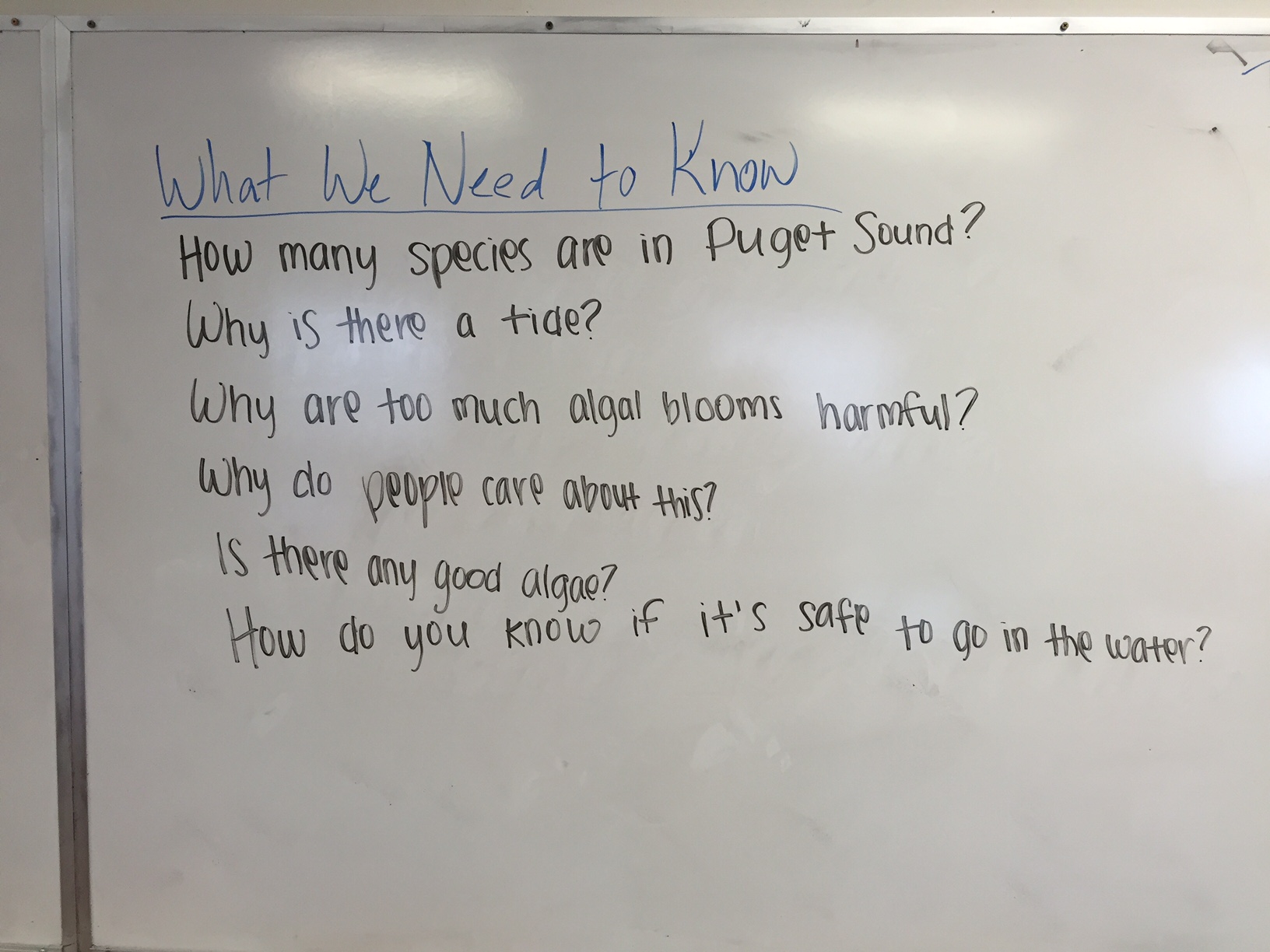
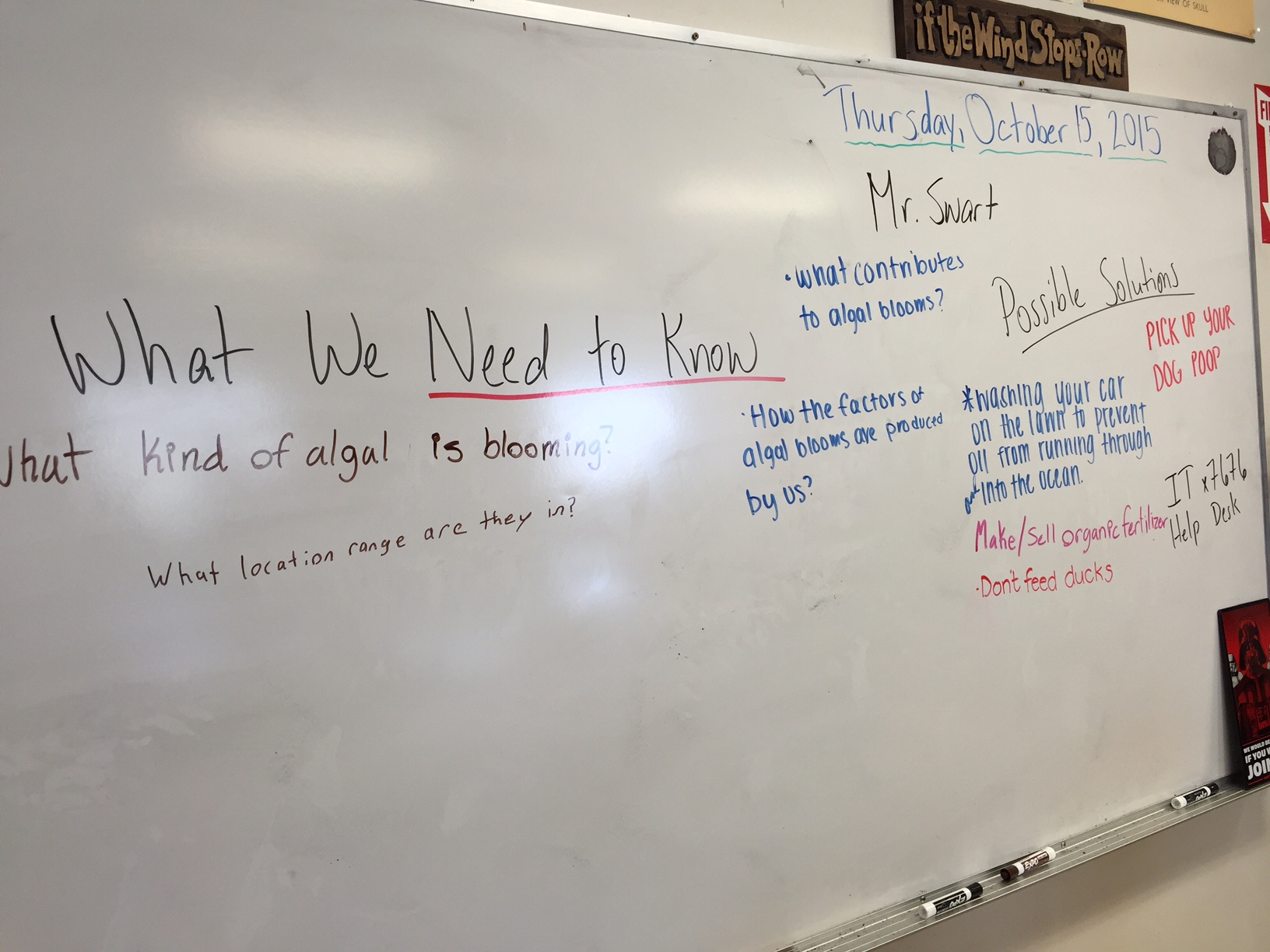
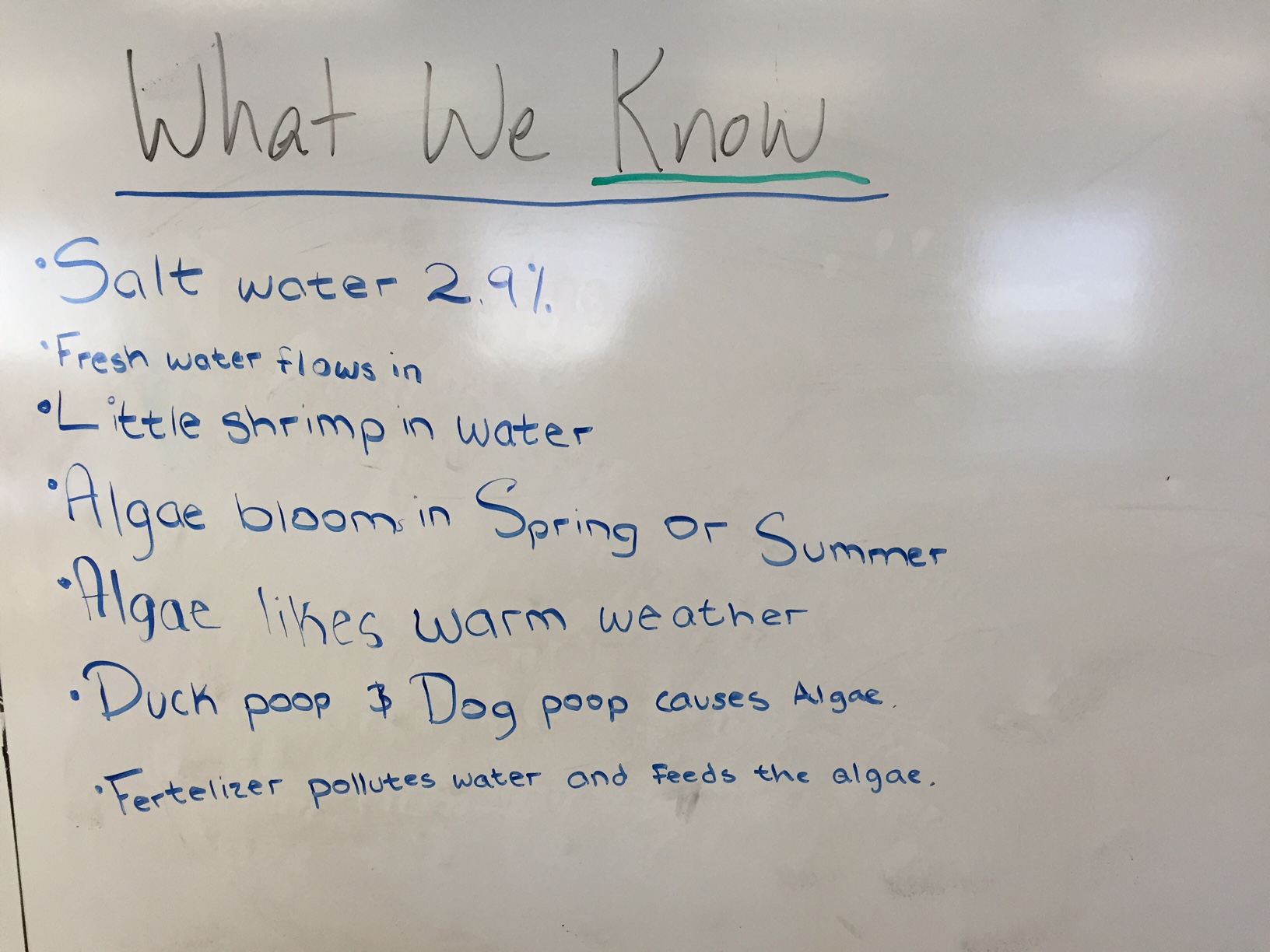
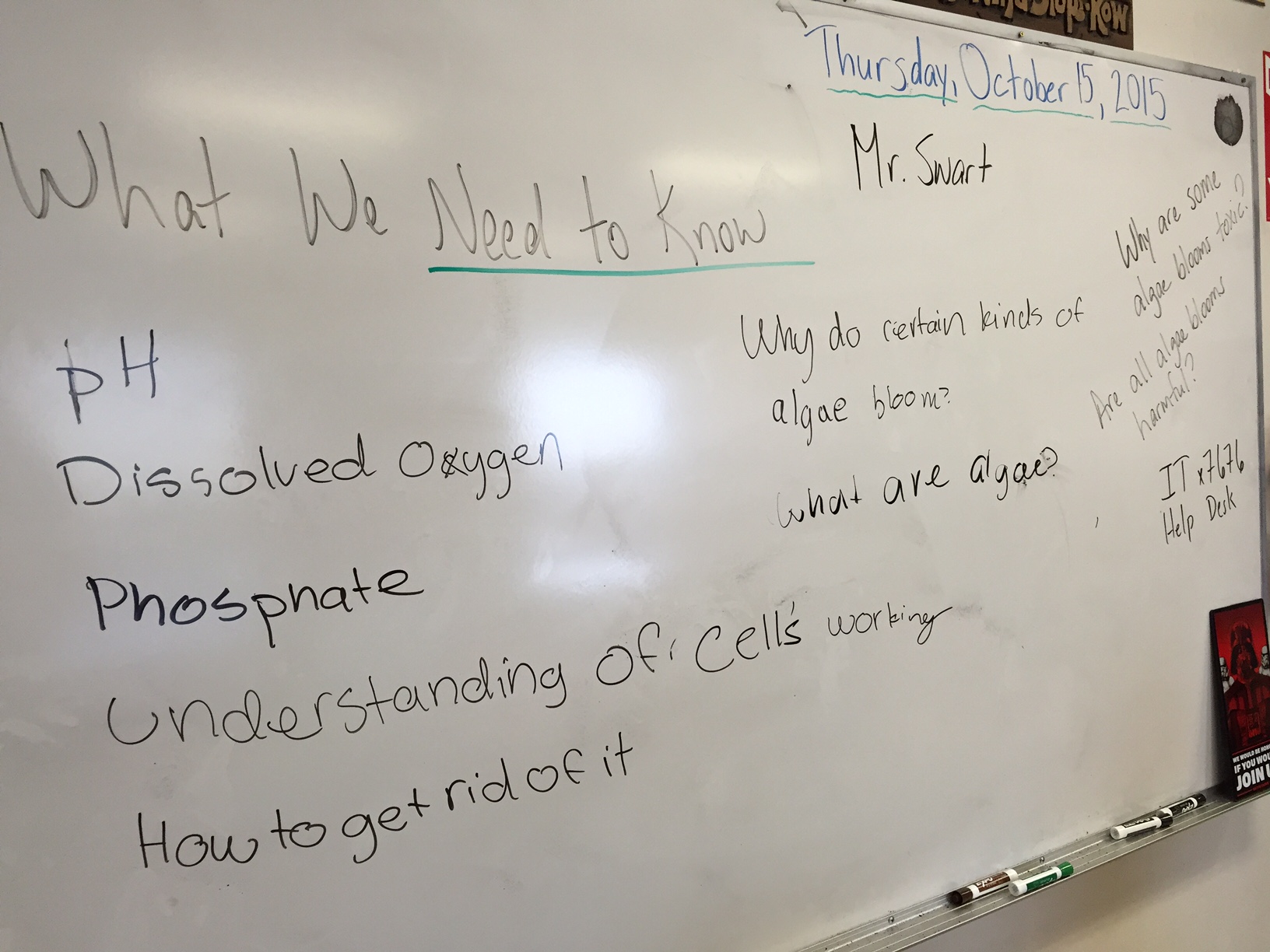
We began class with a pre-assessment of student prior knowledge of the learning targets encompassed by the final segment of our unit on cells and homeostasis.  Next we launched the Seahurst Park PBL (problem-based learning) with a PowerPoint depicting a scenario familiar to students now that they have recently visited Seahurst Park and learned about harmful algal blooms locally in Puget Sound, as well as on a much larger scale off the West Coast (from Tuesday’s reading assignment).  We concluded the class period with students taking the lead in creating the Know/Need to Know chart on the white boards at the front of the classroom.  Student work is shown below, grouped by class period (click to enlarge).

Period 2 - Know
Period 2 – Know
Period 2 - Need To Know
Period 2 – Need To Know
Period 3 - Need To Know
Period 3 – Need To Know
Period 3 - Know
Period 3 – Know
Period 4 - Know
Period 4 – Know
Period 4 - Need To Know
Period 4 – Need To Know
Period 5 - Know
Period 5 – Know
Period 5 - Need To Know
Period 5 – Need To Know