All posts by David Swart

High school science teacher

Matter, Atomic Structure, and Bonding: Ions

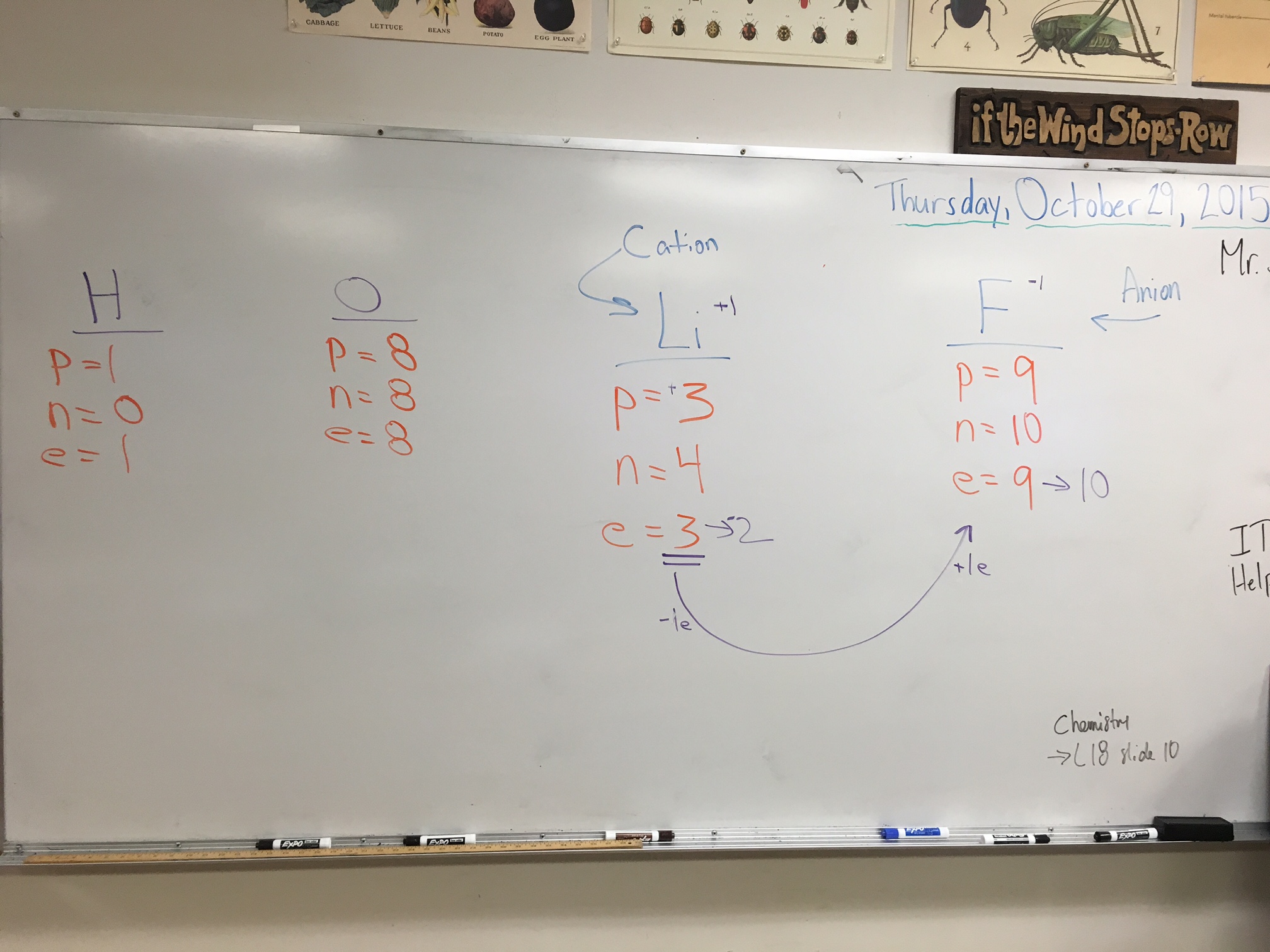
Our learning about electrons continued with the Lesson 19 PowerPoint introducing students to the concept of ions.  Students received the Noble Gas Envy handout and we walked through the example on the whiteboard.  The discussion prompted a student question about how two atoms of hydrogen bind with an oxygen atom to form a water molecule which was also captured on the whiteboard (pictured below).  For classwork, students received the Lesson 19 Worksheet and the Ion Cards Game Cards that accompanies it.  For homework, students should complete the Lesson 19 textbook questions #2-16 (evens only).

IMG_0086IMG_0087

Cells & Homeostasis: Practice PBL Presentations

Students worked on their tri-fold posters all class period, printing content and practicing presentations.  While they worked, student groups were challenged to come up with three questions to anticipate from visitors to their group’s poster on Tuesday.  Examples of questions to anticipate:

  • Why did you pick your solution?
  • How did you select your group’s members?

Matter, Atomic Structure, and Bonding: Valence and Core Electrons

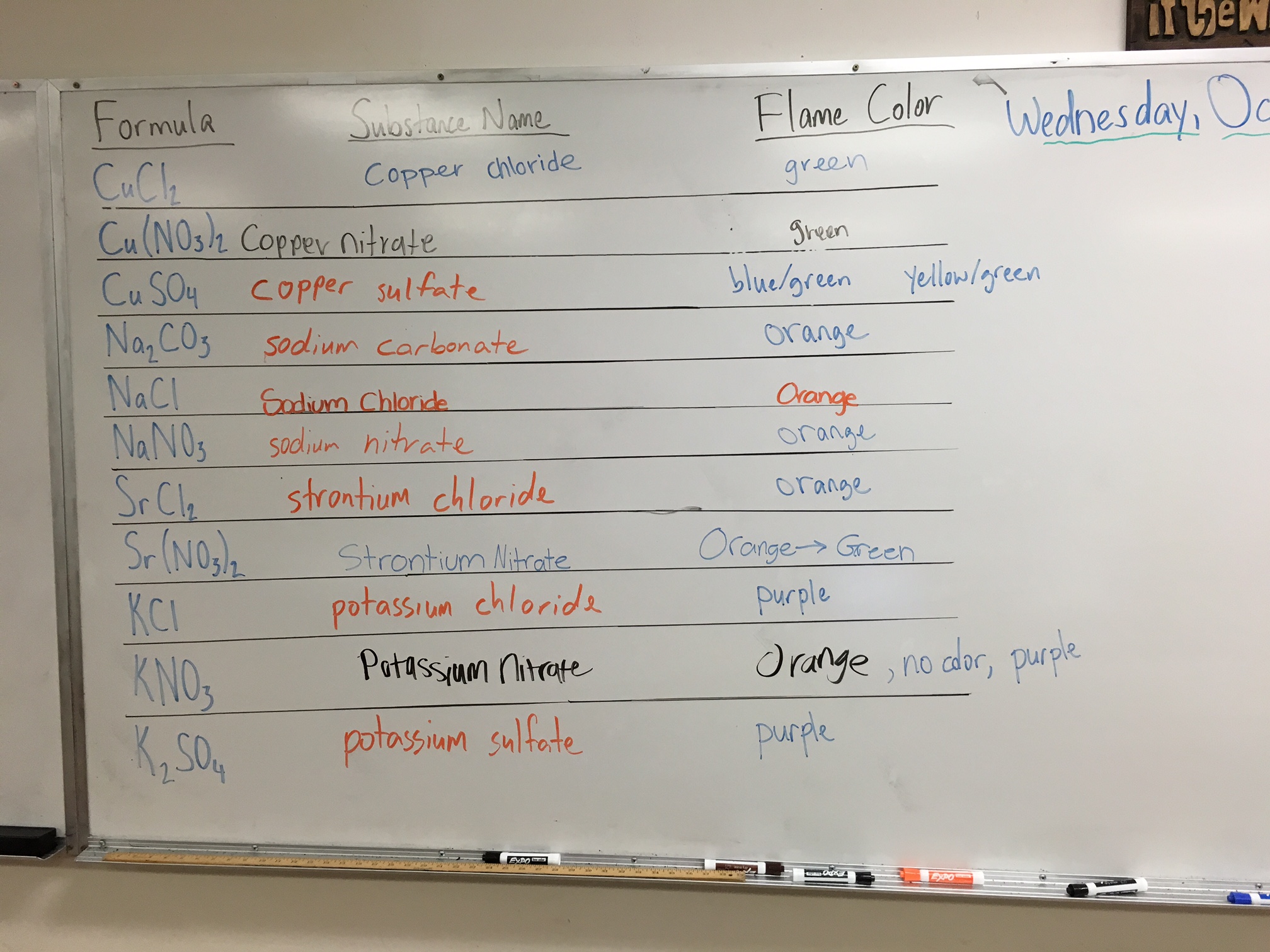
We began the class period by creating a table of the data from yesterday’s Flame Test lab, which students then used to complete the Lesson 17 Worksheet.

IMG_0083

We also reviewed the Lesson 17 PowerPoint before transitioning to Lesson 18.  There are several hand-outs for Lesson 18, including the Lesson 18 Worksheet, the Lesson 18 Shell Model, the Table of Electron Shells, and the Table of Valence and Core Electrons.  We reviewed the Lesson 18 PowerPoint through slide 9 and will complete the remaining slides tomorrow.  For homework, in addition to completing the Lesson 18 worksheet, students should work through questions #3-10 at the end of Lesson 18 in the textbook and then read through Lesson 19 in the textbook.

Cells & Homeostasis: PBL Research – Day 6

Due to a last-minute scheduling change, we had the opportunity to spend our final lab in the computer lab today instead of tomorrow.  This worked out nicely, as many groups realized yesterday their tri-fold presentation boards needed additional content.  After today, students will need to arrange computer time outside of class if additional research is needed to complete the project.  We will be back in the classroom tomorrow assembling tri-fold presentation materials and discussing anticipated audience questions.

Matter, Atomic Structure, and Bonding: Flame Tests

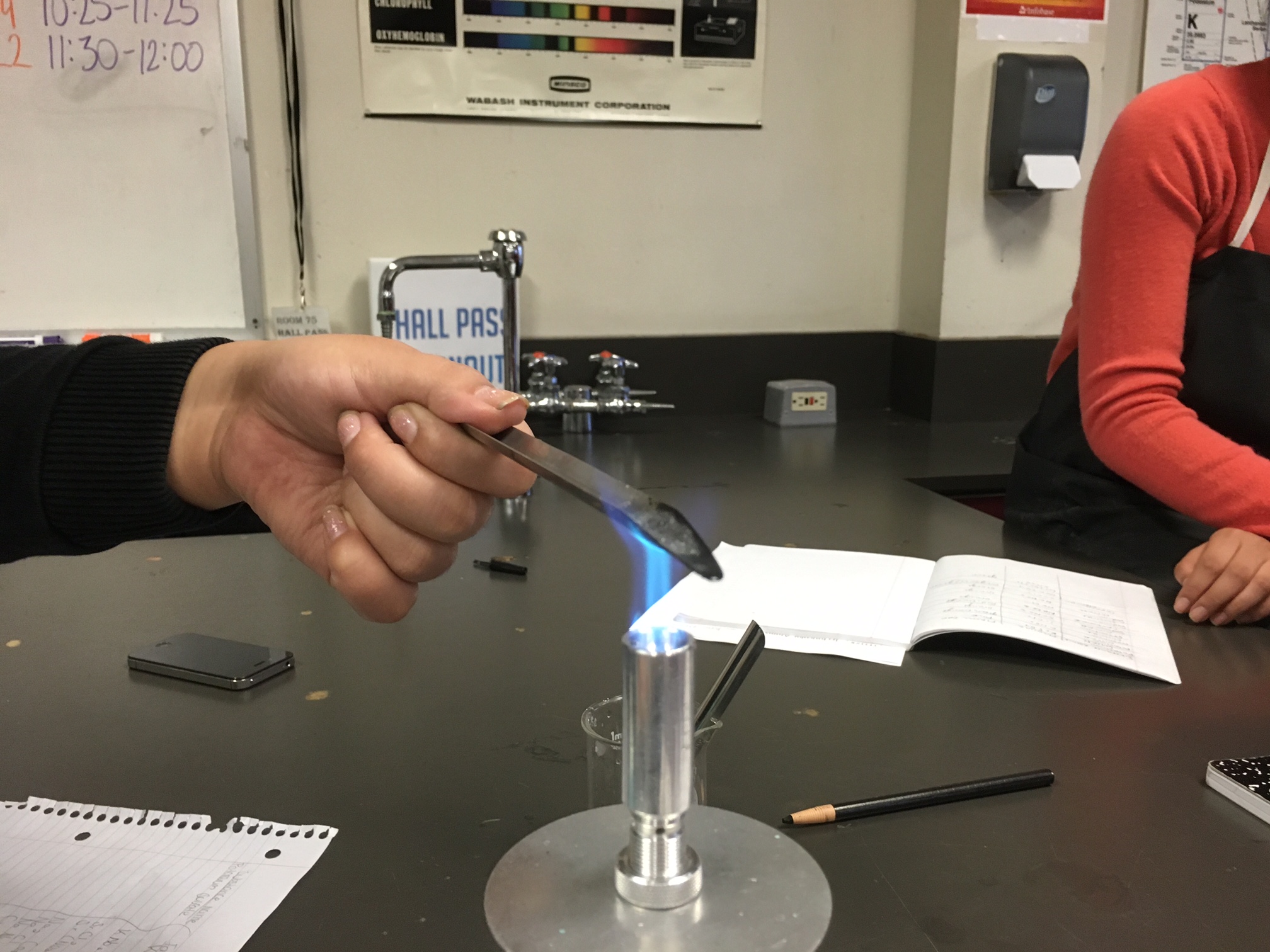
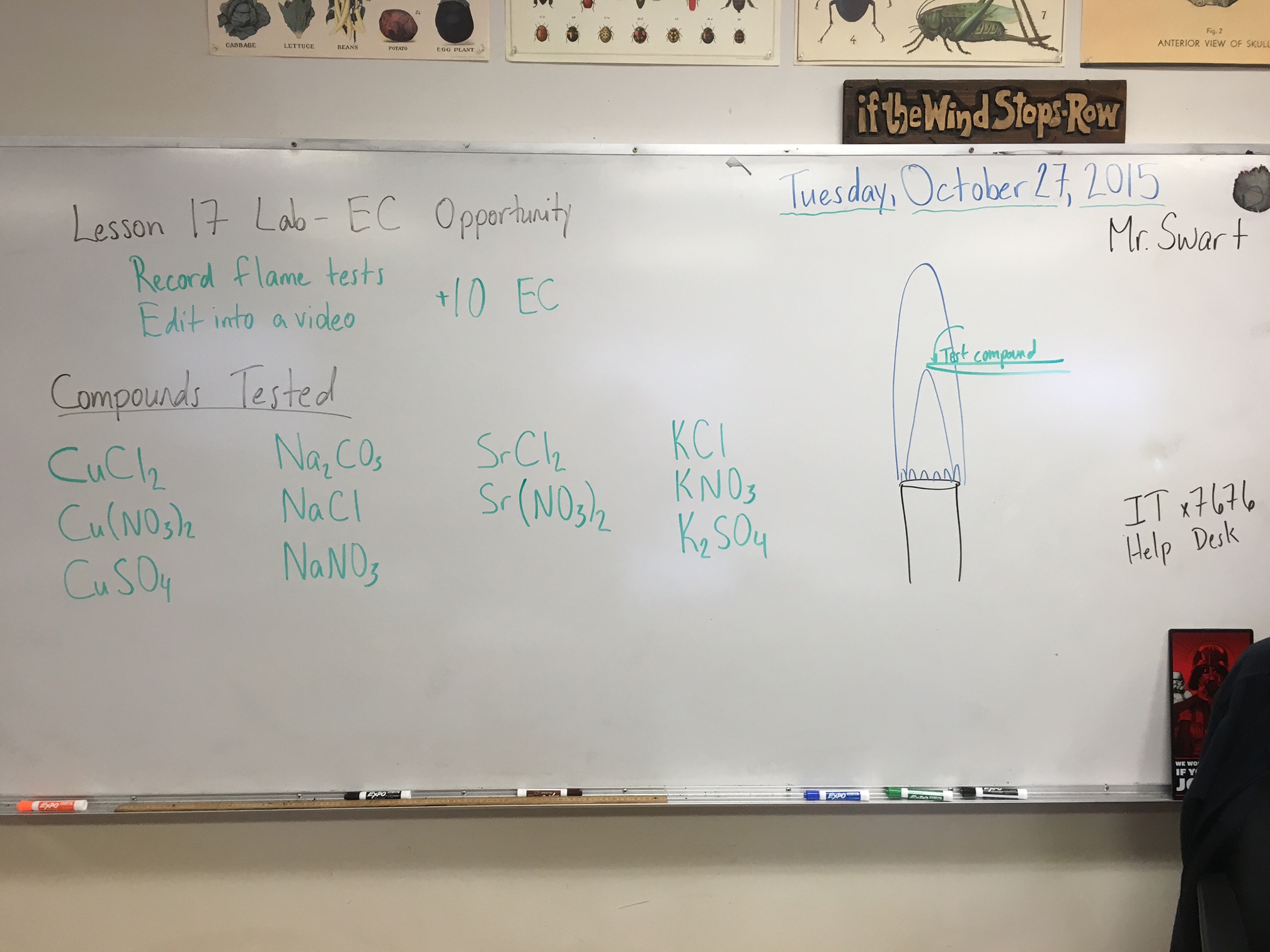
We began Chapter 4 with the Flame Test lab.  We reviewed the safety requirements and lab mechanics.  There were stations set up around the room with portable Bunsen burners, chemicals to burn, and equipment to conduct the flame test.  Students recorded their results as described on the Lesson 17 Worksheet.  Students were also offered 10 points of extra credit for taking video of the flame tests and editing them together into a video.  Students also received a print-out of the electron structure of a sodium atom, showing what happens when the outer shell electron of sodium is excited.  The lab took most of the class period, so we will discuss results tomorrow.  Students should complete as much of the Lesson 17 worksheet as possible, read Lesson 17 in the textbook, and answer questions 1 and 2 in the textbook.

Conducting the flame test
IMG_0078
Flame Test lab safety equipment
IMG_0079
Compounds tested

Cells & Homeostasis: Assemble PBL Posters

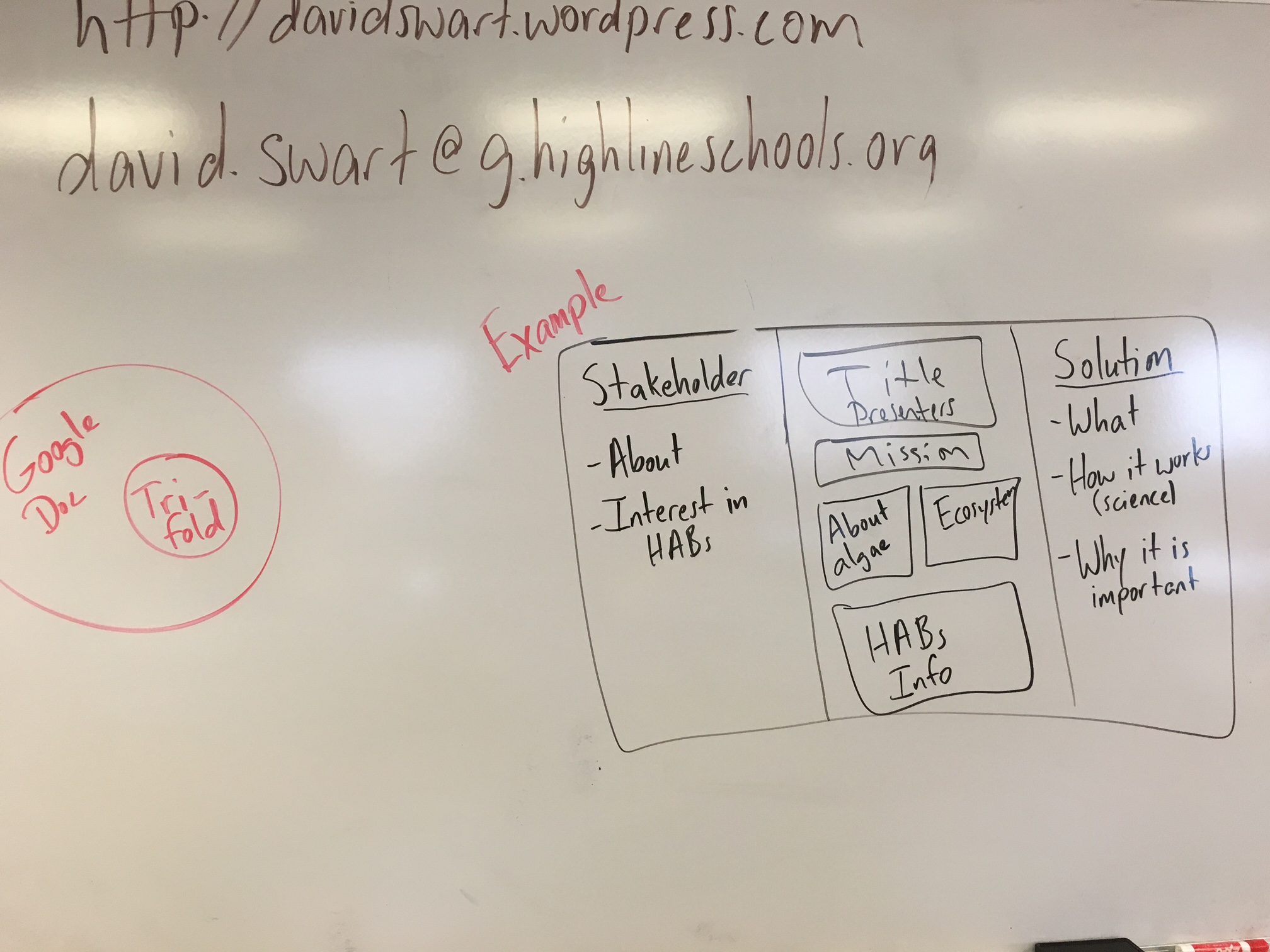
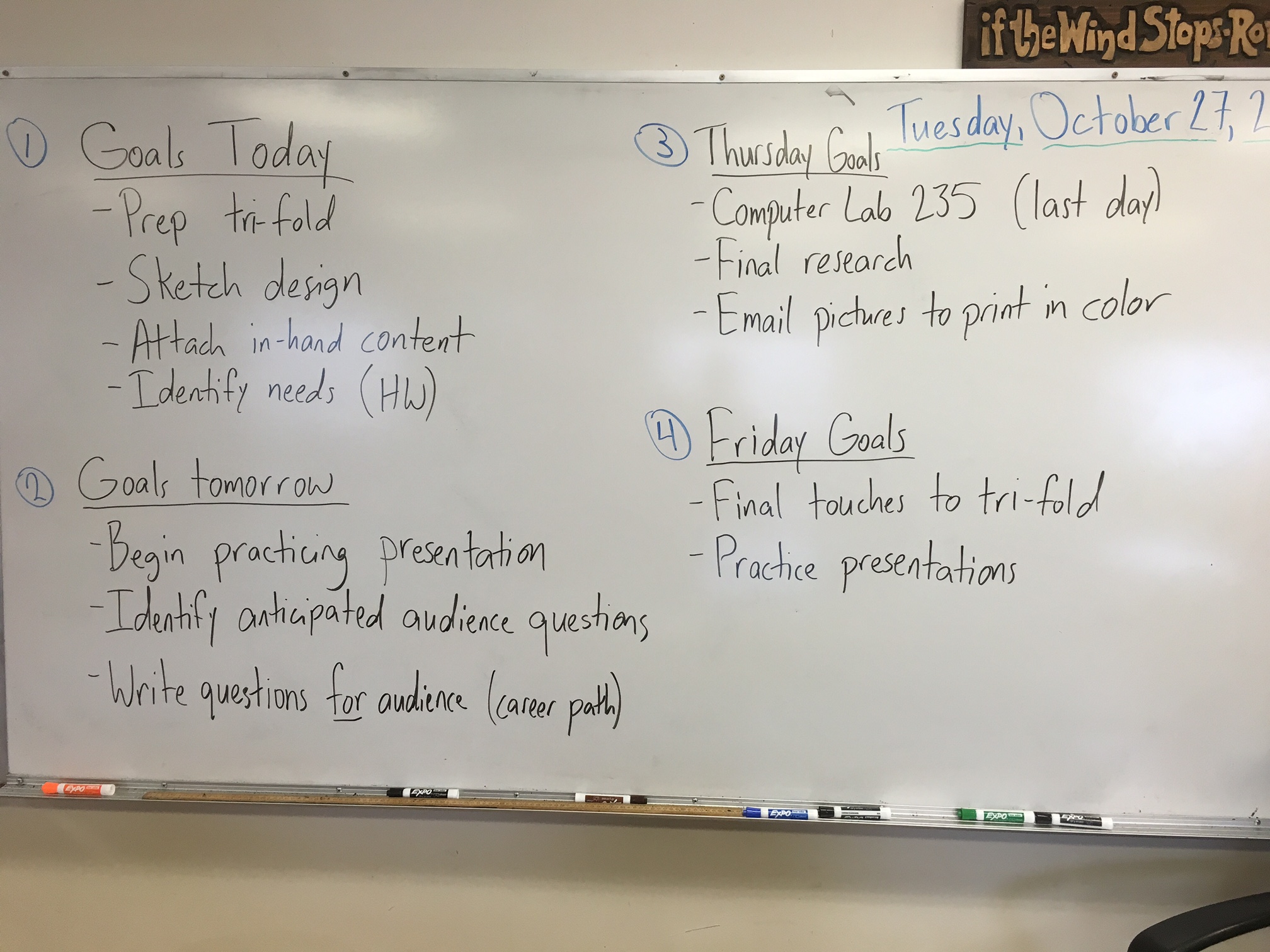
Student groups received their printed Google Doc materials and a used tri-fold poster board.  They were provided with Pirate yellow paper to re-cover the tri-folds and then began sketching out how their content would be attached to their boards.  The process helped students identify remaining areas of need so they can focus their efforts on Thursday, our final class day in a computer lab.  The pictures below show an example tri-fold layout for students who need some inspiration and guidance, as well as a list of goals for the rest of the week.

IMG_0081
Tri-fold example
IMG_0082
Goals for the week

Cells & Homeostasis: PBL Research – Day 5

We completed our first week of problem-based learning (PBL) with a quiz about Harmful Algal Blooms (HABs), an opportunity for students to reflect on how well their group has been working together, and a call for questions about the work we have been doing.  Based on student feedback, here are several documents for students to review, reference, and print if desired to better help them understand our work:

Information about the HAB PBL

Rubric for the HAB PBL Research phase of the project

Rubric for the HAB PBL Presentation phase of the project

Multiplier Worksheet (for groups with inequitable member contributions)

We will work today in a computer lab, with students encouraged to use the time efficiently to discuss the current state of their group’s project and to identify any opportunities for research to fill gaps in group knowledge before spending the next two days in class working on the tri-fold (or equivalent) presentation content.

Matter, Atomic Structure, and Bonding: Chapter 3 Quiz

Chapter 3 came to a close today with a quiz.  This marked the first time students were assessed with a chapter quiz without having previously seen an alternate version of the quiz.  The results varied widely, with a top score of 19/20, a low score of 4/20, and an average of 11/20. The results indicate some re-teaching may be necessary in addition to a renewed commitment by students to maintain the high level of study habits required for success in chemistry class.  It may also indicate the extended length of the current chapter made it challenging for students to maintain the focus needed to maintain content mastery.  We will discuss as a class on Monday.

Cells & Homeostasis: HAB Quiz

We concluded the week with a quiz designed to assess student knowledge of harmful algal blooms (HAB).  Back on October 6, Christine and Jarrett from the Environmental Science Lab came to our school and met with students in the library in preparation for the field trip.  During the visit, they engaged students in a “quiz show” format game, and students were instructed to take notes for a future quiz.  Today was that day.  In addition to questions about HAB, students were asked to evaluate how well their group worked this past week and to establish a goal for next week.  Finally, students were asked for feedback about the project, and their feedback will help guide the resources that are made available as they work next week.

Cells & Homeostasis: PBL Research – Day 4

For our final day with the Chromebooks, students were asked to research how algae fit into the Puget Sound food web.   After a student mentioned that algae obtain energy through photosynthesis, students were introduced to the formal scientific concept of limiting factors.  We used the example of phosphate, a chemical students measured while on the field trip which is also a critical component of ATP.  Photosynthesis is the process of storing the energy from sunlight within a molecule of glucose, and that energy is transferred to ATP during the process of cellular respiration.  ATP, or adenosine triphosphate, consists of an adenine group with three phosphate molecules attached.  When there is an excess of phosphate in the environment, the organisms that live there are not limited in their ability to multiply.  Therefore, phosphate availability is a limiting factor for algal blooms.  Michigan State University has a more in-depth scientific explanation of limiting factors in aquatic environments.

As student projects take shape, students were reminded that they need to dig deeply into the science to explore why their proposed solution will reduce the frequency of harmful algae blooms.  Next week, they will have some additional computer time coupled with time to work on their posters and presentations.  The posters and presentations will be the action piece of the project – students will present their work to their stakeholders and seek feedback about their proposed solutions.