Category Archives: Cells

Inside the Cell / Organelle Flash Cards

Students were tasked with completing the reading from Chapter 1 of Inside the Cell (assigned yesterday) and turning in answers to the Got It questions on page 19.  Next, students received eight index cards on which to create flash cards of the following cell organelles:

  • cell membrane
  • cytoplasm
  • nucleus
  • ribosome
  • mitochondria
  • endoplasmic reticulum
  • Golgi apparatus
  • lysosome

On the front of the card, students wrote the name of the organelle.  On the back of the card, students explained the function of the organelle and were encouraged to draw a picture that would help them remember the function of the organelle.  The flash cards are due tomorrow and must be completed before the student can participate in the Gizmo simulations of cell structure and function.

Initial Model of the Cell

For our first lesson of our new unit, students were tasked with drawing an initial model of a cell.  They used the white boards on their desks to draw cells as they understand them, including the parts of cells (organelles).  Students shared out what types of cells they had drawn and what parts they could remember.  An example of student work is pictured below.

Next, we watched the Harvard BioVisions video Inner Life of a Cell, which presents a realistic animation of how cells move.

http://www.youtube.com/watch?v=B_zD3NxSsD8

We concluded the lesson with students reading Chapter 1 of Inside the Cell.  The “Got It” questions on page 19 are due tomorrow by the end of class.  For homework, students are encouraged to read as much of Chapter 1 as necessary to be able to complete the reading in class tomorrow.

Cells & Homeostasis: Unit 1 Final Exam Review

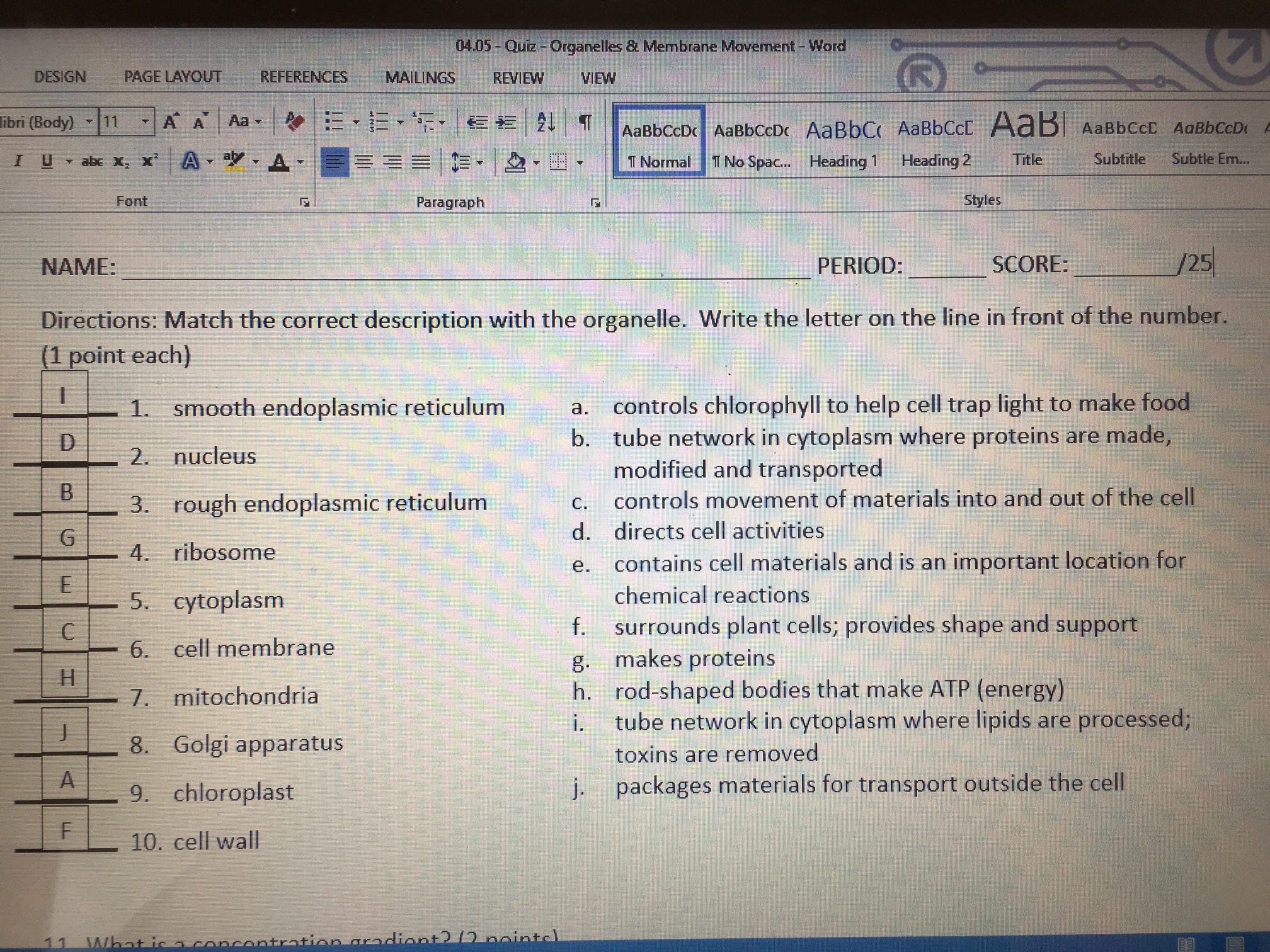
As Unit 1 draws to a close, today students spent the first part of class completing the HAB PBL Post-Assessment worksheet which will be used to assess student growth in understanding the content and in helping to determine how individual points are allocated for each member of the group.  For the second half of class, we reviewed for the Unit 1 exam by matching a list of cell organelles with a list of organelle functions:

IMG_0105

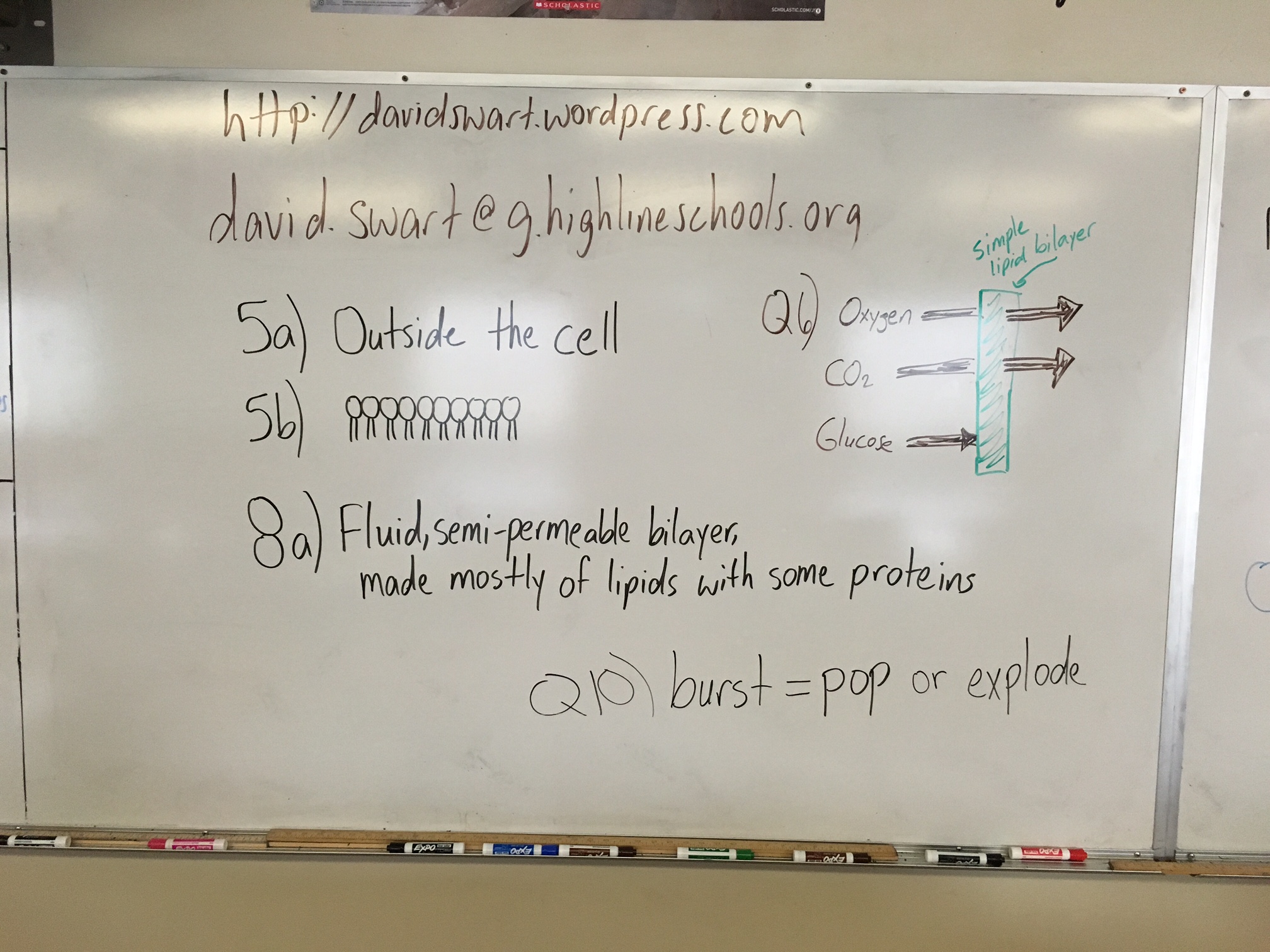
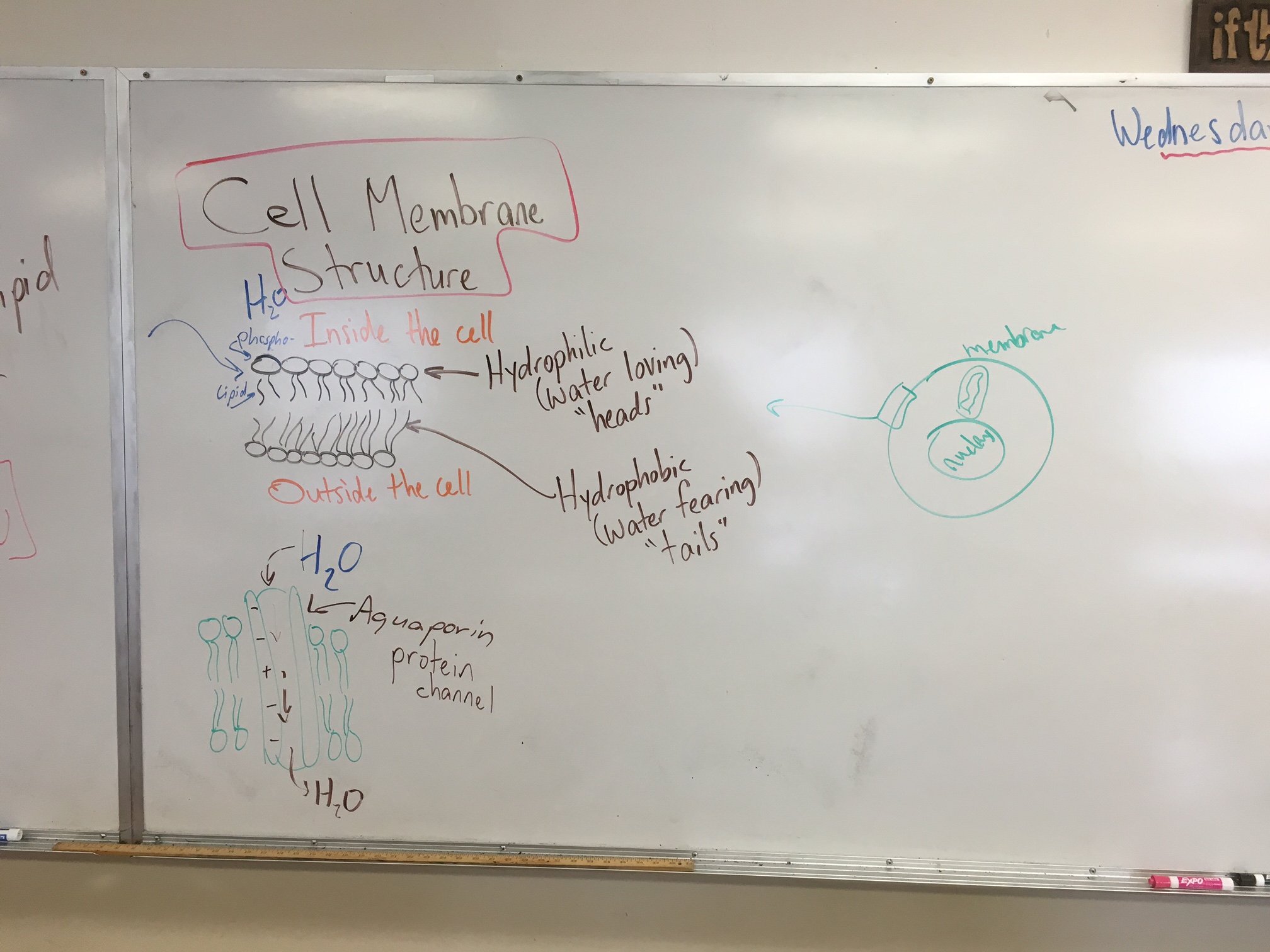
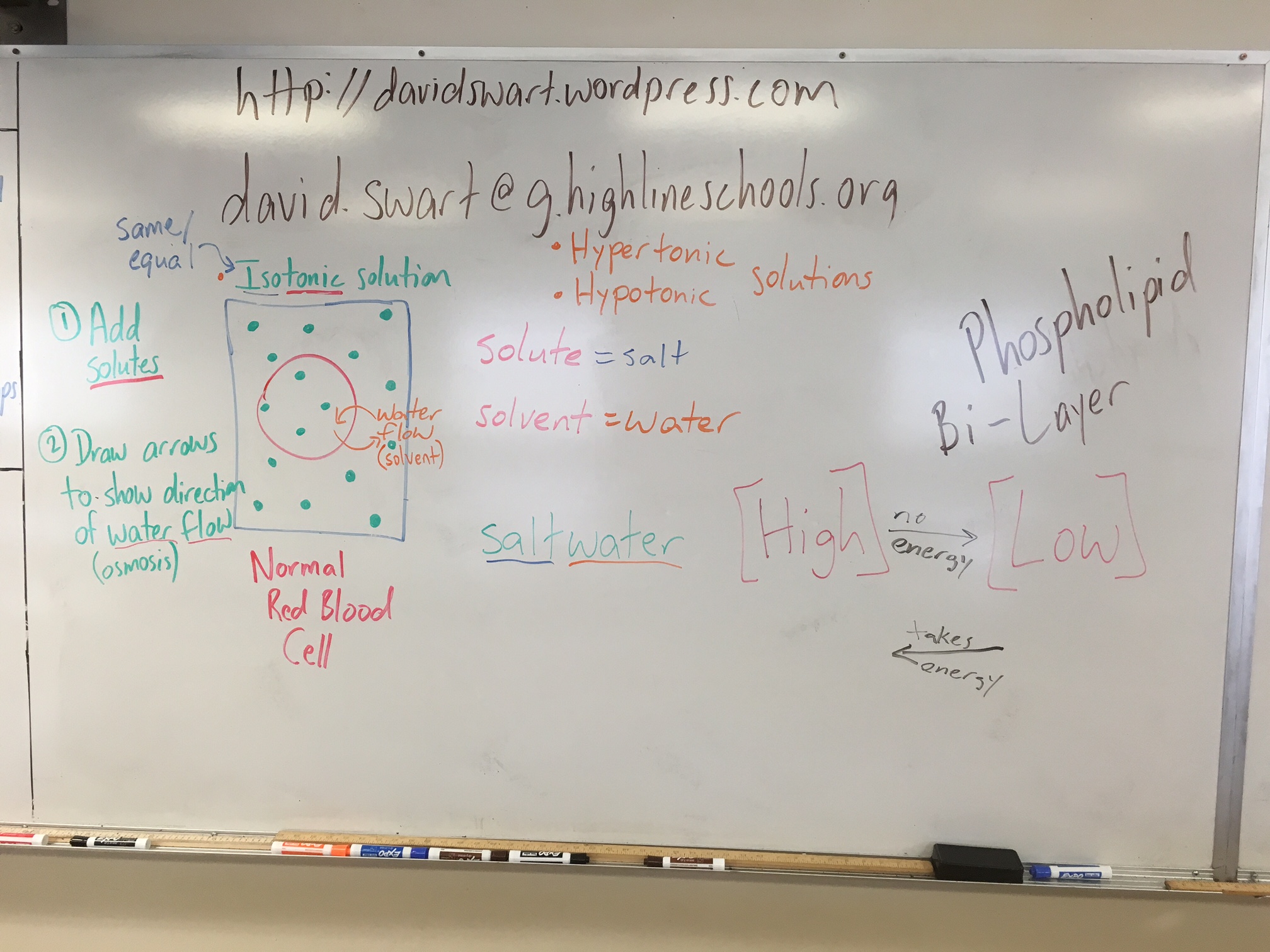
Next, we reviewed the structure of cell membranes and then finished with a review of osmosis:

IMG_0103 IMG_0104

Cells & Homeostasis: PBL Presentation Day

Our Project-Based Learning mini-unit concluded today with students presenting their solutions to the problem of harmful algal blooms.  Special thanks to our many “stakeholders” who visited with students today.  The students did a great job sharing their ideas, answering questions, and engaging with the stakeholders to learn more about career paths.  We will debrief the experience tomorrow and then transition to a review of Unit 1 content in preparation for the Unit 1 Exam scheduled for Thursday.

Updated June 1, 2016: To conclude the WABS PBL, I presented the results of our efforts in the form of a poster at the Showcase of Success meeting at the Hyatt Hotel in Seattle on Thursday, May 26.  Again, a huge thank you to my students, the Environmental Science Center, the chaperones who made our field trip to Seahurst Park possible, the groups who worked with my students on the field trip, the stakeholders who shared information with student groups, stakeholders who attended our in-class poster session, and of course, WABS and King County Public Health for inspiring our work.


Cells & Homeostasis: Practice PBL Presentations

On the final day of work before students share their work by presenting to stakeholders tomorrow, groups put the finishing touches on tri-folds and formulated responses to questions they should anticipate during their presentations.  Each student should be prepared to share their understanding of the following list of questions:

  • What exactly are algae?
  • How do algae obtain energy?
  • How do algae fit into the ecosystem?
  • How do algae make more algae?
  • What does it mean for algae to “bloom”?
  • Why do algae bloom?
  • When do algae bloom?
  • What happens to the ecosystem when algae bloom?
  • Why do algae only bloom at certain times?
  • What are the conditions that lead to algal blooms?
  • Why do algal blooms end?

There are a number of excellent resources on the Internet to help students formulate answers to these questions and many more.  Here are a selection:

Cells & Homeostasis: Revise PBL Posters – Day 2

Students spent the short Friday class period putting the finishing touches on tri-folds in preparation for presentation day on Tuesday.  While they worked, students were reminded to discuss questions (and their own responses) they might anticipate from audience members, and to consider how to engage their audience members with questions about career paths.  On Monday, students will share their lists of anticipated questions, receive a list of questions they will be asking audience members about career paths, and then spend the class period practicing their presentations and fine-tuning their tri-folds.

Cells & Homeostasis: Practice PBL Presentations

Students worked on their tri-fold posters all class period, printing content and practicing presentations.  While they worked, student groups were challenged to come up with three questions to anticipate from visitors to their group’s poster on Tuesday.  Examples of questions to anticipate:

  • Why did you pick your solution?
  • How did you select your group’s members?

Cells & Homeostasis: PBL Research – Day 6

Due to a last-minute scheduling change, we had the opportunity to spend our final lab in the computer lab today instead of tomorrow.  This worked out nicely, as many groups realized yesterday their tri-fold presentation boards needed additional content.  After today, students will need to arrange computer time outside of class if additional research is needed to complete the project.  We will be back in the classroom tomorrow assembling tri-fold presentation materials and discussing anticipated audience questions.

Cells & Homeostasis: Assemble PBL Posters

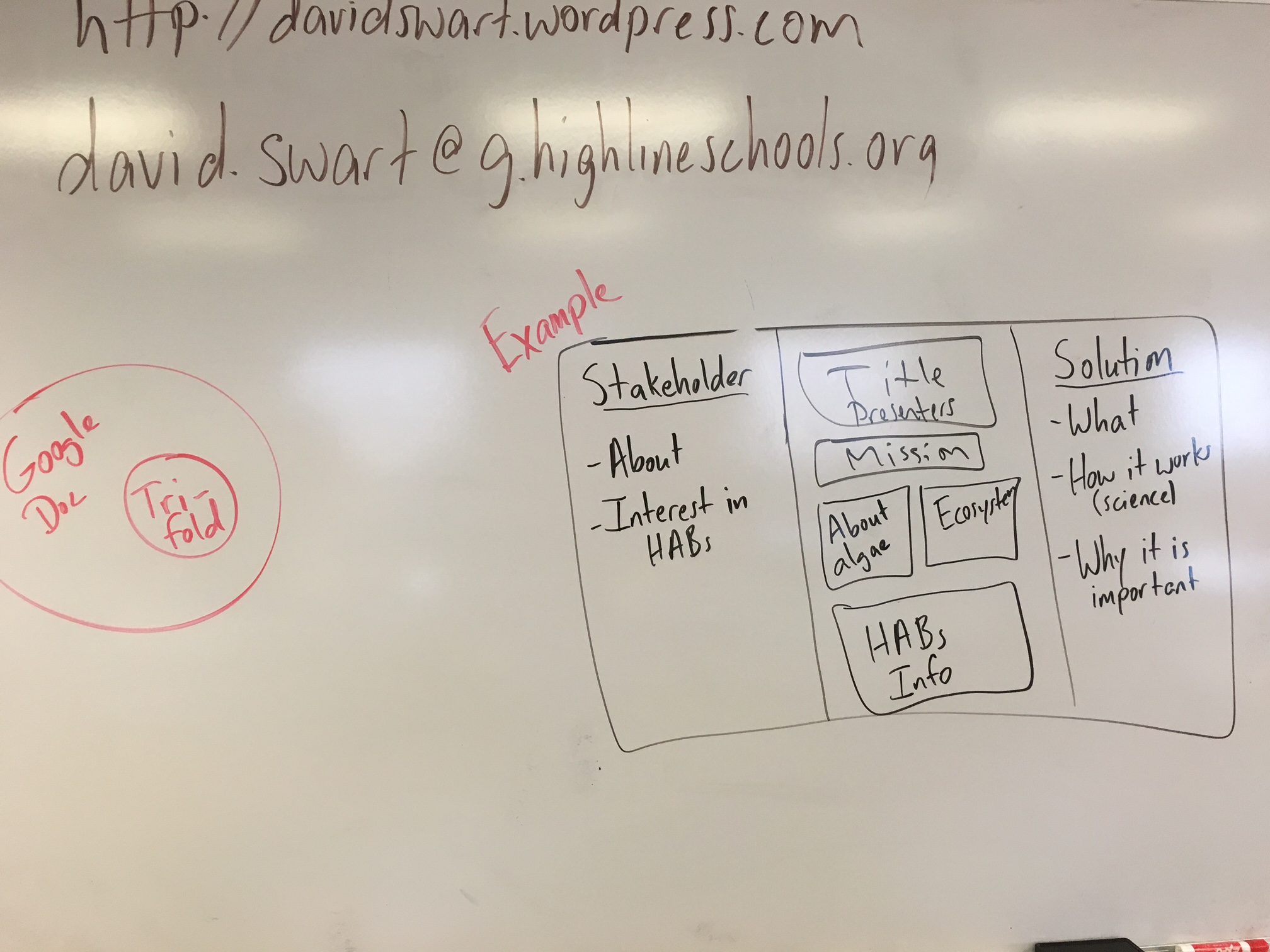
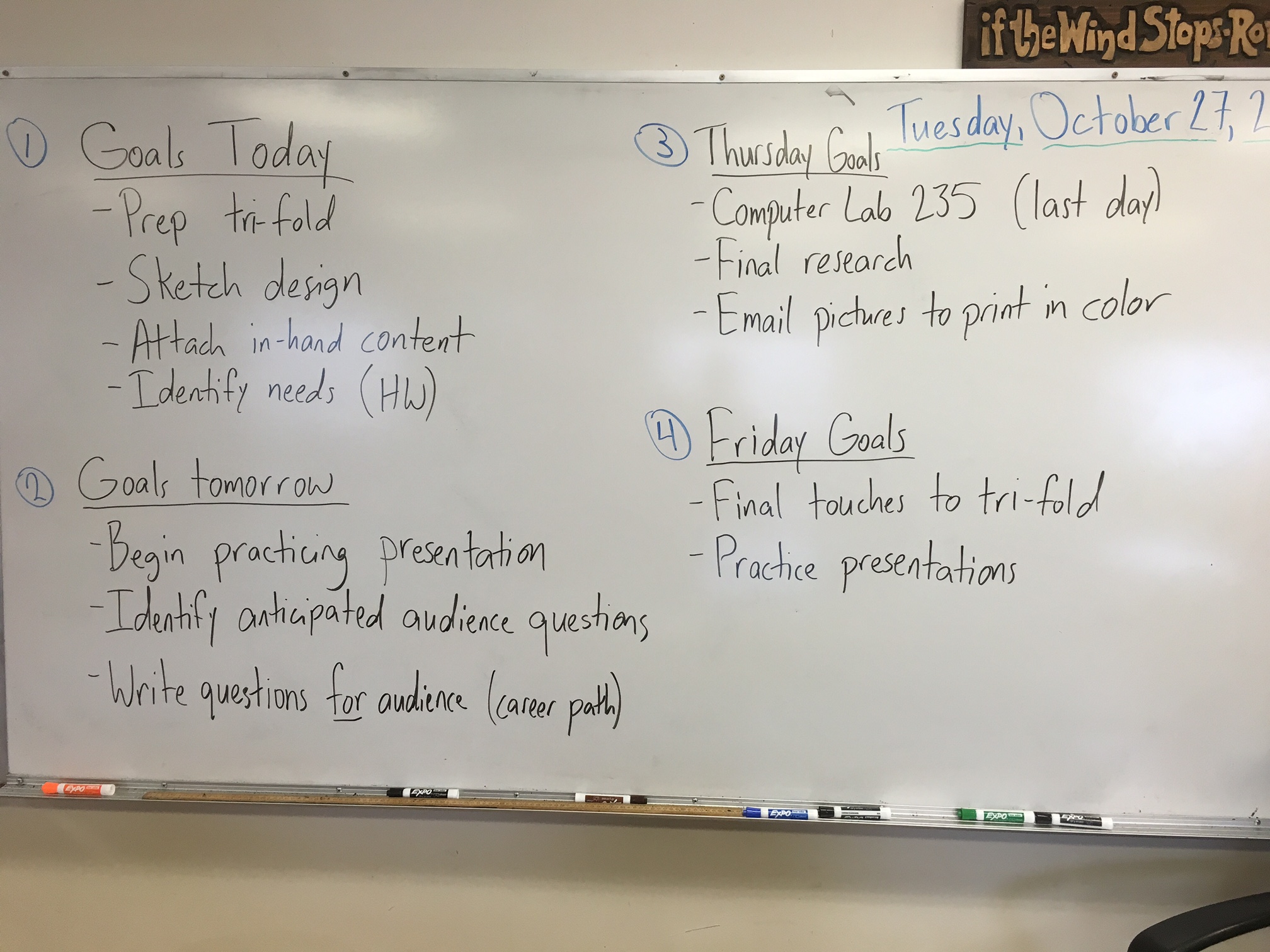
Student groups received their printed Google Doc materials and a used tri-fold poster board.  They were provided with Pirate yellow paper to re-cover the tri-folds and then began sketching out how their content would be attached to their boards.  The process helped students identify remaining areas of need so they can focus their efforts on Thursday, our final class day in a computer lab.  The pictures below show an example tri-fold layout for students who need some inspiration and guidance, as well as a list of goals for the rest of the week.

IMG_0081
Tri-fold example
IMG_0082
Goals for the week