Looking to grow some new plants for free? If you know someone with an herb garden, ask for a couple of mint cuttings. Wrap the ends of the cut mint plants in a moist paper towel and place them in a plastic bag. As quickly as possible, transfer the cut off the lower leaves and place the stem in water. Add water as needed to ensure the stem stays submerged. After about a week, your mint will sprout roots! Let the roots grow for a few more days, then transplant the mint cutting to soil. You have a new mint plant!
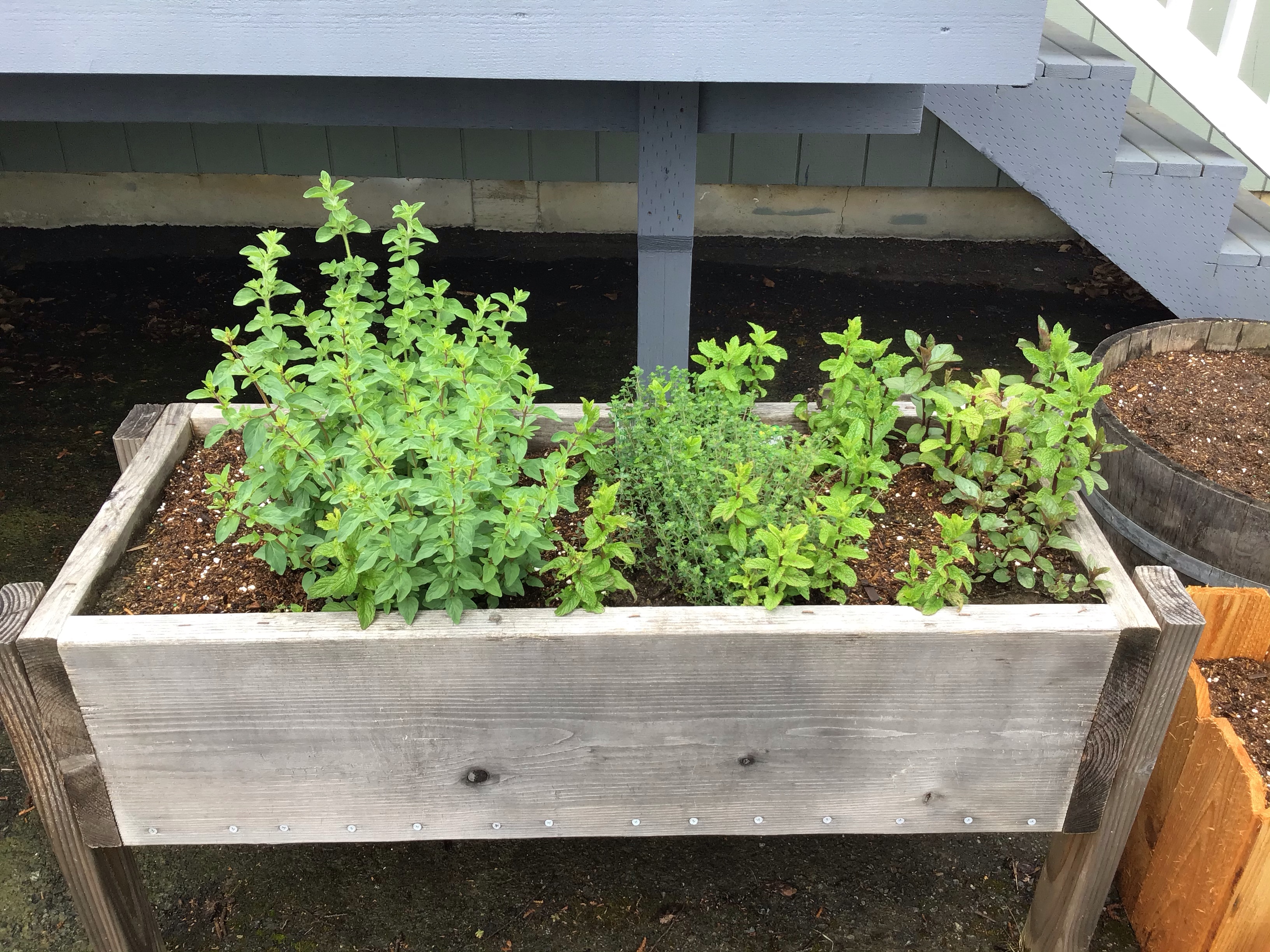
Here’s a photo of our small herb garden:
Using clean scissors, I cut the top 6 inches off of some mint plants, removed the lower leaves, and placed them in containers of water.
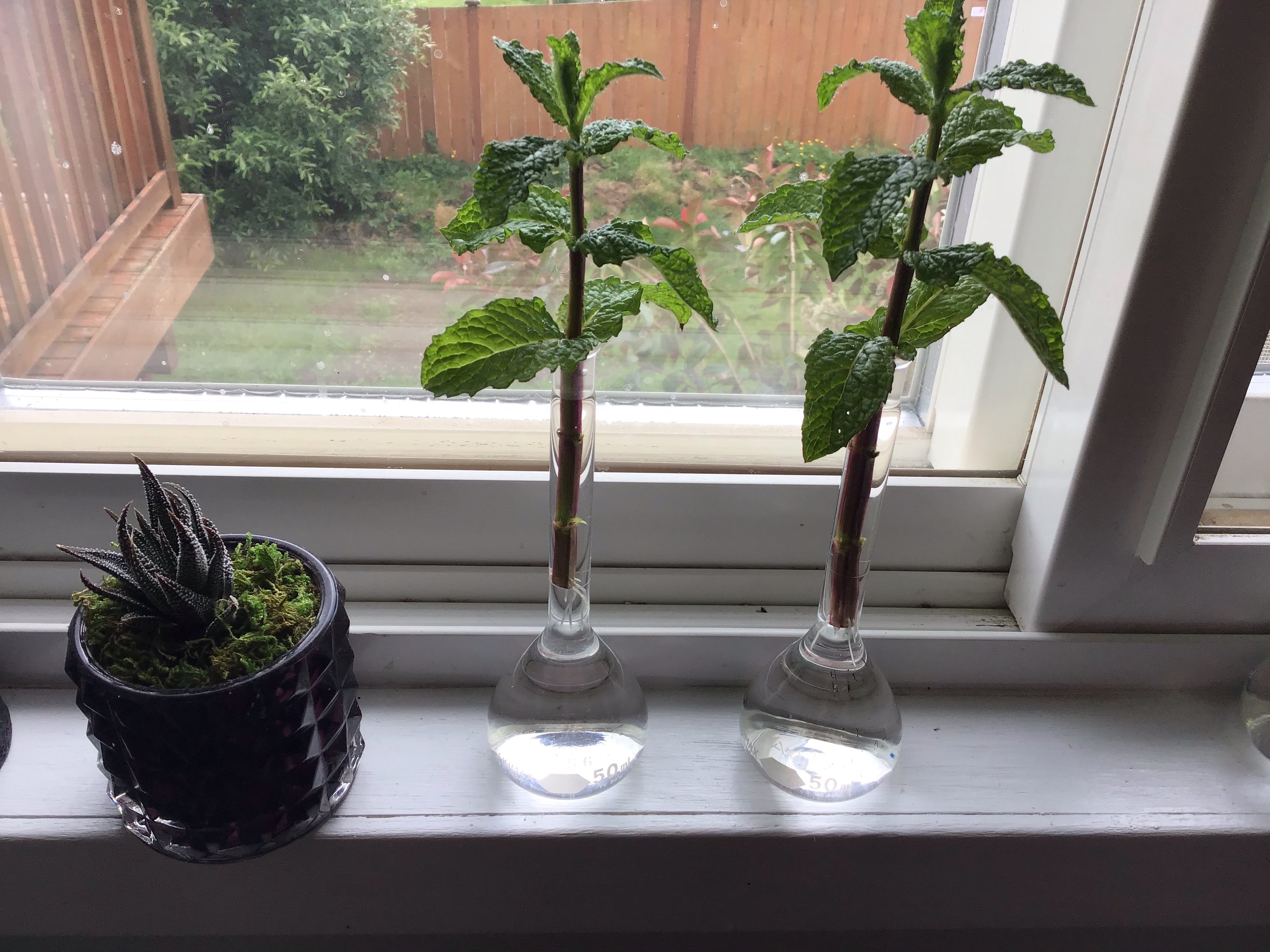
A week later, the mint cuttings had roots! I’ll give them another few days to grow roots and then transplant them outside in our expanded herb garden barrel.
Now that we better understand enzymes and how they work, it is time to focus on the enzyme lactase. The substrate for lactase is lactose, a sugar commonly found in milk. While you were briefly introduced to lactase in the previous work for this week, the video below will provide you with many important insights.
For starters, what is an enzyme? From Simple English Wikipedia: Enzymes are protein molecules in cells which work as biological catalysts. Enzymes speed up chemical reactions in the body, but do not get used up in the process, therefore can be used over and over again. Almost all biochemical reactions in living things need enzymes.
To learn more about Enzymes, watch the video below and then complete the Enzymes Google Form assignment. Note: after you submit the form, view your score. You can re-submit the form if needed to improve your score. Just make sure you improve your learning as well!
Take a breather from all that hard work and play a game of Google PAC-MAN.
To conclude our learning about enzymes, complete the Enzymes STEM Case Gizmo. This is a new type of Gizmo – everything is self-contained within the simulation. No packet to complete! Work through the STEM Case to find out what’s wrong with Claire. Hint: it has something to do with her enzymes! To receive credit for the assignment:
Create a Google Doc titled “What’s Wrong with Claire? – Your Name” (example: What’s Wrong with Claire? – Pierre Swart)
Copy and your first Hypothesis statement from the Gizmo and paste it into your Google Doc
Repeat step 2 each time you revise your hypothesis
Briefly explain what was wrong with Claire
Take a screenshot of the Case Completed screen
Share the Google doc with Mr. Swart at david.swart@g.highlineschools.org
Welcome to Weeks 34 and 35! We continue our study of evolution, and specifically co-evolution, by focusing on the enzyme lactase. You have two weeks to complete this work. The recommended weekly work schedule is provided below. You must complete the weekly attendance check-in, but you are welcome to adjust the learning schedule to meet your own needs.
Week 34 (recommended)
Week 34 Attendance Check-In (required by 10am 5/15)
Got Lactase? Google Form (worth 15 assignment points)
Enzymes STEM Case Gizmo Google Doc Notes (worth 10 assignment points)
Remember, you can email me any time. Office hours for Science are Tuesdays from 11am-12pm and Thursdays from 1pm-2pm. Check your student Gmail for Zoom instructions.
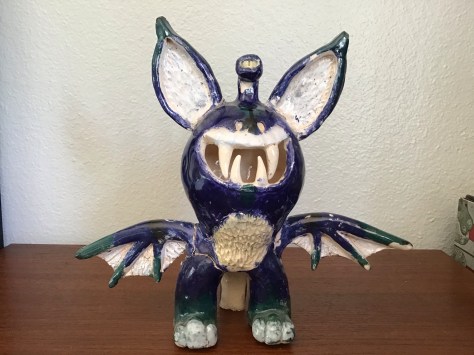
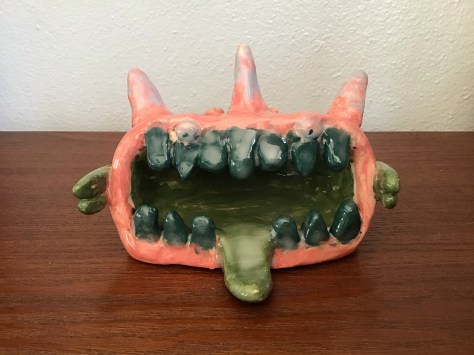
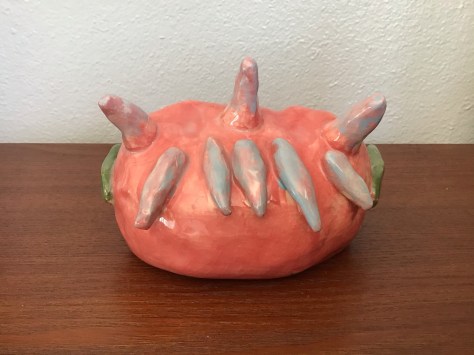
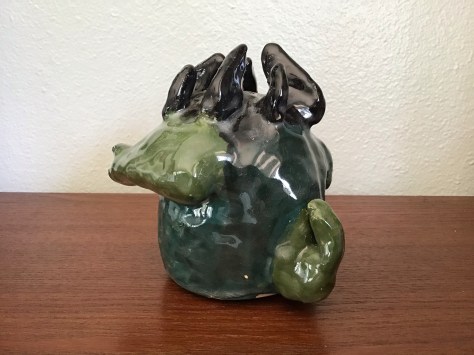
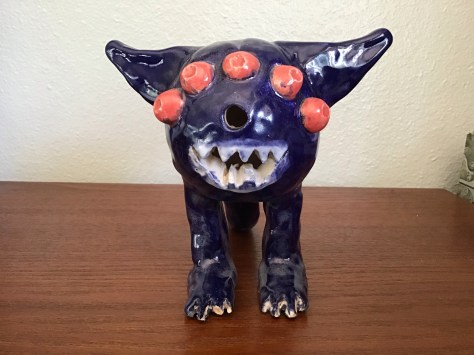
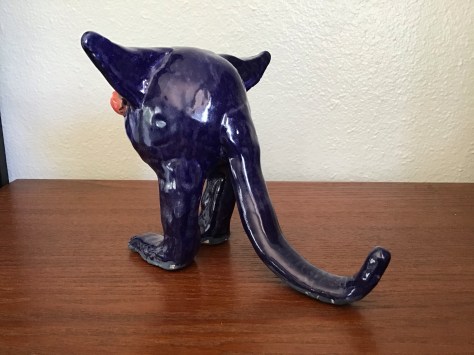
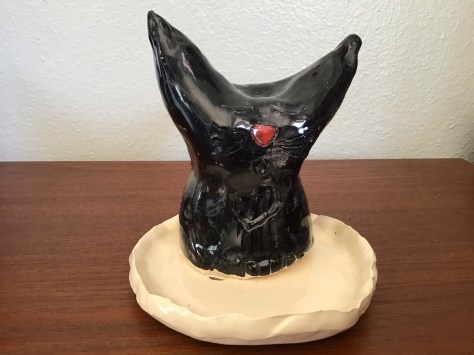
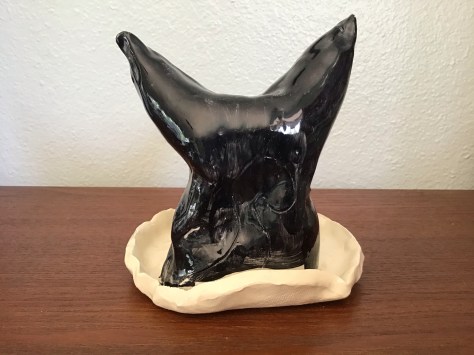
Don’t forget to complete the Week 34 and Week 35 Bonus Credit Opportunities! Check out the amazing artwork students are submitting as part of the Week 35 Bonus Credit Opportunity.
Ready to step up your enzyme game? Begin by watching the Enzymes video by Mr. Anderson:
Now that you have been introduced to the enzyme catalase, it is time to see catalase in action through this installment of Lab@Home.
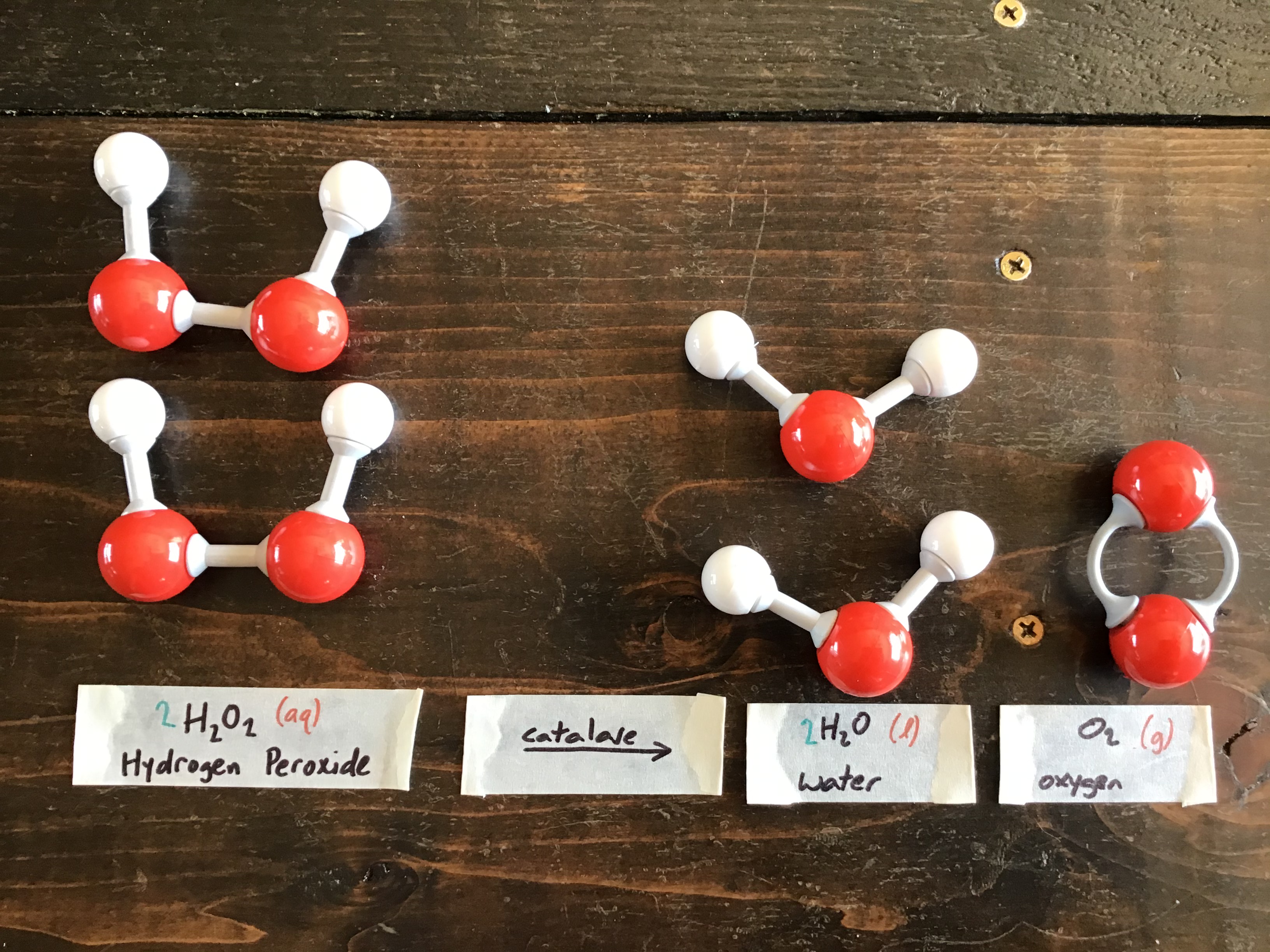
In this video, you will observe the enzyme catalase reacting with hydrogen peroxide (the substrate) to produce water and oxygen gas. The hydrogen peroxide is an aqueous solution consisting of 3% H2O2 and 97% H2O. The picture below depicts a balanced chemical equation along with models of the reactant (H2O2) and products (H2O and O2):
For the experiment, 10 mL of H2O2 was pipetted into each of 3 test tubes. Next, 5 g of finely diced potato was added into each test tube. Before being minced, potato #1 was kept at room temperature, potato #2 was baked in an oven for 30 minutes at 450 °F (232 °C), and potato #3 was frozen for 60 minutes at -20 °C. The 5 g of baked potato was kept at room temperature until the experiment started. The 5 g of frozen potato was returned to the freezer until just before the experiment.
If you have access to a potato and hydrogen peroxide, then you can do this lab at home and dazzle your family. You don’t need any fancy equipment, just do your best to keep the experimental conditions similar. If not, watch the video below carefully. Either way, whether you conduct the experiment yourself, or follow along with the video, write up the experiment into a lab report and submit it for up to +40 bonus points in the lab report section of your semester grade. Let me repeat: this is worth +40 bonus points, which means it is not required, but highly encouraged! If you would like to work with a partner, you may as long as it is clear who did which parts of the report and the work is equally shared.
For full credit, the lab report should consist of:
Title: Potato Catalase Experiment
Student Name(s) – two students max with work clearly labeled
Introduction section: Explain the purpose of the lab. Include your understanding of catalase. What was the manipulated variable (what we intentionally changed)? What were the responding variables (what we observed)? What variables were controlled?
Procedure section: Include a numbered list of every step needed to conduct this experiment. Have a friend or family member review the procedure and attempt to follow it. If they get lost, fill in the missing steps!
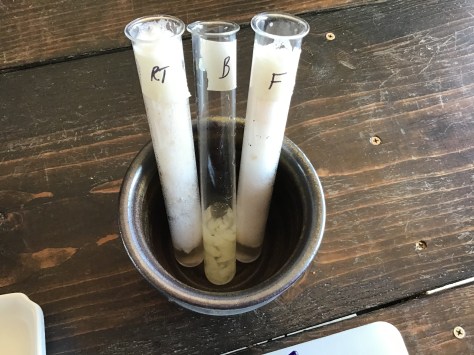
Results section: Include observations of which samples produced oxygen gas bubbles. Record the time it took for the bubbles to reach the top of the tubes. Include the starting and ending temperatures (given in °C). If you are using the data from the experiment in the video, include and explain the picture below:
RT = Room Temp, B = Baked, F = Frozen
Discussion section: Explain why some, but not all, samples produced oxygen gas bubbles. Include the words enzyme, substrate, products, and denatured. Is the reaction exothermic, isothermic, or endothermic? How do you know? Explain the results: how did the manipulated variable affect the responding variables? Why? What were three possible sources of error? Based on what you learned, what would be your next experiment to further your learning?
Need some help setting up your lab report? Click the link and then select File > Make a Copy and get to it!
Welcome to Week 33! Last week, you constructed phylogenetic trees based on the relationships (like physical appearance, bird songs, and DNA sequences). For this week, we will be extending our study of evolution to include the process of co-evolution. Co-evolution occurs when two or more species interact over time, and influence each other’s evolution. Please work through the list of links below. Each section contains important information and ends with a portion of the weekly assignment. You can complete it all in one sitting or break it up as needed. Ready, set, go!
You did it! Just to make sure, here’s a checklist of items you must complete this week by Sunday, May 10 at 11:59pm:
Weekly Attendance Check-In (school district requirement)
Biological Relationships Vocabulary section of Google Doc (worth 11 assignment points)
Zombie Parasites section of Google Doc (worth 4 assignment points)
UC Berkeley Understanding Evolution section of Google Doc (worth 20 assignment points)
Remember, you can email me any time. Office hours for Science are Tuesdays from 11am-12pm and Thursdays from 1pm-2pm. Check your student Gmail for Zoom instructions.
Over the past few weeks, we have acquired a significant amount of evidence for evolution:
Natural selection (the common ancestry of brown bears and polar bears; dinosaurs and chickens)
Artificial selection (humans selecting for desired traits, such as dog breeding)
As we continue learning about evolution, we must expand our view to consider the concept of co-evolution:
Co-evolution is the idea that organisms do not evolve in a vacuum. Evolution takes place concurrently in nature: populations of organisms influence each other’s evolution.
The term co-evolution is used to describe cases where two (or more) species reciprocally affect each other’s evolution.
Plants and insects represent a classic case of co-evolution — one that is often, but not always, mutualistic (keep reading – the definition of mutualism is further down). Many plants and their pollinators are so reliant on one another and their relationships are so exclusive that biologists have good reason to think that the “match” between the two is the result of a co-evolutionary process.
Host: an organism that harbors a parasite, or a mutual or commensal symbiont, typically providing nourishment (food) and shelter.
Bacteria: microscopic living organisms, usually one-celled, that can be found everywhere. They can be dangerous, such as when they cause infection, or beneficial, as in the process of fermentation (to make foods like kimchi, fish sauce, Tabasco sauce, and salami) and that of decomposition.
Virus: Any of various simple submicroscopic parasites of plants, animals, and bacteria that often cause disease and that consist essentially of a core of RNA or DNA surrounded by a protein coat. Unable to replicate without a host cell, viruses are typically not considered living organisms.
Infection: Invasion and multiplication of an infectious agent in body tissues of the host and may lead to clinical symptoms or local cellular injury as a result of competition in metabolism, production of toxins, intracellular replication, or antigen antibody response.
Symbiosis: the interaction between two different organisms living in close physical association.
Symbiotic Relationships:
Mutualism: symbiosis that is beneficial to both organisms involved.
Commensalism: an association between two organisms in which one benefits and the other derives neither benefit nor harm.
Parasitism: a non-mutual symbiotic relationship between species, where one species, the parasite, benefits at the expense of the other, the host.
Your assignment:
Create a Google Doc titled Week 33 – Your Name (Example: Week 33 – Olive Swart)
Create a section in your Week 33 Google Doc titled “Biological Relationships Vocabulary”.
Make a numbered list of each of the 11 words from this lesson highlighted in red bold text.
For each word in your list, research your own examples of these biological processes, type of organisms, or relationships between organisms and write up your work in your Week 33 Google Doc. Include source citations as appropriate. Need some help getting started? Click here for examples of symbiotic relationships.
By now you should fully understand that evolution does not have a direction. There is no goal. Evolution is simply the process of genetic mutations occurring within a population that give rise to traits which may allow some individuals of a population to survive when the environment changes. The video below brings us back to the Galapagos Islands where Charles Darwin first encountered the finches that would ultimately help him formulate the Theory of Evolution. (Note: in science, theory is considered fact. We often hear the phrase “just a theory” which is not a scientific use of the term.) Would Darwin be surprised to see the timescale on which evolution can be observed on the island? To complete this next section:
Watch The Beak of the Finch video below:
Complete the accompanying worksheet packet as a section of your Week 32 Google Doc (section title: The Beak of the Finch).
Work through the Sorting Finch Species interactive (sound required) and complete the Sorting Finch Species worksheet as a section of your Week 32 Google Doc (section title: Sorting Finch Species). This is a fun activity to play with someone at home – feel free to team up and share your learning with others.





 Science with Swart
You must be logged in to post a comment.