All posts by David Swart

High school science teacher

Week 36 – What is a Dichotomous Key?

As part of our learning about biological classification (week 31), you completed the Biological Classification POGIL assignment.  Model 4 from that assignment begins with a dichotomous key that helps you determine which kingdom your unknown organism belongs to (Pro Tip – open up that assignment).  We are going to be focusing on photosynthetic organisms (the answer to the ? box) which we know are called Plants!  A dichotomous key can look like a flow chart (like the POGIL) or it can look like a series of questions similar to a choose-your-own-adventure book where one question leads to the next and eventually you figure out the identity of the organism.  To begin, watch the video below to see you to use a dichotomous key:


Now, imagine you are out for a walk in the woods.  You look up at the tall trees and down at the forest floor.  How do you know what’s what?  Is that plant native or a weed?


Need more help?  Click here for a Dichotomous Key Project Example.

Return to Week 36 – Dichotomous Key Project and continue working.

Week 36 – Phylogenetic Tree Project

One month ago, we planted our vegetable garden.  It was the reward for several weeks of arduous labor (about which my kids are still complaining).  This week, we will observe together the miracle of biology: after a little more than a month, what began as a tiny little seed is now a plant with interesting and complex structures, well on its way to maturing into something that will produce food for us in a few months.  From the perspective of the plant, feeding us isn’t the goal.  The plant has domesticated humans by convincing us to cultivate it, thus ensuring the plant and its offspring survive for future generations.  Same with cats and dogs – we like to pretend we’re in charge, but really the creatures we love as “pets” have actually been stunningly successful at domesticating humans and getting us to feed, shelter, love, and protect them.  Who is really in charge?

But I digress!  Back to plants and our work for the week.  Your job is to look through the pictures of individual plants from the garden.  The pictures show the plants after 3 weeks of growth (they were taken last weekend).  The plants are labeled so you will know what you are looking at.  Take notes about the characteristics of the plants – you will need those notes to construct a phylogenetic tree.  (Click here for a refresher about phylogenetic trees).  Your goal for the week is use evidence to infer the evolutionary relationships amongst common garden vegetables.

Instructions:

  1. Observe the pictures of garden vegetable plants after 3 weeks of growth (from seeds).  The same pictures in the link are also provided here as a slide show.  Use whichever is easiest for you.

    This slideshow requires JavaScript.

  2. Record (write down!) detailed observations in a Google Doc titled “Vegetable Garden Phylogenetic Tree – Your Name”.  This means, make a list of the 25 plants.  Write down detailed observations of each plant.  Your observations will serve as your evidence for how you construct your phylogenetic tree.
  3. In your Google Doc, organize the plants into groups based on similarities.
  4. In your Google Doc, create a phylogenetic tree which predicts the evolutionary relationships amongst the 25 different garden vegetable plants.  You might expect plants that appear similar to be more closely related than plants that appear different.  Use your evidence to infer the evolutionary relationships as depicted in your phylogenetic tree drawing.
  5. Need help?  Click here for a Phylogenetic Tree Project example.
  6. When finished, Share the Doc with Mr. Swart at david.swart@g.highlineschools.org

Return to Week 36 – Inferring with Evidence and continue working.

Week 36 – Molarity

If you’ve ever made ice tea and decided it needs more sugar, you understand the importance of solution concentration.  Add too little sugar and the sugar concentration is too low to make the ice tea pleasantly sweet.  Add too much sugar and the ice tea just tastes like sugar water because the sugar concentration is too high.  Somewhere in there is the ice tea Goldilocks zone – just the right amount of sweet.  If you have access to water, a measuring cup, a glass, some tea, some sugar, and a teaspoon: fill a glass with one cup (8 ounces) of cold water, add one bag of tea, and let it steep while you continue working.


Back to our lesson: we need to understand the concept of molarity which is defined as the concentration of dissolved substances in a solution, expressed in moles of solute per liter of solution.  We use M as the unit of molarity (M = mol/L).  We already know how to calculate moles from grams, so just take moles and divide by volume (in liters) to calculate molarity.  Here’s an easy example question: glucose has a molar mass of 180 g/mol.  If 90 g of glucose is added to 1 L of water, calculate the molarity of the solution.  Answer: 90 g x 1 mol / 180 g = 0.5 mol, 0.5 mol / 1 L = 0.5 M.  The molarity of the solution is 0.5 M.


Here’s a harder example question: A 20 fluid ounce bottle of Dr. Pepper contains 64 grams of sugar (high fructose corn syrup).  Determine the molarity of sugar Dr. Pepper.

To approach this question, we need to know some additional pieces of information.  Ultimately, we need our answer in units of M, or mol/L.  So we need to convert ounces to liters and we need the molar mass of high fructose corn syrup.

Key information:

  • 1 L = 33.814 fluid ounces
  • High fructose corn syrup consists of glucose and fructose, both of which have a molar mass of 180 g/mol.

Answer: First, let’s convert 64 grams of sugar to moles: 64 g x (1 mol / 180 g) = 0.36 mol of sugar.  Next, let’s convert 20 ounces to liters: 20 ounce x (1 L / 33.814 ounces) = 0.59 L.  Finally, we just need to divide moles by liters to calculate molarity: 0.36 mol / 0.59 L = 0.61 M.


Let’s turn our attention back to the tea we started making at the beginning of this lesson and wrap this up with a more challenging practice problem.  Question: If we add one teaspoon of table sugar to our 8 ounce glass of tea, what is the molarity of the solution?

Key information:

  • 1 L = 33.814 fluid ounces
  • molar mass of table sugar (sucrose) = 342 g/mol
  • 1 teaspoon of table sugar = 4.2 grams

Answer: Let’s begin by calculating the number of moles of sucrose (table sugar) added to the tea.  One teaspoon = 4.2 grams of sucrose.  4.2 grams x (1 mole / 342 g) = 0.0123 mol of sucrose.  Next, let’s convert 8 ounces to liters: 8 ounces x (1 L / 33.814 ounces) = 0.237 L.  Finally, to calculate molarity (M), divide moles by liters: 0.0123 mol / 0.237 L = 0.052 M.


Time to show what you know!  Complete the Week 36 – Molarity Google Form assignment and then return to Week 36 – Solution Concentration and continue working.

Week 36 – Dichotomous Key Project

One month ago, we planted our vegetable garden.  It was the reward for several weeks of arduous labor (about which my kids are still complaining).  This week, we will observe together the miracle of biology: after a little more than 4 weeks, what began as a tiny little seed is now a plant with interesting and complex structures, well on its way to maturing into something that will produce food for us in a few months.  From the perspective of the plant, feeding us isn’t the goal.  The plant has domesticated humans by convincing us to cultivate it, thus ensuring the plant and its offspring survive for future generations.  Same with cats and dogs – we like to pretend we’re in charge, but really the creatures we love as “pets” have actually been stunningly successful at domesticating humans and getting us to feed, shelter, love, and protect them.  Who is really in charge?

But I digress!  Back to plants and our work for the week.  Your job is to look through the pictures of individual plants from the garden.  The pictures show the plants after 3 weeks of growth (they were taken last weekend).  The plants are labeled so you will know what you are looking at.  Take notes about the characteristics of the plants – you will need those notes to construct a dichotomous key.  (Click here for a refresher about dichotomous keys).  Your goal for the week is create a tool that can be used by a vegetable gardener to know which plants will produce which vegetable and to help the gardener know which plants are weeds and should be removed from the garden.

Instructions:

  1. Observe the pictures of garden vegetable plants after 3 weeks of growth (from seeds).  The same pictures in the link are also provided here as a slide show.  Use whichever is easiest for you.

    This slideshow requires JavaScript.

  2. Record (write down!) detailed observations in a Google Doc titled “Vegetable Garden Dichotomous Key – Your Name”.  This means, make a list of the 25 plants.  Write down detailed observations of each plant.  Your observations will serve as your evidence for how you construct your dichotomous key.
  3. In your Google Doc, organize the plants into groups based on similarities.
  4. In your Google Doc, create a dichotomous key to determine the identity of each plant through a series of questions.  Look for differences between the groupings of plants you created and then write the differences into questions.  For example, if you have a group of pink plants (which you do not!) while the rest are green, Question 1 might be: Is the plant pink?  If yes, go to question 2.  If no, go to Question 3.  Note: you can construct a flowchart instead if you find that easier. 
  5. Need help? Click here for a Dichotomous Key Project example.
  6. When finished, Share the Doc with Mr. Swart at david.swart@g.highlineschools.org

Return to Week 36 – Inferring with Evidence and continue working.

Week 36 – Mint Plant Cuttings

Looking to grow some new plants for free?  If you know someone with an herb garden, ask for a couple of mint cuttings.  Wrap the ends of the cut mint plants in a moist paper towel and place them in a plastic bag.  As quickly as possible, transfer the cut off the lower leaves and place the stem in water.  Add water as needed to ensure the stem stays submerged.  After about a week, your mint will sprout roots!  Let the roots grow for a few more days, then transplant the mint cutting to soil.  You have a new mint plant!

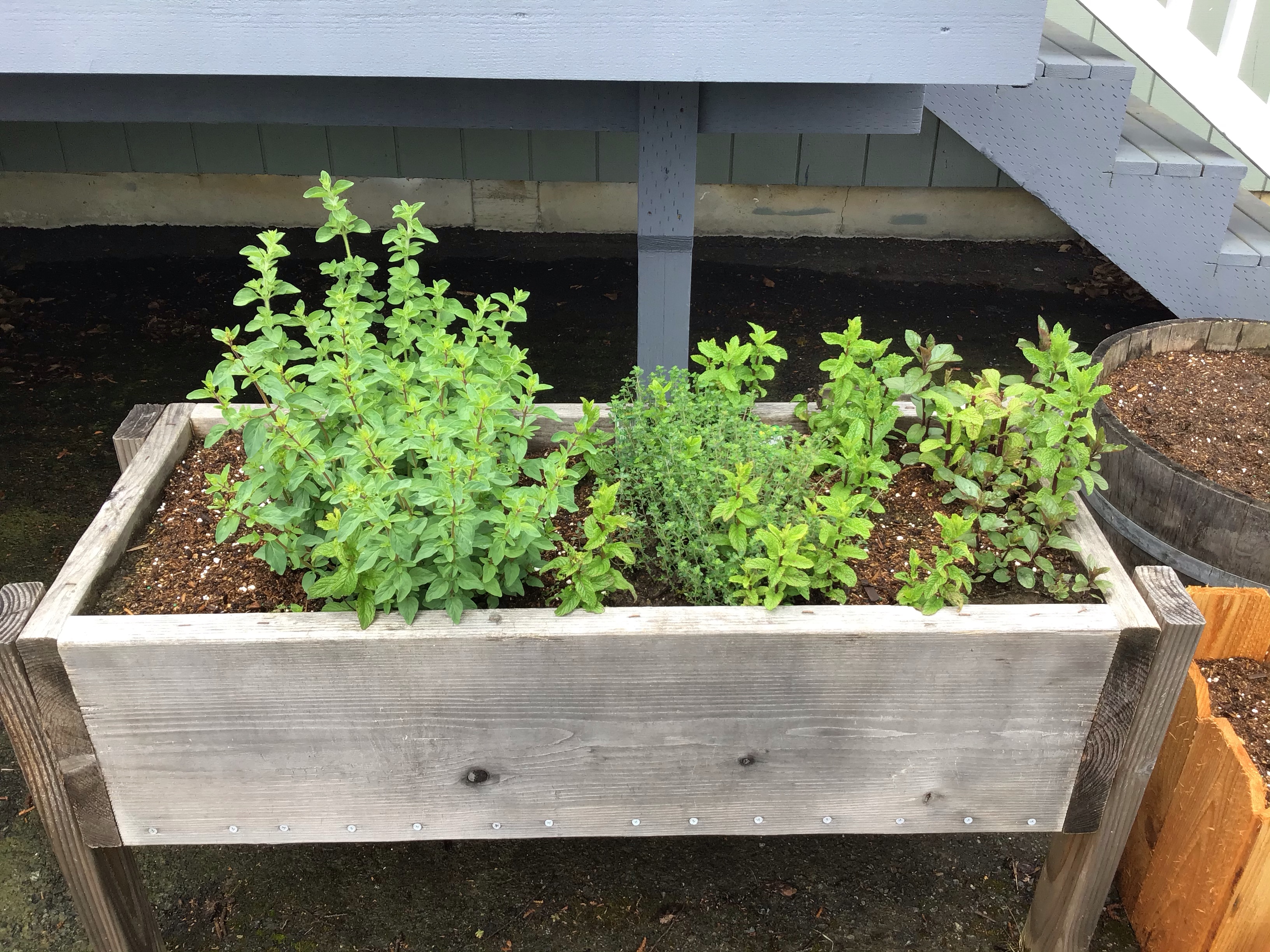
Here’s a photo of our small herb garden:

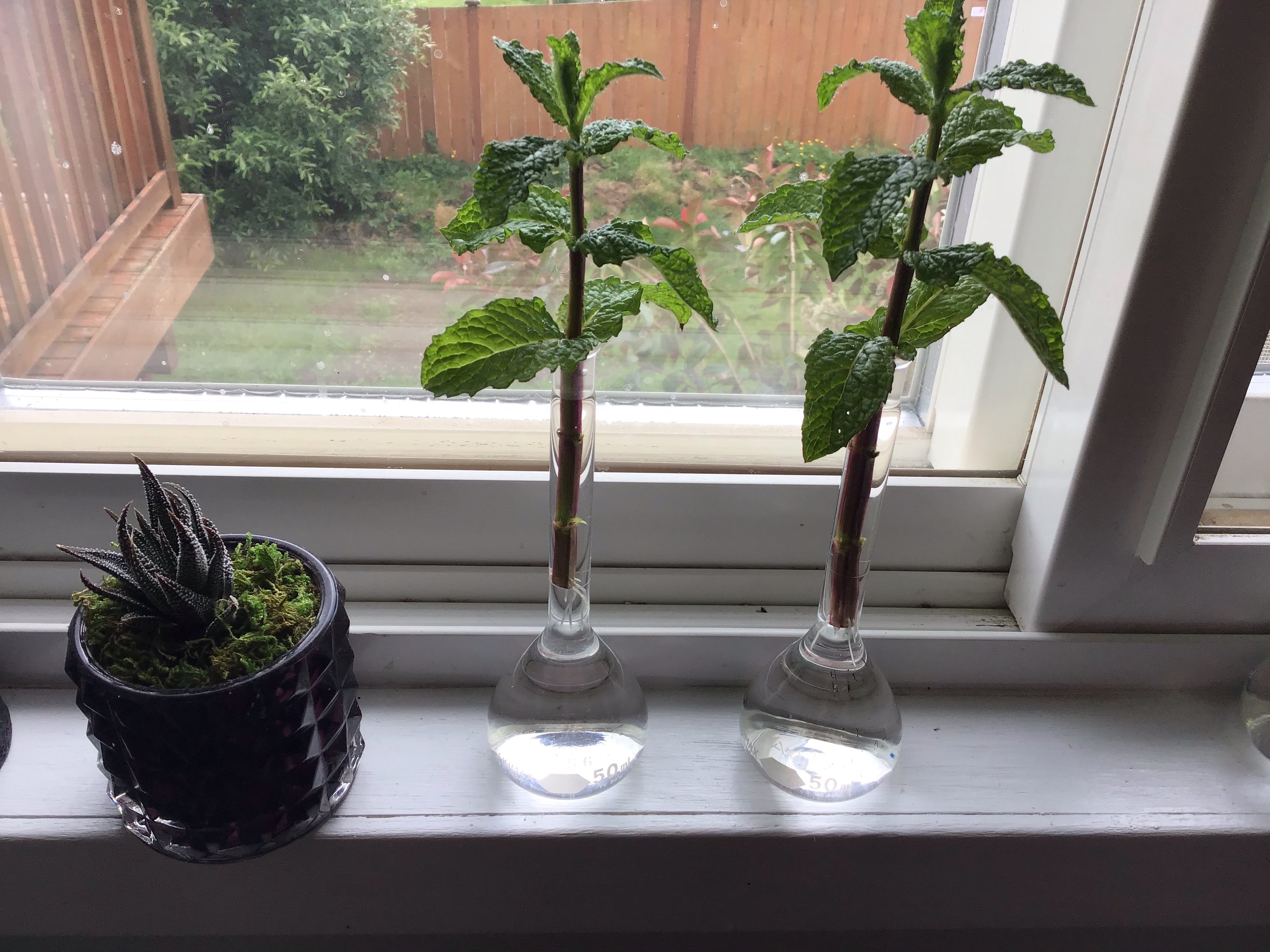
Using clean scissors, I cut the top 6 inches off of some mint plants, removed the lower leaves, and placed them in containers of water.

A week later, the mint cuttings had roots!  I’ll give them another few days to grow roots and then transplant them outside in our expanded herb garden barrel.

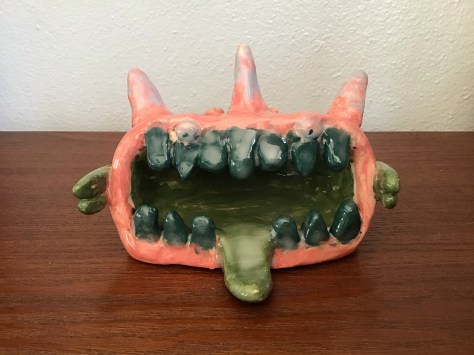
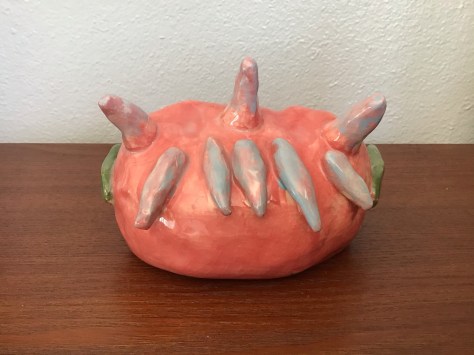
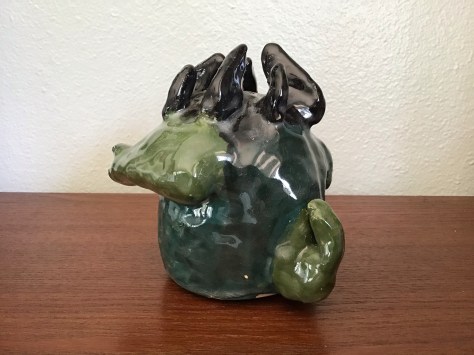
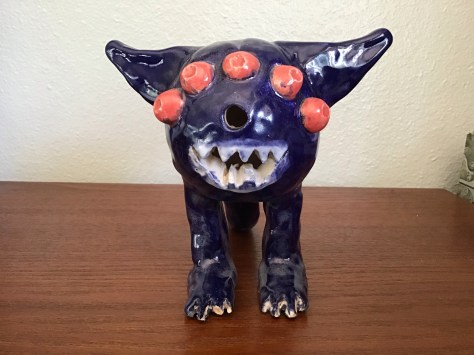
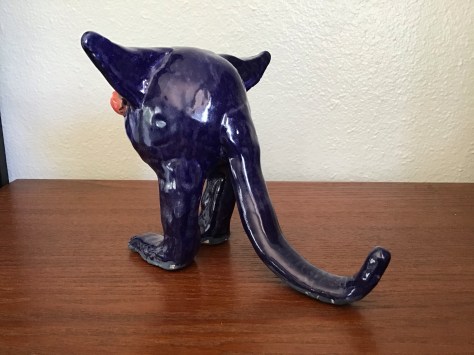
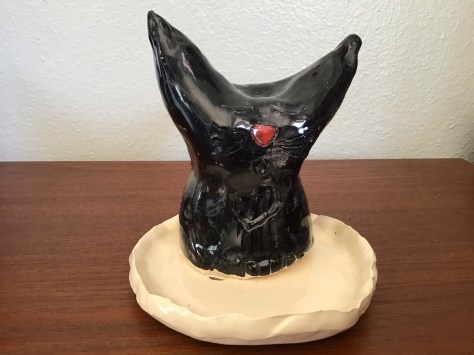
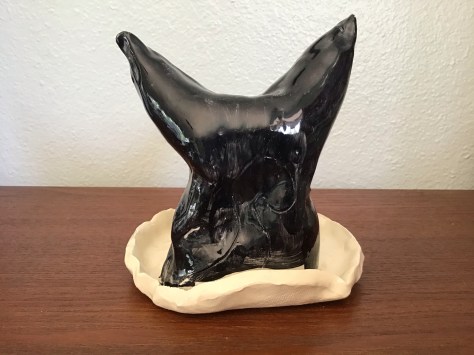
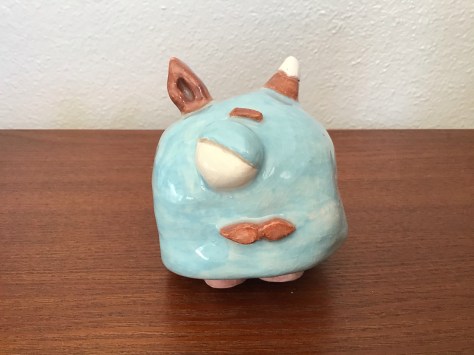
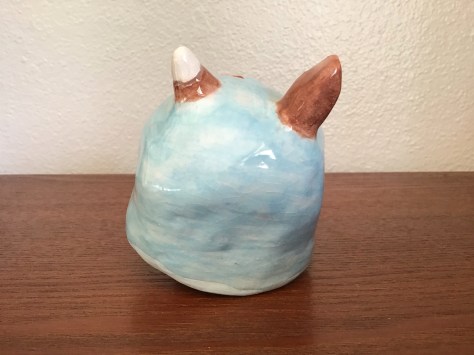
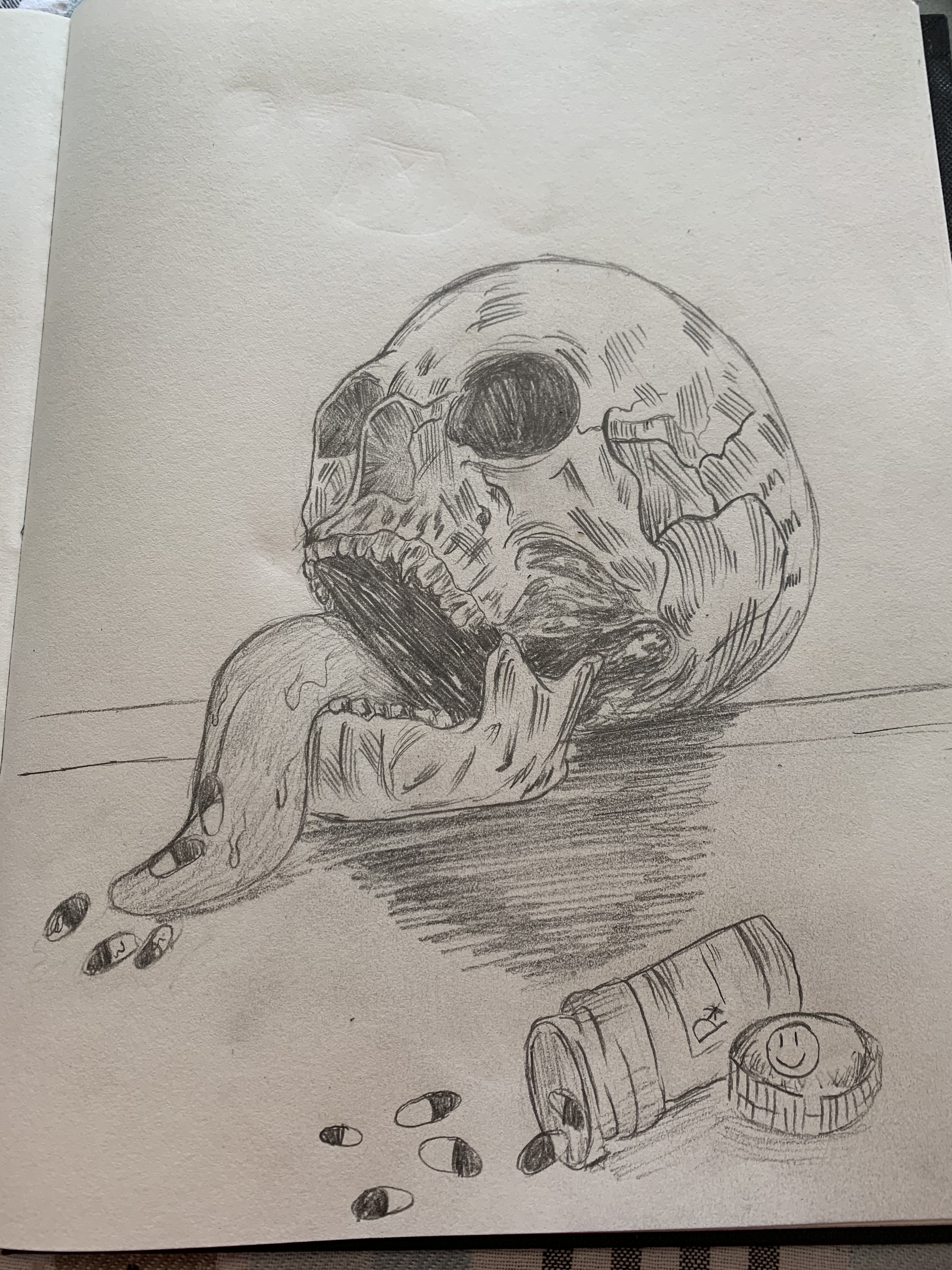
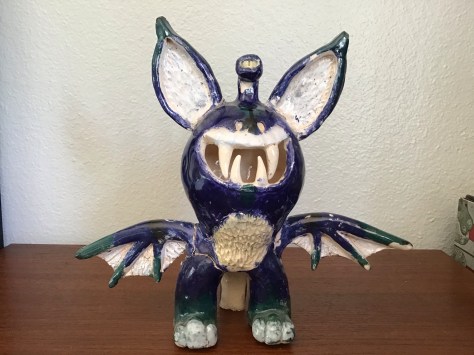
Week 35 – Student Art of Science Gallery

We have such talented artists among us!  The art below was created by students as part of the Week 35 Bonus Credit Opportunity.  Students who submit original artwork for bonus credit have the option of allowing it to be displayed publicly (not required to earn bonus credit) and the only requirement is student names may not be visible to protect privacy.

LD50
Is This Too Much
Is This Too Much?
The Third Eye
The Third Eye

Week 35 – Bonus Credit Opportunity

Looking to earn some bonus credit and boost your grade?  You’ve come to the right place!  Each week, you will have the opportunity to earn bonus credit for completing extra learning about science.

This week’s bonus credit opportunity is called…The Art of Science.  Create a piece of art themed around our current unit of work.  Any format is fine, as long as it is school-appropriate and can be uploaded to the Week 35 Bonus Credit Opportunity Google Form.  If you are willing to share your work publicly, please make sure your name is not visible.  Have fun and be creative!